
Date of Event: 26–27 March 2025
Event: Global Anti-Scam Summit London 2025
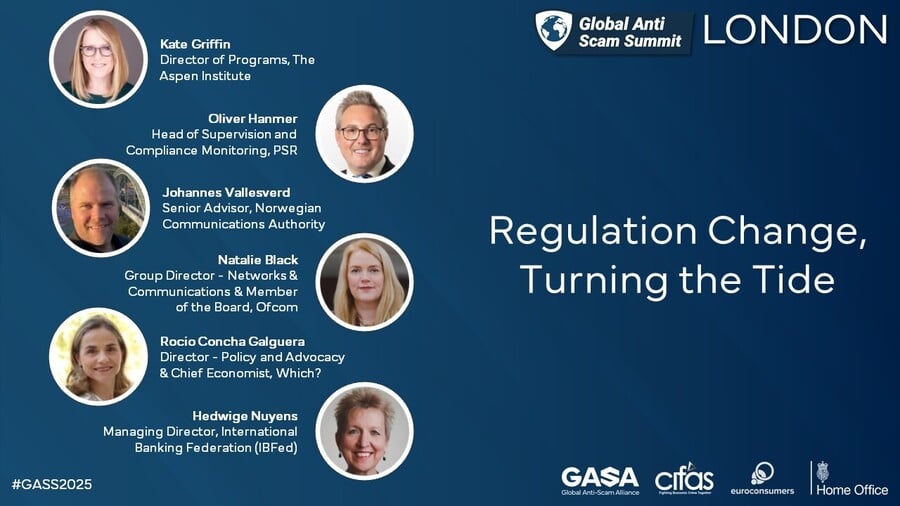
As global scams grow in scale and sophistication, regulators are under pressure to keep pace. In this session, leaders from the UK, Europe, and beyond came together to discuss the regulatory responses now taking shape—and where they must go next.
Kate Griffin, Director of Programs at The Aspen Institute, chaired the discussion and opened by framing the challenge: how can countries with different legal systems establish shared best practices for anti-scam regulation?
Oliver Hanmer, Head of Supervision and Compliance Monitoring at the UK Payment Systems Regulator, outlined two recent interventions: a name-checking system called Confirmation of Payee, and a mandatory reimbursement requirement for scam victims, both designed to balance protection and prevention.
Natalie Black, Group Director - Networks & Communications at Ofcom, spoke about the implementation of the UK’s Online Safety Act and upcoming telecoms-focused regulations. She emphasised the need to break down silos and regulate fraud across digital and telecom channels together.
Rocio Concha Galguera, Director of Policy and Advocacy at Which?, underscored the emotional, economic, and long-term impact of scams on consumers. She stressed the urgency of fully implementing fraud protections, particularly for online ads.
Jean-Jacques Sahel, Director of Government Affairs and Public Policy at Google, argued for fast, cross-border enforcement against transnational criminal networks and outlined a policy framework for industry cooperation, data sharing, and international legal coordination.
Johannes Vallesverd, Senior Advisor at the Norwegian Communications Authority, described Norway’s deployment of a national roaming proxy to stop spoofing, and urged global collaboration to harmonise KYC standards in telecoms and domain registration.
Hedwige Nuyens, Managing Director of the International Banking Federation, highlighted the importance of strong digital identity verification, selective friction in instant payments, and sharing scam typologies without breaching data privacy laws.
Together, the speakers sketched out what a truly effective global regulatory framework might look like—and the concrete actions it requires.
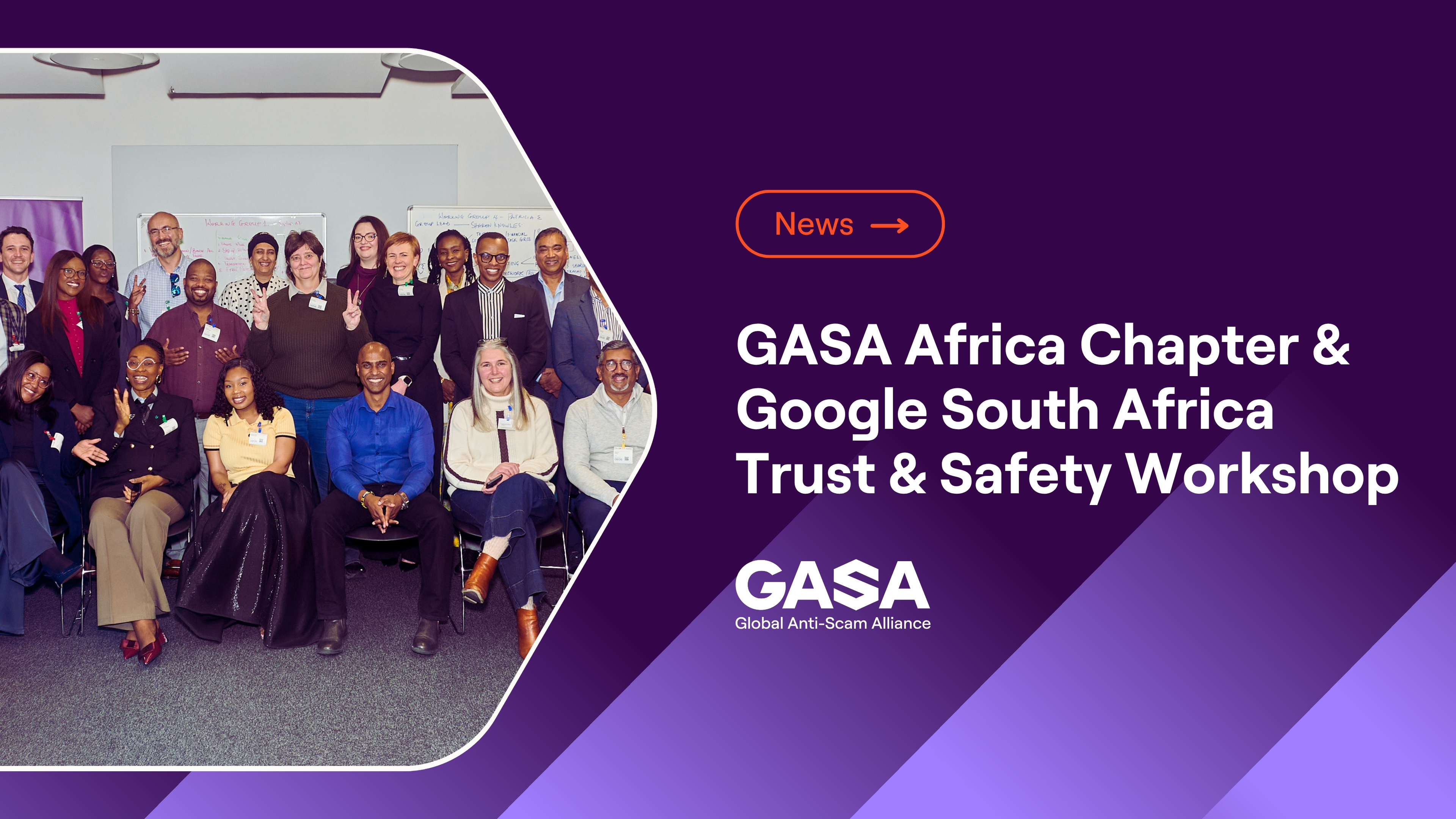
Accra Trust & Safety Workshop Turns Collaboration into Action Against Scams and Fraud in West Africa
GASA Africa Chapter and Google South Africa brought anti-fraud leaders together to strengthen cross-border cooperation and scam prevention.
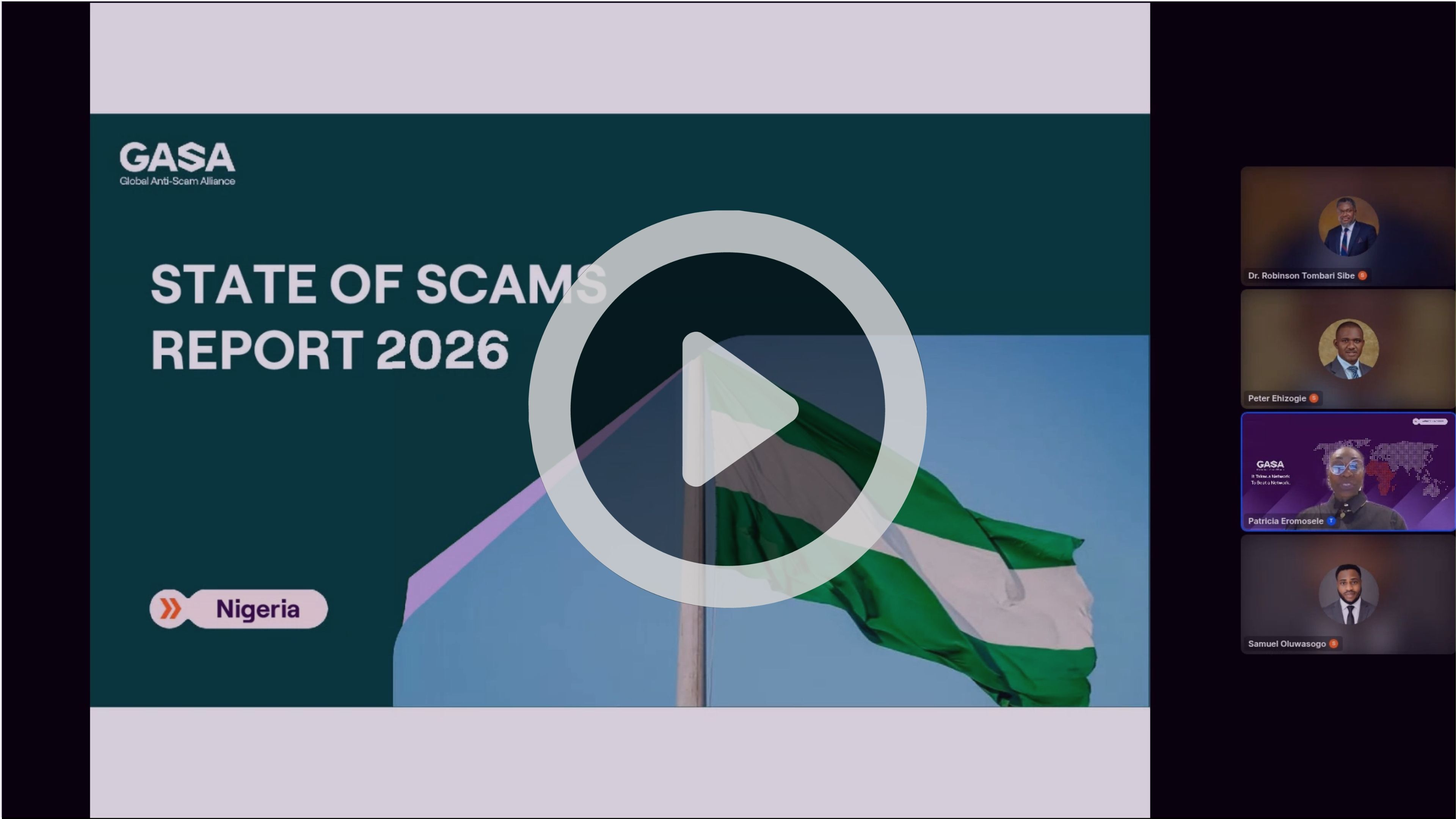
State of Scams in Nigeria 2026: A Comparative Review Across Africa
Nigerian experts examine scam trends, technology, consumer protection and the need for stronger cross-sector collaboration.
Nearly three in four Danish adults encountered scams as estimated losses reach DKK 10.1 billion
New State of Scams Denmark 2026 report finds scam exposure is rising, while victims face repeated financial and emotional harm.
Building a More Trusted Digital Philippines: New Report Underscores the Need for Collective Action as Scam Exposure Continues to Rise
GASA’s State of Scams in the Philippines 2026 Report, in collaboration with Mastercard and Gogolook, highlights the growing scale of the scam challenge in the Philippines.
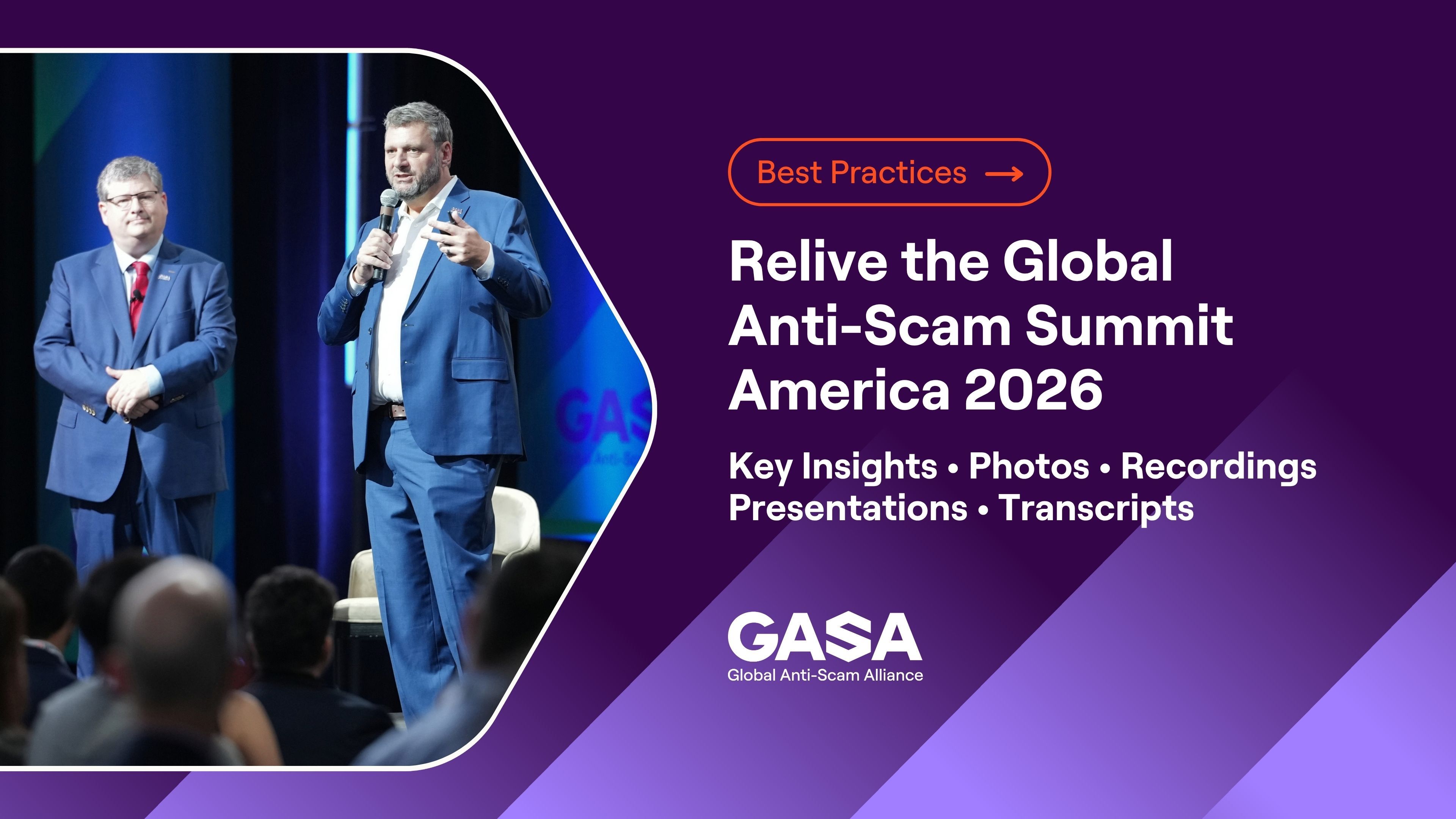
Global Anti-Scam Summit America 2026: Highlights, Insights and Resources
Explore GASS America 2026 highlights and insights, with the Summit summary, photos, presentation slides, transcripts and session recordings from San Francisco.
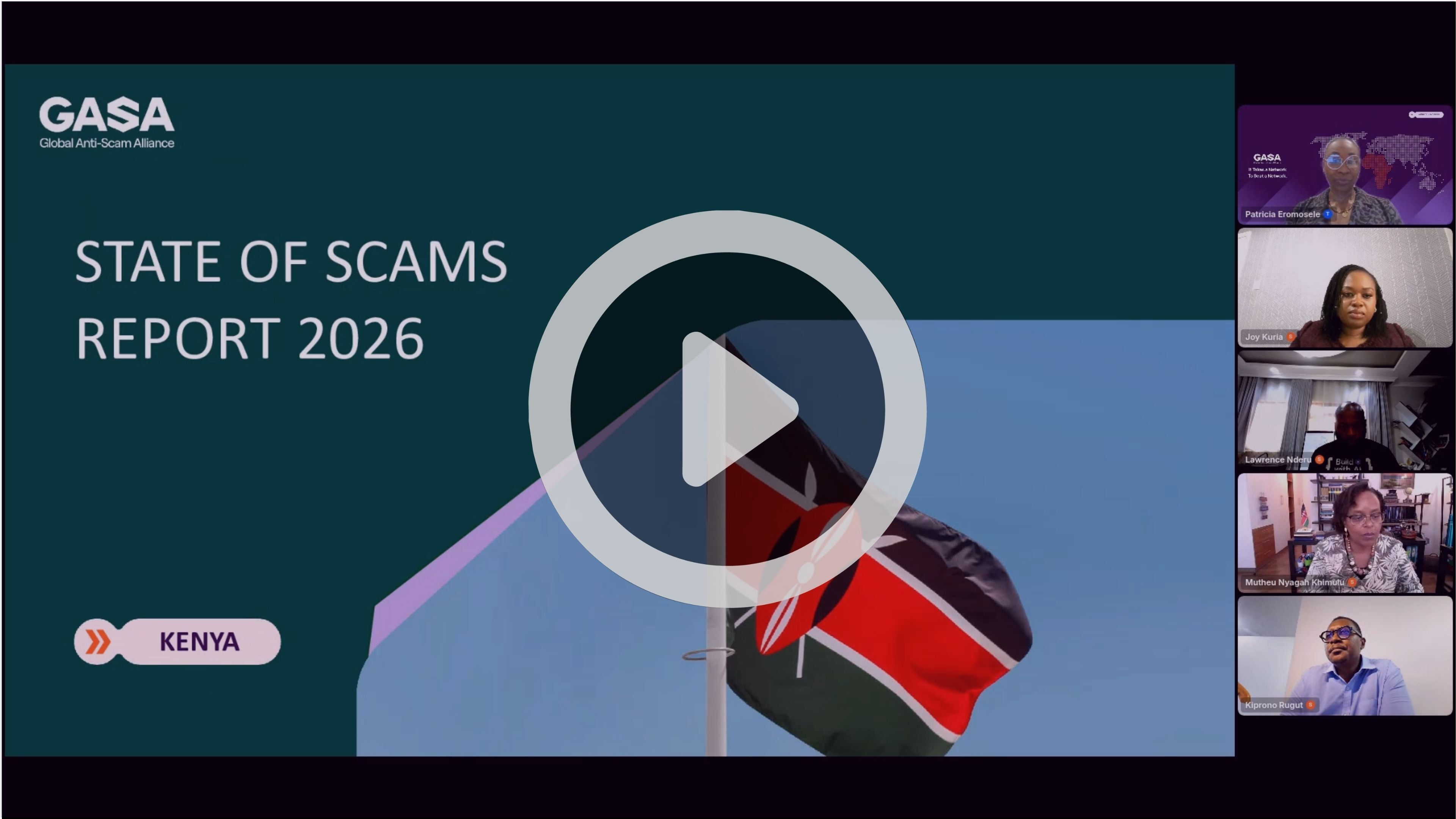
State of Scams in Kenya 2026: A Comparative Review Across Africa
Kenyan experts examine scam trends, data sharing, digital trust and the need for stronger cross-sector prevention.
State of Scams in South Africa 2026: A Comparative Review Across Africa
South African experts examine scam trends, AI, consumer protection and the need for stronger cross-sector collaboration.
-3.jpg)
More than one in five adults in Japan encountered scams in the past year
New State of Scams Japan 2026 report examines how scams are reaching consumers and where stronger prevention and collaboration can make a difference