
 Date of Event: 7 May 2026
Event: GASA Research Working Group Meeting
Fraud against older adults remains one of the most urgent and under-researched challenges in scam prevention. While people of all ages are targeted by scammers, older adults often face more severe financial, emotional and social consequences when fraud occurs. The Research Working Group Meeting brought together GASA members and scientific researchers to examine what current evidence tells us, where gaps remain and how research can better support practical anti-fraud interventions.
The meeting was hosted by the Global Anti-Scam Alliance as part of its Research Working Group, which aims to develop a stronger evidence base for global anti-fraud policy and intervention. The group focuses on improving the collective understanding of fraud through stronger baseline research, structured gap analysis and closer collaboration between academia, industry, law enforcement, policymakers and victim-support organisations.
Speakers:
-
Dr Jack Whittaker, Lecturer in Criminology – University of Surrey
-
Prof. Mark Button, Co-Director of Centre for Cybercrime and Economic Crime – University of Portsmouth
-
Jorij Abraham, Managing Director – Global Anti-Scam Alliance
The session featured a presentation by Prof. Mark Button on his latest research, “What Really Works in Preventing Fraud Against Older Adults”. The discussion built on findings from the study Practitioner Perspectives on What Works in Preventing Fraud Against Older Adults, which gathered insights from frontline professionals including fraud prevention experts, police officers, NGOs, financial professionals and government specialists.
Read the research summary and paper here: What Really Works in Preventing Fraud Against Older Adults? Insights from Frontline Practitioners
The research highlights that fraud prevention is complex, but certain approaches stand out as consistently valuable. Practitioners pointed to the importance of technology that blocks or disrupts scammers before they reach potential victims. Tools such as spam detectors, call-blocking apps, real-time banking alerts and mobile security applications can reduce exposure to scams and help prevent harm before an older adult has to judge whether a message, call or transaction is genuine.
A second major theme was the need for more specific and trusted forms of education. Broad awareness campaigns and generic warnings are often less effective than targeted, practical support. Older adults are more likely to benefit from one-to-one training, community-based sessions, alerts tailored to current scam types and guidance delivered by trusted messengers such as family members, local organisations, police, banks or NGOs.
The meeting also reinforced the importance of intervention by banks and care professionals. Trained bank staff can play a critical role in spotting warning signs such as unusual transactions, rushed transfers or distressed behaviour. Similarly, care workers, nurses, social workers and other frontline professionals may notice early signs of long-running fraud, coercion or emotional manipulation. Their ability to intervene at the right moment can make a major difference in preventing financial loss and further harm.
Another key point was the need for stronger partnerships. Practitioners support collaboration between police, NGOs, banks, technology companies, researchers and public authorities, but many are not aware of existing initiatives or how to engage with them. This points to a wider coordination challenge: promising approaches often exist, but they are not always visible, connected or evaluated in a way that helps others adopt them.
The discussion showed that there is still a significant need for rigorous research into what works in scam prevention. While frontline experience offers valuable direction, more high-quality evaluation is needed to understand which interventions are most effective, for whom and under what conditions. This is especially important as fraud tactics evolve quickly and older adults become increasingly exposed to digital services, online communication and remote transactions.
The Research Working Group aims to help close this gap by connecting researchers with organisations working directly on scam prevention. By bringing together evidence, practical experience and cross-sector collaboration, the group seeks to make research more useful for policy, prevention and victim protection.
Contribute to GASA Working Groups
GASA Working Groups bring members, researchers and experts together to develop practical, real-world solutions to scams. If you are a GASA member and would like to contribute to research, policy development, prevention, intelligence sharing or other anti-scam initiatives, contact the GASA team to get involved.

State of Scams in Kenya 2026: A Comparative Review Across Africa
Kenyan experts examine scam trends, data sharing, digital trust and the need for stronger cross-sector prevention.
State of Scams in South Africa 2026: A Comparative Review Across Africa
South African experts examine scam trends, AI, consumer protection and the need for stronger cross-sector collaboration.
-3.jpg)
More than one in five adults in Japan encountered scams in the past year
New State of Scams Japan 2026 report examines how scams are reaching consumers and where stronger prevention and collaboration can make a difference
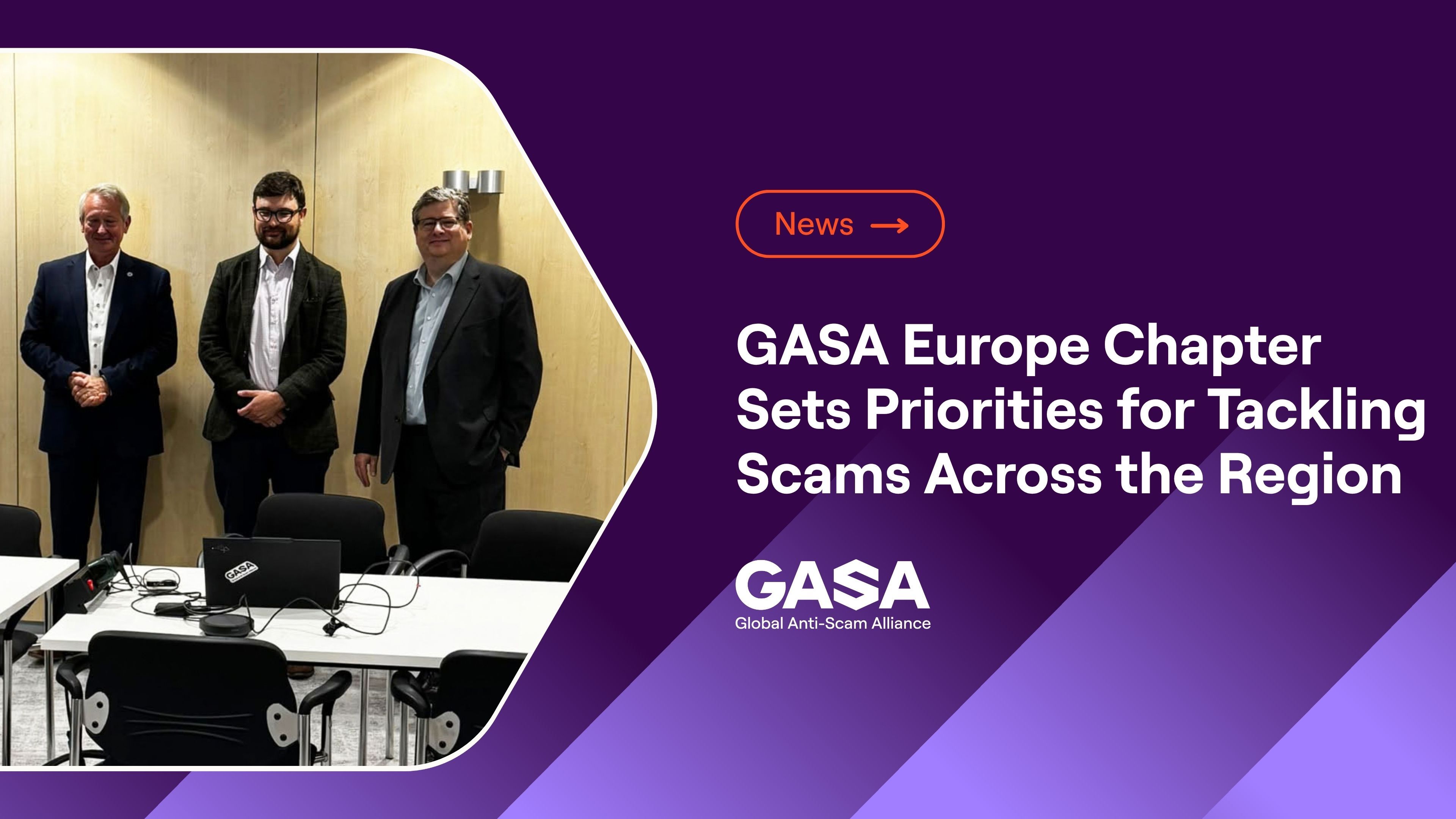
GASA Brings Stakeholders Together in Brussels for First Europe Chapter Meeting
GASA Europe brings 50+ stakeholders together in Brussels to discuss scam trends, data sharing and cross-sector priorities.
Research Working Group Meeting: Fraudulent Tickets and Robocall Scam Tactics
Research presented to GASA examines consumers’ ability to spot fraudulent tickets and tactics found across 4.49 million scam and spam robocalls.
-2.jpg)
Fighting Fraud Without Borders: Cross-Regional Collaboration in Latin America and Beyond
A roundtable at GASS America examined cross-regional collaboration in Latin America and beyond, focusing on fraud prevention, consumer protection and response.
GASA Mexico and the Ministry of Foreign Affairs Hold Working Meeting Ahead of the Chapter’s Annual Forum, “From Coalition to Action”
GASA Mexico and the Ministry of Foreign Affairs convened Mastercard and Scotiabank to discuss fraud, cybersecurity, information sharing and emerging technologies.
GASA Mexico Workshop Examines the Role of Journalism in Digital Scam Prevention
GASA Mexico brought together journalists and editors to discuss digital scams, victim-centred reporting and the role of media in scam prevention.