
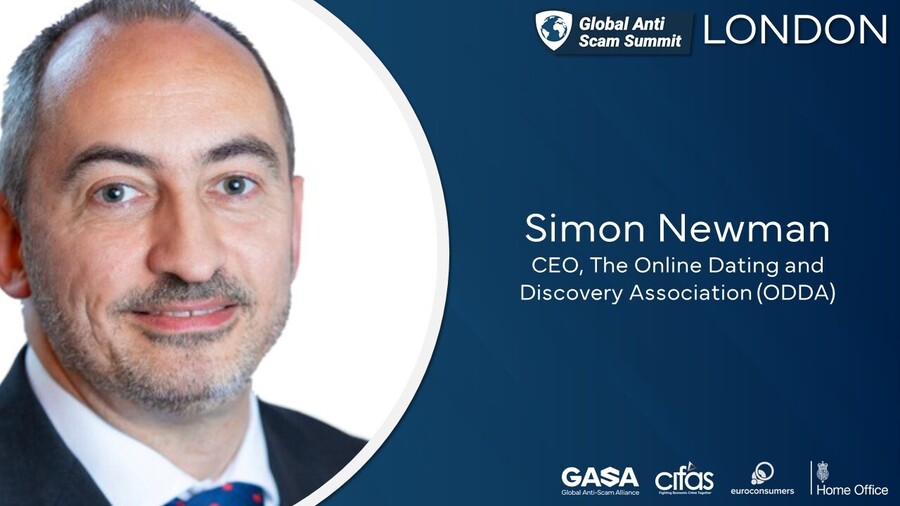
Date of Event: 26–27 March 2025
Event: Global Anti-Scam Summit London 2025
Simon Newman, CEO of the Online Dating and Discovery Association (ODDA), delivered a provocative talk at the Global Anti-Scam Summit London 2025, challenging the current approach to corporate accountability in online fraud. Speaking from his background in government and industry, Newman argued that existing laws and regulatory efforts have failed to stem the growth of scams.
He proposed a more radical solution: introducing corporate liability for scams, similar to corporate manslaughter laws. Companies that show a willful disregard for user safety online should face serious consequences, including criminal charges against executives. He also advocated for better information sharing between industries, the use of real-time scam data, a national-level agency dedicated to tackling scams, and stronger government leadership in fraud prevention efforts.
Newman showcased a pilot project with Scamalytics, where scammer IP addresses were shared across dating platforms to block bad actors across multiple sites. Early results show significant promise for cross-platform collaboration.
Closing his talk, Newman called for bold government action, deeper private sector collaboration, and greater investment in research to build a truly hostile environment for scammers.


Accra Trust & Safety Workshop Turns Collaboration into Action Against Scams and Fraud in West Africa
GASA Africa Chapter and Google South Africa brought anti-fraud leaders together to strengthen cross-border cooperation and scam prevention.
State of Scams in Nigeria 2026: A Comparative Review Across Africa
Nigerian experts examine scam trends, technology, consumer protection and the need for stronger cross-sector collaboration.
Nearly three in four Danish adults encountered scams as estimated losses reach DKK 10.1 billion
New State of Scams Denmark 2026 report finds scam exposure is rising, while victims face repeated financial and emotional harm.
Building a More Trusted Digital Philippines: New Report Underscores the Need for Collective Action as Scam Exposure Continues to Rise
GASA’s State of Scams in the Philippines 2026 Report, in collaboration with Mastercard and Gogolook, highlights the growing scale of the scam challenge in the Philippines.
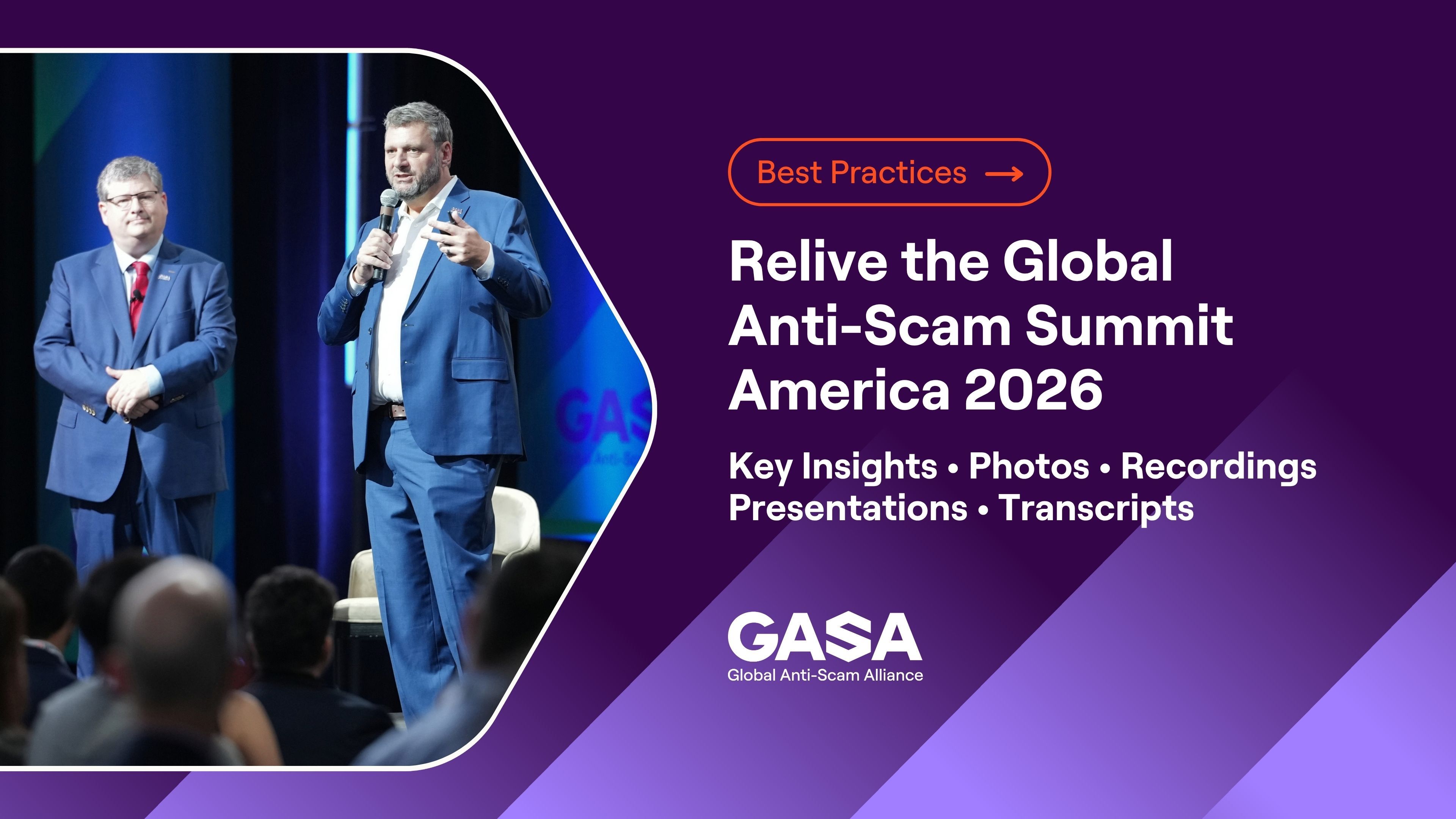
Global Anti-Scam Summit America 2026: Highlights, Insights and Resources
Explore GASS America 2026 highlights and insights, with the Summit summary, photos, presentation slides, transcripts and session recordings from San Francisco.
State of Scams in Kenya 2026: A Comparative Review Across Africa
Kenyan experts examine scam trends, data sharing, digital trust and the need for stronger cross-sector prevention.
State of Scams in South Africa 2026: A Comparative Review Across Africa
South African experts examine scam trends, AI, consumer protection and the need for stronger cross-sector collaboration.
-3.jpg)
More than one in five adults in Japan encountered scams in the past year
New State of Scams Japan 2026 report examines how scams are reaching consumers and where stronger prevention and collaboration can make a difference