
Fraud and scams are among the most significant and fastest-growing forms of crime worldwide. The Global Anti-Scam Alliance (GASA) works in close partnership with leaders from across industry, government, regulators, law enforcement and civil society to strengthen the global response.
The Global State of Scams Report 2025 estimates that $442 billion was lost to scams across the 42 countries surveyed, with 23% of 46,000 individuals reporting that they lost money to scams in the past year. These losses represent not only financial harm but also a broader erosion of trust in digital systems, institutions and cross-border commerce. Fraud and scams now represent the single largest category of crime globally and require a response that goes beyond traditional law enforcement and government action. A coordinated effort with private industry is essential to deliver a technologically sophisticated response to this growing threat.
GASA will continue to convene the global counter-scam community as we intensify efforts to address the risks scams pose to societies and economies worldwide.
The Nature of the Scam Threat
Fraud and scams are fundamentally crimes built on the abuse of trust. Criminals exploit communications technologies to deceive individuals and extract money through manipulation and deception.
As global efforts to combat scams evolve, criminal groups continue to adapt rapidly. Increasingly sophisticated methods, including the use of AI and other emerging technologies, allow criminals to operate at scale and with greater precision. The global response must therefore innovate and intensify in parallel to reduce victimisation and make scams less attractive and less profitable for criminals.
Scams are highly diverse in their methods and frequently linked to wider transnational organised crime networks. These activities often intersect with human trafficking, drug trafficking, cybercrime and complex money laundering operations.
A particularly harmful element of scams is the manipulation of victims themselves. Criminals often groom or psychologically pressure individuals into participating in the process, which can lead victims to blame themselves for the crime. This significantly compounds the harm caused and reduces reporting rates.
Because scams typically span multiple platforms, sectors and jurisdictions, no single organisation has full visibility of the attack chain. Effective prevention therefore requires coordinated collaboration across sectors, with actors sharing intelligence and working collectively to disrupt criminal activity.
Consumer Education
Consumer awareness remains an important part of any counter-scam strategy. Public authorities, industry and civil society must communicate with consumers in ways that are coherent, consistent and evidence based.
The goal is to identify what approaches are most effective in educating the public and helping individuals recognise scam attempts. This includes developing targeted communications and practical materials for groups that may be particularly vulnerable, including older adults, children and other at-risk populations.
While education alone cannot prevent all scams, it plays a critical role in enabling people to detect suspicious activity, understand how to report scam attempts and limit the damage when incidents occur. Strong consumer education also supports broader societal awareness of the scale and impact of scams.
Intelligence Sharing
Effective disruption of scams requires organisations to share threat intelligence. This includes sharing signals about emerging threats, information on threat actors, details of victimisation patterns and insights into scam methodologies.
Because scams typically unfold across multiple platforms and jurisdictions, individual companies often see only fragments of the attack chain. Joining these fragments together is essential to building a more complete understanding of the threat.
However, several barriers continue to limit intelligence sharing. These include restrictive legal frameworks, the absence of interoperable technical solutions, organisational concerns about risk and liability and insufficient prioritisation.
There are already examples of successful intelligence sharing initiatives in several jurisdictions. One example is the Global Signal Exchange , co-founded by GASA. Rather than building competing platforms, efforts in this space should focus on improving interoperability, addressing legal barriers and creating incentives for proactive collaboration.
Prevention and Intervention
Reducing the profitability of scams is one of the most effective ways to disrupt criminal activity.
This requires organisations across sectors to take proactive steps to prevent scams before they occur. Key priorities include limiting criminals’ ability to contact victims at scale, strengthening identity verification and improving the ability of platforms and services to detect suspicious behaviour.
Industry partners can also strengthen systems that allow consumers to report suspected scams quickly and easily.
A comprehensive prevention strategy must also anticipate how criminals may adapt when existing methods become less effective. Continuous monitoring and forward-looking responses are essential to stay ahead of evolving tactics.
Enforcement
The covert and deceptive nature of scams makes them particularly challenging to investigate and prosecute.
Offenders are often located in different jurisdictions from their victims, and the technological and financial complexity of many scams can make investigations resource intensive. As a result, only a very small proportion of fraud cases ultimately lead to prosecution or conviction.
This limited level of enforcement contributes to the attractiveness of scams as a criminal activity.
Improving outcomes requires stronger collaboration between industry, law enforcement and regulatory actors. This includes building operational networks, improving visibility of threat trends and supporting initiatives such as the creation of National Anti-Scam Centres .
Research
Despite the scale of the problem, significant gaps remain in understanding how scams are carried out and how criminal networks operate.
Information often exists in fragmented silos across different organisations. Bridging these gaps is essential for developing effective responses.
GASA will continue to build on its Global State of Scams research by linking together research initiatives and improving how findings are shared across the counter-fraud ecosystem. This includes strengthening collaboration between academic researchers, civil society organisations, governments and industry partners.
Research must be data driven, practical and designed to support real-world prevention and disruption efforts.
Finance
Removing criminals’ ability to profit from scams is central to reducing the incentives for fraud.
Financial systems play a critical role in detecting and disrupting criminal proceeds. This includes tackling money mule networks, improving cross-border payment monitoring and strengthening processes for repatriating stolen funds.
Closer collaboration is also needed between the counter-fraud community and the wider anti-money laundering ecosystem. This includes improving coordination between traditional financial institutions and emerging financial technologies.
Partnerships with organisations such as the International Banking Federation and ACAMS will remain important in strengthening the financial response to scams globally.
Strengthening the Global Response to Scams
Scams continue to evolve rapidly and exploit the interconnected nature of the digital economy. Addressing this threat requires sustained collaboration across sectors, jurisdictions and disciplines.
Through its working groups and global partnerships, GASA aims to strengthen the collective response to scams by identifying best practices, promoting intelligence sharing and supporting practical interventions across the scam attack chain.
The initiatives outlined in this policy agenda represent a statement of intent for the year ahead and reflect the need for coordinated action to reduce the global impact of scams.
Sign up to the GASA newsletter for regular updates on scam prevention, research, and best practices.
About the Author
Andrei Skorobogatov is Director of Policy at the Global Anti-Scam Alliance (GASA), where he leads the organisation’s global policy agenda and engagement with governments, regulators and multilateral institutions. Prior to joining GASA, he served for nine years in the UK Government, including as Head of Strategy and International Fraud Policy at the Home Office, shaping national and international approaches to fraud prevention.


Accra Trust & Safety Workshop Turns Collaboration into Action Against Scams and Fraud in West Africa
GASA Africa Chapter and Google South Africa brought anti-fraud leaders together to strengthen cross-border cooperation and scam prevention.
State of Scams in Nigeria 2026: A Comparative Review Across Africa
Nigerian experts examine scam trends, technology, consumer protection and the need for stronger cross-sector collaboration.
Nearly three in four Danish adults encountered scams as estimated losses reach DKK 10.1 billion
New State of Scams Denmark 2026 report finds scam exposure is rising, while victims face repeated financial and emotional harm.
Building a More Trusted Digital Philippines: New Report Underscores the Need for Collective Action as Scam Exposure Continues to Rise
GASA’s State of Scams in the Philippines 2026 Report, in collaboration with Mastercard and Gogolook, highlights the growing scale of the scam challenge in the Philippines.
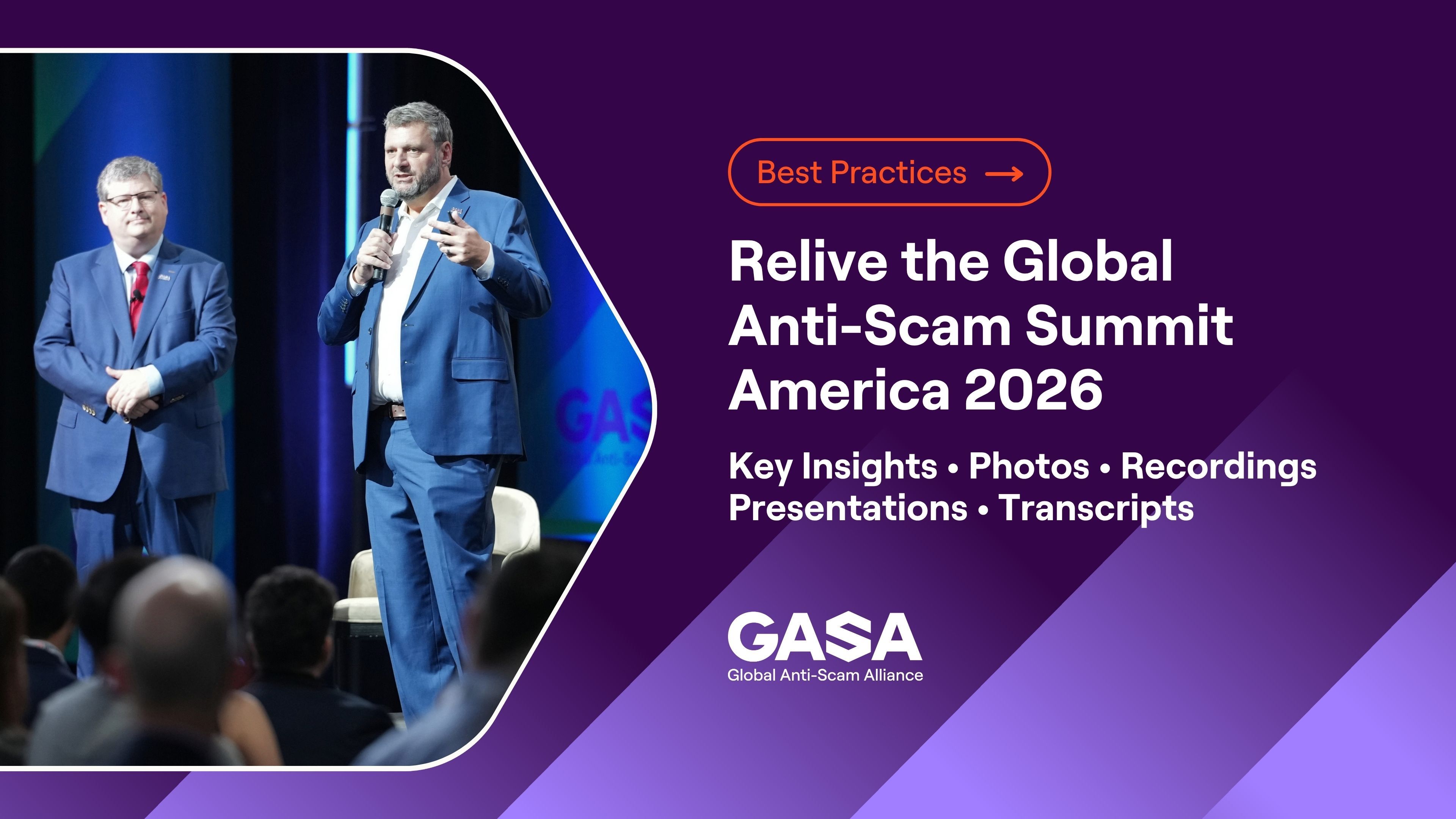
Global Anti-Scam Summit America 2026: Highlights, Insights and Resources
Explore GASS America 2026 highlights and insights, with the Summit summary, photos, presentation slides, transcripts and session recordings from San Francisco.
State of Scams in Kenya 2026: A Comparative Review Across Africa
Kenyan experts examine scam trends, data sharing, digital trust and the need for stronger cross-sector prevention.
State of Scams in South Africa 2026: A Comparative Review Across Africa
South African experts examine scam trends, AI, consumer protection and the need for stronger cross-sector collaboration.
-3.jpg)
More than one in five adults in Japan encountered scams in the past year
New State of Scams Japan 2026 report examines how scams are reaching consumers and where stronger prevention and collaboration can make a difference