
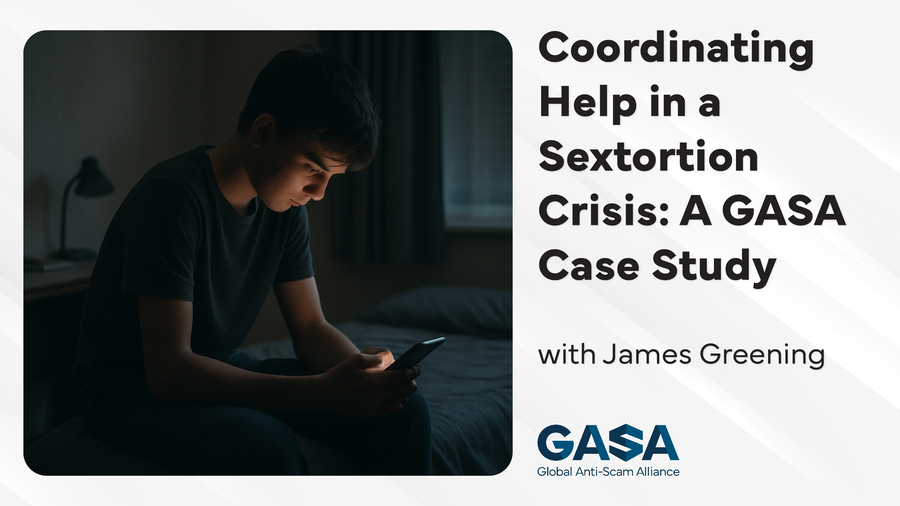
In early 2024, the Internet Watch Foundation (IWF) reported a 25% rise in sextortion cases involving children aged 14–15 compared to the same period the previous year. A March 2024 study by Snap Inc. in India revealed that 71% of Gen Z individuals were targeted , and 55% fell victim —most of them between the ages of 13 and 17.
While public awareness campaigns are increasing, too many victims—especially minors—still have nowhere to turn. Recently, one such victim reached out directly to GASA.
A 15-year-old boy contacted GASA, explaining that a scammer had threatened to distribute fake, explicit images that looked like him. The criminal had his phone number and was threatening to send the images to his contacts. He was terrified and asked for urgent help.
The message that came through GASA’s website contact form was written in broken English, but the fear was clear. A teenage boy, alone, being threatened with fabricated images and fearing exposure to his entire network.
GASA responded by engaging anti-sextortion expert Paul Raffile , who has spoken on the subject at both the Global Anti-Scam Summit Americas 2024 and the Global Anti-Scam Summit London 2025 .
Responding Effectively: Expert Advice
Paul’s guidance included a series of trauma-informed, high-impact steps—many of which can serve as best practice for any organisation confronted with a similar case. The advice was relayed confidentially to the victim—quickly, clearly, and without judgment.
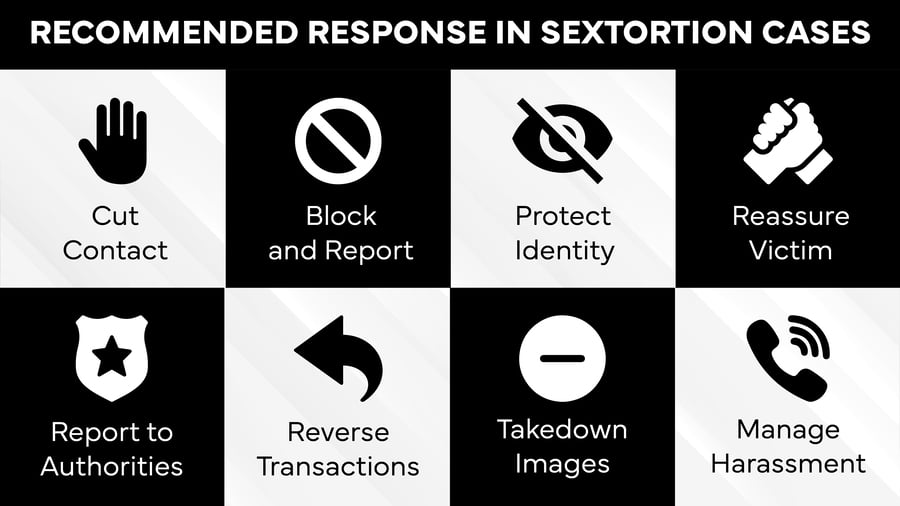
Cease all communication with the scammer. No replies, no negotiation. Every response gives the perpetrator more leverage. Silence is the most effective way to reduce their power.
Block and report across all platforms. Snapchat, Instagram, TikTok, WhatsApp—block the account and report it through the platform’s abuse function.
Protect digital identity. Victims should either deactivate all accounts temporarily or change usernames, display names, and profile photos. This limits the scammer’s ability to track or harass them.
Use image takedown tools. If the victim has access to the fake images, they can use the Take It Down service from NCMEC. The tool hashes the images and distributes these digital fingerprints to major platforms to prevent future uploads—without ever storing the images themselves.
Reassure the victim. Leak threats are typically bluffs. As Paul notes, “Scammers rarely follow through—it damages their business and gets them banned.” Panic is the scammer’s weapon. Reassurance is critical.
Report to authorities. In the U.S., this includes IC3.gov , FBI.gov/tips , and CyberTipline.org for cases involving minors. Local cybercrime agencies should be used in other countries.
Reverse financial transactions. If money has been sent, victims should report it to their bank or the payment platform. Reversals are often possible, and the scammer is unlikely to know that it was initiated.
Manage phone harassment. iPhone users can enable Filter Unknown Senders to suppress messages from unrecognised numbers. If harassment continues, changing the phone number is often easy and effective.
Lessons for the Broader Ecosystem
This case demonstrates the value of a connected, expert-driven response. The victim did not reach a platform or police agency—he reached GASA. In turn, GASA activated its expert network and worked with sextortion specialist Paul Raffile to provide timely, confidential guidance.
It reveals the wider gaps that still leave young victims vulnerable. Many don’t know where to turn. They’re scared to report. And in some regions, the necessary tools—like takedown services, escalation paths, or victim support protocols—may not even exist.
At GASA, we are committed to:
Advocating for better education around online abuse and sextortion
Promoting cross-sector collaboration between NGOs, platforms, and enforcement
Surfacing expert-informed responses that can be scaled and shared
Building trusted networks so that no victim’s cry for help goes unheard
As sextortion scams grow more sophisticated, so too must our collective response—faster, smarter, and more compassionate.
About the Author
James Greening , operating under a pseudonym, brings a wealth of experience to his role. Formerly the sole driving force behind Fake Website Buster, James leverages his expertise to raise awareness about online scams. He currently serves as a Content Marketing & Design Specialist for the Global Anti-Scam Alliance (GASA).
James’s mission aligns with GASA’s mission to protect consumers worldwide from scams. He is committed to empowering professionals with the insights necessary to detect and mitigate online scams, ensuring the security and integrity of their operations and digital ecosystems.

BanCoppel joins the Global Anti-Scam Alliance to bolster fraud prevention and safeguard individuals entering the banking system.
BanCoppel has joined the Global Anti-Scam Alliance (GASA) as a Corporate Member of the GASA Mexico Chapter.
The emotions scammers exploit: how social engineering influences our decisions
How scammers use fear, urgency, excitement and trust to influence decisions, and how recognising these tactics can help people prevent fraud.

Global Anti-Scam Alliance Welcomes Mastercard as Founding Member of Its Mexico Chapter
The Global Anti-Scam Alliance (GASA) announces the membership of Mastercard as a Member of its Mexico Chapter.

What Uganda’s IVR Trial Shows About Practice-Based Scam Prevention
A Uganda IVR trial shows how practice-based fraud prevention helped mobile money users reduce losses and increase reporting.
FTC’s Never EVER Campaign Helps Prevent Elder Financial Abuse With Simple, Specific Scam Warnings
The FTC’s Never EVER campaign uses simple, specific imposter scam warnings to help prevent elder financial abuse and support coordinated consumer education.
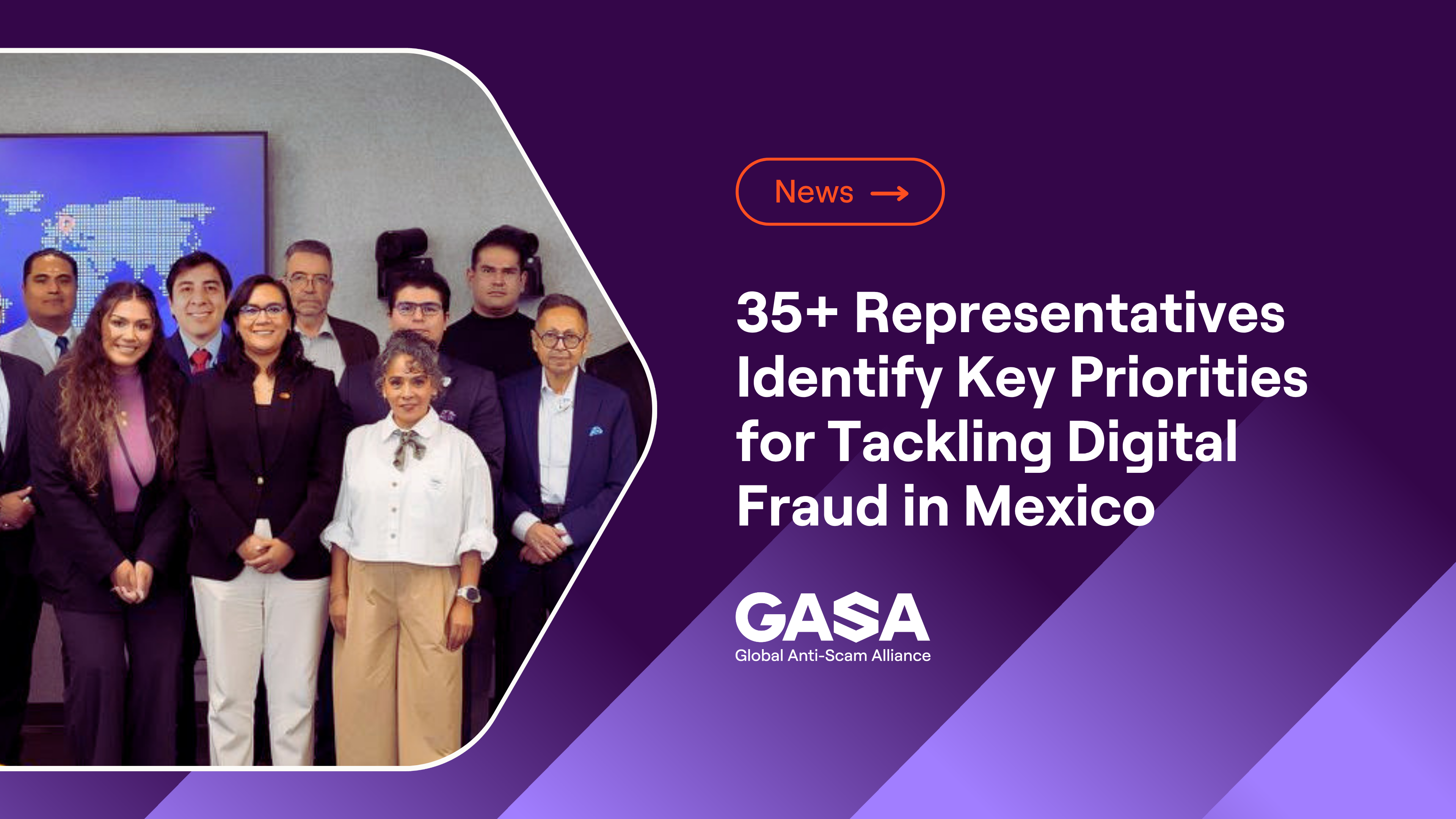
GASA Mexico's Second Roundtable Advances Coordinated Action Against Digital Fraud
GASA Mexico's second roundtable brought together more than 35 representatives to strengthen coordination across cybersecurity, fraud prevention and other sectors.

Cognyte Joins Global Anti-Scam Alliance to Fight Financial Fraud Threats
Cognyte, a global leader in investigative analytics software, today announced its membership in the Global Anti-Scam Alliance (GASA).
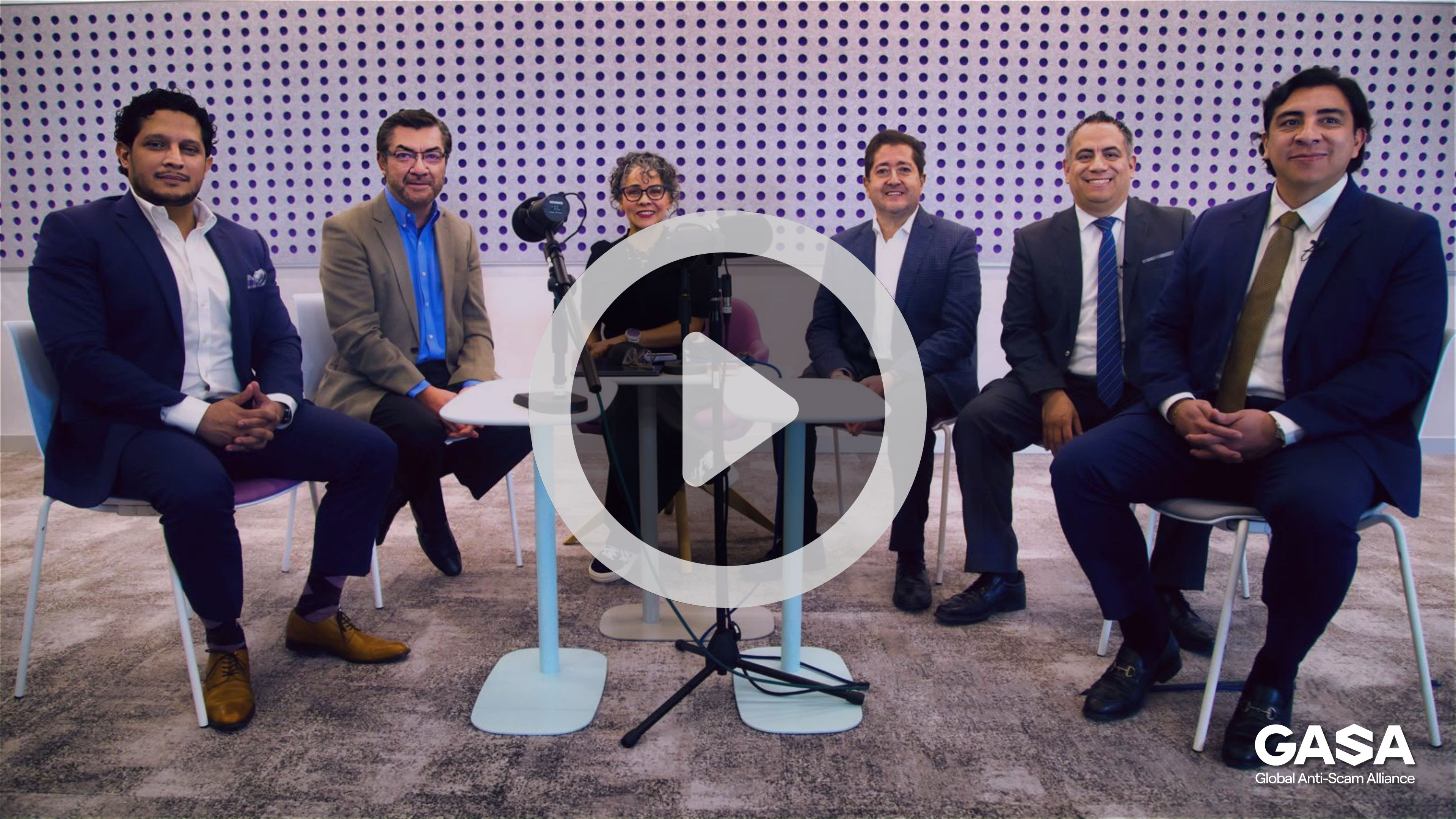
A network is beaten by a network: Mexico's banks move from remediation to prevention
GASA convened the ABM Fraud Committee and Mexican banks to advance the enriched agreement and strengthen coordinated fraud prevention across the sector.