
Fraud has quietly become the UK’s most common crime, now making up nearly 40% of all offences. And while people of all ages are targeted, older adults face some of the most severe consequences — losing more money, suffering greater emotional distress, and often receiving the least support. Yet despite the scale of the problem, there is still surprisingly little solid evidence about what truly works to prevent scams.
A recent study, Practitioner Perspectives on What Works in Preventing Fraud Against Older Adults, set out to bridge that gap by asking the people closest to the issue – fraud prevention experts, police officers, NGOs, financial professionals, and government specialists – what they believe is most effective in protecting older adults. Drawing on interviews with 17 practitioners and survey responses from over 300 professionals, the study offers a rare, practice-based insight into what works, what doesn’t, and where efforts should shift.
The findings show that while fraud prevention is complex, certain strategies stand out as consistently effective.
1. Tech That Blocks Scammers Before They Reach the Door
One message came through loud and clear: technology that disrupts scammer communication works.
Tools like spam detectors, call‑blocking apps, and real‑time banking alerts were viewed as some of the most effective ways to prevent fraud. These tools intervene early — often before an older adult even realises a scam attempt has occurred.
Practitioners noted that:
-
Real‑time transaction alerts help people spot unexpected withdrawals or suspicious activity.
-
Call‑blocking tools reduce exposure to phone‑based scams, which remain a key method used against older adults.
-
Mobile apps that combine multiple features — such as scam call blocking, malware detection, and transaction monitoring — are becoming especially valuable.
The benefit of these tools is simple: they reduce the need for individuals to evaluate whether a message, call, or alert is genuine. In a landscape where scams look increasingly convincing, this barrier is essential.
2. Education Works — But Only When It’s Specific
Mass advertising campaigns and generic warnings don’t significantly reduce fraud. Practitioners overwhelmingly agreed that education only works when it’s highly targeted.
The most effective approaches include:
- Personalised, one‑to‑one training
- Alerts tailored specifically for older adults
- Campaigns focused on emerging scam types
- Community‑based talks where people can ask questions and share experiences
What doesn’t work?
Broad “be aware of scams” campaigns, phishing tests that shame participants, and generic websites that overwhelm with information.
Crucially, older adults respond best when the messenger is someone they trust — family members, community organisations, police, or dedicated NGOs.
3. Banks and Care Professionals Are on the Front Line
The single most effective fraud‑prevention method identified in the study was intervention by trained bank staff. When employees recognise the signs of active fraud — a rushed transfer, unusual behaviour, a distressed customer — they can step in and prevent losses.
Similarly, care professionals, from nurses to social workers, often spot early warning signs that family or friends might miss. Their intervention can stop fraud in its early stages, especially in cases of long‑running scams or coercion.
Data analytics, account‑level risk flags, and behaviour‑based alerts further strengthen banks’ ability to detect suspicious transactions before they escalate.
4. Partnerships Are Powerful — But Not Yet Visible
Practitioners strongly support national and local partnerships across police, NGOs, banks, and tech companies. Yet surprisingly, most said they weren’t aware of existing collaborations.
The desire for coordinated, well‑funded, visible partnerships is clear. Professionals want structured networks where:
- New technology can be tested and rolled out
- Community support can be scaled
- Public awareness campaigns can align
- Innovations can be evaluated and shared
Without coordination, promising approaches remain isolated and underused.
Why This Matters
Fraud is evolving quickly, and older adults are increasingly exposed as they use more digital services. While there is still a lack of rigorous scientific trials, insights from those on the ground offer valuable direction.
- This research suggests the future of effective fraud prevention lies in:
- Smarter technology that blocks scams automatically
- Personalised, trusted education
- Strong intervention roles for banks and care professionals
- Better‑coordinated nationwide partnerships
And while more high‑quality evaluation is badly needed, these practitioner insights offer a meaningful starting point — evidence‑informed strategies that can be put into practice now to help protect older adults from one of today’s most pervasive crimes.
The full article can be read at Button, M., Karagiannopoulos, V., Shepherd, D., Kirby, A., Lee, J., Suh, J. B., ... & Koh, C. S. (2026). Practitioner Perspectives on What Works in Preventing Fraud Against Older Adults. Journal of Economic Criminology, 100213. https://www.sciencedirect.com/science/article/pii/S2949791426000084
About the Author
Professor Mark Button is Professor of Criminology and Director of the Centre for Cybercrime and Economic Crime at the University of Portsmouth. His work focuses on fraud, cybercrime, and economic crime prevention, with a particular interest in the role of non-state actors in policing and security.

Appeals Centre Europe Report Points to Gaps in Social Media Scam Moderation
Appeals Centre Europe’s Transparency Report, covering April 2025 to March 2026, highlights early fraud and scam dispute findings relevant to social media moderation and scam prevention.
Protecting Seniors and Vulnerable Communities from Fraud
Experts from financial services, internet safety and policy explore how families, banks and communities can better protect vulnerable groups from fraud.
Fenasbac and GASA Report Outlines a Cross-Sector Response to Digital Scams in Brazil
Fenasbac and GASA’s Brazil Blueprint examines how finance, telecoms, technology and regulators can share intelligence to strengthen protection against digital scams.

Bitdefender Report Reveals How Scams Operate Across Digital Channels
Bitdefender’s Global Scam Intelligence Report 2026 shows how organised scam campaigns move across advertising, websites, SMS, messaging apps and voice calls to exploit trust at scale.
Beyond Compliance: Why Organisational Accountability is Critical for Consumer Protection
How the NDPC-Meta initiative could strengthen data protection, organisational accountability, scam prevention and consumer trust across Nigeria’s digital economy.
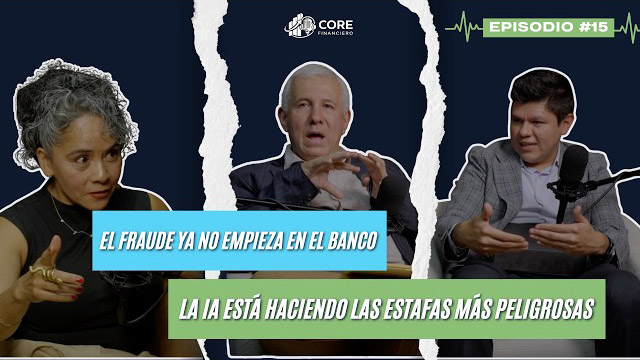
Why Mexico’s Anti-Scam Response Needs Cross-Sector Coordination
GASA Mexico Chapter's Sissi De la Pena explains why scam prevention in Mexico requires stronger coordination across finance, telecoms, platforms, government and civil society.
GASA Mexico Shares Scam Prevention Tips During the 2026 FIFA World Cup
GASA Mexico shares practical advice for football fans on avoiding ticketing, travel, phishing and payment scams during the 2026 FIFA World Cup.

Watch the Global Anti-Scam Summit Europe 2026 Session Recordings
Watch keynotes, panels, workshops, working group sessions and Scam Fighter Awards recordings from the Global Anti-Scam Summit Europe 2026 in Lisbon.