
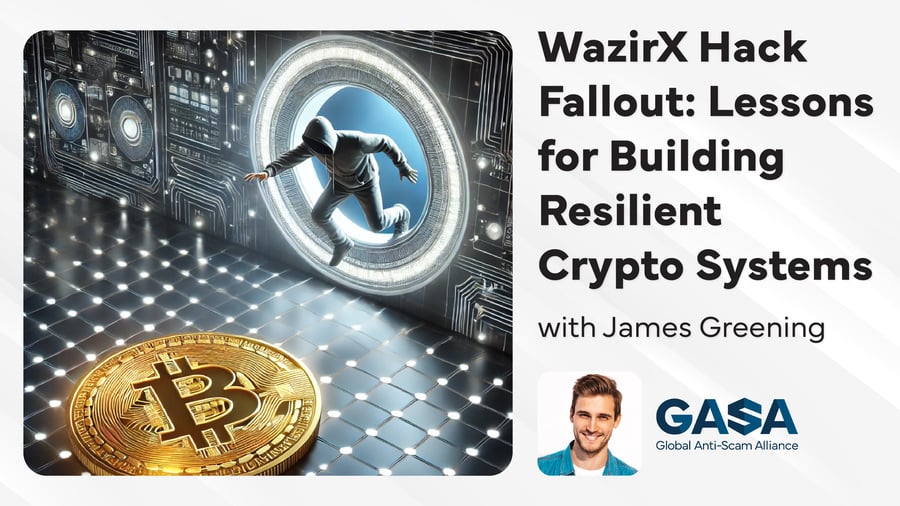
On July 18, 2024, the Indian cryptocurrency exchange WazirX suffered a devastating security breach that resulted in the theft of approximately USD 230 million worth of digital assets . This incident has sent shockwaves through the crypto community and raised significant concerns about the security measures employed by exchanges. The hack has not only impacted WazirX and its users but has also prompted a broader examination of cybersecurity practices in the cryptocurrency industry. This article delves into the details of the hack, its impact on the crypto markets, and the lessons it holds for anti-scam and anti-fraud experts.
WazirX Hack: What Happened?
WazirX, India's largest cryptocurrency exchange with over 16 million users, reported that one of its multisig wallets had been compromised . A multisig wallet requires multiple signatures to authorise a transaction, a security measure intended to prevent unauthorised access. Despite these precautions, the attacker managed to drain significant amounts of various cryptocurrencies, including USD 102.1 million in Shiba Inu (SHIB) tokens, USD 52.6 million in Ether (ETH), USD 11 million in Matic (MATIC), and USD 7.6 million in Pepe (PEPE).

The breach occurred due to a discrepancy between the data displayed on Liminal Custody's digital interface and the actual transaction contents. This discrepancy allowed the attackers to manipulate the system in the following ways:
Data Mismatch : The information shown on Liminal Custody's interface did not accurately reflect the actual transactions taking place. This means that the displayed transaction details, such as amounts, recipient addresses, or authorization statuses, were different from what was being executed on the blockchain.
False Information : By exploiting this discrepancy, attackers could present false information to users and administrators. For example, a transaction might appear to be a legitimate transfer of funds between authorised accounts, while in reality, it was directing funds to an attacker-controlled address.
Payload Manipulation : The attackers likely manipulated the payload, which is the data that gets signed in a transaction. This manipulation could involve altering critical transaction details after the initial user review but before the final execution. Since multisig wallets require multiple approvals, the attackers might have shown a benign transaction for approval but altered it to a malicious one at the execution stage.
Liminal Custody, responsible for the wallet's security, denied any breach of its infrastructure, stating that the malicious payloads were injected through three compromised devices at WazirX’s end.
Speculation of North Korean Involvement
Adding to the complexity of the situation, there has been speculation that the hack might have been orchestrated by North Korean hackers. Crypto researcher ZachXBT on X suggested that the techniques used in the WazirX hack bear similarities to those employed by the infamous Lazarus Group, a North Korean state-sponsored hacking organisation known for targeting cryptocurrency exchanges. If confirmed, this would mark another significant cyber-heist attributed to North Korea, which has reportedly used such attacks to circumvent international sanctions and fund its activities.
Impact on Crypto Markets
The immediate aftermath of the hack saw significant disruptions in the crypto markets. The stolen funds represented more than 45% of WazirX's total reserves, leading to a liquidity crisis. As a result, most cryptocurrencies, including market leaders Bitcoin (BTC) and Tether (USDT), traded at substantial discounts on WazirX compared to other exchanges. For instance, the BTC/INR pair on WazirX was priced at INR 5.1 million (USD 60,945), while it traded at INR 5.7 million on CoinDCX.
The exchange's native token, WRX, suffered a steep decline, trading 15% lower in USD terms and over 25% lower in INR terms. SHIB also saw a significant drop in value as the attacker liquidated the stolen tokens, putting downward pressure on its market price. This panic selling and rush for fiat/cash exposed the vulnerability of centralised exchanges to such attacks and demonstrated the cascading effects on market stability.
Lessons for Cybersecurity
The WazirX hack underscores the critical importance of robust cybersecurity measures in the cryptocurrency industry.

Here are key takeaways for cybersecurity professionals, anti-scam investigators, and fraud prevention experts:
Multi-layered Security: While multisig wallets are a robust security measure, they are not infallible. This incident underscores the need for multi-layered security approaches, including stringent verification processes and real-time monitoring of transactions.
Phishing and Social Engineering: The use of deceptive phishing smart contracts to manipulate the multisig process underscores the ongoing threat of social engineering attacks. Education and awareness programs for employees and users are crucial to mitigate these risks.
Incident Response Plans: The slow response and lack of immediate transparency from WazirX exacerbated the situation. Exchanges must have well-defined incident response plans, including clear communication strategies to maintain user trust and minimise panic.
Collaboration with Authorities: WazirX's engagement with the Indian Computer Emergency Response Team (CERT-In) and other government agencies is a positive step. Collaboration with regulatory and law enforcement agencies is essential for effective incident resolution and recovery.
Trends and Future Directions
The WazirX hack is part of a broader trend of increasing sophistication in cyberattacks targeting the cryptocurrency sector. According to a Chainalysis report , attackers stole USD 1.7 billion from crypto platforms in 2023, with a significant increase in the number of attacks year-on-year. As crypto prices rise, so does the incentive for hackers, necessitating continuous innovation in security practices.
Emerging Trends in Cybersecurity and Crypto
Increased Regulation: The Indian government and other regulatory bodies worldwide are likely to impose stricter regulations on cryptocurrency exchanges. These regulations will focus on security standards, risk management, and consumer protection to safeguard user funds.
Adoption of Decentralised Exchanges (DEXs): The vulnerabilities of centralised exchanges may drive users towards decentralised exchanges, which offer greater security through decentralised protocols. However, DEXs are not immune to hacks and require their own set of security measures.
Enhanced Security Protocols: The industry is expected to see the adoption of advanced security technologies, such as multi-factor authentication, biometric verification, and AI-based threat detection. Continuous investment in security infrastructure will be crucial to staying ahead of evolving threats.
Collaborative Defence Initiatives: The establishment of industry-wide collaborative defence initiatives, such as information-sharing networks and joint cybersecurity task forces, can enhance the collective ability to detect and respond to threats.
Conclusion
The WazirX hack serves as a stark reminder of the challenges and risks inherent in the cryptocurrency industry. For security professionals and industry stakeholders, it highlights the need for robust, multi-layered security measures and proactive incident response strategies. As the industry continues to evolve, collaboration between exchanges, regulatory bodies, and cybersecurity experts will be key to building a safer and more resilient ecosystem. The lessons learned from this incident must drive ongoing efforts to protect digital assets and maintain user trust in the rapidly growing world of cryptocurrency.
About the Author
James Greening , operating under a pseudonym, brings a wealth of experience to his role. Formerly the sole driving force behind Fake Website Buster, James leverages his expertise to raise awareness about online scams. He currently serves as a Content Marketing & Design Specialist for the Global Anti-Scam Alliance (GASA) , and contributes to ScamAdviser.com .
James’s mission aligns with GASA’s mission to protect consumers worldwide from scams. He is committed to empowering professionals with the insights and tools necessary to detect and mitigate online scams, ensuring the security and integrity of their operations and digital ecosystems.
BanCoppel joins the Global Anti-Scam Alliance to bolster fraud prevention and safeguard individuals entering the banking system.
BanCoppel has joined the Global Anti-Scam Alliance (GASA) as a Corporate Member of the GASA Mexico Chapter.

The emotions scammers exploit: how social engineering influences our decisions
How scammers use fear, urgency, excitement and trust to influence decisions, and how recognising these tactics can help people prevent fraud.

Global Anti-Scam Alliance Welcomes Mastercard as Founding Member of Its Mexico Chapter
The Global Anti-Scam Alliance (GASA) announces the membership of Mastercard as a Member of its Mexico Chapter.

What Uganda’s IVR Trial Shows About Practice-Based Scam Prevention
A Uganda IVR trial shows how practice-based fraud prevention helped mobile money users reduce losses and increase reporting.
FTC’s Never EVER Campaign Helps Prevent Elder Financial Abuse With Simple, Specific Scam Warnings
The FTC’s Never EVER campaign uses simple, specific imposter scam warnings to help prevent elder financial abuse and support coordinated consumer education.

GASA Mexico's Second Roundtable Advances Coordinated Action Against Digital Fraud
GASA Mexico's second roundtable brought together more than 35 representatives to strengthen coordination across cybersecurity, fraud prevention and other sectors.
Cognyte Joins Global Anti-Scam Alliance to Fight Financial Fraud Threats
Cognyte, a global leader in investigative analytics software, today announced its membership in the Global Anti-Scam Alliance (GASA).

A network is beaten by a network: Mexico's banks move from remediation to prevention
GASA convened the ABM Fraud Committee and Mexican banks to advance the enriched agreement and strengthen coordinated fraud prevention across the sector.