
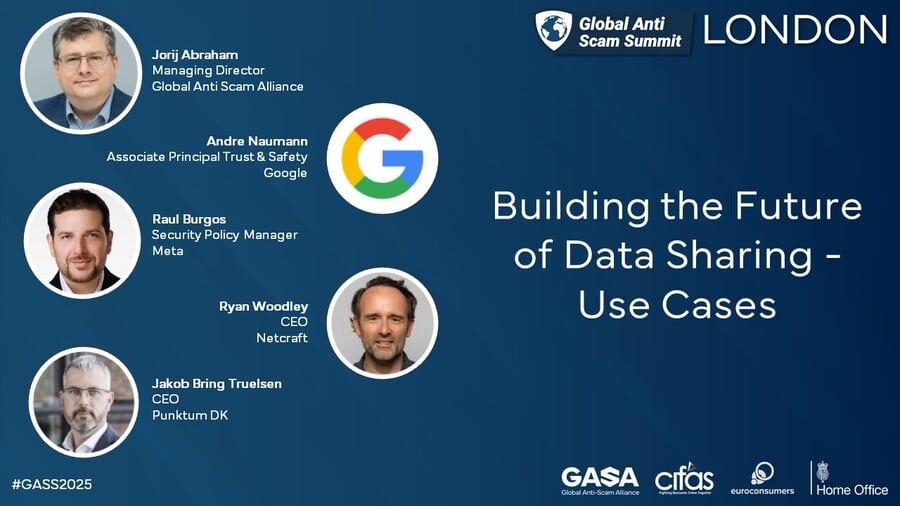
Date of Event: 26–27 March 2025
Event: Global Anti-Scam Summit London 2025
At the Global Anti-Scam Summit London 2025 , a dedicated session introduced the Global Signal Exchange (GSE)—a cross-sector initiative developed by the Global Anti-Scam Alliance and DNS Research Federation to transform how cybercrime data is shared.
Jorij Abraham opened the discussion by outlining how the GSE aims to break the cycle of "whack-a-mole" enforcement, connecting existing national and commercial intelligence-sharing networks into a global ecosystem. The platform, which grew from 50 million to 135 million signals in just three months, lets vetted partners control exactly who receives their data, allowing tailored sharing across law enforcement, platforms, or other stakeholders.
André Naumann of Google described the GSE as a global, multi-stakeholder, cross-sector platform designed to scale real-time collaboration. He highlighted the value of trusted data-sharing to prevent harm before it reaches users.
Raul Burgos from Meta echoed this, noting that while many current initiatives are bilateral or industry-specific, the GSE is the first to offer truly global and cross-industry collaboration. He explained how early signals shared by Google have already supported successful investigations, reinforcing the importance of quality and scalability.
Netcraft CEO Ryan Woodley described the GSE as “multi-player whack-a-mole,” enabling coordinated responses to emerging threats. He stressed the importance of networked collaboration to undermine the profitability of scam operations at scale.
Jakob Bring Truelsen of Punktum dk, whose registry ranked among the safest globally, spoke about his organisation’s drive to maintain high security standards and use GSE insights to further reduce abuse across the .dk domain space.
Together, the panellists showcased how real-time, responsible data sharing is building a smarter global defence against scams and cybercrime.

BanCoppel joins the Global Anti-Scam Alliance to bolster fraud prevention and safeguard individuals entering the banking system.
BanCoppel has joined the Global Anti-Scam Alliance (GASA) as a Corporate Member of the GASA Mexico Chapter.
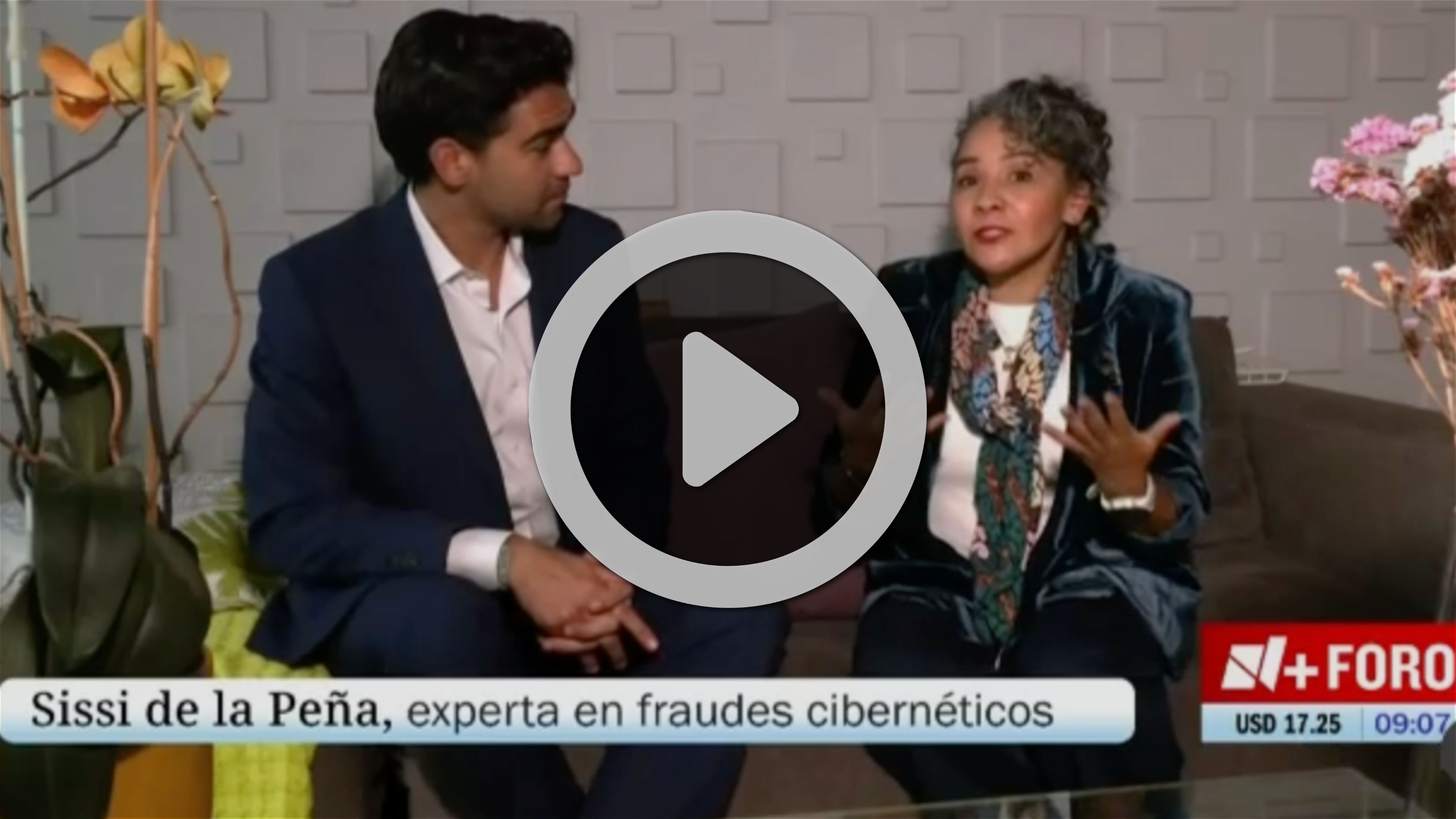
The emotions scammers exploit: how social engineering influences our decisions
How scammers use fear, urgency, excitement and trust to influence decisions, and how recognising these tactics can help people prevent fraud.

Global Anti-Scam Alliance Welcomes Mastercard as Founding Member of Its Mexico Chapter
The Global Anti-Scam Alliance (GASA) announces the membership of Mastercard as a Member of its Mexico Chapter.
What Uganda’s IVR Trial Shows About Practice-Based Scam Prevention
A Uganda IVR trial shows how practice-based fraud prevention helped mobile money users reduce losses and increase reporting.
FTC’s Never EVER Campaign Helps Prevent Elder Financial Abuse With Simple, Specific Scam Warnings
The FTC’s Never EVER campaign uses simple, specific imposter scam warnings to help prevent elder financial abuse and support coordinated consumer education.
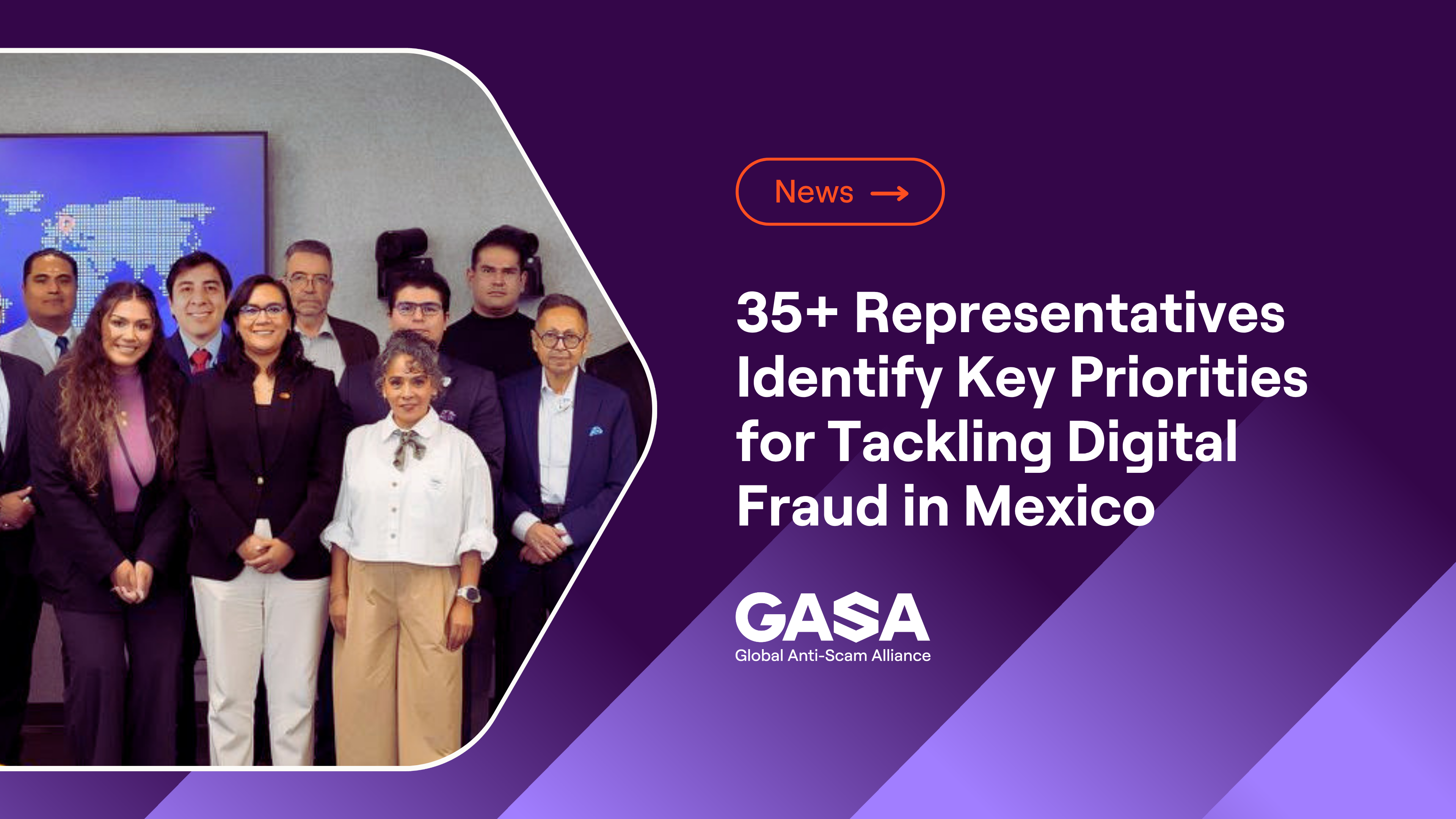
GASA Mexico's Second Roundtable Advances Coordinated Action Against Digital Fraud
GASA Mexico's second roundtable brought together more than 35 representatives to strengthen coordination across cybersecurity, fraud prevention and other sectors.
Cognyte Joins Global Anti-Scam Alliance to Fight Financial Fraud Threats
Cognyte, a global leader in investigative analytics software, today announced its membership in the Global Anti-Scam Alliance (GASA).
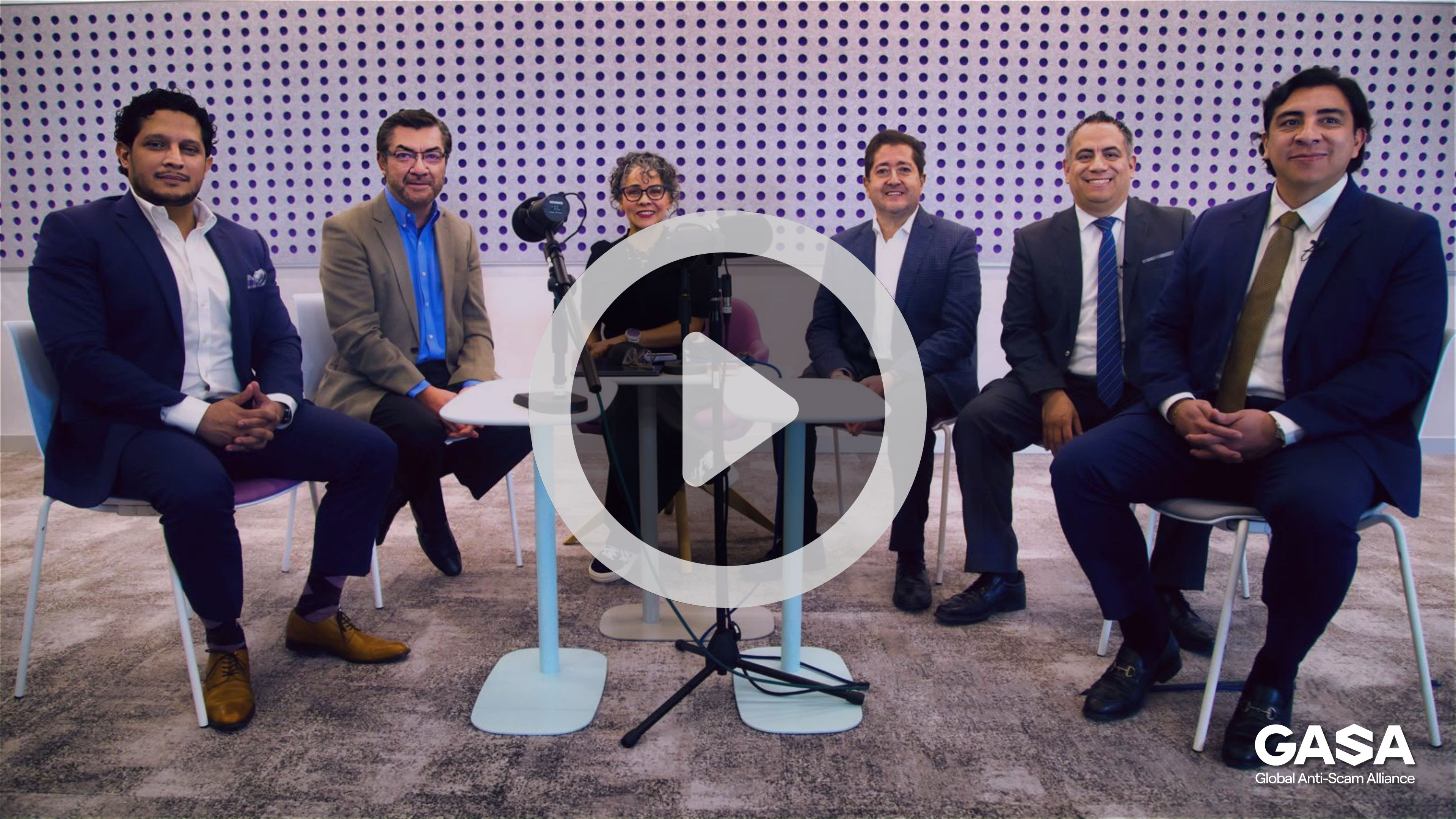
A network is beaten by a network: Mexico's banks move from remediation to prevention
GASA convened the ABM Fraud Committee and Mexican banks to advance the enriched agreement and strengthen coordinated fraud prevention across the sector.