
Date of Event: 3 June 2025
Event: GASA Virtual Meet-up
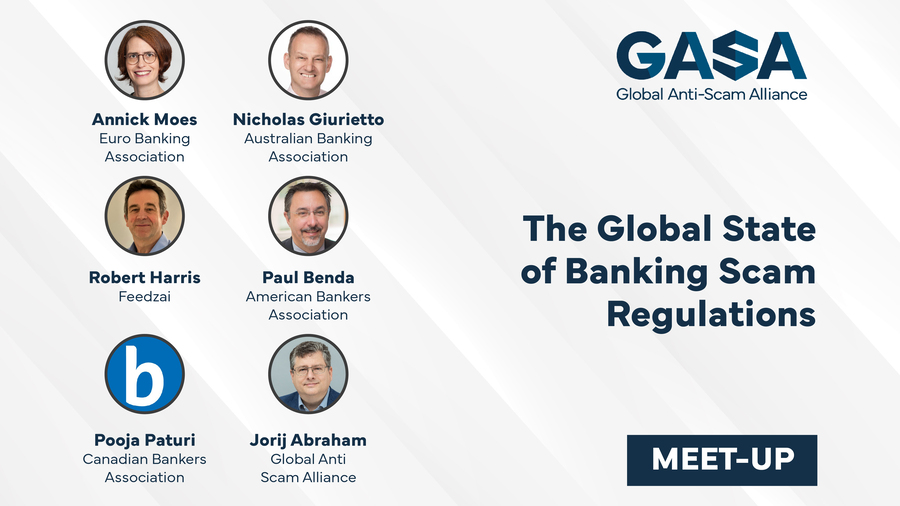
As scam-related losses continue to rise worldwide, banks and regulators are under pressure to strengthen protections and clarify liability. On the 3rd of June 2025, the Global Anti-Scam Alliance hosted The Global State of Banking Scam Regulations , a virtual roundtable bringing together leaders from five countries to compare regulatory strategies, cross-sector initiatives, and priorities for preventing financial scams.
Jorij Abraham, Managing Director of the Global Anti-Scam Alliance , opened the session by outlining GASA’s role in uniting stakeholders across banking, government, telecom, and tech. He highlighted the importance of shared intelligence, global collaboration, and public-private partnerships in reversing the rising tide of scams.
Representing Australia, Nicholas Giurietto, General Manager – Policy at the Australian Banking Association , presented the country's "ecosystem approach" to scam prevention. He outlined the role of the National Anti-Scam Centre, the use of biometric onboarding, intelligence sharing through the Australian Financial Crimes Exchange, and a national Confirmation of Payee rollout launching in July.
Annick Moes, Senior Policy Adviser at the Euro Banking Association , provided a European perspective, focusing on the upcoming mandatory introduction of real-time payments and verification of payee across the Eurozone. She highlighted friction and complexity in implementation, especially for corporates, and called for enhanced fraud data sharing and typology alignment across sectors.
From the UK, Robert Harris, Head of EMEA Fraud Market Planning at Feedzai , discussed the impact of new Payment Services Regulator rules making scam victim reimbursement mandatory and splitting liability between banks. Early results show increased collaboration, faster resolution of cases, and improved consistency in compensation.
Pooja Paturi, Director of Digital Payments and Fraud Prevention at the Canadian Bankers Association , described Canada’s voluntary alliance model. The initiative has brought together over 50 organisations across four sectors to focus on shared awareness campaigns, data-sharing protocols, and the development of a national scam reporting and intelligence platform.
Paul Benda, Executive Vice President at the American Bankers Association , highlighted the unique challenges faced by the United States. With no central authority on scams, a highly fragmented banking system, and minimal federal coordination, the U.S. is pushing for a national strategy and broader engagement with tech platforms and telecom providers.
Throughout the discussion, speakers emphasised the importance of data-sharing frameworks, global scam taxonomies, and coordinated responses across borders. While approaches differ, the collective goal is clear: stopping scams before the money leaves the account.
Watch the full discussion below.

BanCoppel joins the Global Anti-Scam Alliance to bolster fraud prevention and safeguard individuals entering the banking system.
BanCoppel has joined the Global Anti-Scam Alliance (GASA) as a Corporate Member of the GASA Mexico Chapter.
The emotions scammers exploit: how social engineering influences our decisions
How scammers use fear, urgency, excitement and trust to influence decisions, and how recognising these tactics can help people prevent fraud.

Global Anti-Scam Alliance Welcomes Mastercard as Founding Member of Its Mexico Chapter
The Global Anti-Scam Alliance (GASA) announces the membership of Mastercard as a Member of its Mexico Chapter.
What Uganda’s IVR Trial Shows About Practice-Based Scam Prevention
A Uganda IVR trial shows how practice-based fraud prevention helped mobile money users reduce losses and increase reporting.
FTC’s Never EVER Campaign Helps Prevent Elder Financial Abuse With Simple, Specific Scam Warnings
The FTC’s Never EVER campaign uses simple, specific imposter scam warnings to help prevent elder financial abuse and support coordinated consumer education.
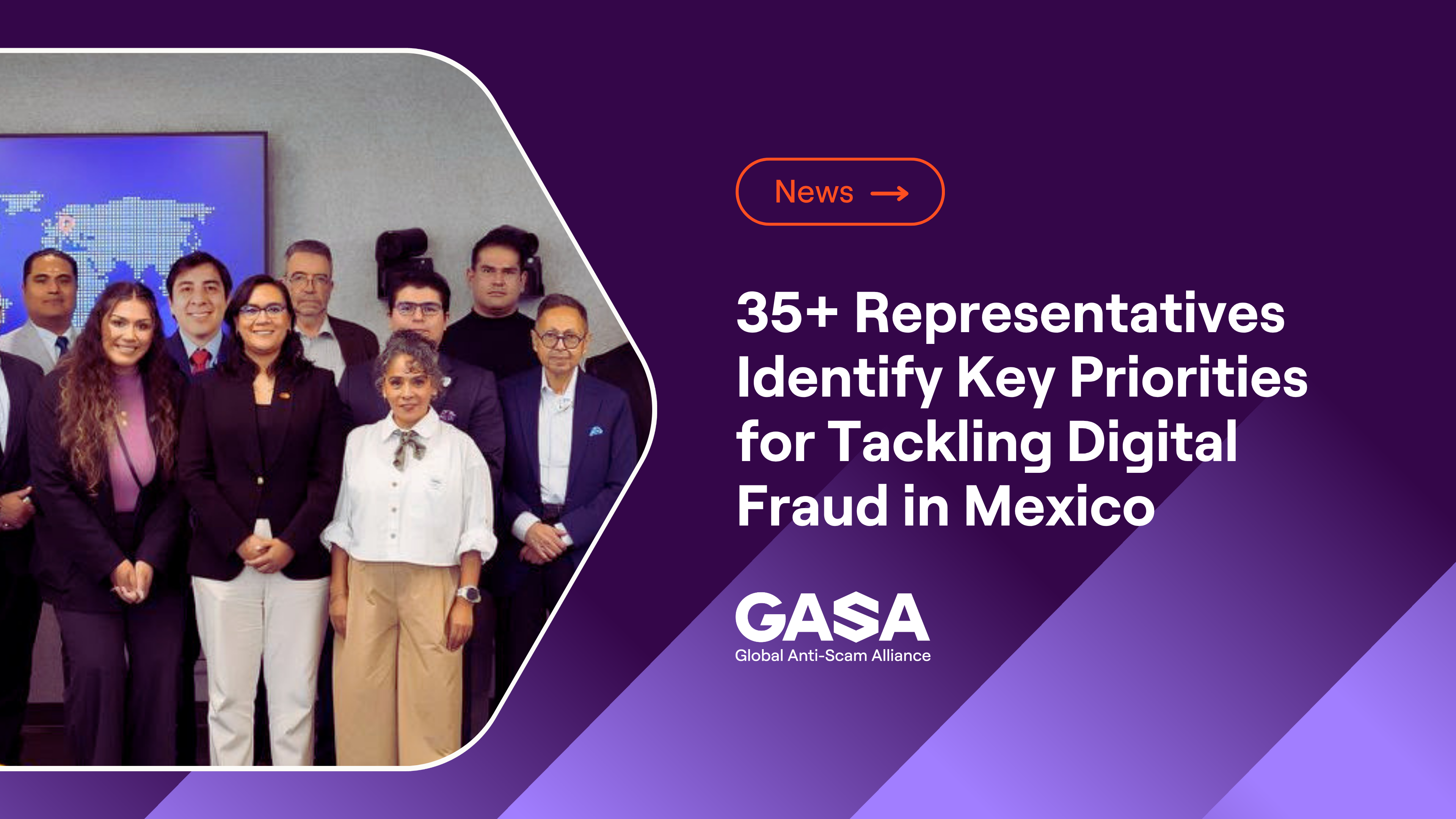
GASA Mexico's Second Roundtable Advances Coordinated Action Against Digital Fraud
GASA Mexico's second roundtable brought together more than 35 representatives to strengthen coordination across cybersecurity, fraud prevention and other sectors.
Cognyte Joins Global Anti-Scam Alliance to Fight Financial Fraud Threats
Cognyte, a global leader in investigative analytics software, today announced its membership in the Global Anti-Scam Alliance (GASA).
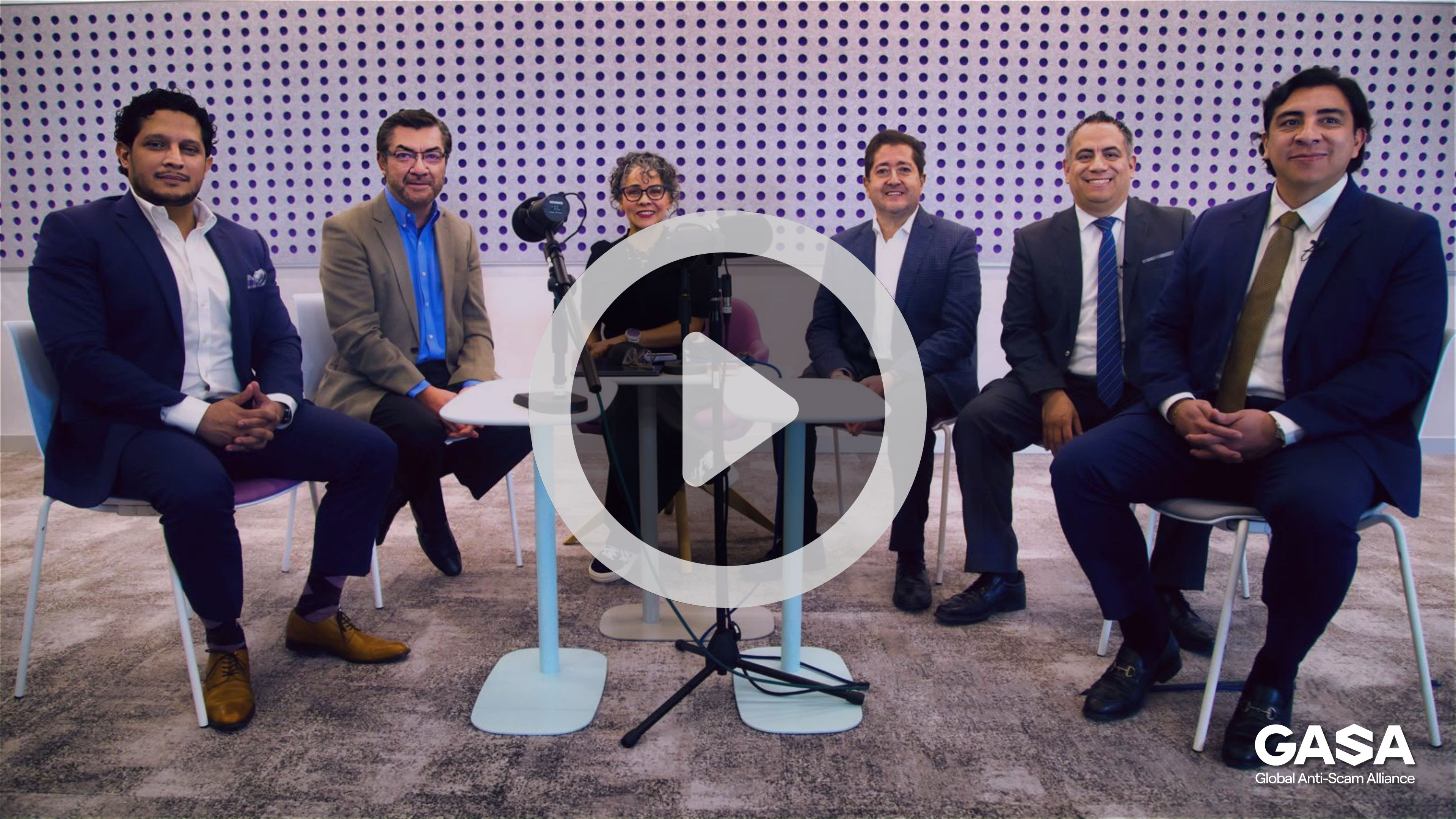
A network is beaten by a network: Mexico's banks move from remediation to prevention
GASA convened the ABM Fraud Committee and Mexican banks to advance the enriched agreement and strengthen coordinated fraud prevention across the sector.