

Robin Reichwald, Head of Ecosystem Risk, Visa
As payments have evolved over the years, so has the nature of fraud. According to UK Finance , in 2024, UK consumers lost over £1.17 billion to fraudsters. Much of this fraud involves scams that directly impact the lives of victims, sometimes with devastating effects.
Visa is ramping up its efforts to stay ahead of fraudsters, reinforcing its commitment to protecting consumers here in Europe and around the world. In fact, Visa has invested over $12 billion (approximately €10 billion) in technology over the last five years, including to combat fraud and cyber threats and to enhance network security.
Our scam-disrupting squad
Earlier this year, Visa officially launched the Visa Scam Disruption (VSD) practice , an initiative under Visa Payment Ecosystem Risk and Control (PERC). This is a dedicated team whose goal goes beyond defending consumers by proactively hunting fraud networks down and dismantling their operations.
VSD has a cross disciplinary team working together on a proactive and intelligence-led approach. Alongside hiring engineers and AI specialists, Visa has recruited talent with diverse backgrounds, including former law enforcement officers, individuals with military experience and data visualisation experts, to help tackle fraud more effectively.
The team uses advanced technology and unique network data with the aim of neutralising scams before they cause serious harm to consumers. Investigators leverage Generative AI to identify patterns and connections in large data sets, helping them spot real and serious scam activity.
Here's how it works
Last year, the Europe VSD team uncovered a large-scale, complex scam that used social media adverts to target UK and European cardholders with offers for non-existent products.
The scam network used over 450 different URLs and merchant IDs to obtain almost 3 million card details, many of which were then compromised and used for further fraud transactions. In total, over $130 million (approximately €110 million) was stolen by the scammers.
However, the VSD team was able to block fraud attempts on almost 75% of the compromised cards, meaning Visa was able to prevent a further $431 million (approximately €370 million) in fraud.
Thanks to our enhanced VSD capabilities, the scam network was also completely dismantled. This is just one example from the VSD practice.
Leading the fight
There’s no denying that the methods used by fraudsters are becoming increasingly advanced, especially those harnessing generative AI (such as using it to impersonate their victim's friends, family members, or even work colleagues). However, Visa is closely monitoring this evolution and is actively deploying countermeasures that are designed to stay ahead of emerging threats.
The practice is already making a significant impact. Since the inception of our group, VSD has shut down more than $650 million (approximately €560 million) in potential scam fraud.
Visa is collaborating with intelligence partners, law enforcement agencies, and industry working groups - not only to shut these scammers down, but to help those across the ecosystem to spot and respond to the warning signs themselves.
Case studies, statistics, research and recommendations are provided “AS IS” and intended for informational purposes only and should not be relied upon for operational, marketing, legal, technical, tax, financial or other advice. Visa Inc. does not make any warranty or representation as to the completeness or accuracy of the Information within this document, nor assume any liability or responsibility that may result from reliance on such Information. The Information contained herein is not intended as legal advice, and readers are encouraged to seek the advice of a competent legal professional where such advice is required.


BanCoppel joins the Global Anti-Scam Alliance to bolster fraud prevention and safeguard individuals entering the banking system.
BanCoppel has joined the Global Anti-Scam Alliance (GASA) as a Corporate Member of the GASA Mexico Chapter.
The emotions scammers exploit: how social engineering influences our decisions
How scammers use fear, urgency, excitement and trust to influence decisions, and how recognising these tactics can help people prevent fraud.

Global Anti-Scam Alliance Welcomes Mastercard as Founding Member of Its Mexico Chapter
The Global Anti-Scam Alliance (GASA) announces the membership of Mastercard as a Member of its Mexico Chapter.
What Uganda’s IVR Trial Shows About Practice-Based Scam Prevention
A Uganda IVR trial shows how practice-based fraud prevention helped mobile money users reduce losses and increase reporting.
FTC’s Never EVER Campaign Helps Prevent Elder Financial Abuse With Simple, Specific Scam Warnings
The FTC’s Never EVER campaign uses simple, specific imposter scam warnings to help prevent elder financial abuse and support coordinated consumer education.
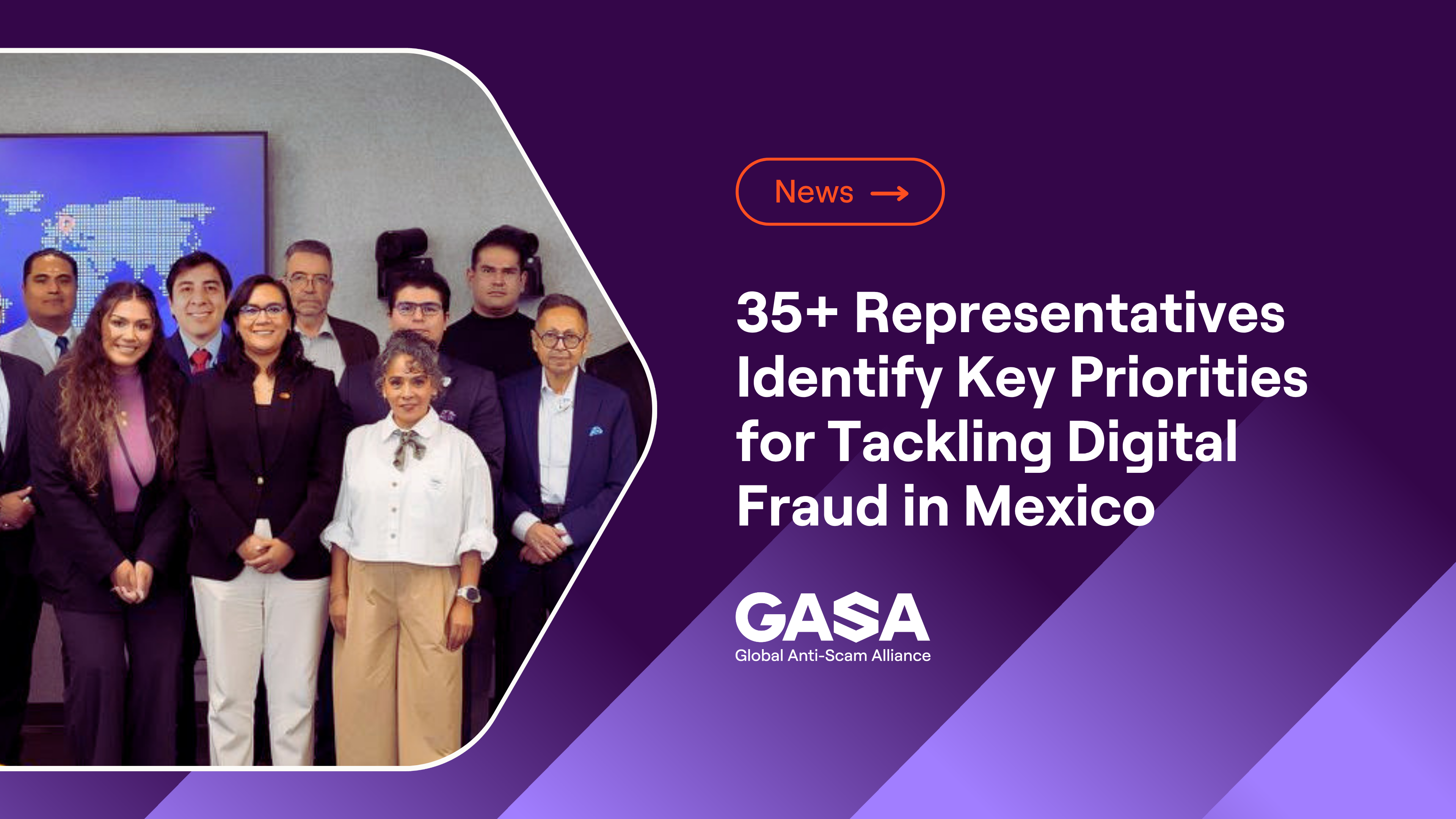
GASA Mexico's Second Roundtable Advances Coordinated Action Against Digital Fraud
GASA Mexico's second roundtable brought together more than 35 representatives to strengthen coordination across cybersecurity, fraud prevention and other sectors.

Cognyte Joins Global Anti-Scam Alliance to Fight Financial Fraud Threats
Cognyte, a global leader in investigative analytics software, today announced its membership in the Global Anti-Scam Alliance (GASA).
A network is beaten by a network: Mexico's banks move from remediation to prevention
GASA convened the ABM Fraud Committee and Mexican banks to advance the enriched agreement and strengthen coordinated fraud prevention across the sector.