
ScamAdviser.com surveyed 1,494 consumers from across the world asking them why they buy fakes and how they could be kept from buying counterfeit.
While all income groups, educational categories, age levels and continents are represented, it is interesting to note that mostly men (67%) participated. This trend is identical to the previous year's survey , where 65% of the participants were men, suggesting that men may be buying more counterfeit than generally thought.
Fake goods are estimated to exceed $500 billion annually
According to OECD, 3.3% of world trade is now the trade in fake goods . Footwear made up almost a quarter of seized goods around the world, making it the most popular product copied by counterfeiters. But also apparel & accessories, leather goods, perfumes, electronic devices and watches.
69% say they are good at identifying fakes
Most consumers (69%) consider themselves capable of identifying counterfeits. This is especially the case for Clothing, Accessories and Consumer Electronics. Only 10% admit they are unable to identify fakes. 45% of consumers doubt their ability to recognize fake Medicines and Toys while 23% say they have trouble with all categories.
92% of all consumers have bought counterfeits
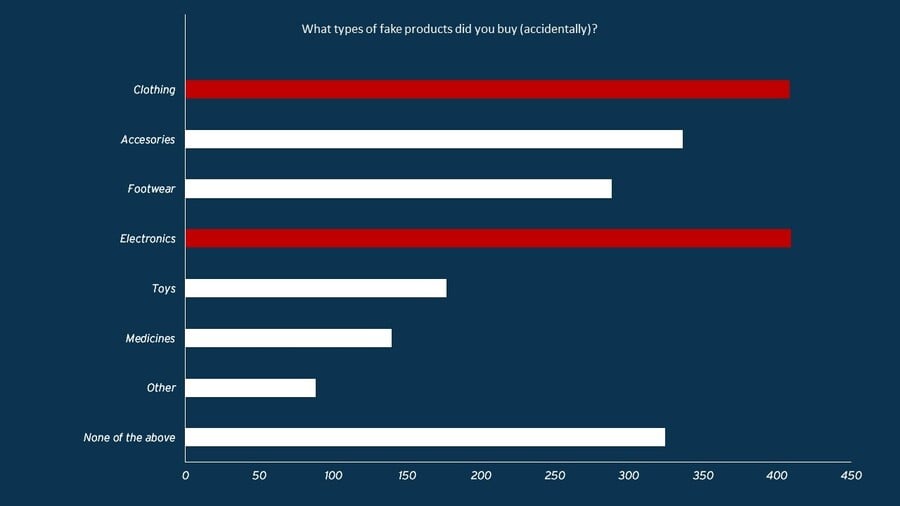
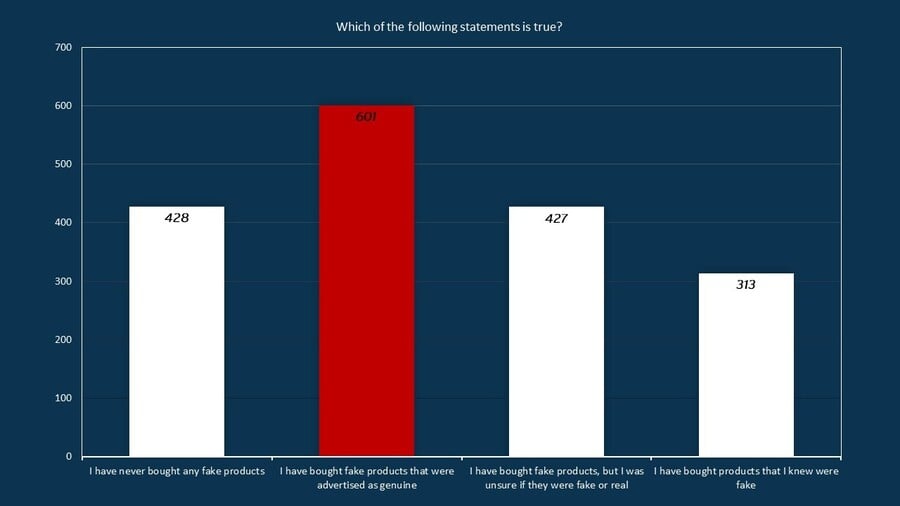
Still, 70% of the consumers have bought a fake product in the past unknowingly or doubting the originality of the product. 21% admit to knowingly having bought fakes. Clothing, electronics and accessories are the most commonly purchased fake products.
Websites, not marketplaces, are the main purchase channel
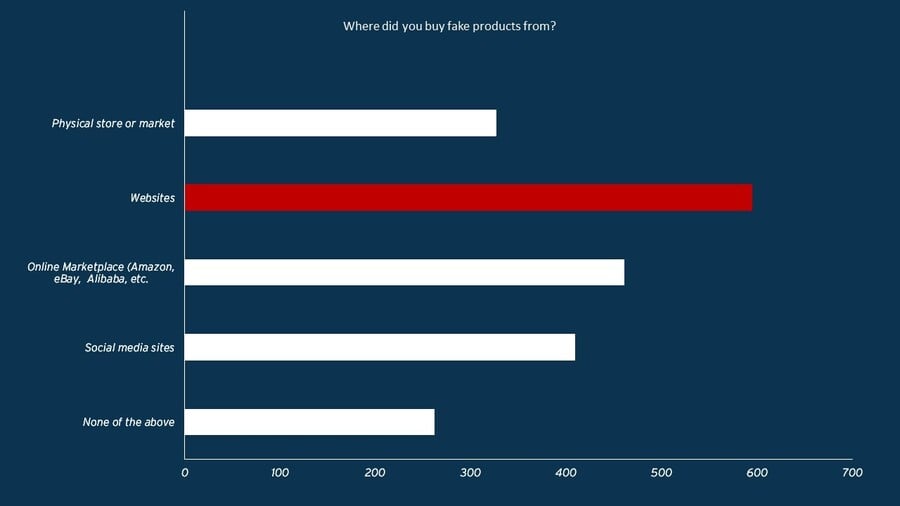
The focus of brand protection agencies has shifted to online marketplaces in recent years. However, remarkably, websites (41%) are by far the most popular channel to buy counterfeits. This channel is followed by online marketplaces like Amazon, eBay and Alibaba (32%).
Social media sites are named by 28% of consumers and 22% bought fakes from physical stores. Physical markets and stores are slowly losing popularity while buying directly via Social Media is on the rise (but not yet as big as websites).
39% think that the fakes are sold directly from China
When asked to name the originating selling country of their fake goods, 39% of consumers named China. This was followed by, surprisingly, the United States (9%) and India (6%).
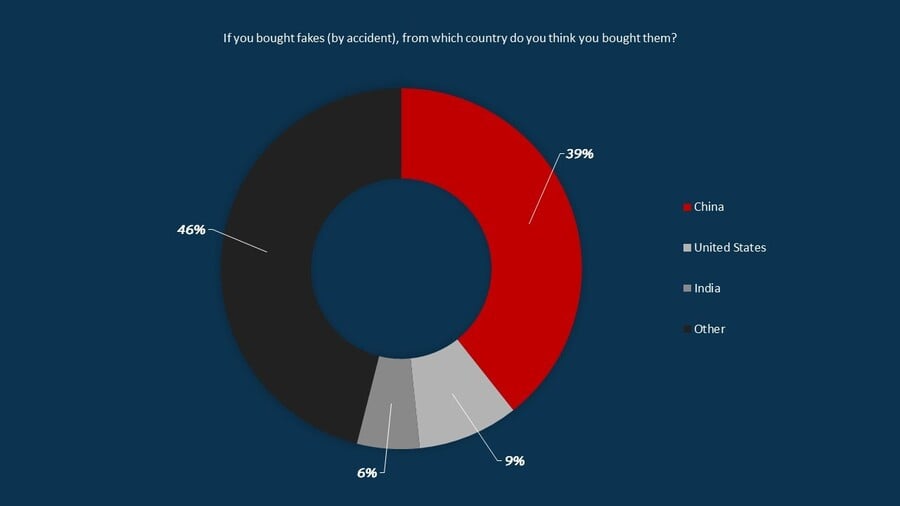
According to an OECD report, the majority of fake goods picked up in customs checks originate in mainland China and Hong Kong. Other major points of origin include the United Arab Emirates, Turkey, Singapore, Thailand and India. However, a large number of consumers have named their own countries, indicating that they are being misled into believing that the fake goods they buy are originating in their own countries.
Consumers are dissuaded by fears, not ethics
Consumers buy fakes primarily as they believe that there will be no significant difference in quality (16%). Affordability (16%) is an equally big motivator for buying fakes and the feeling that the real brand is overpriced (12%) is also named.
Consumers are aware that counterfeits support crime and human exploitation. What however would keep consumers the most from buying counterfeit is the concern about the quality of the product (42%) and the belief that buying fakes online is not safe as their (financial) data may be misused (38%) and the product not being delivered (32%).
Regarding the fight against counterfeits, consumers think the lead should be taken by consumer protection agencies (49%) and not by international authorities such as Europol/Interpol (25%) and the EU/UN (24%).


Accra Trust & Safety Workshop Turns Collaboration into Action Against Scams and Fraud in West Africa
GASA Africa Chapter and Google South Africa brought anti-fraud leaders together to strengthen cross-border cooperation and scam prevention.
State of Scams in Nigeria 2026: A Comparative Review Across Africa
Nigerian experts examine scam trends, technology, consumer protection and the need for stronger cross-sector collaboration.
Nearly three in four Danish adults encountered scams as estimated losses reach DKK 10.1 billion
New State of Scams Denmark 2026 report finds scam exposure is rising, while victims face repeated financial and emotional harm.
Building a More Trusted Digital Philippines: New Report Underscores the Need for Collective Action as Scam Exposure Continues to Rise
GASA’s State of Scams in the Philippines 2026 Report, in collaboration with Mastercard and Gogolook, highlights the growing scale of the scam challenge in the Philippines.
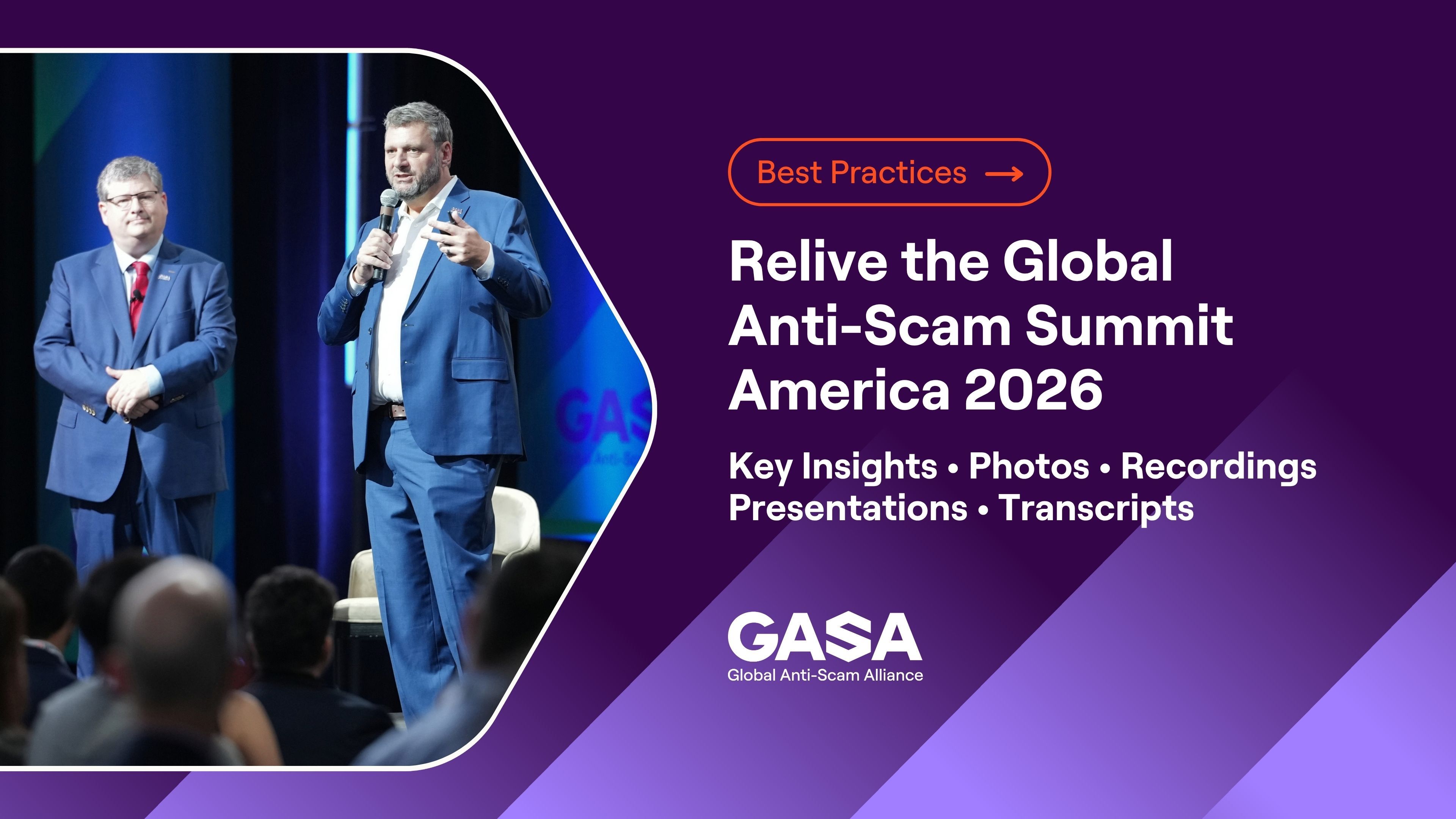
Global Anti-Scam Summit America 2026: Highlights, Insights and Resources
Explore GASS America 2026 highlights and insights, with the Summit summary, photos, presentation slides, transcripts and session recordings from San Francisco.
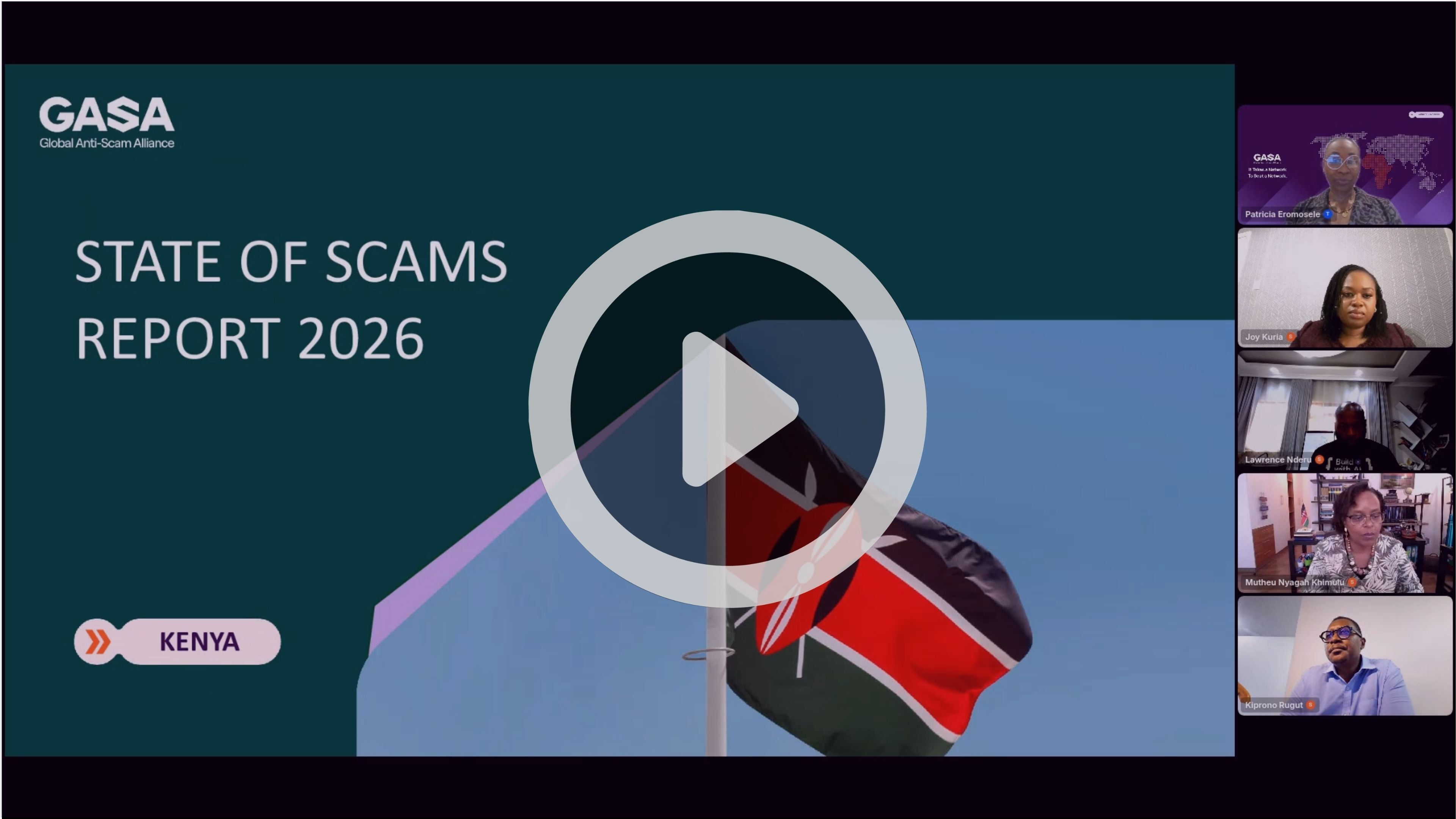
State of Scams in Kenya 2026: A Comparative Review Across Africa
Kenyan experts examine scam trends, data sharing, digital trust and the need for stronger cross-sector prevention.
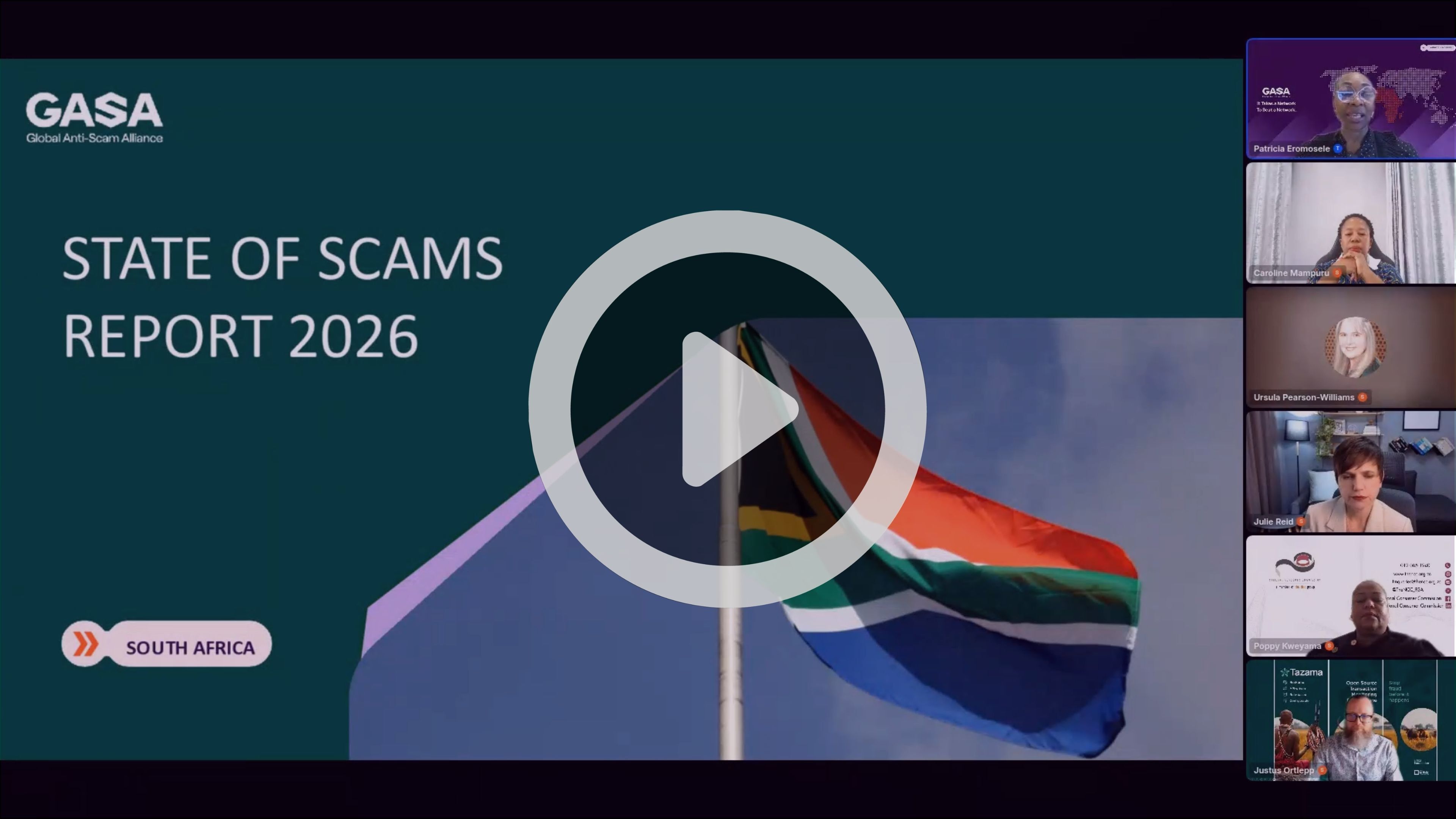
State of Scams in South Africa 2026: A Comparative Review Across Africa
South African experts examine scam trends, AI, consumer protection and the need for stronger cross-sector collaboration.
-3.jpg)
More than one in five adults in Japan encountered scams in the past year
New State of Scams Japan 2026 report examines how scams are reaching consumers and where stronger prevention and collaboration can make a difference