
Date of Event: 26–27 March 2025
Event: Global Anti-Scam Summit London 2025
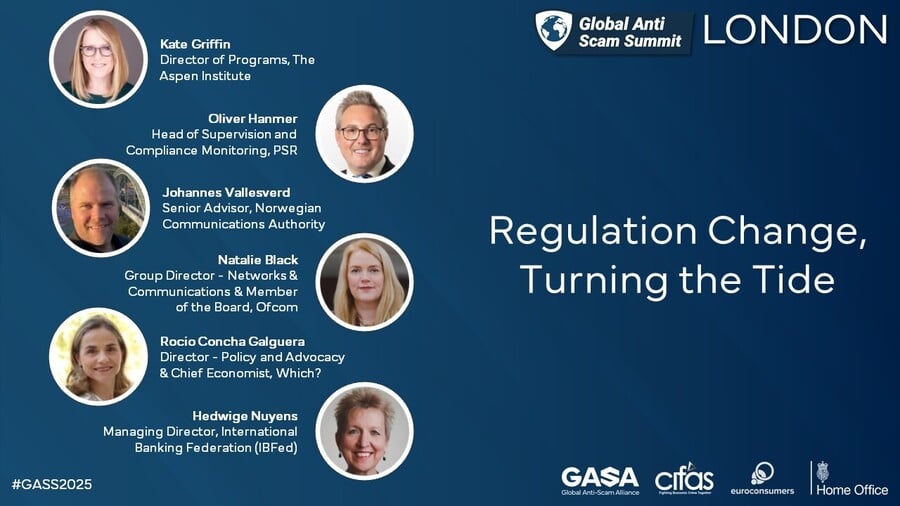
As global scams grow in scale and sophistication, regulators are under pressure to keep pace. In this session, leaders from the UK, Europe, and beyond came together to discuss the regulatory responses now taking shape—and where they must go next.
Kate Griffin, Director of Programs at The Aspen Institute, chaired the discussion and opened by framing the challenge: how can countries with different legal systems establish shared best practices for anti-scam regulation?
Oliver Hanmer, Head of Supervision and Compliance Monitoring at the UK Payment Systems Regulator, outlined two recent interventions: a name-checking system called Confirmation of Payee, and a mandatory reimbursement requirement for scam victims, both designed to balance protection and prevention.
Natalie Black, Group Director - Networks & Communications at Ofcom, spoke about the implementation of the UK’s Online Safety Act and upcoming telecoms-focused regulations. She emphasised the need to break down silos and regulate fraud across digital and telecom channels together.
Rocio Concha Galguera, Director of Policy and Advocacy at Which?, underscored the emotional, economic, and long-term impact of scams on consumers. She stressed the urgency of fully implementing fraud protections, particularly for online ads.
Jean-Jacques Sahel, Director of Government Affairs and Public Policy at Google, argued for fast, cross-border enforcement against transnational criminal networks and outlined a policy framework for industry cooperation, data sharing, and international legal coordination.
Johannes Vallesverd, Senior Advisor at the Norwegian Communications Authority, described Norway’s deployment of a national roaming proxy to stop spoofing, and urged global collaboration to harmonise KYC standards in telecoms and domain registration.
Hedwige Nuyens, Managing Director of the International Banking Federation, highlighted the importance of strong digital identity verification, selective friction in instant payments, and sharing scam typologies without breaching data privacy laws.
Together, the speakers sketched out what a truly effective global regulatory framework might look like—and the concrete actions it requires.

BanCoppel joins the Global Anti-Scam Alliance to bolster fraud prevention and safeguard individuals entering the banking system.
BanCoppel has joined the Global Anti-Scam Alliance (GASA) as a Corporate Member of the GASA Mexico Chapter.
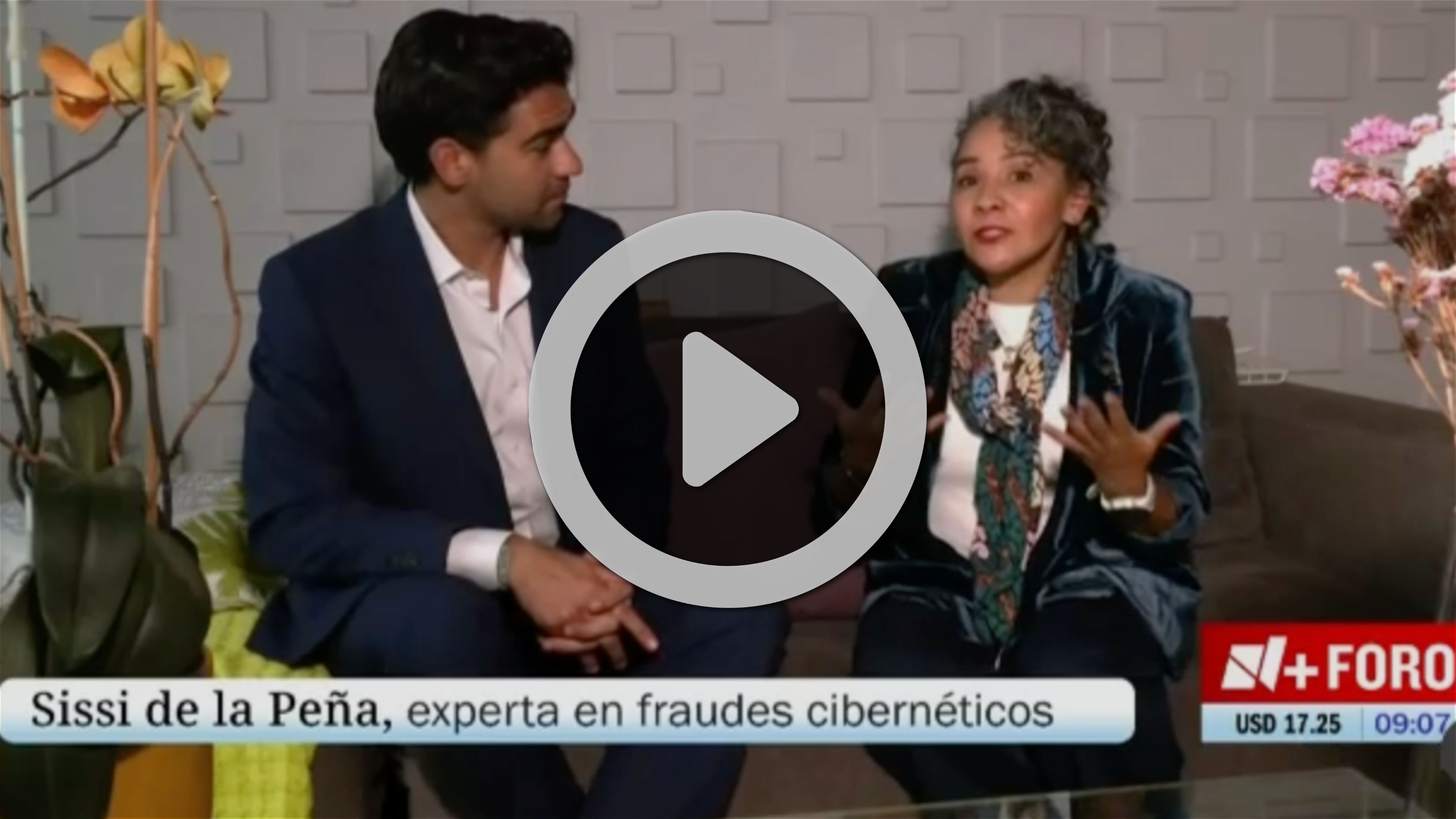
The emotions scammers exploit: how social engineering influences our decisions
How scammers use fear, urgency, excitement and trust to influence decisions, and how recognising these tactics can help people prevent fraud.

Global Anti-Scam Alliance Welcomes Mastercard as Founding Member of Its Mexico Chapter
The Global Anti-Scam Alliance (GASA) announces the membership of Mastercard as a Member of its Mexico Chapter.
What Uganda’s IVR Trial Shows About Practice-Based Scam Prevention
A Uganda IVR trial shows how practice-based fraud prevention helped mobile money users reduce losses and increase reporting.
FTC’s Never EVER Campaign Helps Prevent Elder Financial Abuse With Simple, Specific Scam Warnings
The FTC’s Never EVER campaign uses simple, specific imposter scam warnings to help prevent elder financial abuse and support coordinated consumer education.
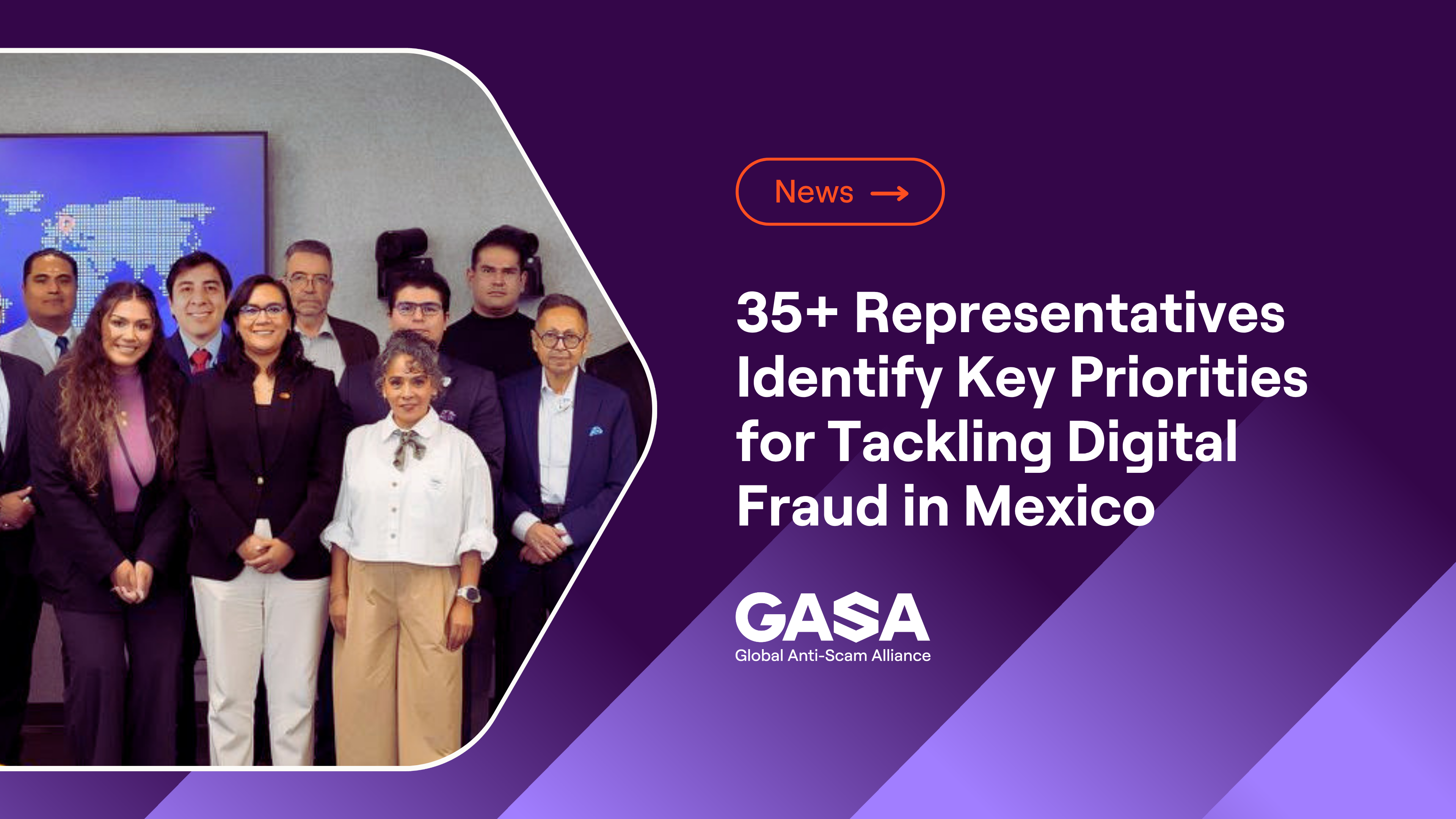
GASA Mexico's Second Roundtable Advances Coordinated Action Against Digital Fraud
GASA Mexico's second roundtable brought together more than 35 representatives to strengthen coordination across cybersecurity, fraud prevention and other sectors.
Cognyte Joins Global Anti-Scam Alliance to Fight Financial Fraud Threats
Cognyte, a global leader in investigative analytics software, today announced its membership in the Global Anti-Scam Alliance (GASA).
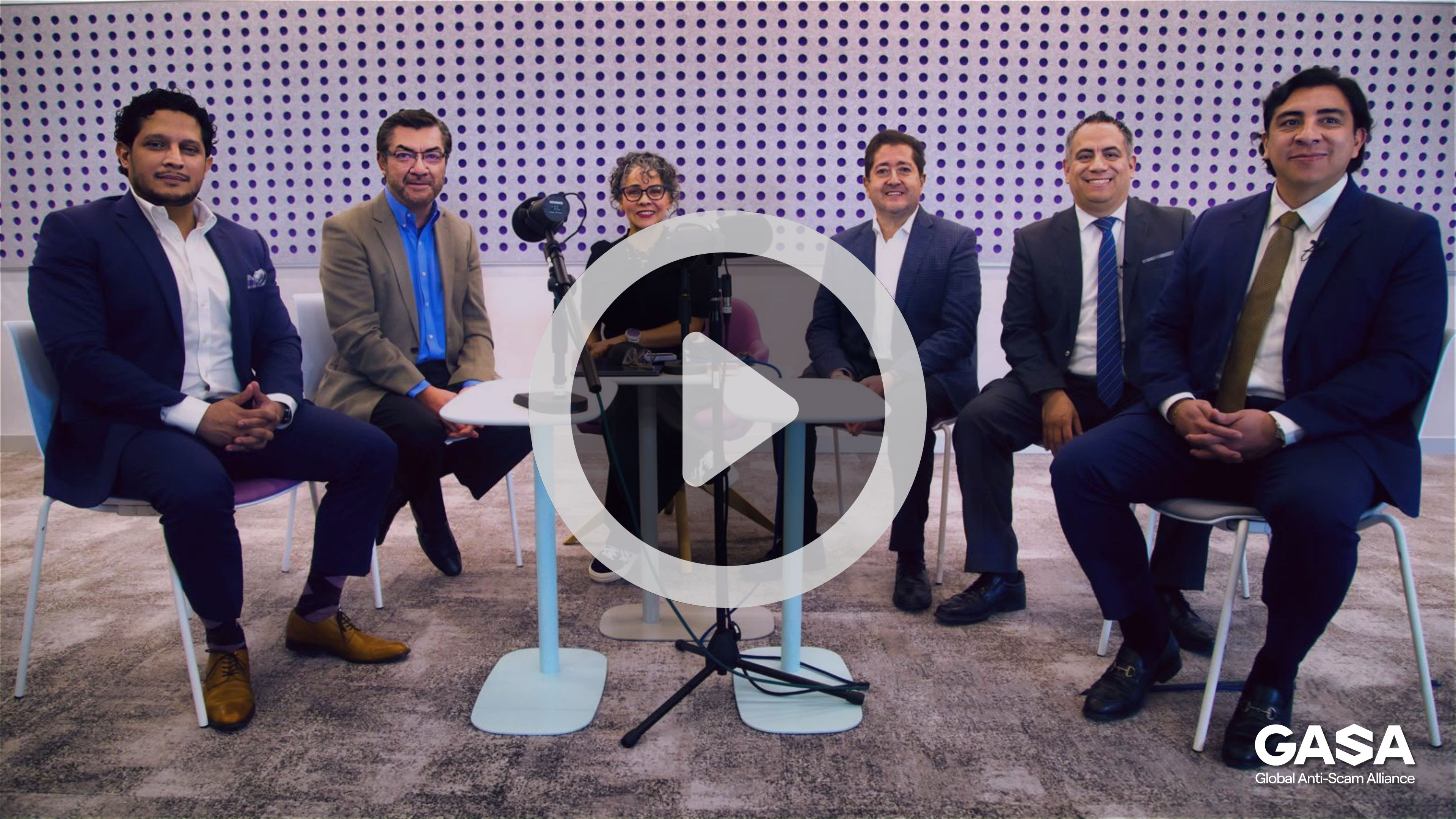
A network is beaten by a network: Mexico's banks move from remediation to prevention
GASA convened the ABM Fraud Committee and Mexican banks to advance the enriched agreement and strengthen coordinated fraud prevention across the sector.