

Financial institutions are navigating a moment where the speed of payments, the sophistication of social-engineering scams, and the erosion of customer trust all converge. Real-time intelligence is no longer a competitive advantage; it is a requirement for protecting customers, meeting regulatory expectations, and preserving institutional integrity. As transaction flows accelerate and scammers exploit every channel—digital banking, phone, messaging, and even authenticated customer sessions—banks must move beyond traditional fraud controls and adopt real-time, proactive defense models that prevent scams before funds leave the institution.
Why Real-Time Scam Prevention Must Replace Traditional Fraud Controls
One of the realities reshaping fraud operations is that scammers now work in the same instantaneous timeframes that payment systems operate in. Legacy fraud systems built for overnight reviews or post-transaction analysis simply cannot keep pace. The moment a customer initiates a transfer under coercion, a fraudulent payee is established, or a device profile abruptly changes, the risk window collapses into seconds. Recognizing this, banks are increasingly treating real-time analysis and real-time intervention as inseparable components of effective scam prevention. Detection without an immediate ability to act is functionally the same as no detection at all.
The foundation of proactive scam defense begins with data—specifically, the ability to gather and interpret context continuously. High-performing institutions are consolidating behavioral analytics, device intelligence, identity signals, session anomalies, external threat feeds, and historical customer patterns into unified real-time models. This richness of context allows a system to understand not just what a customer is doing, but whether the behavior aligns with their typical digital patterns. When a customer suddenly initiates international payments at odd hours, begins testing small transfers to new accounts, or interacts with online banking in a way that mirrors known scam behaviors, the institution gains the ability to respond before the money moves.
How Behavioral Intelligence Enhances Real-Time Detection
Modern scam detection increasingly depends on behavioral analysis—an approach that evaluates how customers normally transact, communicate, navigate apps, and authenticate, and then reacts when behavior dramatically deviates. This shift away from static rules is crucial. Scammers are continually adapting, finding new ways to bypass simple triggers or mimic legitimate activity. Behavior-based systems enable banks to detect subtler signals, such as hesitation patterns, rapid switching between screens, inconsistent typing cadence, session anomalies, or changes in how customers respond to security prompts. These micro-behaviors often reveal social engineering in progress even when the transaction itself appears legitimate.
Operational Workflows That Enable Real-Time Action
Of course, detection is only half of what’s required. To materially prevent losses, institutions need the capability to act in real time—and that means designing operational workflows that allow automated and human decision-making to function as one. In a mature system, automated controls can temporarily hold suspicious transactions, initiate contextual challenges, guide customers into safe-flow verification steps, or escalate high risk scenarios to investigators instantly. When an analyst receives a case within seconds rather than after settlement, the institution creates a narrow but critical opportunity to prevent irrevocable loss. The banks that excel at intervention are those that design cross functional playbooks, pre-approved authority levels, and tightly integrated customer communication channels so decisions can be made in moments, not minutes.
Operationalizing real-time scam prevention also requires addressing the substantial challenges that large financial institutions often face. Data silos, legacy systems, fragmented decision engines, and inconsistent channel governance all make it difficult to build a unified prevention architecture. Institutions that succeed typically take a phased approach: identifying the highest-risk flows, modernizing their data ingestion layer, adopting streaming-ready event processing, and gradually integrating more signals as the architecture matures. Governance considerations are equally important. With regulators increasing scrutiny on authorized push payment fraud, customer harm, and model transparency, banks must ensure clear audit trails, explainable decision logic, and strong oversight over automated interventions.
Another challenge is balancing strong scam controls with customer experience. Overly aggressive interventions can create unnecessary friction and frustration, while overly permissive systems enable substantial losses. Institutions that strike the right balance rely on precision: dynamic risk scoring, contextual messaging, and differentiated responses based on the severity and type of risk. For example, subtle behavioral anomalies may trigger silent monitoring, while high-risk indicators—such as real-time device spoofing paired with an elevated transfer amount—may require immediate user challenges or transaction holds. When executed well, customers experience interventions as protective rather than disruptive.
The threat landscape itself is evolving rapidly. Scammers are weaponizing AI tools to mimic voices, generate synthetic identities, craft persuasive impersonations, and manipulate victims through long-tail social-engineering schemes. Real-time systems must, therefore, detect not only transactional anomalies but also signs of coercion, impersonation, and emotional manipulation. Banks are increasingly exploring ways to surface warnings inside digital channels at the exact moment a scam is likely occurring, and to personalize those warnings based on behavioral indicators rather than generic messaging. This type of targeted, context-aware guidance can interrupt scams even when customers believe they are acting voluntarily.
Stay ahead of scammers with comprehensive educational resources and tips.
Preparing Financial Institutions for the Next Era of Scam Prevention
As scams grow more complex, real-time prevention becomes a shared responsibility across the financial ecosystem. By combining deep contextual awareness, rapid operational decision-making, and adaptive intelligence, financial institutions can shift from reacting to incidents to preventing customer harm before it occurs. At Scamnetic, we see this transformation unfolding across financial institutions worldwide, and we believe the most effective solutions are those that combine advanced analytics with operational clarity and customer-centric protection. As the industry continues to evolve, the mission is clear: turn scam prevention from a reactive function into a strategic advantage that protects customers, strengthens trust, and builds resilience at scale.
Learn more about real-time scam prevention and explore Scamnetic’s insights on emerging fraud trends.

Allstate Identity Protection Joins the Global Anti-Scam Alliance to Strengthen the Fight Against Scams and Identity Theft
Allstate Identity Protection has joined the Global Anti-Scam Alliance (GASA) as a Corporate Member within the North America Chapter.

GASA and Whoscall Release 2026 Asia Scam Report – Taiwan
The 2026 Asia Scam Report – Taiwan, provides an in-depth look at scam exposure, channels, victim experiences, and scam awareness among people in Taiwan.

BanCoppel joins the Global Anti-Scam Alliance to bolster fraud prevention and safeguard individuals entering the banking system.
BanCoppel has joined the Global Anti-Scam Alliance (GASA) as a Corporate Member of the GASA Mexico Chapter.

The emotions scammers exploit: how social engineering influences our decisions
How scammers use fear, urgency, excitement and trust to influence decisions, and how recognising these tactics can help people prevent fraud.

Global Anti-Scam Alliance Welcomes Mastercard as Founding Member of Its Mexico Chapter
The Global Anti-Scam Alliance (GASA) announces the membership of Mastercard as a Member of its Mexico Chapter.
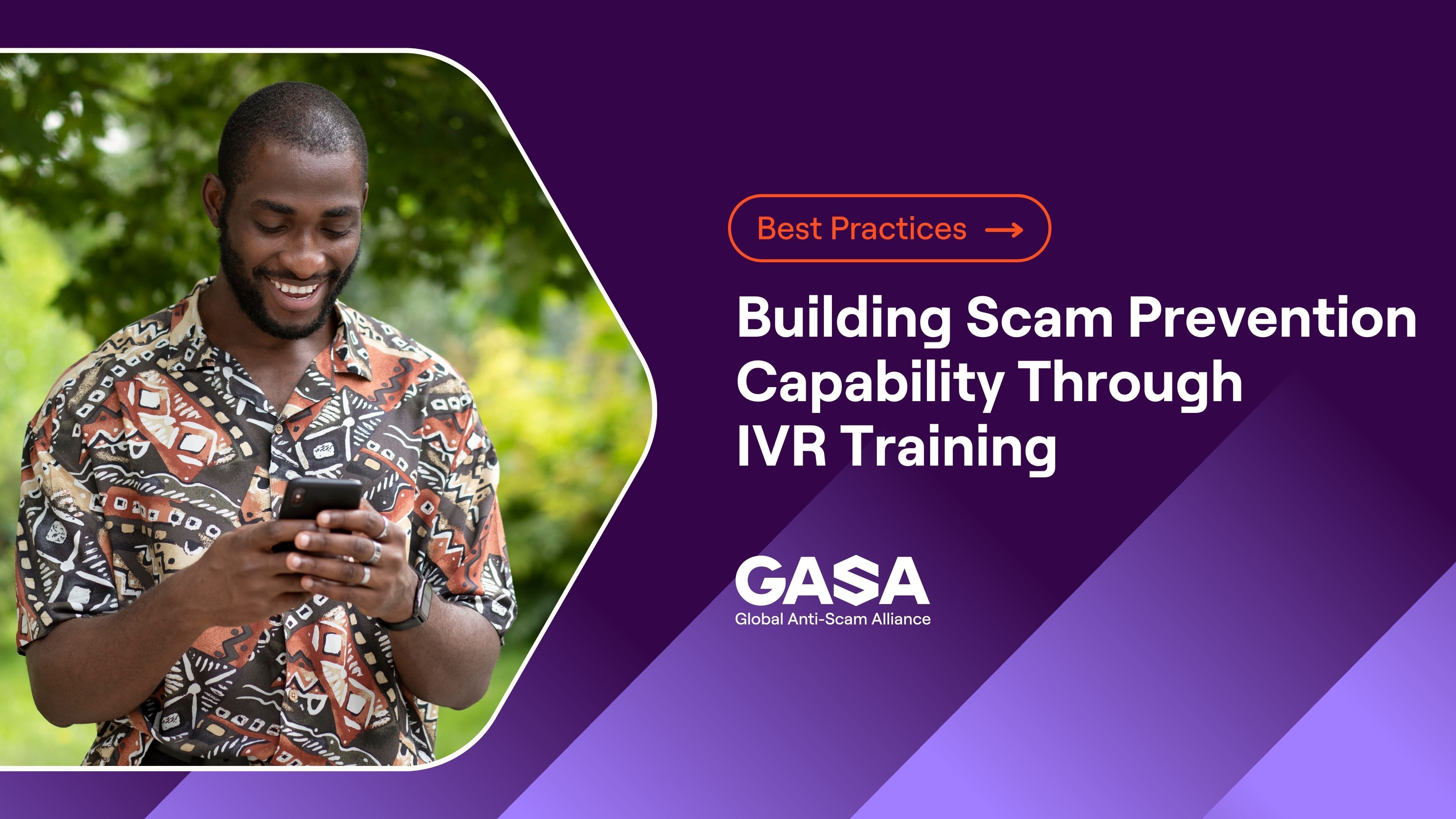
What Uganda’s IVR Trial Shows About Practice-Based Scam Prevention
A Uganda IVR trial shows how practice-based fraud prevention helped mobile money users reduce losses and increase reporting.
FTC’s Never EVER Campaign Helps Prevent Elder Financial Abuse With Simple, Specific Scam Warnings
The FTC’s Never EVER campaign uses simple, specific imposter scam warnings to help prevent elder financial abuse and support coordinated consumer education.
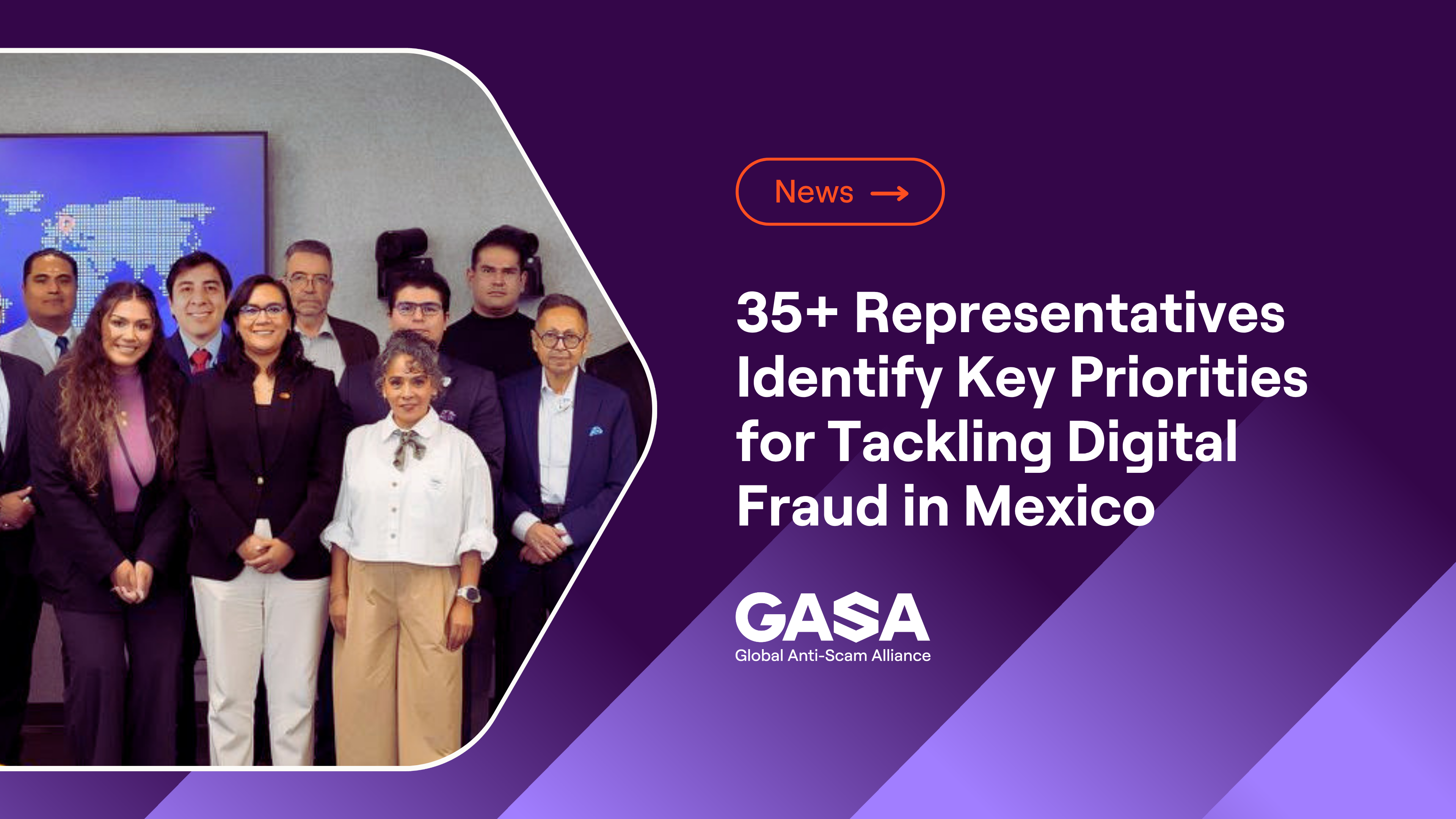
GASA Mexico's Second Roundtable Advances Coordinated Action Against Digital Fraud
GASA Mexico's second roundtable brought together more than 35 representatives to strengthen coordination across cybersecurity, fraud prevention and other sectors.