
Date of Event: 26–27 March 2025
Event: Global Anti-Scam Summit London 2025
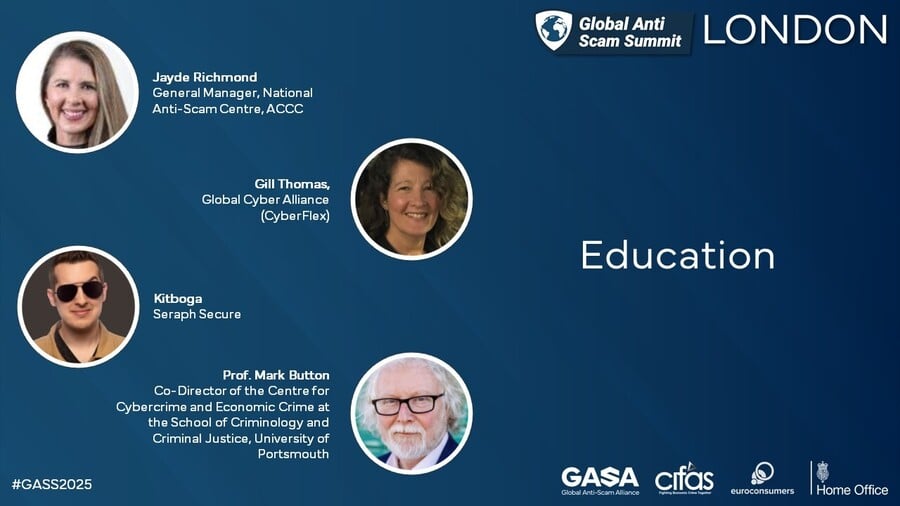
This session brought together experts across academia, advocacy, government, and the private sector to examine how education can drive scam prevention at scale.
Lynette Owens of Trend Micro opened the session by reflecting on new global data that reveals a worrying lack of preparedness among consumers. Few people report discussing scam threats like investment or romance fraud with family members, and this silence leaves many isolated when they fall victim. She argued that breaking this silence through normalising conversations and delivering relatable education is a first step to resilience.
The panel included Jade Richmond of the Australian National Anti-Scam Centre, Gill Thomas from the Global Cyber Alliance, Kitboga from Seraph Secure, and Professor Mark Button from the University of Portsmouth. Each panellist outlined what has worked in their efforts to engage different audiences—from peer-led support for older adults to immersive tools for younger people. Kitboga emphasised the role of humour and shareable content in opening up hard conversations, while Professor Button called for stronger evidence-based evaluations to identify what truly reduces victimisation.
Speakers agreed that prevention must be treated as a shared responsibility and that consistent funding, community partnerships, and cultural change are vital. They called on both governments and businesses to embed education in long-term strategy, with a focus on empowering action—not just awareness.

BanCoppel joins the Global Anti-Scam Alliance to bolster fraud prevention and safeguard individuals entering the banking system.
BanCoppel has joined the Global Anti-Scam Alliance (GASA) as a Corporate Member of the GASA Mexico Chapter.
The emotions scammers exploit: how social engineering influences our decisions
How scammers use fear, urgency, excitement and trust to influence decisions, and how recognising these tactics can help people prevent fraud.

Global Anti-Scam Alliance Welcomes Mastercard as Founding Member of Its Mexico Chapter
The Global Anti-Scam Alliance (GASA) announces the membership of Mastercard as a Member of its Mexico Chapter.
What Uganda’s IVR Trial Shows About Practice-Based Scam Prevention
A Uganda IVR trial shows how practice-based fraud prevention helped mobile money users reduce losses and increase reporting.
FTC’s Never EVER Campaign Helps Prevent Elder Financial Abuse With Simple, Specific Scam Warnings
The FTC’s Never EVER campaign uses simple, specific imposter scam warnings to help prevent elder financial abuse and support coordinated consumer education.
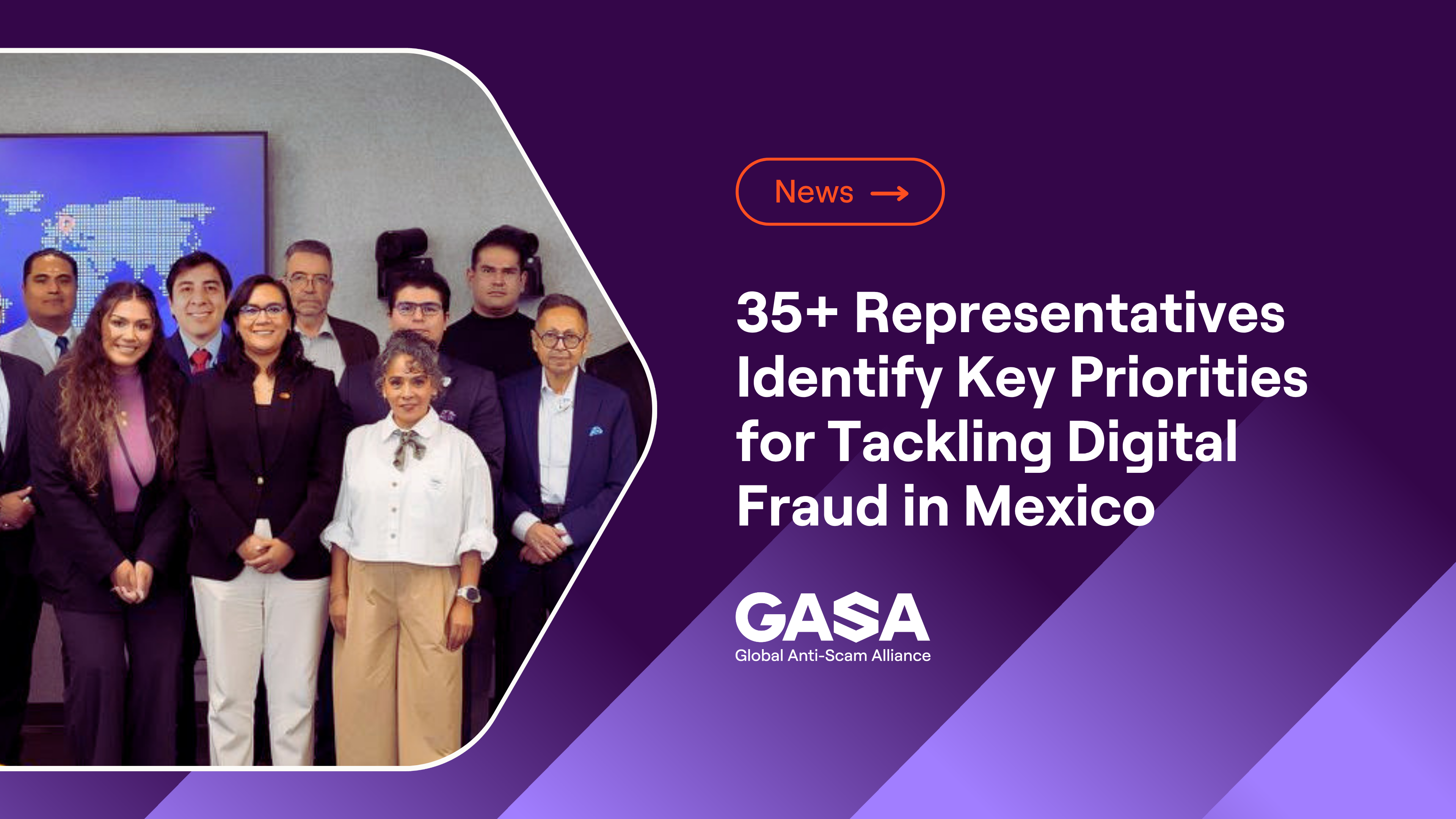
GASA Mexico's Second Roundtable Advances Coordinated Action Against Digital Fraud
GASA Mexico's second roundtable brought together more than 35 representatives to strengthen coordination across cybersecurity, fraud prevention and other sectors.
Cognyte Joins Global Anti-Scam Alliance to Fight Financial Fraud Threats
Cognyte, a global leader in investigative analytics software, today announced its membership in the Global Anti-Scam Alliance (GASA).
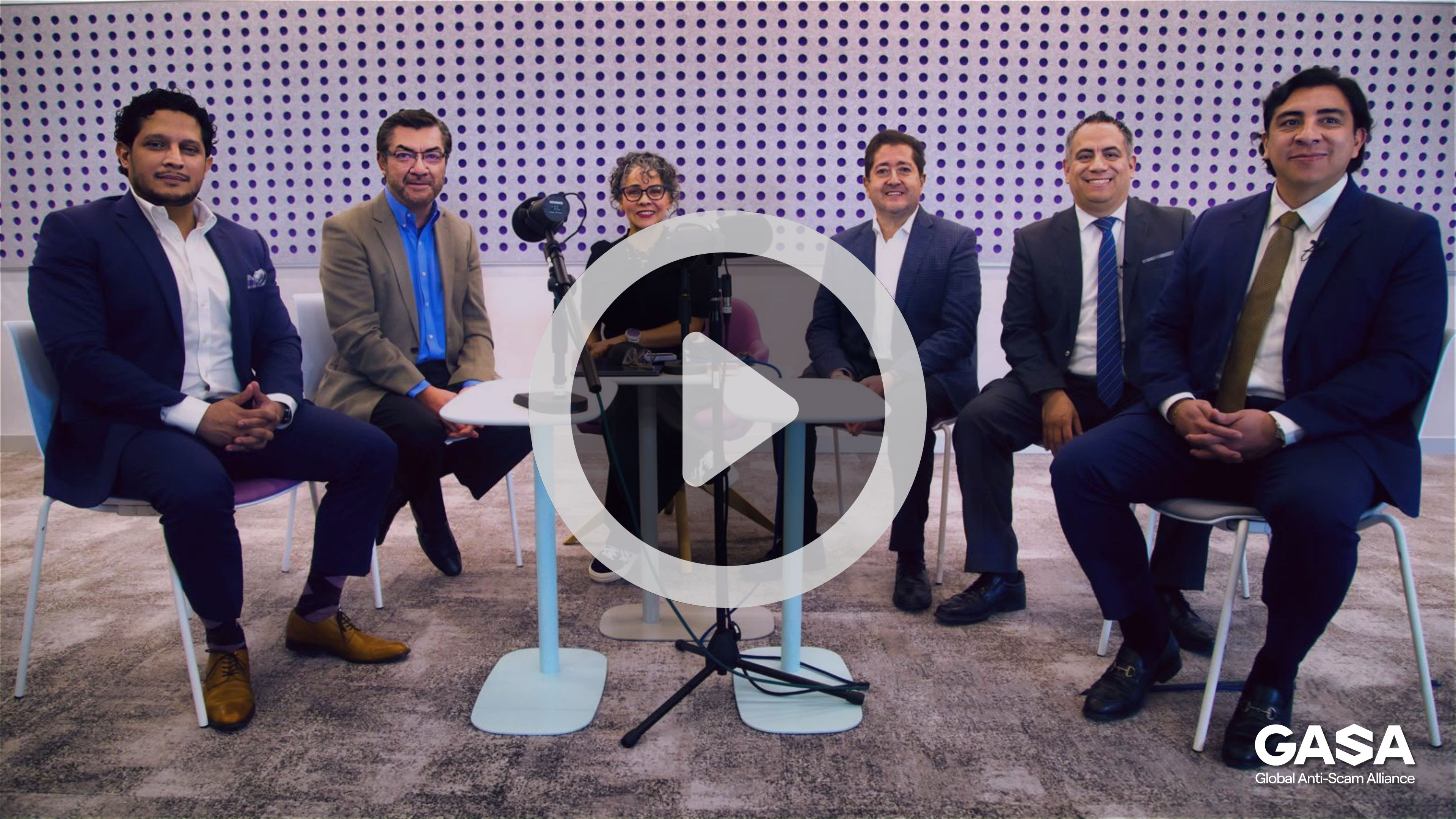
A network is beaten by a network: Mexico's banks move from remediation to prevention
GASA convened the ABM Fraud Committee and Mexican banks to advance the enriched agreement and strengthen coordinated fraud prevention across the sector.