
India’s rapid growth in digital payments has brought new challenges in cyber fraud, prompting the Department of Telecommunications (DoT) to launch the Financial Fraud Risk Indicator (FRI) . Introduced in May 2025 as part of the Digital Intelligence Platform (DIP) , the initiative provides banks and payment platforms with real-time intelligence to identify high-risk mobile numbers before transactions are completed.
A telecom-driven layer of financial security
The indicator classifies each mobile number as Medium , High , or Very High risk using intelligence from multiple national sources, including the Indian Cybercrime Coordination Centre’s National Cybercrime Reporting Portal , DoT’s Chakshu platform, and information shared by banks and financial institutions.
The multi-dimensional analysis allows the system to assess the probability of a number being used for fraudulent activity, with the results shared instantly through DIP’s secure APIs so that banks and UPI providers can decide whether to proceed, delay, or block a payment.
Integration across the payments ecosystem
In June 2025 , the Reserve Bank of India (RBI) directed all scheduled and co-operative banks to adopt the indicator, ensuring consistent handling of flagged numbers across the digital-payments ecosystem.
Major platforms such as PhonePe , Paytm , and Google Pay have already integrated the indicator into their fraud-detection systems. PhonePe’s Protect feature now issues on-screen alerts or blocks transactions depending on the assigned risk level, while banks including HDFC Bank , State Bank of India , Punjab National Bank , and Canara Bank are using the same data to strengthen verification, based on insights from the first integration results .
Results from early adoption
DoT data shows that the indicator helped prevent more than 4.8 million fraudulent transactions , saving users over ₹140 crore (US$15.8 million) within its first four months.
Around 4,000 to 5,000 mobile numbers are now categorised each day as high risk, and intelligence is shared instantly with more than 650 banks and financial institutions connected to DIP.
Complementary systems under the same framework, including the Mobile Number Revocation List and Sanchar Saathi , have together disconnected over 2.8 crore SIM cards associated with suspected fraud.
Strengthening inter-agency collaboration
To expand intelligence sharing, DoT and the Financial Intelligence Unit – India (FIU-IND) signed a memorandum of understanding in September 2025 to exchange data on mule accounts and cyber-fraud-linked numbers. The Digital Intelligence Unit manages these exchanges under a multi-year national programme supported by a ₹228-crore budget, as referenced in the DoT press brief .
Lessons for other markets
India’s experience with the FRI shows how real-time coordination between telecom and finance can prevent scams before they succeed. The model demonstrates the value of using mobile-network data as an early-warning layer supported by shared infrastructure and regulatory endorsement.
By embedding fraud-risk scoring directly into payment flows, the FRI shifts cyber-fraud prevention from post-incident recovery to proactive detection – a scalable model for safeguarding digital transactions in high-volume markets.
The Scam Landscape in India
Findings from GASA’s State of Scams in India 2025 report, supported by BioCatch , reveal that three in five Indian adults encountered a scam in the past year, and nearly one in four lost money. Each victim was scammed an average of 2.2 times , with total estimated losses reaching ₹4,019 billion (US$48 billion) .
Shopping and investment scams are the most common, followed by employment and impersonation fraud. Most victims are targeted through direct messaging platforms such as WhatsApp , SMS , and Telegram , showing how everyday communication tools are being exploited by criminals.
The report also shows that 83% of victims report scams to payment providers, yet only one-third recover any funds . Beyond financial losses, 82% of victims say scams caused stress or anxiety, and many report lower spending confidence and higher family tension.
As awareness grows, 96% of adults now take at least one step to verify offers, and nearly half believe that banks and payment providers should bear greater responsibility for reimbursement when fraud occurs.
Read the full report – State of Scams in India 2025
By connecting telecom intelligence with financial oversight, the Financial Fraud Risk Indicator shows how shared data can stop scams before they succeed. Its success now depends on maintaining transparency, preventing false positives, and ensuring consistent use across all banks and payment platforms. If refined and scaled, India’s model could offer a global blueprint for real-time, cross-sector scam prevention.
About the Author
James Greening , operating under a pseudonym, brings a wealth of experience to his role. Formerly the sole driving force behind Fake Website Buster, James leverages his expertise to raise awareness about online scams. He currently serves as a Content Specialist for the Global Anti-Scam Alliance (GASA).
James’s mission aligns with GASA’s mission to protect consumers worldwide from scams. He is committed to empowering professionals with the insights necessary to detect and mitigate online scams, ensuring the security and integrity of their operations and digital ecosystems.

BanCoppel joins the Global Anti-Scam Alliance to bolster fraud prevention and safeguard individuals entering the banking system.
BanCoppel has joined the Global Anti-Scam Alliance (GASA) as a Corporate Member of the GASA Mexico Chapter.

The emotions scammers exploit: how social engineering influences our decisions
How scammers use fear, urgency, excitement and trust to influence decisions, and how recognising these tactics can help people prevent fraud.

Global Anti-Scam Alliance Welcomes Mastercard as Founding Member of Its Mexico Chapter
The Global Anti-Scam Alliance (GASA) announces the membership of Mastercard as a Member of its Mexico Chapter.

What Uganda’s IVR Trial Shows About Practice-Based Scam Prevention
A Uganda IVR trial shows how practice-based fraud prevention helped mobile money users reduce losses and increase reporting.
FTC’s Never EVER Campaign Helps Prevent Elder Financial Abuse With Simple, Specific Scam Warnings
The FTC’s Never EVER campaign uses simple, specific imposter scam warnings to help prevent elder financial abuse and support coordinated consumer education.
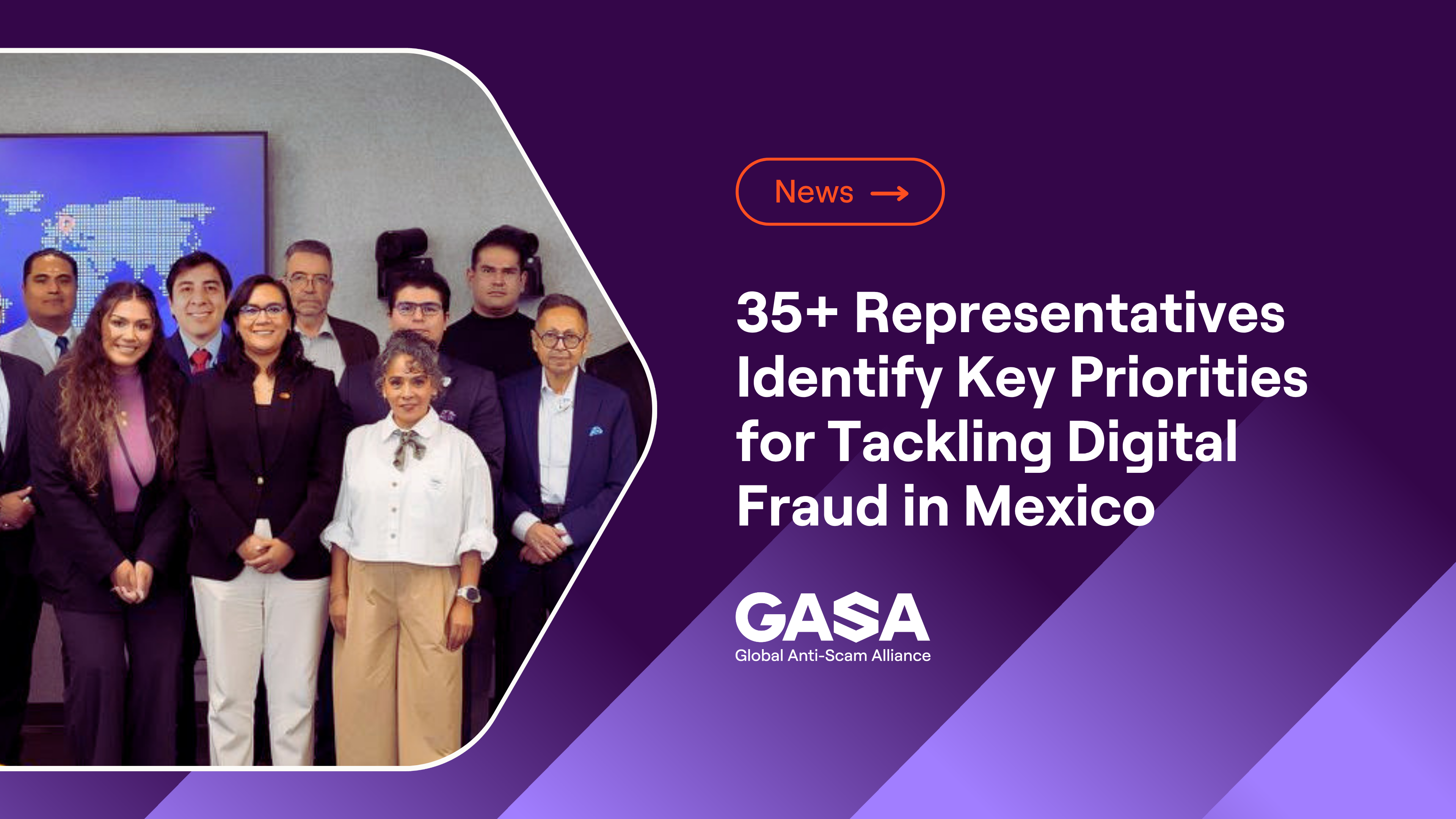
GASA Mexico's Second Roundtable Advances Coordinated Action Against Digital Fraud
GASA Mexico's second roundtable brought together more than 35 representatives to strengthen coordination across cybersecurity, fraud prevention and other sectors.

Cognyte Joins Global Anti-Scam Alliance to Fight Financial Fraud Threats
Cognyte, a global leader in investigative analytics software, today announced its membership in the Global Anti-Scam Alliance (GASA).
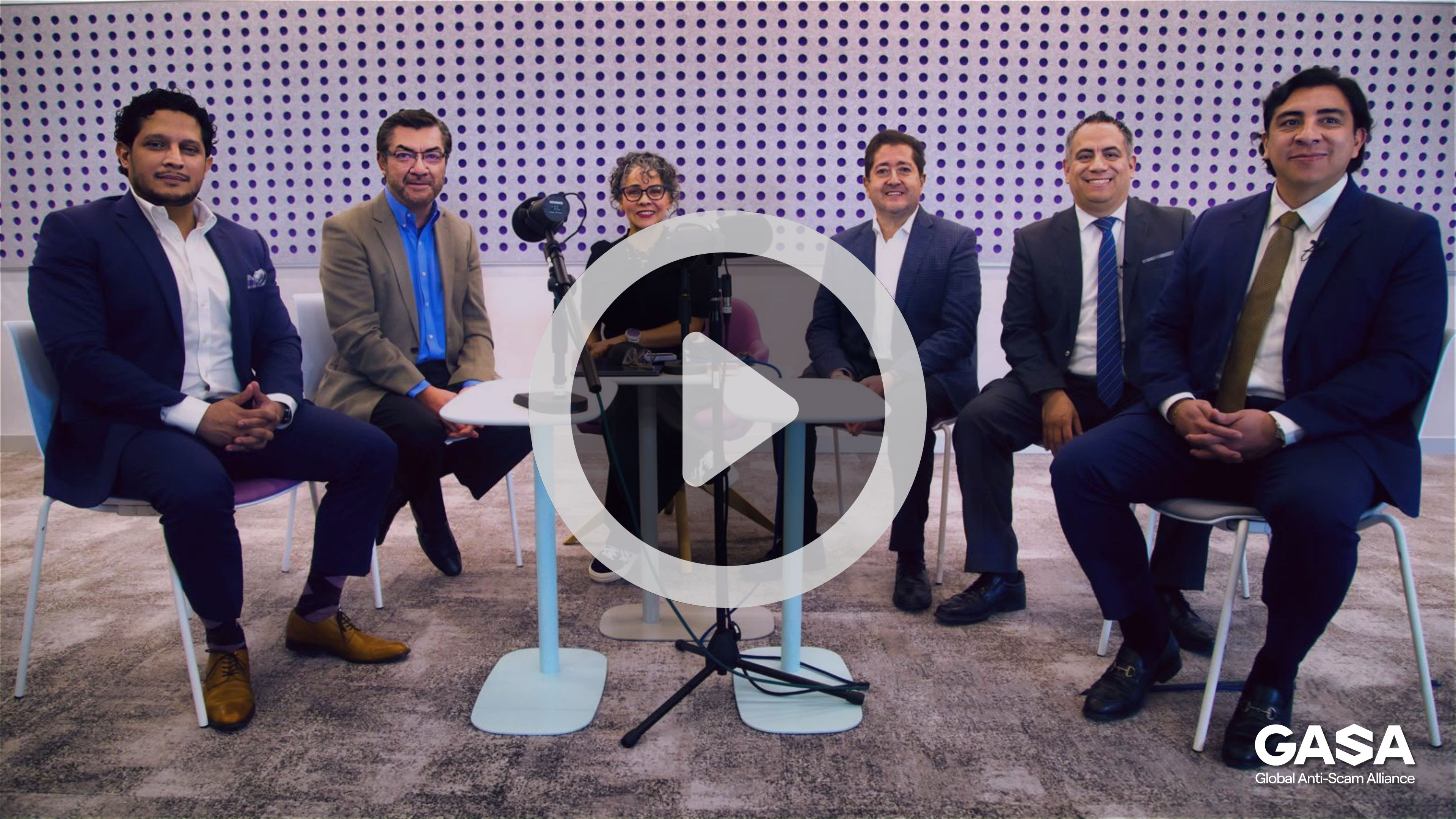
A network is beaten by a network: Mexico's banks move from remediation to prevention
GASA convened the ABM Fraud Committee and Mexican banks to advance the enriched agreement and strengthen coordinated fraud prevention across the sector.