

Global Anti-Scam Alliance and Feedzai Unveil 2024 Global State of Scams Report as Scams Continue to Plague Consumers
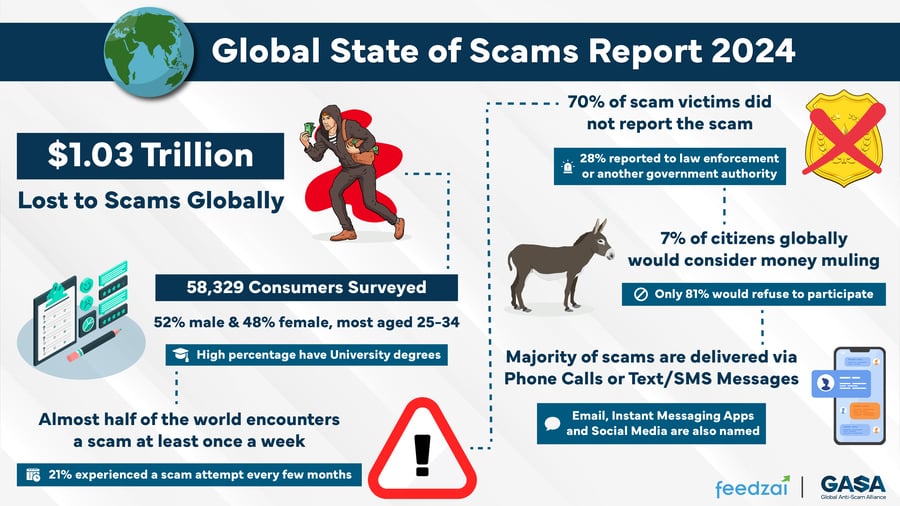
The Global Anti-Scam Alliance (GASA), in collaboration with Feedzai , has released its 2024 Global State of Scams report, uncovering staggering insights into the prevalence and impact of scams worldwide. Based on responses from 58,329 individuals across diverse regions, the report reveals the monumental economic and emotional toll scams take on consumers. The most eye-opening finding? Scammers have siphoned away over $1.03 trillion globally in just the past year—a figure that rivals the GDP of some nations. Yet amid the numbers, the report offers hope, with signs of increased scam awareness and resistance among consumers.
Scams on the Rise Across the Globe Exposing Regional Disparities
Despite relentless efforts to combat scam activity through awareness campaigns, scams remain a significant and growing threat, with nearly half of global consumers experiencing a scam attempt at least once a week. Certain regions are impacted more heavily, with countries like Brazil, Hong Kong, and South Korea facing near-daily scam exposure. Conversely, nations such as Vietnam, Saudi Arabia, and China reported a noticeable drop in scam encounters, suggesting progress in local preventive efforts.
Jorij Abraham, Managing Director of GASA , commented on these trends: "Very little has changed in the last 12 months, as the world’s consumers bear the weight of another $1.03 trillion stolen by scammers. We must do more to combat these crimes, as they continue to erode trust in our systems and cause immense harm to individuals and economies."
Global Confidence in Scam Detection Shows Promise
The report found that 67% of people globally feel confident in their ability to detect scams , reflecting the success of some awareness campaigns, however this could unveil complacency on the rise, too. Countries with high scam-detection confidence include China (84%) and Australia (72%) , while Japan lags behind, highlighting the need for targeted educational efforts in certain regions.
Nuno Sebastião, Co-Founder, Chairman, and CEO of Feedzai , highlighted the role of financial institutions and technology in increasing consumer confidence: "Consumers are becoming smarter at catching scams themselves. This year, 67% of respondents expressed confidence they could spot a scam. This strong display of confidence is a testament to banks’ and others’ efforts to educate consumers on the red flags to watch for that could be a scam."
Financial Losses Mark Clear Division Between Developed vs. Developing Nations
The financial toll of scams is staggering, with the U.S., Denmark, and Switzerland reporting the highest losses per victim, with Americans averaging a $3,520 loss. Meanwhile, in developing countries like Pakistan , scams have a far greater impact, equivalent to 4.2% of the country’s GDP . Kenya and South Africa also reported heavy GDP impacts at 3.6% and 3.4% , respectively. The financial strain scams impose on both individuals and national economies underscores the urgent need for better safeguards and international cooperation.
AI and Social Media Driving New Scams
The rise of artificial intelligence (AI) in scam tactics is a growing concern, though awareness varies globally. In countries such as Japan, Thailand, and Malaysia , citizens remain largely unaware of the role AI may play in scam operations. Globally, 31% of respondents were uncertain if AI was involved in the scams they encountered, reflecting the evolving complexity of fraudulent activities.
Scammers continue to exploit popular platforms and channels. Phone calls and text messages remain the primary methods of initial contact, with WhatsApp , Instagram , and Gmail also frequently used. In the Philippines, South Korea, and Brazil , SMS scams are particularly prevalent, while WhatsApp scams are rising in various regions.
Emotional Impact: The Untold Cost of Scams
Beyond financial losses, scams inflict severe emotional distress on victims. Feelings of vulnerability, fear, and loss of trust are common, with Kenya, the Philippines, and South Africa reporting the highest emotional tolls. Meanwhile, Japan and South Korea show lower emotional impact, possibly reflecting cultural differences in scam reporting and victimization perceptions. The emotional burden of scams is a crucial reminder that fraud prevention goes beyond financial metrics; it’s also about protecting individuals’ mental well-being.
Why Some Regions Are More Affected than Others
The report sheds light on why certain regions report higher scam rates and losses. Shopping scams dominate in Kenya and Nigeria , while investment scams are rampant in Nigeria . In contrast, South Korea and Vietnam report the lowest levels of online shopping scams. Identity theft remains a significant concern in Australia and Mexico , with both countries showing a 25% victimization rate .
Only 4% of Victims Recover Their Losses
Perhaps the most concerning insight from the 2024 report is the dismal rate of financial recovery. Only 4% of scam victims worldwide were able to recover their losses. The U.S. and U.K. have the highest recovery rates, yet these remain low globally, leaving the majority of scam victims without recourse. This data highlights the urgent need for improved consumer protection mechanisms and more effective financial recovery processes.
Nuno Sebastião of Feedzai emphasized the role of banks and payment providers in the final stage of the scam lifecycle: "Banks and payment providers are at the final stage of the scam lifecycle, where illicit attempts to extract money either succeed or fail. Significant differences exist across countries, including how regulators approach scam prevention, which complicates global efforts."
Collaboration and Innovation Needed to Improve the Global State of Scams
The joint report by GASA and Feedzai underscores the importance of global cooperation, enhanced public awareness, and stronger financial recovery processes . With scams growing more sophisticated, banks and financial institutions are investing in advanced AI and machine learning tools to detect unusual activity and protect consumers in real time.
However, Nuno Sebastião warns that technology alone isn’t enough: "Protecting customers goes beyond technology—it’s about fostering industry-wide collaboration and ensuring data privacy. Together with GASA and our partners, we’re driving continuous innovation to stay ahead of evolving scam tactics, ensuring a safer financial ecosystem for everyone."
GASA and Feedzai urge financial institutions, social media platforms, and telecom providers to work together to safeguard consumers. The report highlights the need for standardized definitions and measurements of scams globally. Currently, regional differences in scam classification hinder collaboration, making cross-border comparisons and joint preventive measures challenging.
Jorij Abraham emphasizes the importance of GASA’s role in facilitating this global collaboration: "A global organization such as GASA plays a crucial role in unifying scam prevention efforts. Increasing the amount of shared, secure data across industries is essential to improving scam controls and protecting consumers worldwide."
The Double-Edged Sword of Generative AI
The report also raises concerns over Generative AI , which is becoming a potent tool for fraudsters. With AI able to generate realistic images, scripts, videos, and voices in seconds , scammers can deceive more victims more effectively. While AI’s ability to reproduce and scale tactics is a threat, its replication patterns also present opportunities for detection. Banks and tech companies can harness this vulnerability, using pattern recognition to identify and intercept AI-generated fraud schemes before they succeed.
The Road Long Ahead to Vastly Improve the Global State of Scams
The 2024 Global State of Scams report is clear: scams are costing consumers over $1 trillion globally, with dire financial, emotional, and social repercussions. While confidence in scam detection has improved, many consumers remain vulnerable, and only a small fraction recover their losses.
GASA and Feedzai are committed to driving a safer digital landscape through continuous collaboration and innovation. By uniting financial institutions, tech giants, telecom providers, and regulatory bodies, GASA aims to foster a world where scam tactics can no longer exploit innocent consumers. The journey to a scam-free future requires resilience, global cooperation, and an unwavering commitment to protecting the vulnerable.
For more information and to access the full Global State of Scams 2024 report, visit GASA's Research Page . For now, here are some key figures...

BanCoppel joins the Global Anti-Scam Alliance to bolster fraud prevention and safeguard individuals entering the banking system.
BanCoppel has joined the Global Anti-Scam Alliance (GASA) as a Corporate Member of the GASA Mexico Chapter.

The emotions scammers exploit: how social engineering influences our decisions
How scammers use fear, urgency, excitement and trust to influence decisions, and how recognising these tactics can help people prevent fraud.

Global Anti-Scam Alliance Welcomes Mastercard as Founding Member of Its Mexico Chapter
The Global Anti-Scam Alliance (GASA) announces the membership of Mastercard as a Member of its Mexico Chapter.
What Uganda’s IVR Trial Shows About Practice-Based Scam Prevention
A Uganda IVR trial shows how practice-based fraud prevention helped mobile money users reduce losses and increase reporting.
FTC’s Never EVER Campaign Helps Prevent Elder Financial Abuse With Simple, Specific Scam Warnings
The FTC’s Never EVER campaign uses simple, specific imposter scam warnings to help prevent elder financial abuse and support coordinated consumer education.
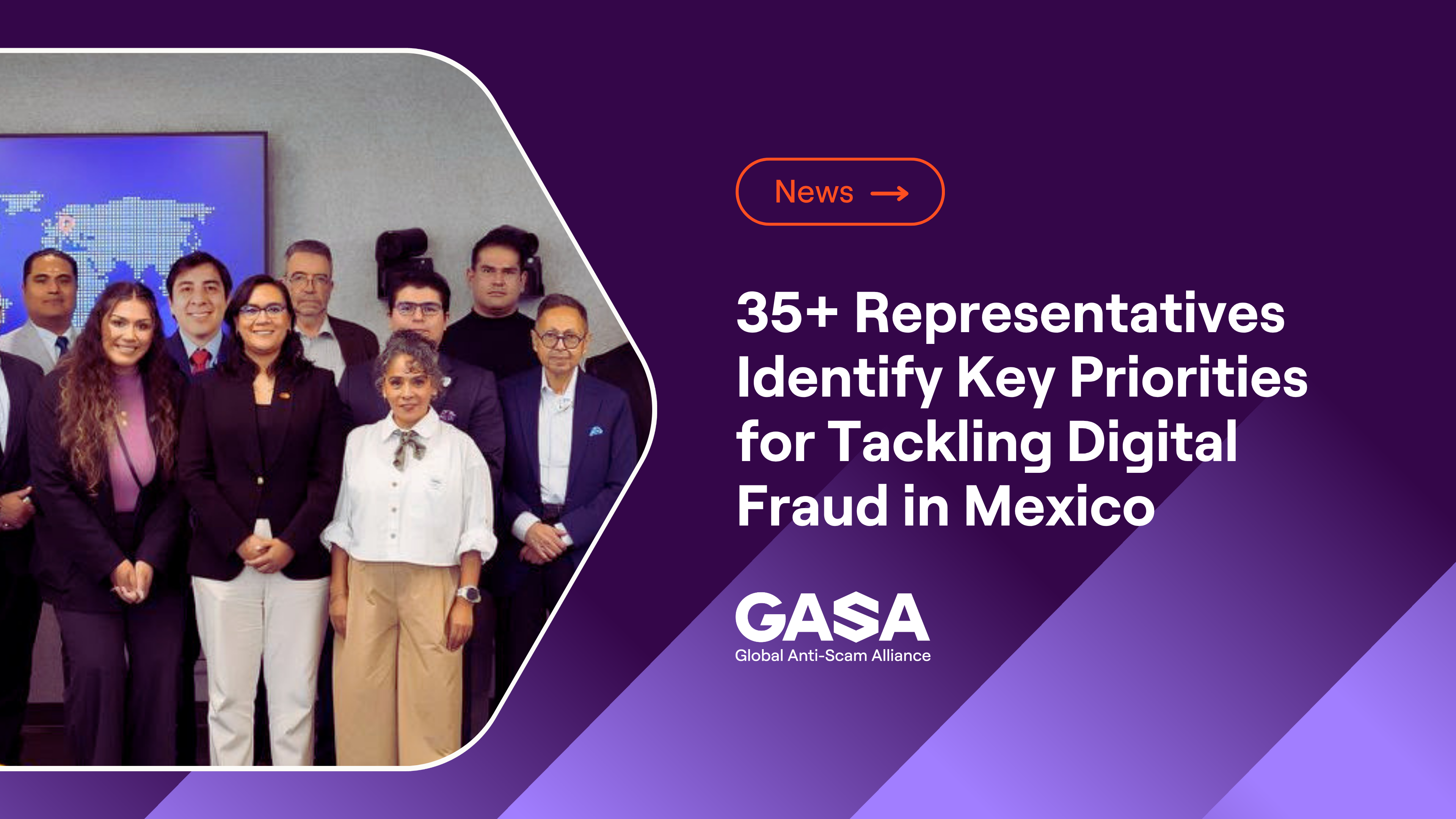
GASA Mexico's Second Roundtable Advances Coordinated Action Against Digital Fraud
GASA Mexico's second roundtable brought together more than 35 representatives to strengthen coordination across cybersecurity, fraud prevention and other sectors.
Cognyte Joins Global Anti-Scam Alliance to Fight Financial Fraud Threats
Cognyte, a global leader in investigative analytics software, today announced its membership in the Global Anti-Scam Alliance (GASA).
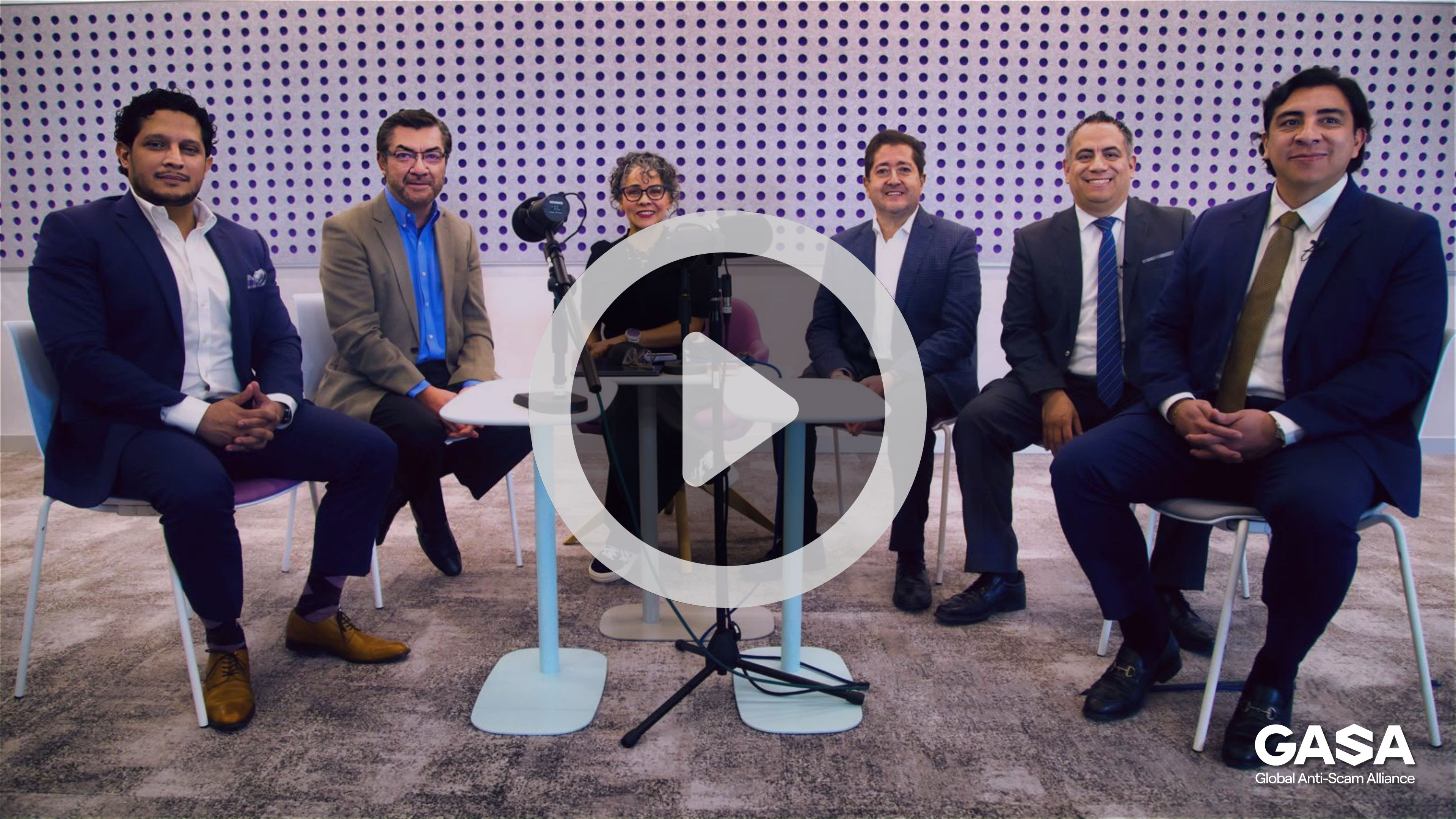
A network is beaten by a network: Mexico's banks move from remediation to prevention
GASA convened the ABM Fraud Committee and Mexican banks to advance the enriched agreement and strengthen coordinated fraud prevention across the sector.