
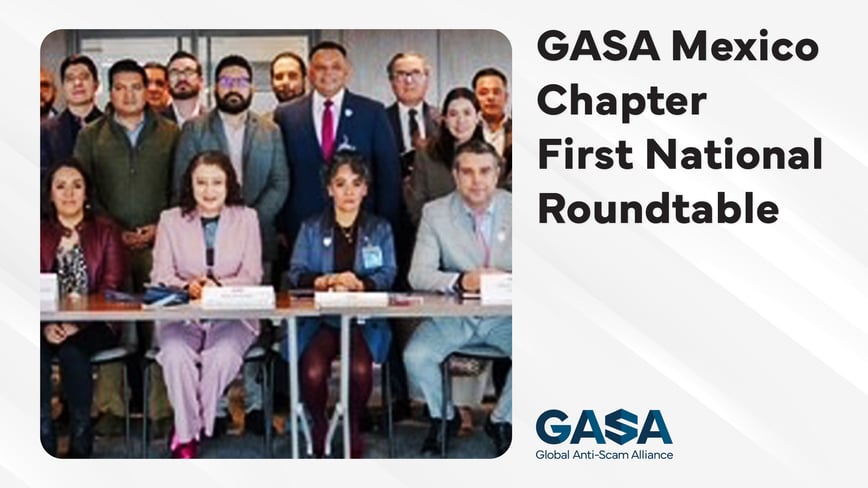
The GASA Mexico Chapter recently held its first national roundtable in Mexico City, bringing together leaders from banking, digital platforms, telecommunications, government, and civil society to discuss building a multi-sector roadmap to strengthen Mexico's response to digital scams and fraud.
Participants addressed the scale of the problem, causing annual losses estimated at 139 billion pesos according to the State of Scams in Mexico 2025 Report. They discussed the growing threats posed by Al-enabled fraud and cross-border networks, and the urgent need for action across all sectors as well as, most importantly, coordination and collaboration between the sectors. Sissi De La Peña, Director of the GASA Mexico Chapter, summarizes key takeaways from this historic meeting:
The meeting was distinguished by the landmark signing of a Memorandum of Understanding between GASA Mexico and the General Directorate of Cybersecurity of the Agency for Digital Transformation and Telecommunications of the Government of Mexico, which now joins the GASA Mexico Board. The agreement marks a first step in strengthening structured cooperation between public authorities and private-sector stakeholders.
Establishing a National Agenda for Coordinated Action
The roundtable was designed to lay the groundwork for a shared national agenda aligning prevention, detection and enforcement efforts across sectors. Participants discussed the scale of digital fraud affecting Mexico, including findings from GASA’s State of Scams in Mexico 2025 Report , which estimates annual losses at 139 billion pesos .
Representatives from major financial institutions, global technology companies, telecommunications providers, regulatorsw, civil society and legislative bodies contributed perspectives on emerging risks. Particular focus was given to the increasing role of AI-enabled impersonation, automated bot activity and cross-border criminal networks operating at scale.
The discussions highlighted a common challenge: while technical detection capabilities have advanced significantly, institutional coordination and legal processes remain fragmented. This gap can limit the ability to convert technical intelligence into enforceable action and asset recovery.
Key Themes from the Roundtable
The discussions identified several priority areas for continued collaboration:
-
The need for clearer data-sharing protocols between banks and telecommunications providers to trace fraudulent calls and payment flows more efficiently.
-
Alignment between legislative reform and operational realities, particularly in relation to AI-based fraud.
-
Strengthening predictive controls within financial institutions in line with regulatory requirements from the CNBV.
-
Enhancing prevention culture at senior decision-making level “active-co responsibility”, not only at consumer education level.
The discussion also highlighted the value of aligning national efforts with international cooperation frameworks addressing cybercrime and fraud.
Sissi De La Peña, Director of the GASA Mexico Chapter , said the objective is to establish “a true multisectoral dialogue and a national roadmap aimed at identifying an agenda against scams, fraud and digital deception. This must be a multi-actor strategy where the main capacity lies in the combined efforts of the public and private sectors to protect citizens.”
Summary and Next Steps
A detailed summary of the roundtable discussions has been prepared in both English and Spanish . These documents provide a structured overview of the strategic context, institutional challenges and proposed roadmap emerging from the session.
These summaries provide a reference point for future policy and industry discussions within Mexico and beyond.
Strengthening Multi-Sector Collaboration in Mexico
The first GASA Mexico Roundtable and the signing of the MOU reflect a shift towards more formalised collaboration between financial institutions, digital platforms, telecommunications providers and government authorities.
GASA Mexico will continue to use this forum to advance coordination between financial institutions, digital platforms, telecommunications providers, civil society and public authorities, with a focus on practical steps that strengthen the national response to scams and digital fraud.

Brazil Anti-Scam Forum 2026: Key Takeaways on Strengthening Scam Prevention in Brazil
Key insights from the Brazil Anti-Scam Forum 2026 on scam trends, prevention, intelligence sharing and cross-sector collaboration.

GASA Consumer Education Working Group Develops 5-Step Response Plan for Scam Victims
GASA’s Consumer Education Working Group sets out a five-step response plan that organisations can use and share to support people affected by scams.
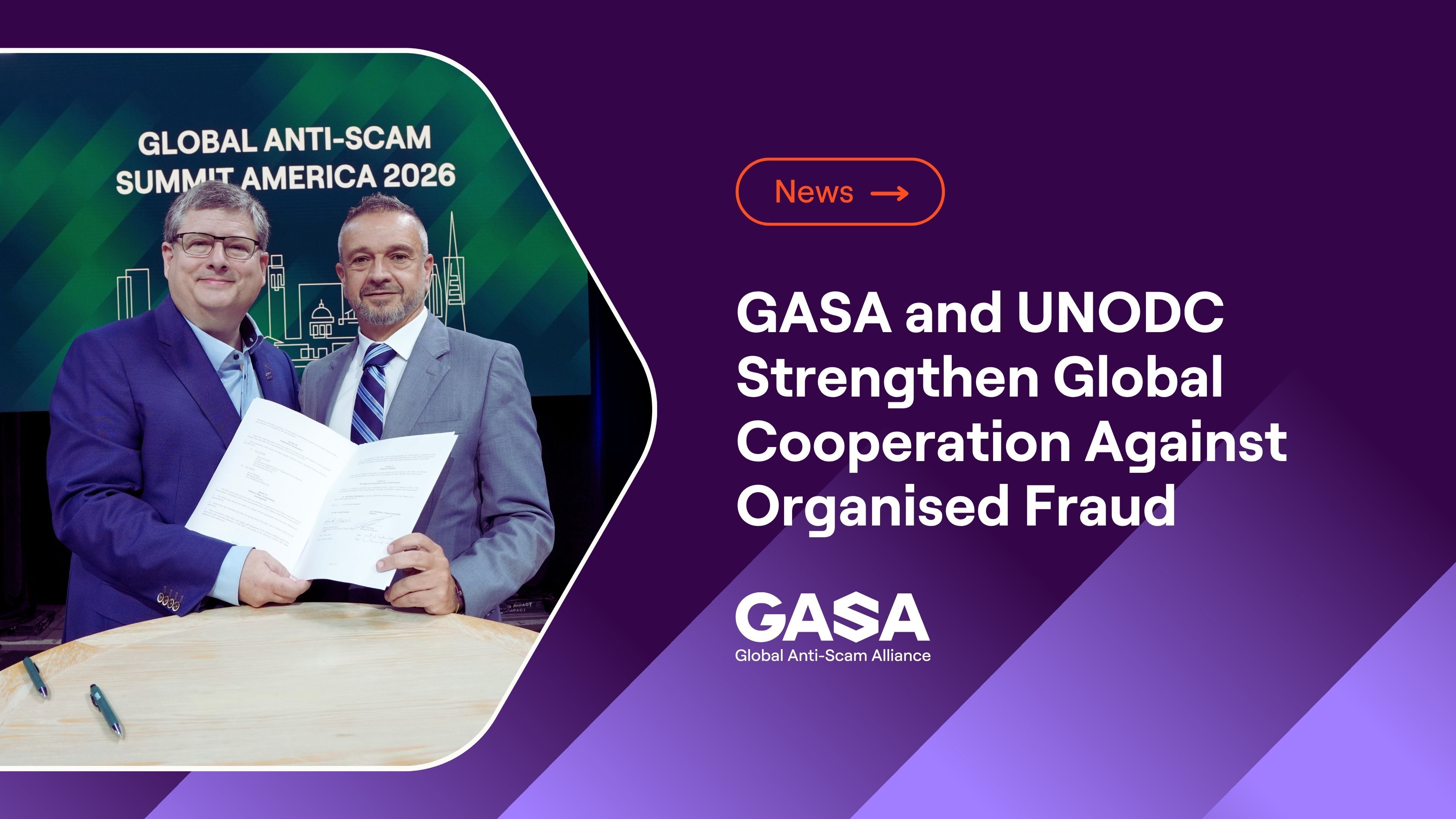
GASA and UNODC Partner to Strengthen Global Response to Organised Fraud
GASA and UNODC sign an MoU to strengthen international cooperation on fraud prevention, research, criminal justice responses and awareness.
Meet the Winners – Scam Fighter Awards at the Global Anti-Scam Summit America 2026
Meet the winners of the Scam Fighter Awards at the Global Anti-Scam Summit America 2026 and learn about their work in education, research, collaboration and technology.

Global Anti-Scam Alliance Partners with TruthScan to Integrate Deepfake Detection on scam.org
Users of scam.org will now be able to upload an image to the website for analysis to determine whether the image is authentic, edited, or generated by artificial intelligence.
From Information Sharing to Intelligence Production: GASA Mexico in Forbes
Sissi de la Peña, Director of the GASA Mexico Chapter, examines in Forbes México what the U.S. memorandum on cyber operations against fraud networks means for the country.
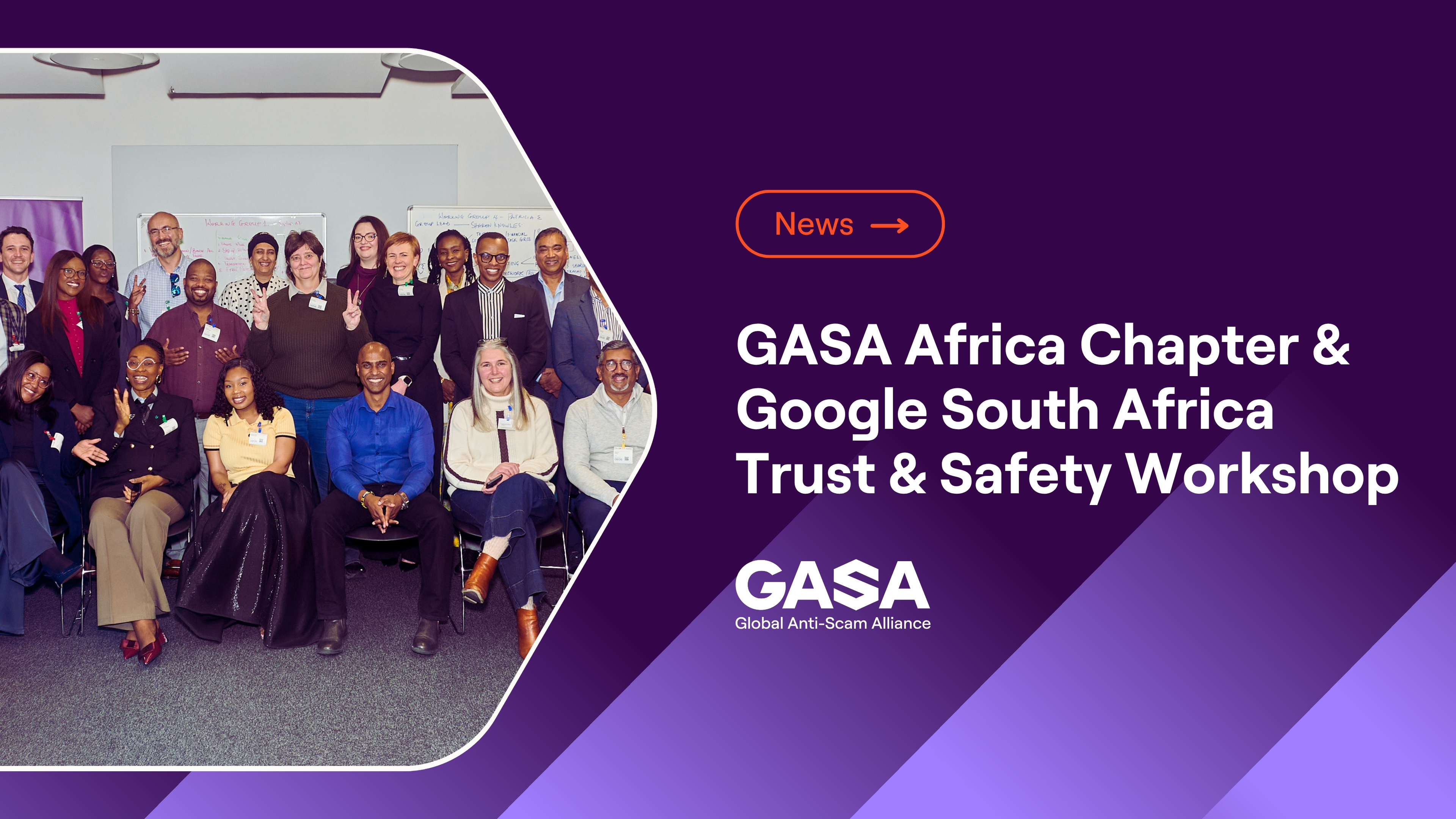
GASA and Google Trust & Safety Workshop Sets Priorities for Anti-Scam Cooperation Across Africa
GASA Africa Chapter and Google South Africa brought anti-fraud leaders together to strengthen cross-border cooperation and scam prevention.
Allstate Identity Protection Joins the Global Anti-Scam Alliance to Strengthen the Fight Against Scams and Identity Theft
Allstate Identity Protection has joined the Global Anti-Scam Alliance (GASA) as a Corporate Member within the North America Chapter.