
In the first half of 2024, India faced a surge in cyber fraud, with citizens reportedly losing over ₹11,000 crore (approximately $1.3 billion) to online scams—averaging around ₹60 crore (approximately $7.2 million) per day. A substantial share of these incidents involved spoofed international calls , where fraudsters manipulated caller IDs to appear as local Indian numbers. At its peak, India was seeing as many as 15 million spoofed calls a day , overwhelming telcos, law enforcement, and the public.
India’s Department of Telecommunications (DoT), under the Ministry of Communications , responded with a coordinated and tech-driven initiative involving telecom operators and law enforcement. Between October 2024 and January 2025 , the country reduced spoofed call volumes by 90% . As telecom fraud becomes more global and persistent, India’s response offers practical insights for regulators , industry leaders , and anti-scam coalitions worldwide.
An Escalating Threat Built on Cheap Infrastructure
For years, scammers have exploited a loophole called Calling Line Identity (CLI) spoofing to make international calls appear as if they were coming from Indian mobile numbers. India’s international termination charge (ITC) of just 65 paise per minute (less than $0.01 USD) is one of the lowest globally , which makes it economically viable to flood Indian networks with scam traffic.
These calls often impersonated trusted institutions such as the police , Reserve Bank of India (RBI) , or telecom authorities , intimidating victims into transferring money or sharing sensitive information.
A National Solution with Rapid Results
In October 2024 , the DoT launched the International Incoming Spoofed Calls Prevention System in collaboration with major telecom providers including Airtel , Reliance Jio , and BSNL . The locally-developed system proved remarkably effective. Within the first 24 hours, it blocked 13.5 million spoofed calls . Over the following weeks, the daily volume of such calls dropped to around 4–5 lakh (400,000–500,000) , representing a 90% reduction .
The DoT also mandated that all calls originating from outside India be clearly labelled as “International Call” across mobile networks. This helps recipients immediately spot impersonation attempts, particularly those claiming to be domestic authorities.
Disrupting the Ecosystem Behind Scams
Recognising that a small number of international aggregators were responsible for a disproportionate share of spoofed traffic, the DoT ordered Indian telcos to block over 20 foreign carriers and aggregators . These firms had repeatedly been flagged for handing off spoofed CLI calls into Indian networks. Blocking them disrupted a key pathway scammers were using to reach victims at scale.
At the same time, enforcement extended to SIM fraud and misuse of Indian mobile numbers. Using an AI-powered tool called ASTR , the DoT identified 78 lakh (7.8 million) fraudulent SIM cards obtained with fake or duplicate credentials. This led to 365 FIRs and regulatory action against 1,900 points of sale across the country.
Authorities also observed suspicious patterns among Indian mobile users roaming in Southeast Asia , some of whom were believed to be linked to fraud rings. As a result, 2 lakh (200,000) mobile connections and nearly 10,000 handsets were blocked.
Enabling Citizens to Take Action
India’s approach has not relied solely on backend infrastructure. Public engagement has been a priority, led by the launch of the Sanchar Saathi mobile app and portal . Available on Android and iOS, the app allows users to report fraudulent calls directly from their call logs . This makes reporting simple and accessible for the average user, while also giving investigators timely data to act upon.
Meanwhile, the DoT’s broader Digital Intelligence Platform has enabled secure information sharing between 520 participating entities . These include security agencies , law enforcement , banks , telecom firms , and messaging platforms like WhatsApp . By creating a real-time, cross-sector intelligence network, the initiative is helping India stay ahead of increasingly dynamic fraud tactics.
Lessons for Other Countries
While spoofing isn’t a new problem, the speed and scale of India’s response sets a strong precedent. Instead of relying on future regulation or fragmented enforcement, the DoT coordinated directly with telecom operators to deploy an operational solution. Key success factors included the use of AI to detect identity fraud , strategic carrier blocking , caller ID transparency , and citizen reporting tools .
At a time when scammers are turning to VPNs and real international numbers to bypass traditional defences, India’s multi-layered approach— technical , legal , and user-driven —demonstrates that coordinated action can still produce results. The DoT estimates that these efforts have helped safeguard ₹2,500 crore (approximately $300 million) in assets .
India’s experience shows that meaningful progress against scam infrastructure is possible when governments act decisively, partner with the private sector, and design tools that empower the public. While there’s no one-size-fits-all solution to telecom fraud, the DoT’s approach offers a clear blueprint: stop spoofing at the source, cut off known bad actors, and create shared intelligence networks that evolve with the threat. For countries grappling with the same challenges, this is more than a success story—it’s a playbook worth studying.
Sources
TOI – Telecom department boosts efforts to block fraud from international numbers
Telecom Review – DoT Blocks 90% of International Spoofed Calls in Cybercrime Crackdown
Business Standard – Telcos block 20 global carriers allowing spoofed calls to reach India
Economic Times – Global scam calls surge in India as fraudsters exploit cheap international routes
About the Author
James Greening , operating under a pseudonym, brings a wealth of experience to his role. Formerly the sole driving force behind Fake Website Buster, James leverages his expertise to raise awareness about online scams. He currently serves as a Content Marketing & Design Specialist for the Global Anti-Scam Alliance (GASA).
James’s mission aligns with GASA’s mission to protect consumers worldwide from scams. He is committed to empowering professionals with the insights necessary to detect and mitigate online scams, ensuring the security and integrity of their operations and digital ecosystems.

BanCoppel joins the Global Anti-Scam Alliance to bolster fraud prevention and safeguard individuals entering the banking system.
BanCoppel has joined the Global Anti-Scam Alliance (GASA) as a Corporate Member of the GASA Mexico Chapter.

The emotions scammers exploit: how social engineering influences our decisions
How scammers use fear, urgency, excitement and trust to influence decisions, and how recognising these tactics can help people prevent fraud.

Global Anti-Scam Alliance Welcomes Mastercard as Founding Member of Its Mexico Chapter
The Global Anti-Scam Alliance (GASA) announces the membership of Mastercard as a Member of its Mexico Chapter.

What Uganda’s IVR Trial Shows About Practice-Based Scam Prevention
A Uganda IVR trial shows how practice-based fraud prevention helped mobile money users reduce losses and increase reporting.
FTC’s Never EVER Campaign Helps Prevent Elder Financial Abuse With Simple, Specific Scam Warnings
The FTC’s Never EVER campaign uses simple, specific imposter scam warnings to help prevent elder financial abuse and support coordinated consumer education.
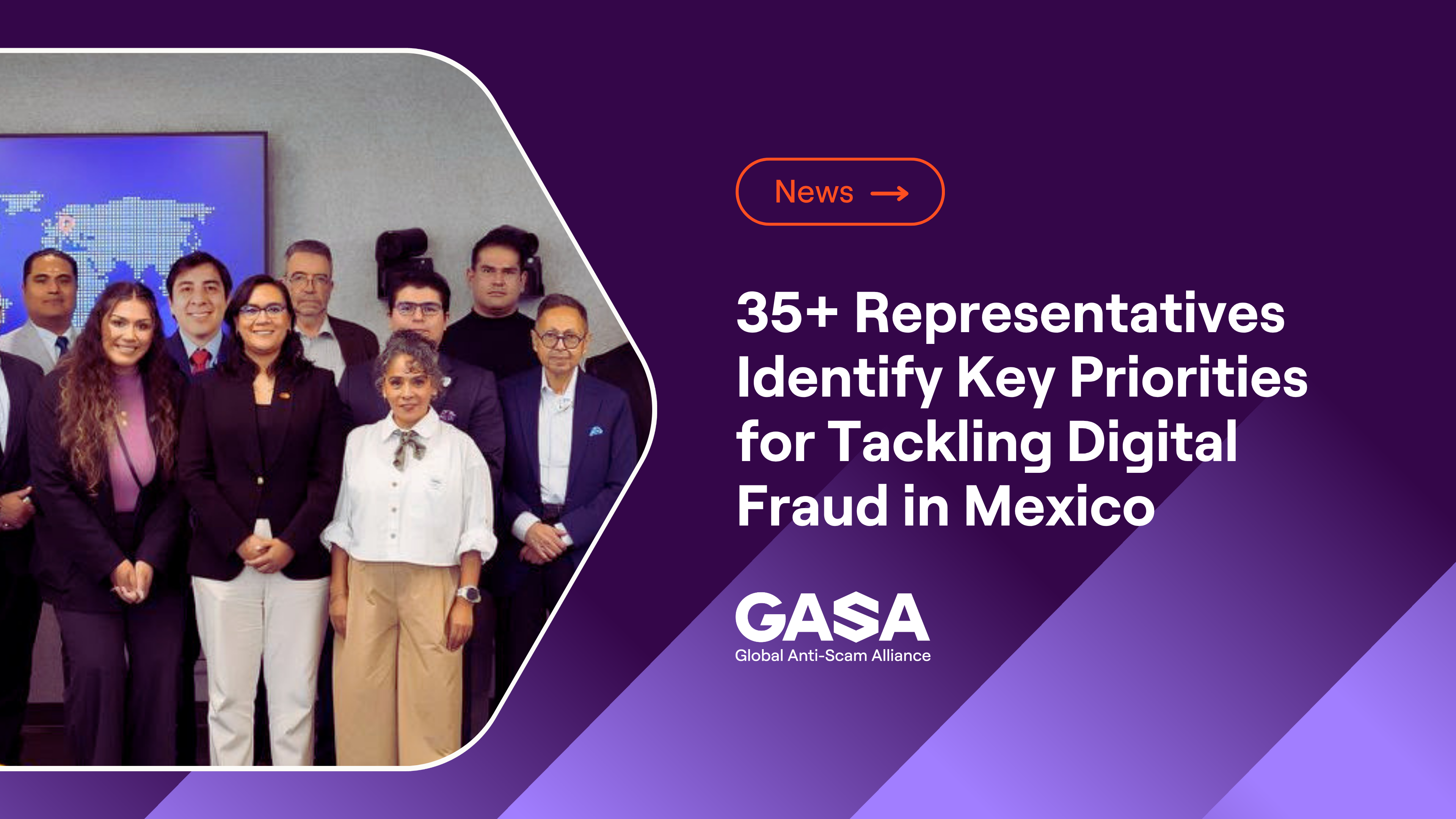
GASA Mexico's Second Roundtable Advances Coordinated Action Against Digital Fraud
GASA Mexico's second roundtable brought together more than 35 representatives to strengthen coordination across cybersecurity, fraud prevention and other sectors.
Cognyte Joins Global Anti-Scam Alliance to Fight Financial Fraud Threats
Cognyte, a global leader in investigative analytics software, today announced its membership in the Global Anti-Scam Alliance (GASA).
A network is beaten by a network: Mexico's banks move from remediation to prevention
GASA convened the ABM Fraud Committee and Mexican banks to advance the enriched agreement and strengthen coordinated fraud prevention across the sector.