
The year is 2020, and Finland has just lost EUR 7.1 million to scam calls, mostly technical support staff scams. Fast forward to 2022 and the Finnish only lost EUR 600 to scam calls according to Klaus Nieminen , the Chief Specialist at Finnish Transport and Communications Agency Traficom . So, what changed? In 2022, Traficom made deliberate efforts to eliminate caller ID spoofing.
Using an update to Regulation 28 which requires telecom operators to stop call spoofing before it reaches the recipient, Traficom has all but eliminated scam calls in Finland.
What is Caller ID Spoofing?
Caller ID spoofing is when a caller intentionally falsifies their info which is transmitted to mask their real identities. The Caller ID number may be spoofed to resemble a government agency, business, or someone in the contact list, attempting to mislead users into picking up the call. Phone number spoofing has been the go-to move for both telemarketers and scammers for years, but it looks like that’s about to change.
Through caller ID spoofing, scammers can easily manipulate users into giving them sensitive personal information or remote access to their computers. According to the Global State of Scam 2023 published by GASA, both phone and SMS scams are common worldwide. Beyond the direct criminal advantages, the growing trend of mobile number spoofing has caused significant distress to individuals whose numbers were used in scam calls.
Finland seems to have found a way to stop this thanks to combined efforts by both the government and telco operators. Klaus Nieminen , the Chief Specialist at Finnish Transport and Communications Agency Traficom notes, "Thanks to the blocking of scam calls made from landline numbers that was implemented in the summer of 2022, scam calls from technical support collapsed.”
How Finland Found Success Blocking Scam Calls
Just like most countries in the world, Finland has had to deal with a lot of call spoofing often leading to losses running into millions. In May 2022, Traficom updated its regulations, introducing new requirements for telecommunications operators to combat caller ID spoofing and the delivery of scam calls. The goal of this update is to prevent the misuse of Finnish phone numbers in international cybercrime and to decrease the number of scam calls coming from overseas. These obligations were implemented in stages: starting with fixed network numbers (landlines) on July 1, 2022, with mobile network numbers beginning on October 2, 2023.
The measures saw Finland block 200,000 calls a day within the first two weeks of operation. That’s 200k attempts on people, most of whom, would have likely lost money and have had their identity stolen by fraudsters.
Elina Ussa , Managing Director of the Finnish Federation for Communications and Teleinformatics FiCom says, “Finnish telecommunications operators are constantly striving to ensure the security of Finnish communications services. As a result of these measures, online criminals can no longer carry out scams based on spoofing Finnish phone numbers.”
So, how is this carried out? The process is split into three main segments: technical measures, regulation enforcement and network filtering by Finnish telecom providers, and active oversight and enhancement.
Technical Measures
To tackle spoofing, telecommunications operators have established a system to manage all international traffic. This system allows operators to block unauthorized calls using Finnish numbers from abroad while ensuring legitimate calls from Finnish travelers are allowed. This is achieved through secure verification services developed by Numpac, which safeguard user privacy and effectively halt Finnish mobile numbers' spoofing as of October 2, 2023. This system has significantly reduced scam calls, blocking over 200,000 attempts daily and approximately half a million monthly.
Additionally, similar strategies have been implemented for text messages, including the registration of protected SMS Sender IDs by Traficom to prevent spoofing. This service guarantees that only authorized parties can use specific SMS Sender IDs when messaging Finnish citizens. Telecommunications operators activate this protection three months after the SMS Sender ID is registered.
Regulatory Enforcement
Traficom introduced a regulation mandating traffic filtering, ensuring that all telecommunications operators adopt the required preventive measures. This was vital because, as the saying goes, "a chain is only as strong as its weakest link." If even one operator failed to implement these filters, it would leave a gap for scammers to exploit.
Perpetual Cooperation
The ongoing exchange of information and cooperative efforts have been pivotal to Finland’s achievements. Both telcos and government agencies realized that their strength is in working together. The Finnish National Bureau of Investigation has also been at the forefront by uncovering various methods used by scammers to help telcos develop effective countermeasures. Given the ever-evolving tactics of cybercriminals, continuous collaboration and sharing of information is indispensable if we are to beat emerging threats.
Key Takeaways from Finland Success Story
Finland's success against spam calls has sparked significant interest worldwide, and it's easy to see why. Who wouldn’t want to get rid of the annoying scam calls that lead to substantial losses? Jarkko Saarimäki , Director-General of Traficom remarks, “The solutions implemented in Finland have also garnered a great deal of interest among your colleagues in different parts of Europe, who are eager to hear and learn about the work that you have done in the areas of telecommunications operations, software solutions, and regulation.”
One of the key pillars is the cooperation between the different players in Finland. Starting in 2021, Finnish authorities and telecommunications operators have joined forces to combat the complex issue of Caller ID spoofing. This partnership led to the rollout of prevention measures in summer 2022, greatly reducing scam calls and cutting down criminal proceeds.
Traficom has been at the forefront and recently awarded different parties at the 2024 Information Security Trailblazer which was aimed at celebrating the cooperation between telcos and public authorities.
“Your cooperation is an excellent example of information security trailblazing that affects the everyday lives of all mobile phone users,” said Jarkko Saarimäki.
They say it takes a village to raise a child, at Global Anti-Scam Alliance we say, it takes a network to defeat a network. The fight against scams can only be won if we all join forces. The success in Finland against Caller ID spoofing is proof that it can be done!
BanCoppel joins the Global Anti-Scam Alliance to bolster fraud prevention and safeguard individuals entering the banking system.
BanCoppel has joined the Global Anti-Scam Alliance (GASA) as a Corporate Member of the GASA Mexico Chapter.
The emotions scammers exploit: how social engineering influences our decisions
How scammers use fear, urgency, excitement and trust to influence decisions, and how recognising these tactics can help people prevent fraud.
Global Anti-Scam Alliance Welcomes Mastercard as Founding Member of Its Mexico Chapter
The Global Anti-Scam Alliance (GASA) announces the membership of Mastercard as a Member of its Mexico Chapter.
What Uganda’s IVR Trial Shows About Practice-Based Scam Prevention
A Uganda IVR trial shows how practice-based fraud prevention helped mobile money users reduce losses and increase reporting.
FTC’s Never EVER Campaign Helps Prevent Elder Financial Abuse With Simple, Specific Scam Warnings
The FTC’s Never EVER campaign uses simple, specific imposter scam warnings to help prevent elder financial abuse and support coordinated consumer education.
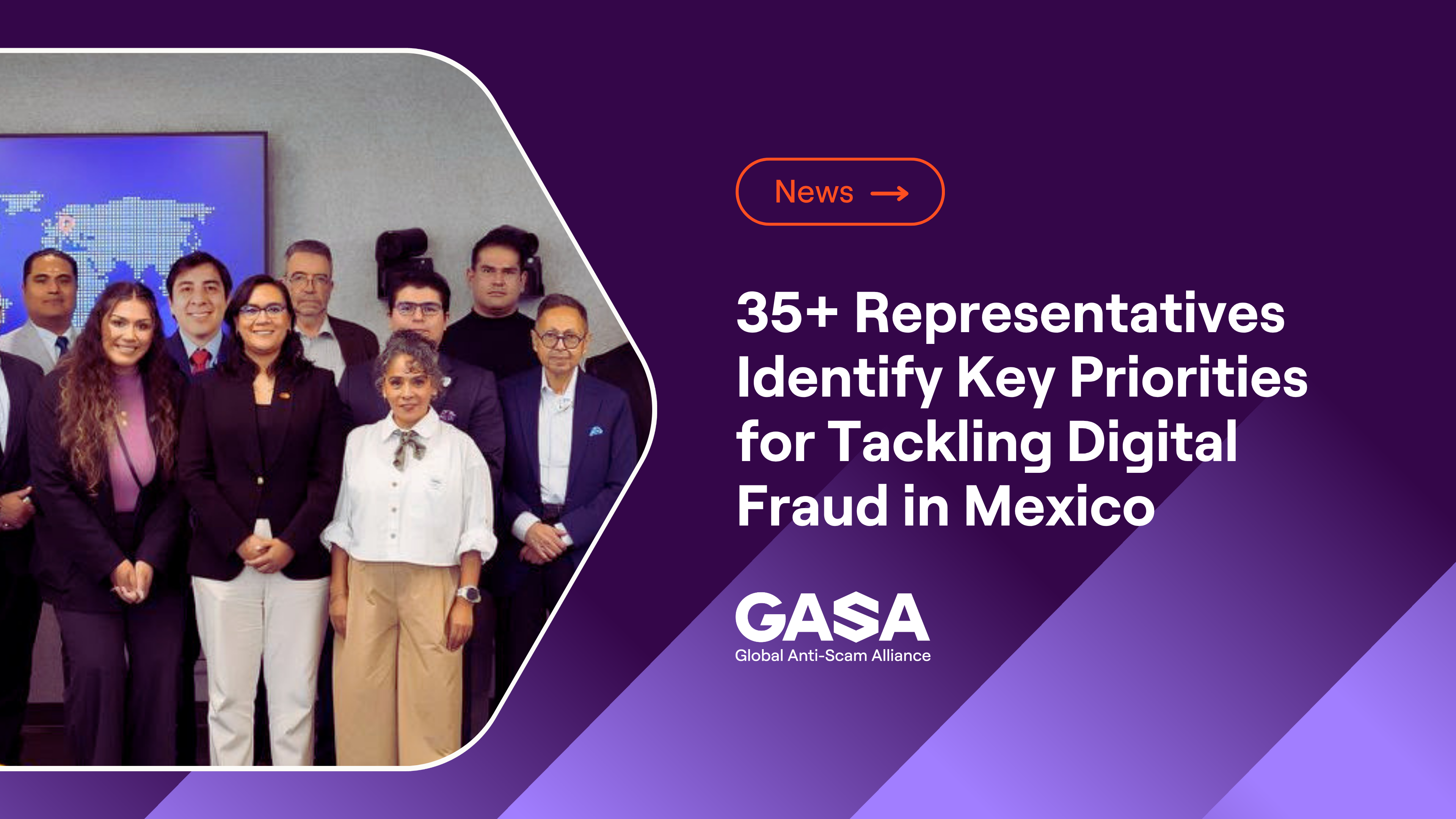
GASA Mexico's Second Roundtable Advances Coordinated Action Against Digital Fraud
GASA Mexico's second roundtable brought together more than 35 representatives to strengthen coordination across cybersecurity, fraud prevention and other sectors.
Cognyte Joins Global Anti-Scam Alliance to Fight Financial Fraud Threats
Cognyte, a global leader in investigative analytics software, today announced its membership in the Global Anti-Scam Alliance (GASA).
A network is beaten by a network: Mexico's banks move from remediation to prevention
GASA convened the ABM Fraud Committee and Mexican banks to advance the enriched agreement and strengthen coordinated fraud prevention across the sector.