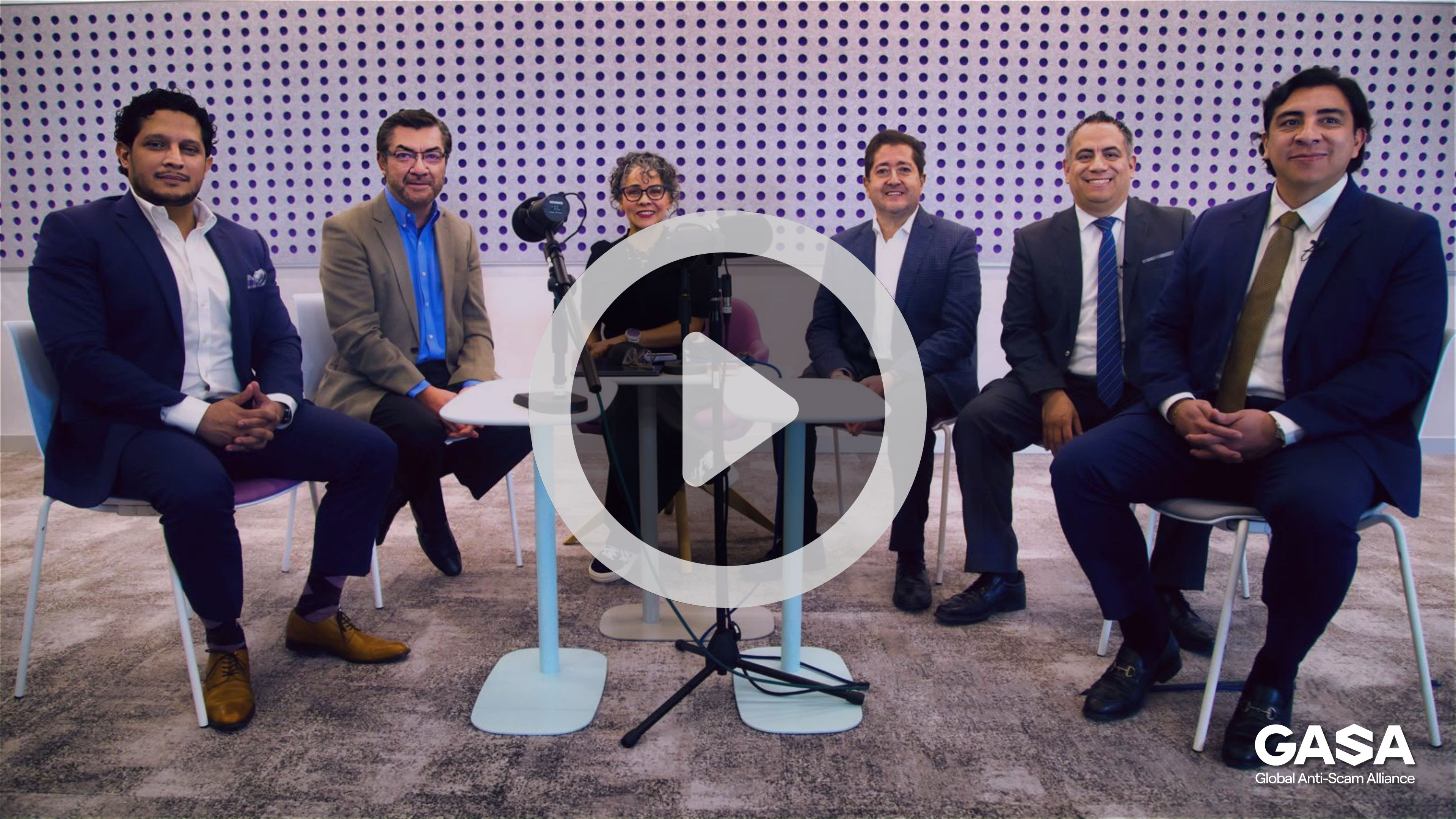
Australia's Best Interventions Against Scammers with Toby Evans of the Australian Payment Network (AusPayNet) - Global Anti-Scam Summit Europe 2024

Date of Event:  2024-06-24

Event:  Global Anti-Scam Summit Europe 2024

Toby Evans from AusPayNet discussed Australia's recent successes and ongoing efforts in combating scams. He emphasized the critical role of accurate data in identifying issues and efficiently allocating resources. Evans mentioned a significant reduction in scam losses, with official data showing a decrease of 133%, bringing total losses down to 2.7 billion AUD. This improvement is attributed to enhanced data sharing and collaboration among organizations like the Australian Competition and Consumer Commission (ACCC) and the National Anti-Scam Center.

Evans highlighted several key initiatives, including the Confirmation of Payee (CoP) system, which matches payee details to reduce mistaken payments and certain types of scams. The implementation of risk-based friction, setting payment limits for high-risk merchants, and using behavioral tools to detect and prevent fraud has also been effective. Banks like Westpac and Commonwealth Bank have introduced interactive consumer alerts, prompting consumers to verify transactions and think twice before proceeding.

A notable development is the Fraud Reporting Exchange, a system that allows for quick reporting and shutting down of scam enablers, such as phone numbers and URLs. This system also facilitates funds tracing and repatriation within a crucial 72-hour window. Evans discussed the importance of an ecosystem approach, involving collaboration across sectors like telecommunications and digital currency exchanges to block scam attempts and improve overall security. Government-led website takedowns have also been successful, removing thousands of scam-related sites.

Evans mentioned the upcoming Scams Code, a regulation requiring all industries involved in the scam lifecycle to adhere to minimum standards, with financial penalties for non-compliance. He also stressed the importance of international collaboration, particularly with partners in the UK and India, to combat cross-border scams and build intelligence networks.

The session concluded with a discussion on handling false positives in scam reporting and the importance of consumer education. By informing consumers about new security features and verification methods, the overall effectiveness of these initiatives can be enhanced. Australia's multi-faceted approach, involving accurate data, cross-sector collaboration, and innovative technological solutions, has led to significant reductions in scam losses and improved overall security. Continued efforts and international partnerships remain crucial for sustaining and building on these successes.

Jun 23, 2024
3 minute read
Category
Event - GASS Europe 2024 Video Presentations Industry - Financial Authorities
Written by
Sam Rogers
Share article

Latest blogs & research

Romance scams continue to grow worldwide, exploiting trust, emotional vulnerability, and online relationships to manipulate victims into financial and emotional harm. Timed around Brazil’s Valentine’s Day period, the latest GASA meet-up, Golpes do Amor — Como eles acontecem e como se proteger, explored how these scams operate, why they are so effective, and how individuals can better recognise warning signs before becoming victims.  Hosted by the Brazil Chapter of the Global Anti-Scam Alliance (GASA), the discussion highlighted findings from O Estado dos Golpes no Brasil. According to the report, romance scams have already affected 18 per cent of surveyed Brazilian adults, while 6 per cent of victims reported falling for this type of scam more than once. Beyond financial losses, speakers emphasised the severe emotional consequences victims often experience, including shame, trauma, and loss of trust.  Read the Report – O Estado dos Golpes no Brasil  Speakers: Rose Leonel, Journalist and Founder – ONG Marias da Internet Tanila Savoy, Founder – Associação Nacional de Vítimas da Internet (ANVINT) Lisandréa Salvariego Colabuono, Police Chief and Coordinator – NOAD, Polícia Civil de São Paulo Renata Salvini, Brazil Chapter Director – Global Anti-Scam Alliance  A major focus of the discussion was the manipulation techniques commonly used in romance scams. Speakers explained how scammers frequently create convincing identities, often pretending to be foreigners, military personnel, or individuals living abroad, while avoiding in-person meetings and building emotional dependency over time. Urgency and financial pressure were highlighted as major warning signs, particularly when victims are pushed to act quickly or send money under emotional circumstances.  The webinar also explored the lasting psychological impact of these crimes and reinforced that victims should never be blamed. Rose Leonel shared her personal story of transforming trauma into advocacy after becoming a victim of non-consensual intimate image sharing, an experience that ultimately contributed to the creation of the Rose Leonel Law in Brazil. Speakers stressed the importance of reporting scams, noting that even small details can assist investigations and help prevent future victims.  The conversation reinforced the need for greater public awareness, victim support, and collaboration between civil society, law enforcement, and digital platforms to address emotionally manipulative fraud more effectively. Through initiatives like this meet-up, GASA continues working with experts and organisations worldwide to strengthen scam prevention and support victims of online fraud.  Watch the full discussion below to learn how individuals and organisations can better recognise and respond to romance scams.

Romance Scams in Brazil: Warning Signs and Prevention

Experts from Brazil discuss how romance scams work, their emotional impact, and how victims can protect themselves online.

Topic - Scam Awareness Video Event - GASA Meet-Ups Industry - Law Enforcement
Acción coordinada. Impacto real. México lidera el cambio

De Viena a la Acción: GASA México y UNODC México Cierran Brechas Operativas

GASA México y UNODC México formalizan un Acuerdo de Intercambio de Comunicaciones, convirtiendo los compromisos globales de Viena en acción coordinada contra el fraude.

News Topic - Fraud Policy Industry - Policy Makers Region - Latin America
un global fraud summit what comes next discussions

What the UN Global Fraud Summit Discussions Tell Us About What Comes Next

Watch expert discussions from the UN Global Fraud Summit on the industrialisation of fraud, global collaboration, public–private frameworks, and next steps for implementation.

Best Practices Industry - National Cyber Security Centers (NCSCs) Region - Europe Region - Global
gasa webinar

Game Over for Scammers: Regional Defenses Against Online Gambling–Related Scams

Experts from INTERPOL, ACMA, and DGOJ examine how gambling-related scams operate and how global enforcement is responding.

Region - Europe Video Topic - Fraud Policy Event - GASA Meet-Ups
22,000 Fraud Signals Bank Attack Trends – March 2026

What 22,000 Fraud & Cyber Crime Operator Signals Reveal About the State of Bank Attacks

Falkin's analysis of 22,661 fraud operator signals shows how bank attacks are evolving across regions, typologies, and AI-driven scam infrastructure.

Research Region - Global Scam Trends Topic - Fraud Research
Microsoft White Paper  on Link Analysis and Digital Fingerprinting in Fraud Detection

Reinventing Fraud Detection Through Digital Fingerprinting and Link Analysis

A Microsoft white paper examines how digital fingerprinting and link analysis shift fraud detection from isolated events to connected, network-level intelligence.

Research Topic - Fraud Prevention Region - Global Topic - Scam Detection
gasa meet-up

On the Frontlines: Fighting AI-Powered Scams & Fraud

Experts from Microsoft, OpenAI, Google and C4ADS share how AI is shaping scams and how to fight back.

Topic - Fraud Prevention Region - Global Video Topic - Scam Detection

Telecoms on the Front Line: GASA at the Stimson Center Dialogue on Combating Scams

According to GASA’s Global State of Scams Report, telecommunications channels—voice and SMS in particular—remain a predominant “front door” for scams.

News Topic - Fraud Policy Region - North America Industry - Policy Makers