
Singapore’s Scam Situation
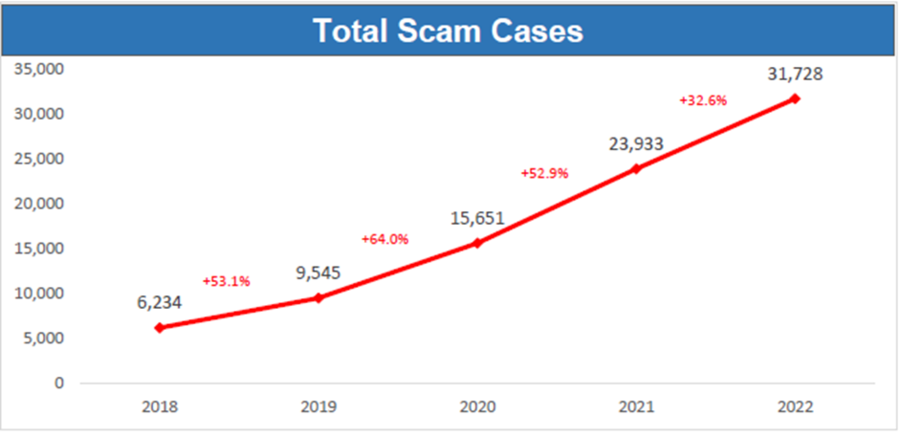
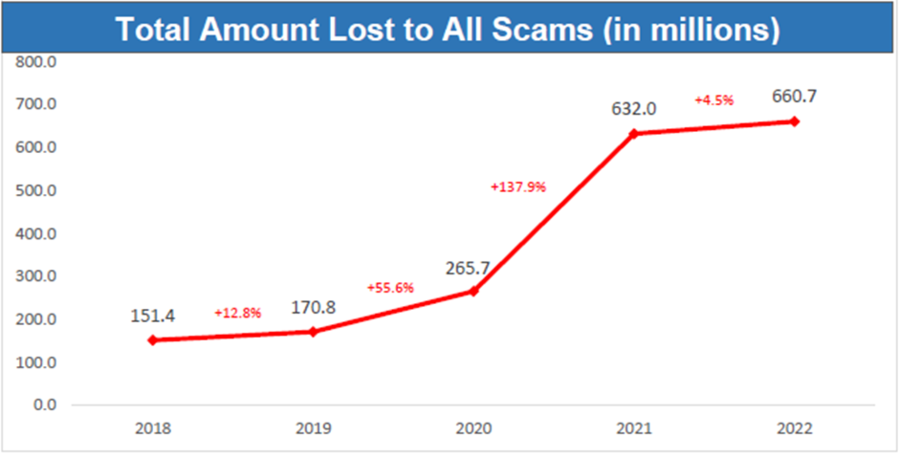
Scams continue to be a key concern in Singapore. The total number of scam cases increased by 32.6% to 31,728 in 2022, from 23,933 cases in 2021. The total amount reported to have been cheated from all scams increased by 4.5% to $660.7 million in 2022, from $632.0 million in 2021.
Phishing scams (7,097 cases), job scams (6,492 reports), e-commerce scams (4,762 reports), investment scams (3,108 reports) and fake friend call scams (2,106 reports) were the top five scam types of 2022. These five scam types made up 82.5% of the top ten scams reported in Singapore in 2022.
Set-up of the Anti-Scam Centre
To combat scams, the Singapore Police Force set up the Anti-Scam Centre in 2019 as a nerve centre for investigating scam-related cases. The Anti-Scam Centre’s focus is to mitigate victims’ losses through the swift interdiction of the proceeds of crimes.
To arrest the scam situation, the Anti-Scam Center adopts six “I”s in their approach to disrupt scammers’ operations and mitigate victims’ monetary losses:
Information Management
Intervention
Investigations
Innovation
Inculcation
International Cooperation
Information Management: One Source for Scams
The Anti-Scam Centre disrupts scammers operations through the use of technology to track island-wide scam trends and sense-make the voluminous crime data that the Centre processes every day. Based on crime data, the Anti-Scam Centre identifies phone lines, WhatsApp lines and online accounts used to perpetrate scams.
Intervention through Public-Private Partnerships
The Anti-Scam Centre partners stakeholders from the public and private sectors to fight scams. Under Project FRONTIER (which stands for Funds Recovery Operations and Networks Team, Inspiring Effective Resolutions), the Anti-Scam Centre collaborates with more than 80 stakeholders comprising financial institutions, fintech companies, telcos and online marketplaces. This has shortened turnaround times for freezing of bank accounts and enabled the recovery of more monies transferred to scammers.
The Singapore Police Force also worked with the Monetary Authority of Singapore to co-locate staff from six major banks at the Anti-Scam Centre. This has enhanced the Singapore Police Force’s capabilities to freeze accounts and trace the flow of funds. By working closely with the Monetary Authority of Singapore and local banks, the Singapore Police Force can freeze bank accounts suspected of being involved in scam activities within a day. This is a significant improvement from 14 to 60 days, which was the timeline for such operations in 2019.
The results are impressive: Between June 2019 and 2022, 40,900 bank accounts were frozen, leading to the recovery of more than SGD310 million, 25% recovery rate based on the reports, which were referred to the Anti-Scam Centre.
The Anti-Scam Centre also works closely with telecommunication companies and online marketplaces. In the last 3.5 years, more than 11,200 mobile phone lines were terminated, more than 54,200 WhatsApp accounts were reported, and more than 7,400 suspicious online monikers and advertisements were removed.
Investigation: Enforcement, Operations and Prosecution
The Anti-Scam Centre takes tough anti-scam enforcement actions against local scammers and money mules. Money mules refer to individuals who assist the scammers in bank transfers, relinquish bank accounts for personal or monetary gains or provide Singpass passcodes (a digital identity) to allow scammers to open companies, bank accounts or subscribe phone lines. In 2022, the Anti-Scam Centre, worked with the seven Scam Strike Teams in the Land Divisions of the Singapore Police Force to carry out 25 island-wide anti-scam enforcement operations, leading to the investigation of more than 8,000 money mules and scammers.
Innovation: Using Tech to Fight Back
The Anti-Scam Centre leverages technology to fight online scams. One example is the collaboration with the Open Government Products (a government agency) to launch ScamShield. ScamShield is an app, developed both for IOS (Apple) as well as Android. ScamShield identifies and filters scam messages using machine learning algorithm. It also blocks calls from phone numbers that were used in other scam cases or reported by ScamShield users. The ScamShield app for iOS and Android was launched on 20 November 2020 and 28 September 2022 respectively. As of end 2022, the ScamShield app has been downloaded by close to 500,000 users. More than 7.4 million SMSes have been reported as potential scams, and more than 47,000 unique scam-tained phone numbers have been blocked.
The Anti-Scam Centre focuses on upstream interventions to disrupt scammers’ operations and leverages technology to strengthen its sense-making capabilities. One successful innovation is Project COMBAT (Centralised Operational Messaging Bot Addressing Threats). Under this project, the Centre analyses information from open sources, extracts phone numbers using optical character recognition software, sense-makes and then employs Robotic Process Automation to send alerts to victims before they realise that they have been scammed. In 2022, the Anti-Scam Centre alerted more than 11,000 potential scam victims.
Inculcation: Communicate like Mad
As the best defence against scams is a discerning public, the Singapore Police Force has stepped up the public education efforts. In 2023, the Singapore Police Force launched the new national anti-scam campaign, “I can ACT against scams”, which calls on the public to take concrete actions to protect themselves and their loved ones by taking the three key steps of “A”, “C”, “T”:
“A” for Add : Add security features such as installing the ScamShield app, setting transaction limits for internet banking transactions and enabling 2-Factor Authentication for personal accounts.
“C” for Check : Always be vigilant, take time to spot scam signs and ensure transactions are done via authentic platforms, and with legitimate parties.
“T” for Tell : Members of the public should tell authorities about scam encounters. The faster scams are reported to the authorities, the faster the authorities can take action to prevent more people from falling prey to scams. The public should also tell their family members and friends about scams, to raise our collective defence against scams.
For more information on scams, members of the public can visit www.scamalert.sg or call the Anti-Scam Helpline at 1800-722-6688.
The Anti-Scam Centre works with the media to conduct scam public education through television programmes such as CrimeWatch.
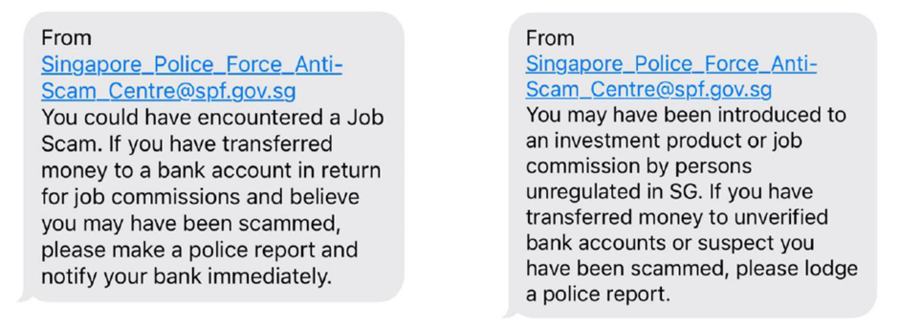
The Anti-Scam Centre also uses innovative methods to cascade crime prevention messages to the public. In November 2022, the Anti-Scam Centre developed a 30-second video based on the latest scam trends to spread scam awareness via communication channels such as WhatsApp and Telegram. As WhatsApp and Telegram are the top contact methods used by scammers, the Anti-Scam Centre produced and disseminated short videos with screenshots of scammers’ exact messages and Police advisories to members of the public via the same medium. The video went viral on social media and reached 178,500 Telegram users and 8,100 WhatsApp users in the first 24 hours alone when it was first launched. To date, the videos have reached more than 900,000 members of the public.
International Cooperation is a Must
The vast majority of scams are perpetrated by scammers based outside Singapore. The Singapore Police Force continues to work closely with foreign counterparts and partners to exchange information and conduct joint investigations and operations against transnational scams. Between June 2021 and December 2022, the Singapore Police Force worked with overseas law enforcement agencies such as the Royal Malaysia Police, the Hong Kong Police Force and Interpol to dismantle 18 Job Scam syndicates, three Internet Love Scam groups, eight Government/China Official Impersonation Scam syndicates and one Transnational Phishing Scam syndicate, leading to the arrest of more than 300 suspects.
Looking ahead
Fighting scams is a community effort. The Singapore Police Force will continue to work closely with other Government agencies and private stakeholders to strengthen our public education and awareness efforts, to better protect the public against scams.

-2.jpg)
Fighting Fraud Without Borders: Cross-Regional Collaboration in Latin America and Beyond
A roundtable at GASS America examined cross-regional collaboration in Latin America and beyond, focusing on fraud prevention, consumer protection and response.
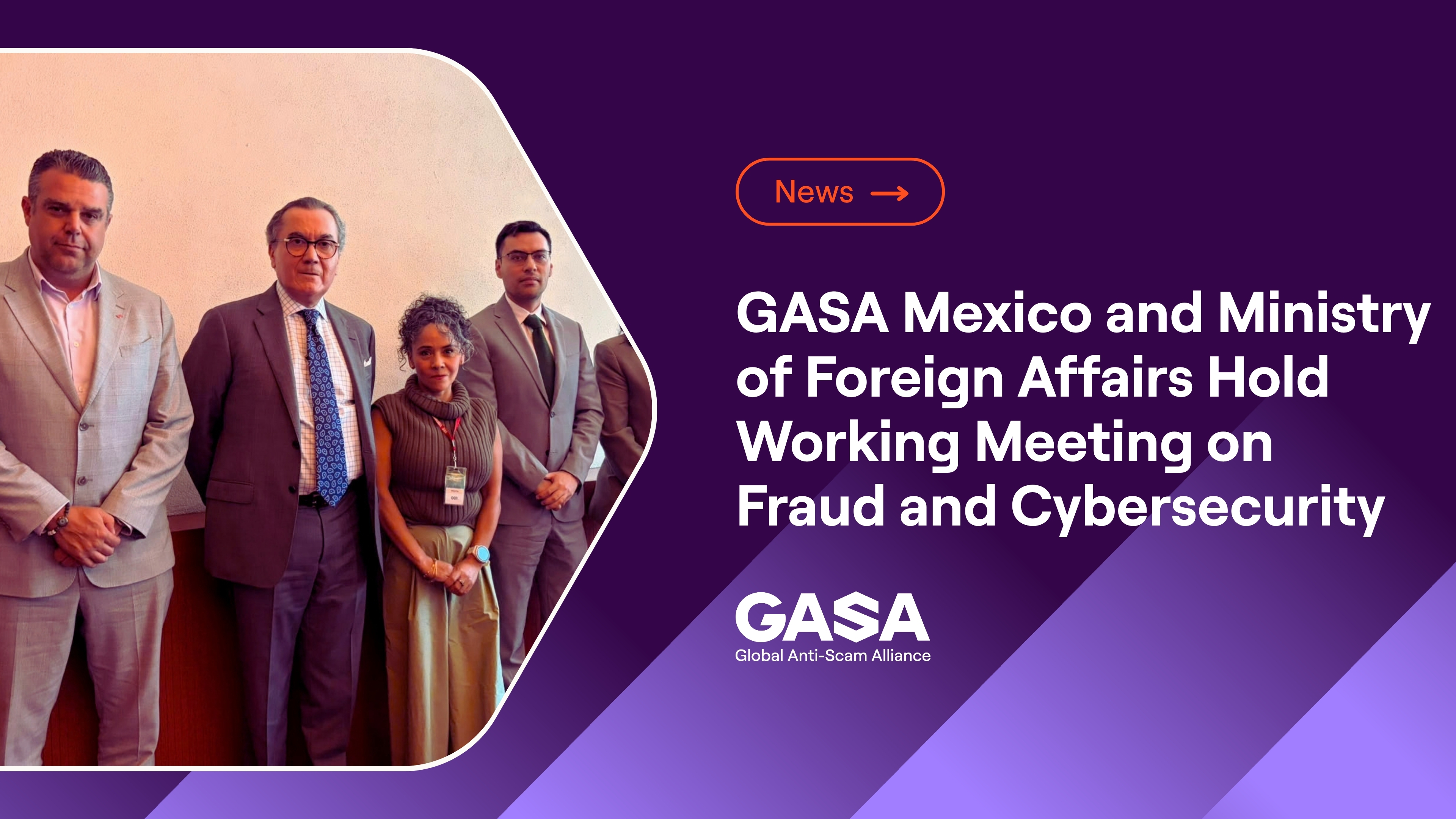
GASA Mexico and the Ministry of Foreign Affairs Hold Working Meeting Ahead of the Chapter’s Annual Forum, “From Coalition to Action”
GASA Mexico and the Ministry of Foreign Affairs convened Mastercard and Scotiabank to discuss fraud, cybersecurity, information sharing and emerging technologies.
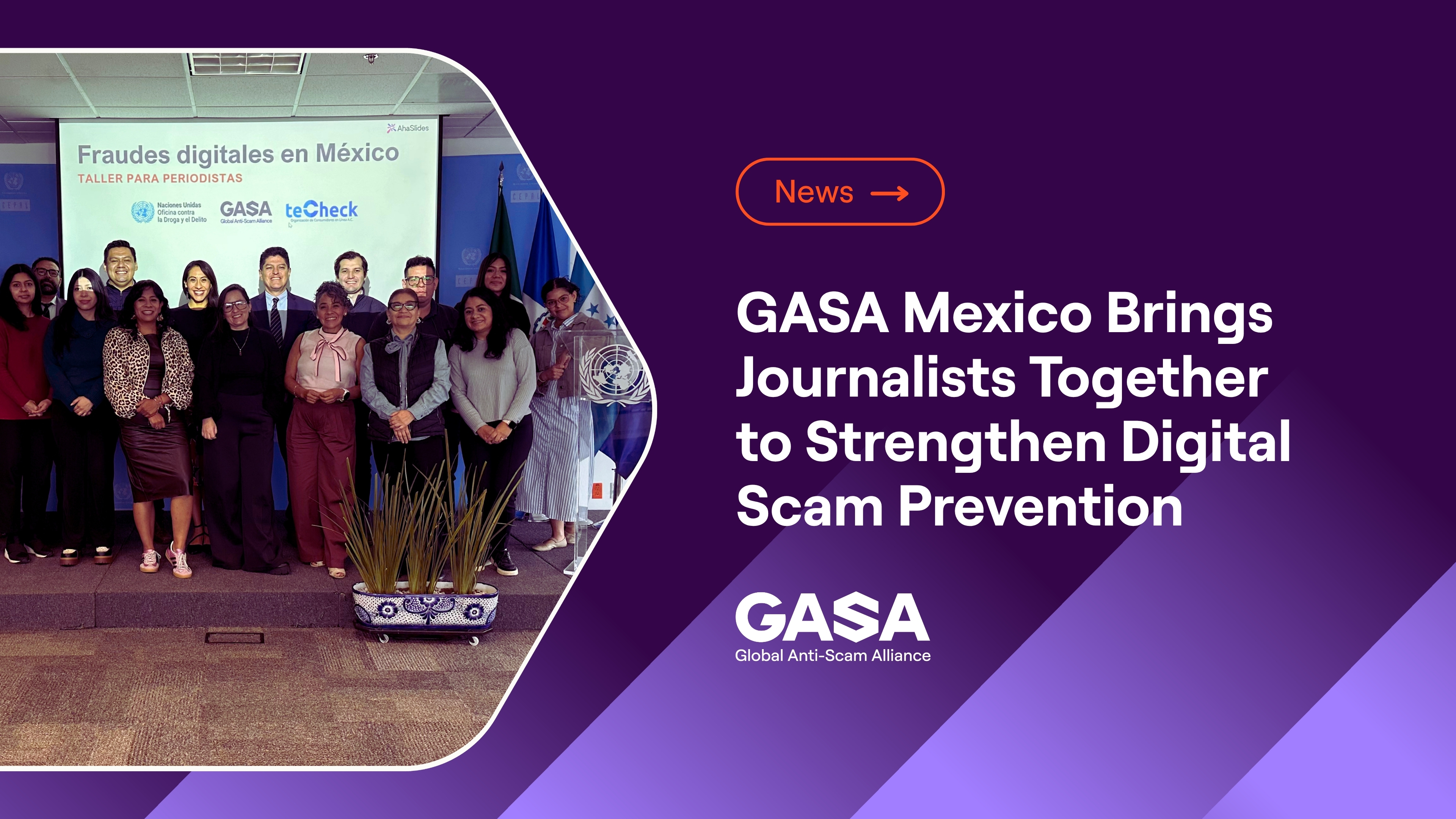
GASA Mexico Workshop Examines the Role of Journalism in Digital Scam Prevention
GASA Mexico brought together journalists and editors to discuss digital scams, victim-centred reporting and the role of media in scam prevention.
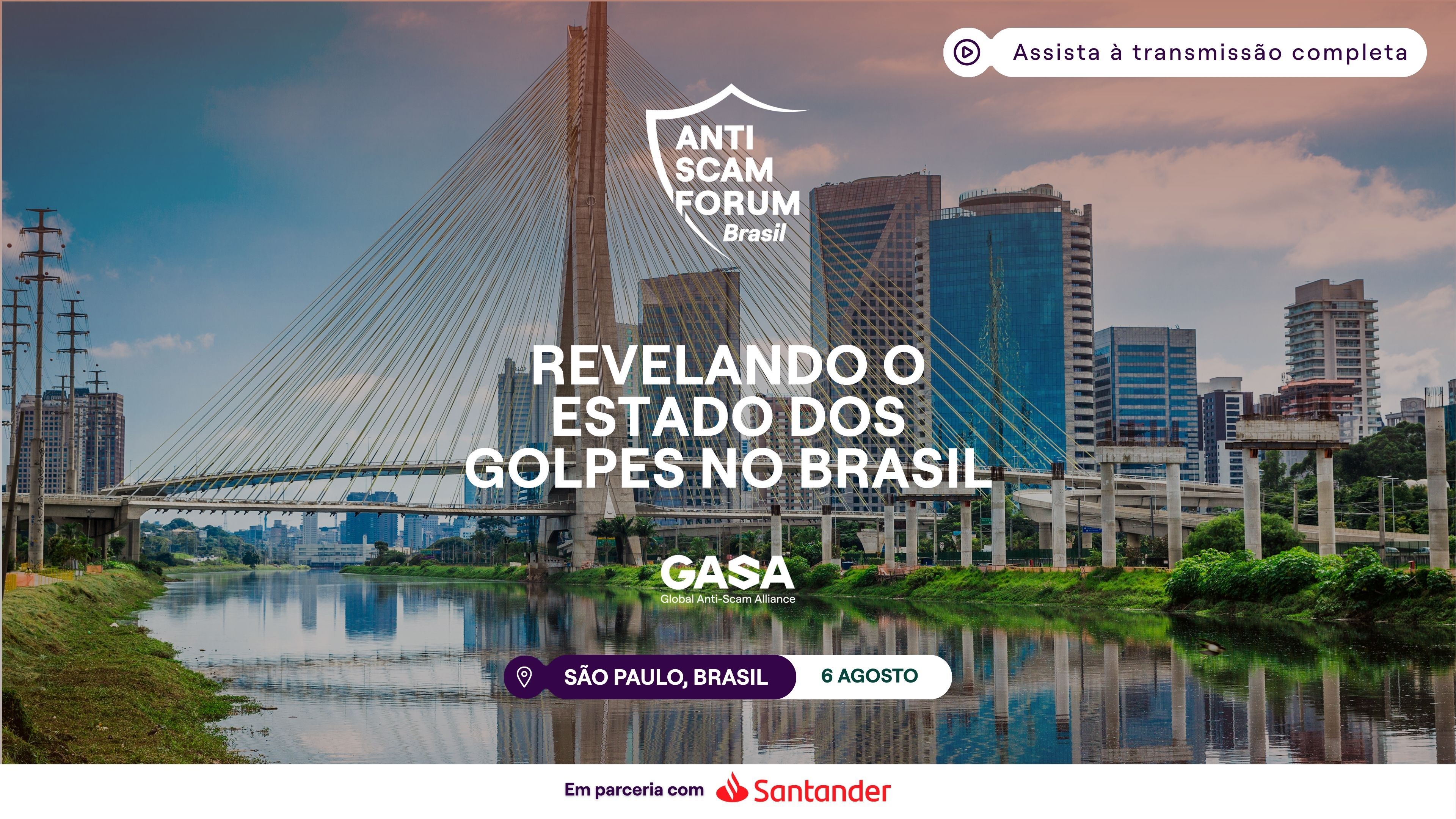
Brazil Anti-Scam Forum 2026: Key Takeaways on Strengthening Scam Prevention in Brazil
Key insights from the Brazil Anti-Scam Forum 2026 on scam trends, prevention, intelligence sharing and cross-sector collaboration.

GASA Consumer Education Working Group Develops 5-Step Response Plan for Scam Victims
GASA’s Consumer Education Working Group sets out a five-step response plan that organisations can use and share to support people affected by scams.
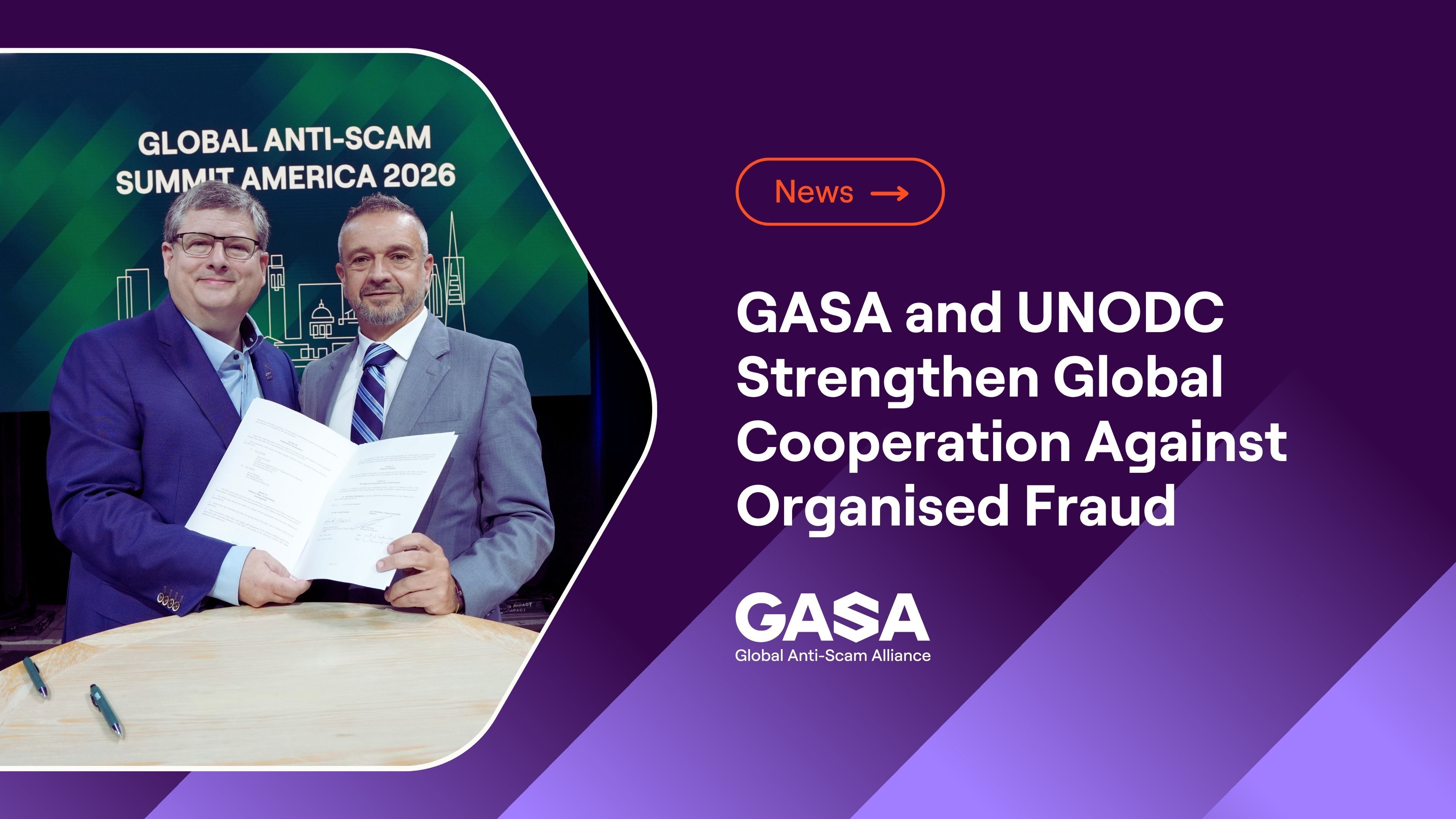
GASA and UNODC Partner to Strengthen Global Response to Organised Fraud
GASA and UNODC sign an MoU to strengthen international cooperation on fraud prevention, research, criminal justice responses and awareness.
Meet the Winners – Scam Fighter Awards at the Global Anti-Scam Summit America 2026
Meet the winners of the Scam Fighter Awards at the Global Anti-Scam Summit America 2026 and learn about their work in education, research, collaboration and technology.

Global Anti-Scam Alliance Partners with TruthScan to Integrate Deepfake Detection on scam.org
Users of scam.org will now be able to upload an image to the website for analysis to determine whether the image is authentic, edited, or generated by artificial intelligence.