
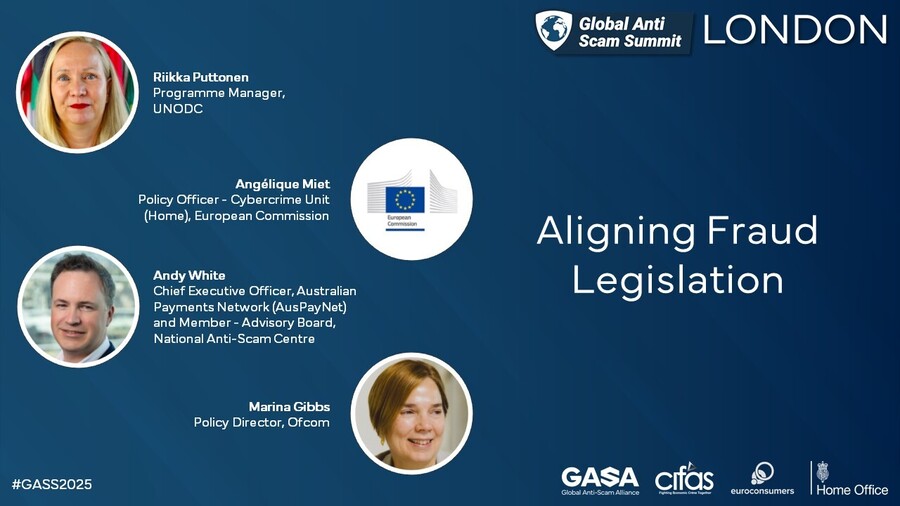
Date of Event: 26–27 March 2025
Event: Global Anti-Scam Summit London 2025
This session at the Global Anti-Scam Summit London 2025 explored how national and international legislation must evolve to confront modern scam threats. Speakers reflected on the urgent need to modernise regulatory frameworks and balance privacy with effective enforcement.
Moderated by Riikka Puttonen from UNODC, the panel featured representatives from the UK Home Office, Ofcom, the European Commission, and Australia’s regulatory ecosystem. The discussion began with an overview of existing fraud legislation—including serious crime classifications and sector-specific frameworks. While some jurisdictions have enacted broad regulatory powers, panellists noted that fraudsters often exploit grey areas in jurisdiction, enforcement, and oversight.
Artificial intelligence, deepfakes, crypto, and decentralised platforms have all introduced new challenges to enforcement. Speakers stressed that legislation must remain agile, technologically neutral, and future-proof. Several called for a functional, principles-based approach that avoids overly prescriptive rules.
Despite differences in legal systems, the panel found common ground on the need for:
Streamlined data sharing frameworks that respect—but don’t over-prioritise—privacy
International regulatory alignment to prevent exploitation of cross-border inconsistencies
Impact measurement systems that track the effectiveness of anti-scam interventions
The session closed with a call to continue building collaborative legal infrastructure and to prioritise clarity, coherence, and cross-sector cooperation. Participants welcomed the news that the UN and INTERPOL will co-host a Global Fraud Summit in 2026 to further this work.

BanCoppel joins the Global Anti-Scam Alliance to bolster fraud prevention and safeguard individuals entering the banking system.
BanCoppel has joined the Global Anti-Scam Alliance (GASA) as a Corporate Member of the GASA Mexico Chapter.
The emotions scammers exploit: how social engineering influences our decisions
How scammers use fear, urgency, excitement and trust to influence decisions, and how recognising these tactics can help people prevent fraud.

Global Anti-Scam Alliance Welcomes Mastercard as Founding Member of Its Mexico Chapter
The Global Anti-Scam Alliance (GASA) announces the membership of Mastercard as a Member of its Mexico Chapter.
What Uganda’s IVR Trial Shows About Practice-Based Scam Prevention
A Uganda IVR trial shows how practice-based fraud prevention helped mobile money users reduce losses and increase reporting.
FTC’s Never EVER Campaign Helps Prevent Elder Financial Abuse With Simple, Specific Scam Warnings
The FTC’s Never EVER campaign uses simple, specific imposter scam warnings to help prevent elder financial abuse and support coordinated consumer education.
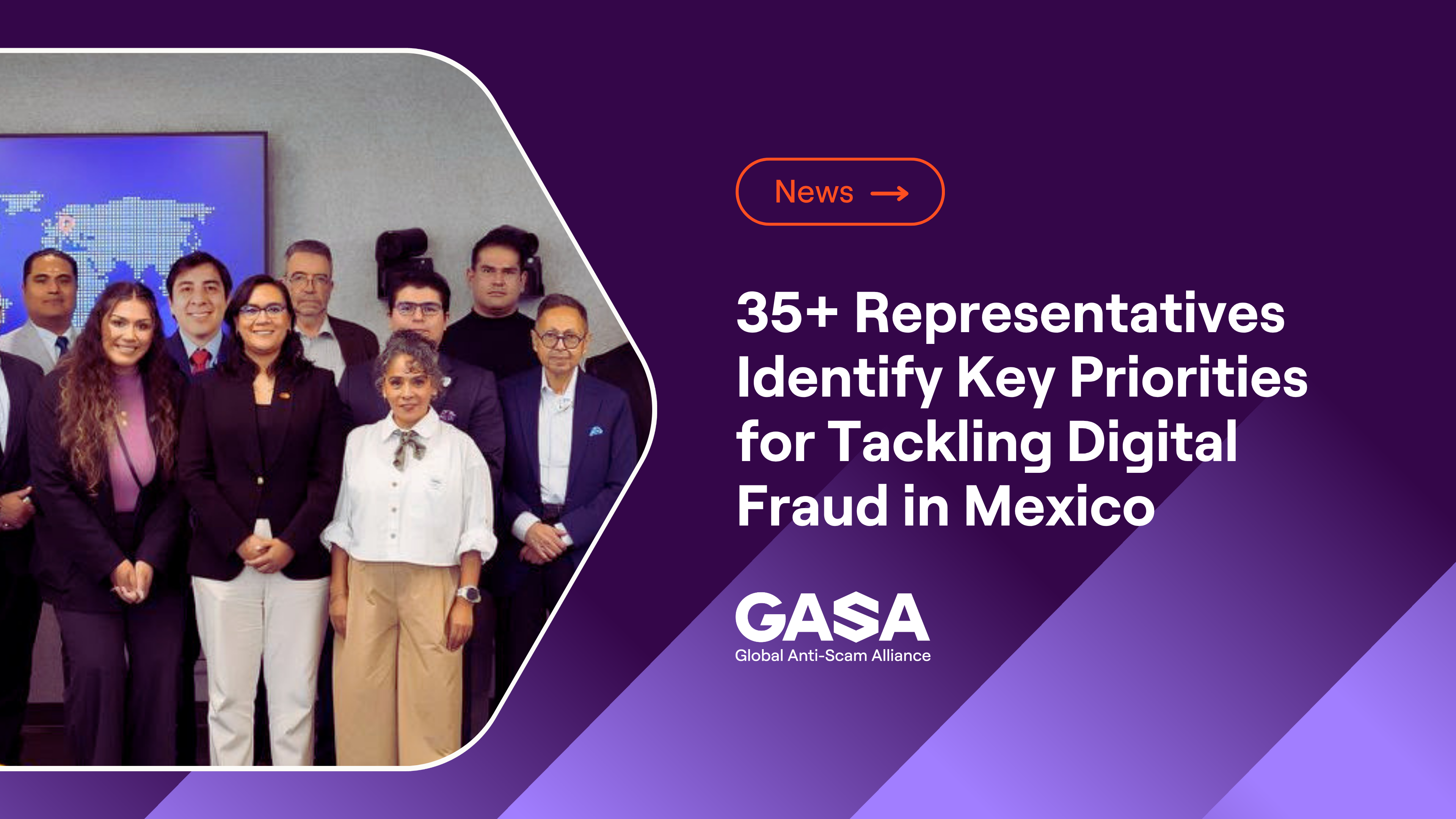
GASA Mexico's Second Roundtable Advances Coordinated Action Against Digital Fraud
GASA Mexico's second roundtable brought together more than 35 representatives to strengthen coordination across cybersecurity, fraud prevention and other sectors.
Cognyte Joins Global Anti-Scam Alliance to Fight Financial Fraud Threats
Cognyte, a global leader in investigative analytics software, today announced its membership in the Global Anti-Scam Alliance (GASA).
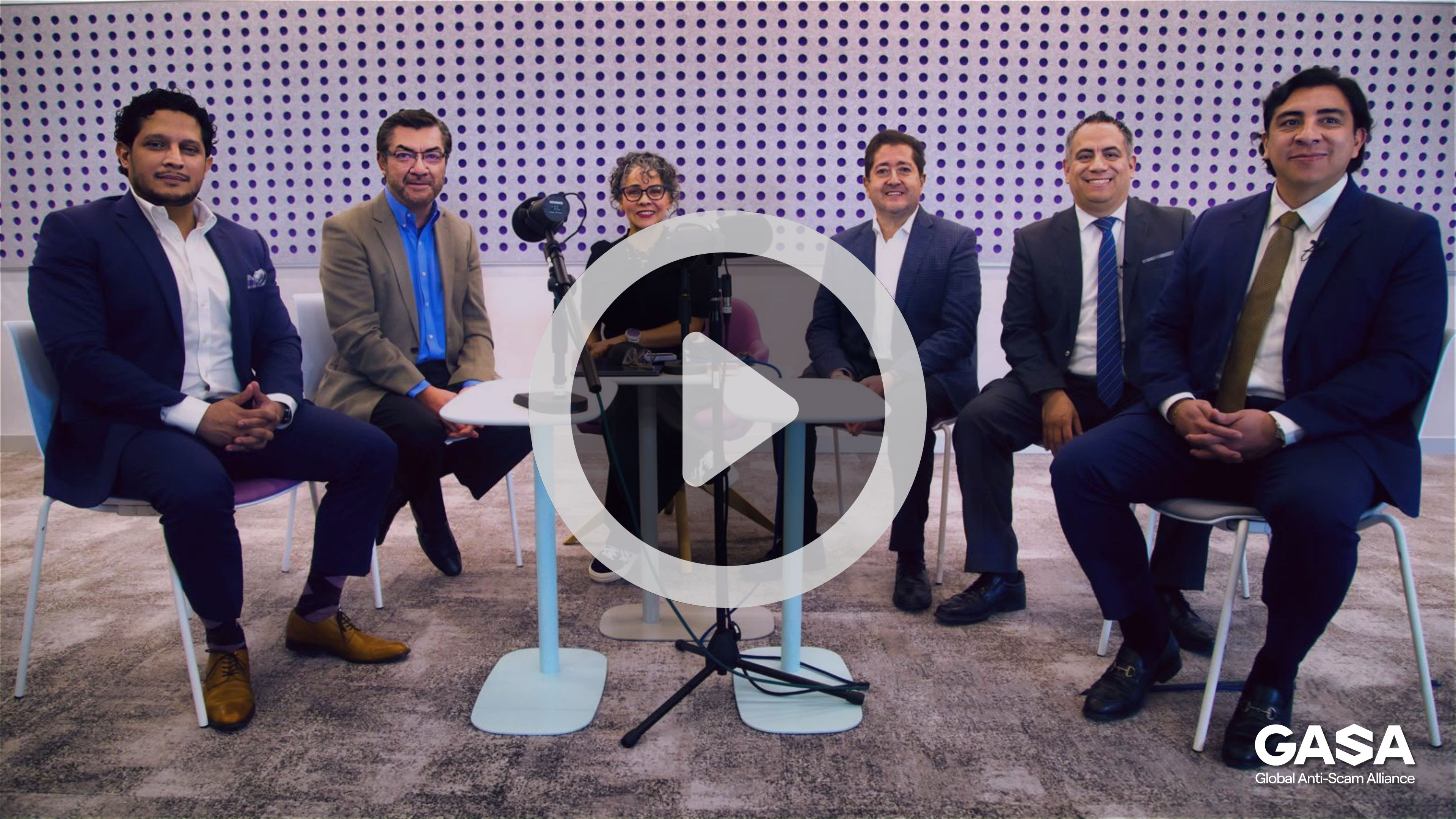
A network is beaten by a network: Mexico's banks move from remediation to prevention
GASA convened the ABM Fraud Committee and Mexican banks to advance the enriched agreement and strengthen coordinated fraud prevention across the sector.