
ScamAdviser.com surveyed 2,575 consumers from across the world asking them about their experience with trying to get their money back from scammers.
While all income groups, educational categories, age levels and continents are represented, mostly men (77%) participated. This trend is similar to our
‘Why Do Consumers Buy Fakes?’ report
, where 67% of the participants were men, suggesting that men may be falling for scams more than generally thought.
Curiously, most of the victims have reported being from Asia (39%) and Africa (32%). This goes to show that not only do several scams originate in those places, but scammers may be victimizing more people domestically than internationally.
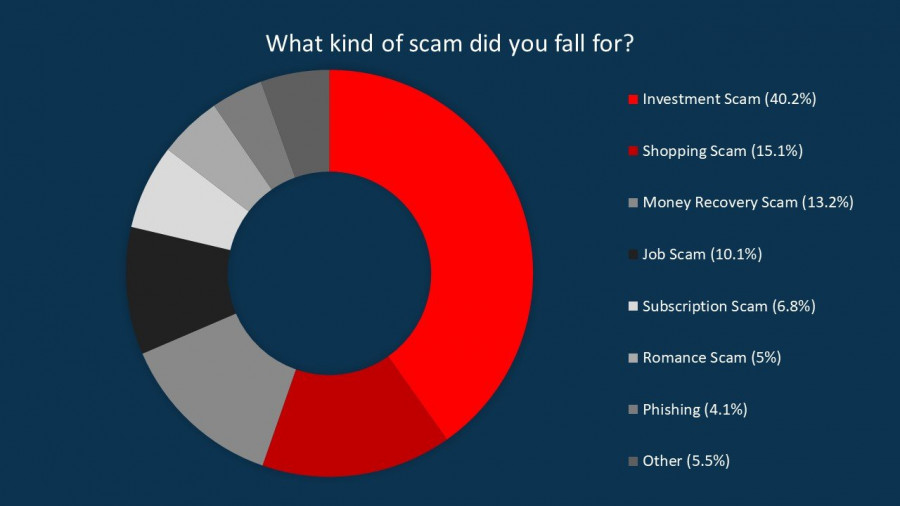
Most money is lost to Investment Scams (40.2%)
Investment scams (40%) seem to be the most common scams that consumers are getting trapped in. This is followed by Shopping Scams (15%), Money Recovery Scams (13%) and Job Scams (10%). Consumers are also losing money to Subscription Scams (7%), Romance Scams (5%) and Phishing (4%).
Individual losses are not large but seriously impact victims
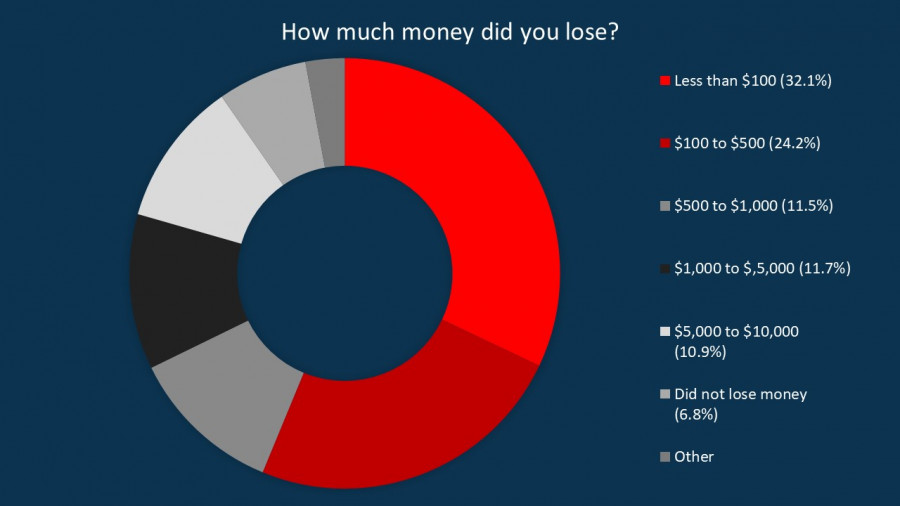
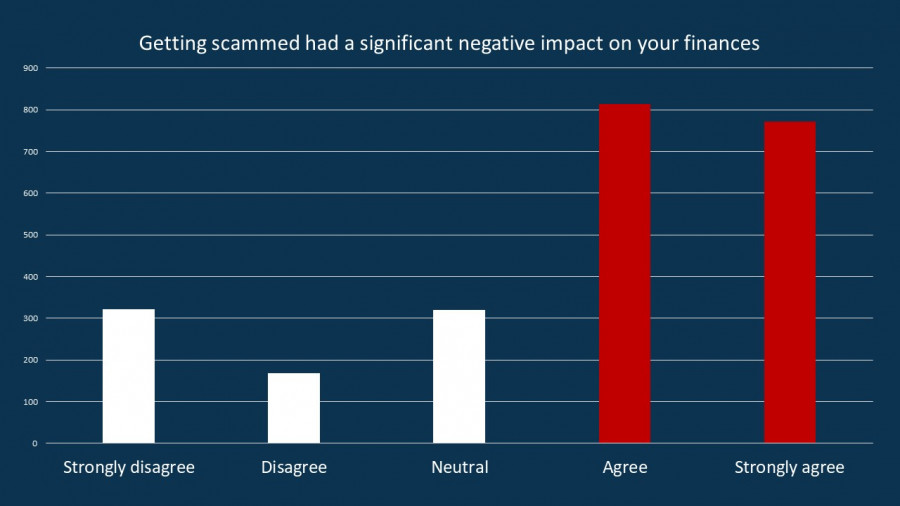
Most of the survey participants lost less than $100 (32%). 11% lost a huge sum of money - $5,000 to $10,000 – but 7% did not lose any money. 66% said that getting scammed had a significant negative impact on their finances.
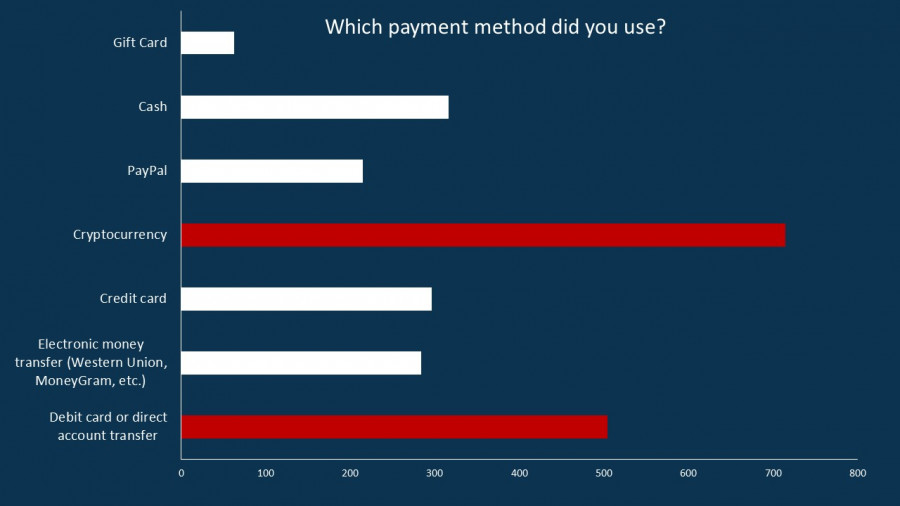
Victims lost money majorly through Cryptocurrency (29.8%) payments
The payment methods most favoured by scammers are Cryptocurrency (29.8%) and bank transfer (21.1%). Scammers also favour Credit Card (12.4%) and Electronic Money Transfer (11.9%).
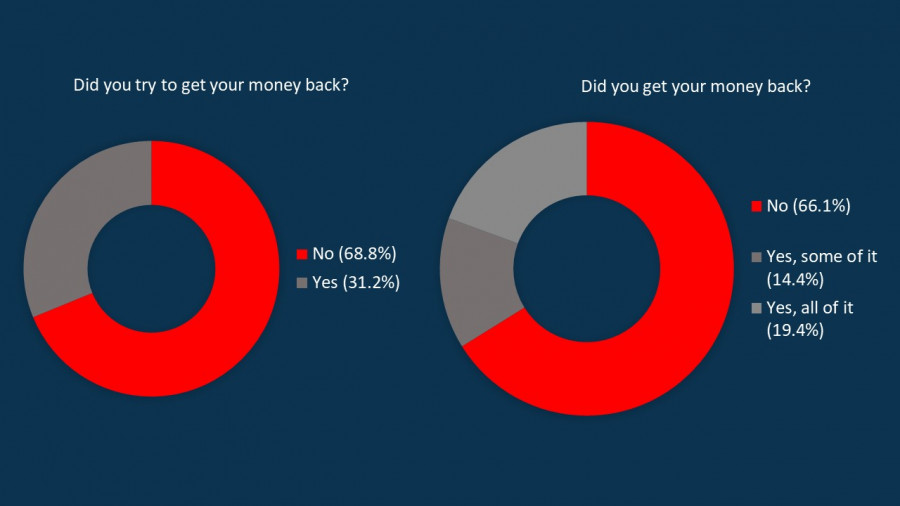
68.8% of the victims did not try to get their money back from the scammer
Not only did most victims not try to recover their funds, but it was also further reported that 66.1% of the victims who tried to recover their money failed to get it back.
Even those who recovered their money were not always able to get the entire amount back as 14.4% said that they only got a partial refund. It is interesting to note, however, that more consumers were successful at getting a full refund (19.4%) than a partial refund (14.4%).
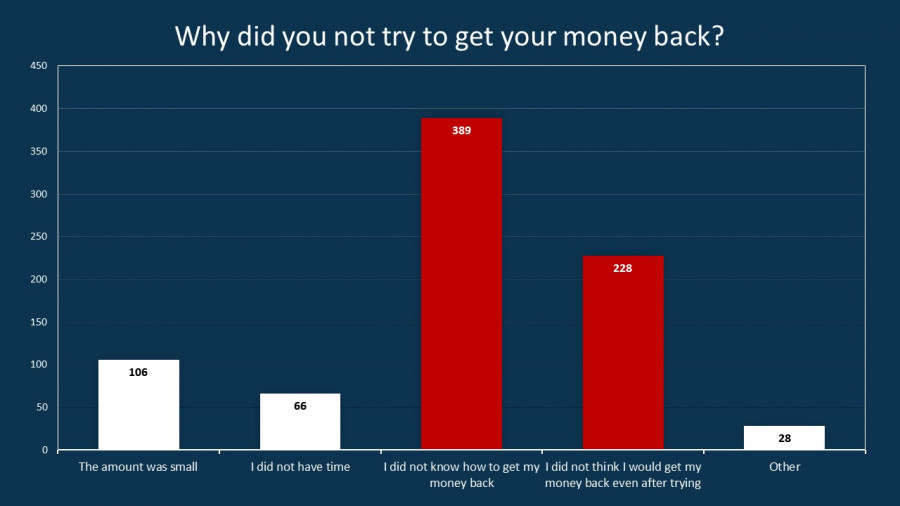
53.7% said they did not know how to get their money back
The main reason cited for not attempting to get a refund is that the victim did not know how to get their money back. A considerable portion also said that they did not try to recover the money as they did not think they would get it back even after trying (31.5%).
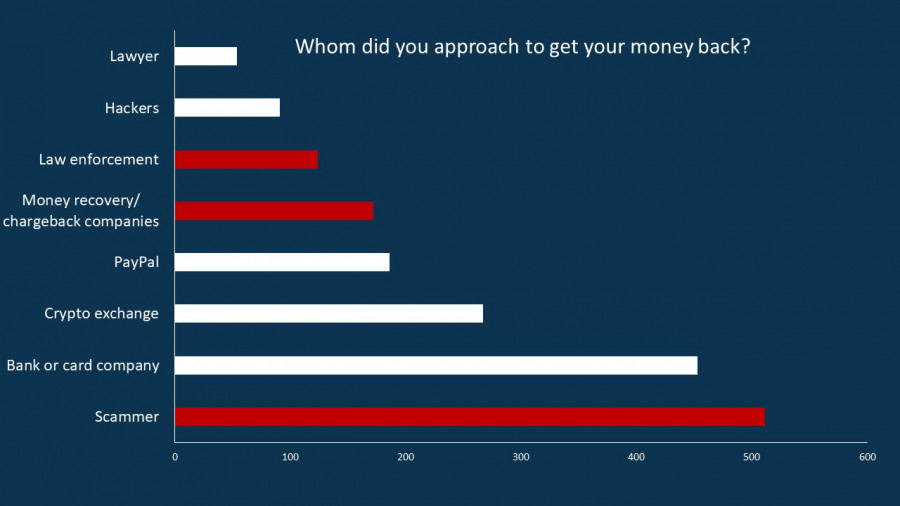
Victims first approach the scammer (31.9%) for a refund
Among the consumers who did try to get their money back, they did so by approaching the scammer (31.9%) and their bank (28.3%). 16.7% approached the crypto exchange while 10.7% sought the help of money recovery services. Only 7.7% reported it to law enforcement. 3.4% tried taking legal action.
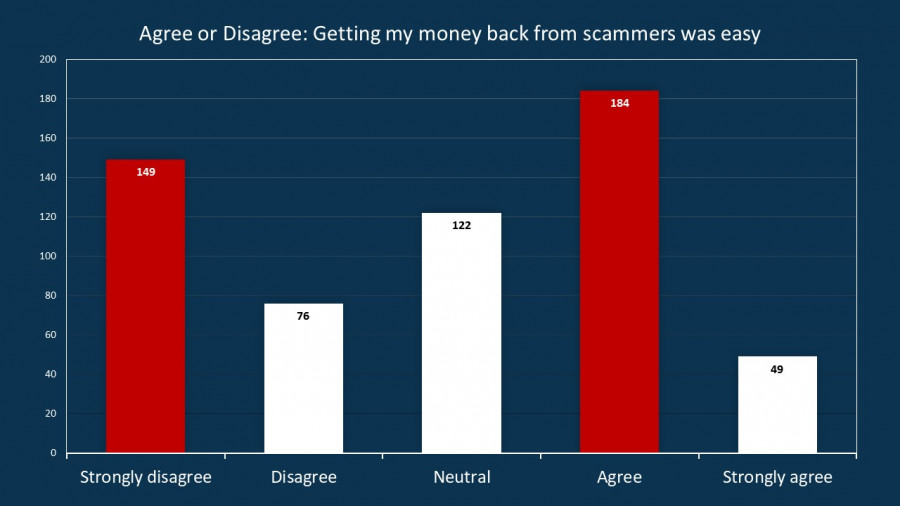
40.1% agreed that getting money back from the scammer was easy
On the brighter side, only 39% disagreed that it was easy to recover their money after being scammed.


Accra Trust & Safety Workshop Turns Collaboration into Action Against Scams and Fraud in West Africa
GASA Africa Chapter and Google South Africa brought anti-fraud leaders together to strengthen cross-border cooperation and scam prevention.
State of Scams in Nigeria 2026: A Comparative Review Across Africa
Nigerian experts examine scam trends, technology, consumer protection and the need for stronger cross-sector collaboration.
Nearly three in four Danish adults encountered scams as estimated losses reach DKK 10.1 billion
New State of Scams Denmark 2026 report finds scam exposure is rising, while victims face repeated financial and emotional harm.

Building a More Trusted Digital Philippines: New Report Underscores the Need for Collective Action as Scam Exposure Continues to Rise
GASA’s State of Scams in the Philippines 2026 Report, in collaboration with Mastercard and Gogolook, highlights the growing scale of the scam challenge in the Philippines.

Global Anti-Scam Summit America 2026: Highlights, Insights and Resources
Explore GASS America 2026 highlights and insights, with the Summit summary, photos, presentation slides, transcripts and session recordings from San Francisco.
State of Scams in Kenya 2026: A Comparative Review Across Africa
Kenyan experts examine scam trends, data sharing, digital trust and the need for stronger cross-sector prevention.
State of Scams in South Africa 2026: A Comparative Review Across Africa
South African experts examine scam trends, AI, consumer protection and the need for stronger cross-sector collaboration.
-3.jpg)
More than one in five adults in Japan encountered scams in the past year
New State of Scams Japan 2026 report examines how scams are reaching consumers and where stronger prevention and collaboration can make a difference