
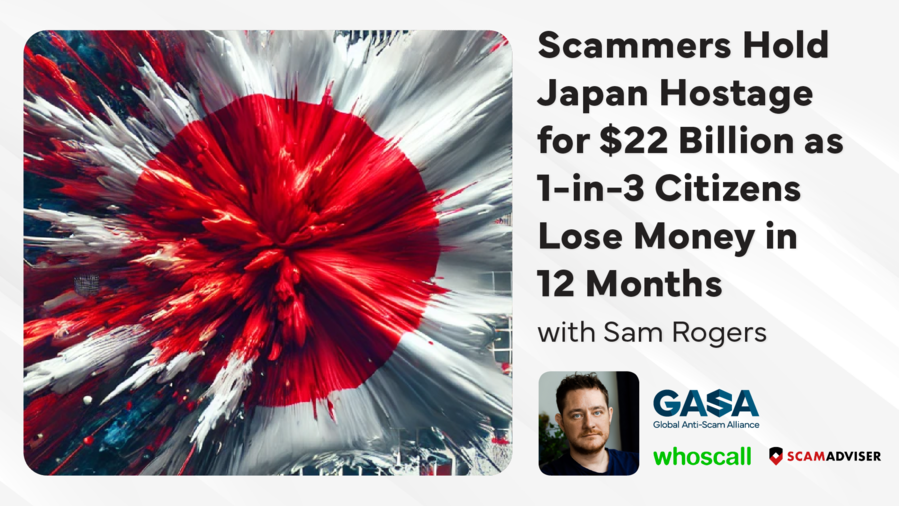
The Global Anti-Scam Alliance (GASA) , in collaboration with Whoscall and ScamAdviser , has released the 2024 State of Scams in Japan report, providing a comprehensive analysis of the growing scam landscape in Japan. This report, based on insights from 921 Japanese citizens , sheds light on the alarming rise in scams, the significant financial impact, and the critical need for more effective consumer protection measures.
The State of Scams in Japan Reaches Crisis Point
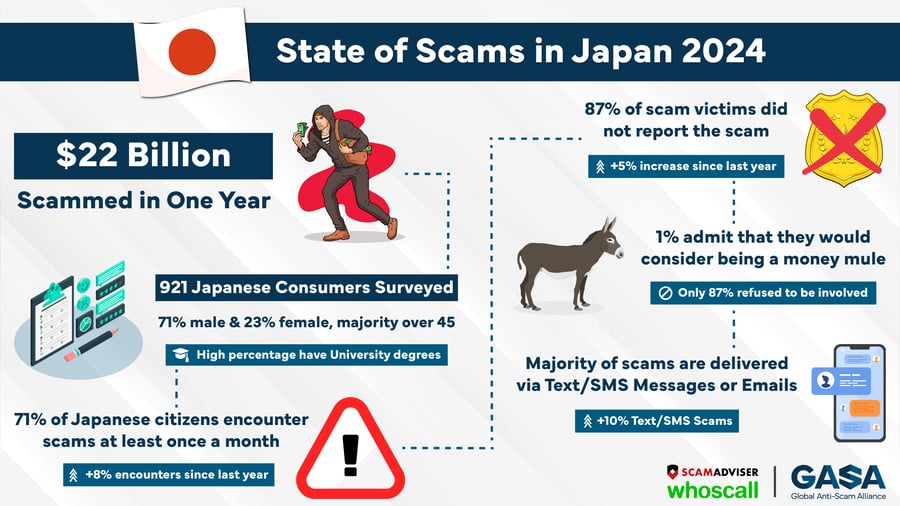
The 2024 State of Scams in Japan report reveals that 71% of Japanese respondents reported encountering scams at least once per month, an 8% increase from 2023. This sharp rise in scam prevalence suggests that fraudsters are becoming more aggressive in their tactics, targeting individuals through familiar digital communication channels such as text messages, emails , and social media platforms like Gmail, Amazon, and Facebook.
"Scammers are exploiting widespread and trusted digital tools to reach potential victims," said Jorij Abraham , Managing Director of GASA. "With 39% of Japanese participants losing money to scams—totaling $22 billion USD (3.22 trillion JPY) —this situation demands immediate attention from both public and private sectors to prevent further economic and societal damage."
The financial toll of scams in Japan is significant, equating to 0.5% of the nation's GDP . Despite a 5% increase in scam recognition confidence, 37% of respondents still express a lack of confidence in their ability to detect scams, leaving a large portion of the population vulnerable. "The high levels of uncertainty about scam tactics, particularly involving AI-generated content, indicate a pressing need for more comprehensive public education," added Sam Rogers , Director of Research and Marketing at GASA.
ScamAdviser and Whoscall Identify Key Scam Trends
The report indicates that scammers are increasingly leveraging AI technologies to create deceptive content, which complicates the ability of individuals to recognize fraudulent schemes. Aaron Chiou , Product Director at ScamAdviser , emphasized this point: "The growing use of AI-generated content has further complicated scam detection, underscoring the urgent need for improved public education and advanced tools. Despite 71% of Japanese citizens encountering scams monthly, only 27% feel confident in identifying them."
The rise in text/SMS scams was particularly notable, with a 10% increase since 2023. Identity theft remains the most common scam type in Japan, followed by investment scams, with scammers predominantly using bank transfers and wire transfers to extract money from victims. Weichen Lo , Japan Country Head of Whoscall , noted the rise in phishing-related scams, adding, "Phishing attacks impersonating government agencies, such as the National Tax Agency, have surged, leading to a significant financial toll."
Underreporting and Its Consequences for Japanese Citizens
One of the most concerning findings from the report is the high rate of underreporting of scam incidents. 87% of Japanese respondents did not report scams to law enforcement, an increase of 5% from 2023 . The reasons for this underreporting include a lack of trust in authorities and uncertainty about where to report scams. This has led to a significant gap in support for victims, with only 5% of scam victims managing to recover their losses.
Aaron Chiou pointed out that "despite efforts by the government and other organizations, the low reporting and recovery rates indicate that more needs to be done to restore public trust and provide accessible support systems for victims."
The Emotional Toll and Declining Trust in the Internet
The emotional impact of scams is also becoming more pronounced, with 45% of victims experiencing a strong emotional toll—a 7% increase from the previous year. This psychological distress, coupled with financial losses, has eroded public confidence in digital platforms, with 61% of Japanese respondents reporting a loss of trust in the Internet .
Weichen Lo stressed the importance of public-private collaboration in addressing these issues. "Strengthening public awareness and providing access to tools like Whoscall is crucial to help users protect themselves. We need to empower consumers by educating them on scam tactics and verifying suspicious communications."
Recommendations for Strengthening Consumer Protection
The 2024 State of Scams in Japan report emphasizes the need for a coordinated response involving government agencies, financial institutions, telecom companies, and technology providers to tackle the rising scam threat effectively.
Aaron Chiou called for greater education efforts: "To effectively combat scams, sectors such as government, banks, and telecoms should educate consumers and provide them with self-protection tools. Integrating anti-scam solutions into existing platforms can help prevent scams before they happen."
Weichen Lo highlighted the importance of public-private collaboration : "We partner with many local city governments and telecommunications companies to expand Whoscall services and scam prevention awareness, demonstrating that effective collaboration can make a significant difference in protecting consumers."
Both GASA and ScamAdviser urged for simplified reporting and recovery options to encourage more victims to seek help and report scams. "Strengthening collaboration across industries is key to building a safer digital space and restoring trust in online interactions," said Jorij Abraham .
The report also noted that only 1% of Japanese respondents indicated a willingness to become money mules , which is one of the lowest rates globally—a hopeful indicator that there is still strong resistance to participating in scam-related activities despite economic pressures.
We Must Improve Support Systems Available to Japanese People
The 2024 State of Scams in Japan report underscores the critical need for improved consumer protection strategies, public education, and a unified response to tackle the rising threats posed by scams. The findings reveal that while scams have become more prevalent and sophisticated, there is still an opportunity to combat these threats through coordinated, multifaceted efforts.
GASA calls on the Japanese government , financial institutions , telecom companies , and technology providers to work together to enhance scam awareness, improve support systems for victims, and ultimately protect the Japanese population from the evolving risks of fraud.
For more detailed insights and to access the full State of Scams in Japan 2024 report, please visit GASA.org/research .
BanCoppel joins the Global Anti-Scam Alliance to bolster fraud prevention and safeguard individuals entering the banking system.
BanCoppel has joined the Global Anti-Scam Alliance (GASA) as a Corporate Member of the GASA Mexico Chapter.
The emotions scammers exploit: how social engineering influences our decisions
How scammers use fear, urgency, excitement and trust to influence decisions, and how recognising these tactics can help people prevent fraud.

Global Anti-Scam Alliance Welcomes Mastercard as Founding Member of Its Mexico Chapter
The Global Anti-Scam Alliance (GASA) announces the membership of Mastercard as a Member of its Mexico Chapter.

What Uganda’s IVR Trial Shows About Practice-Based Scam Prevention
A Uganda IVR trial shows how practice-based fraud prevention helped mobile money users reduce losses and increase reporting.
FTC’s Never EVER Campaign Helps Prevent Elder Financial Abuse With Simple, Specific Scam Warnings
The FTC’s Never EVER campaign uses simple, specific imposter scam warnings to help prevent elder financial abuse and support coordinated consumer education.
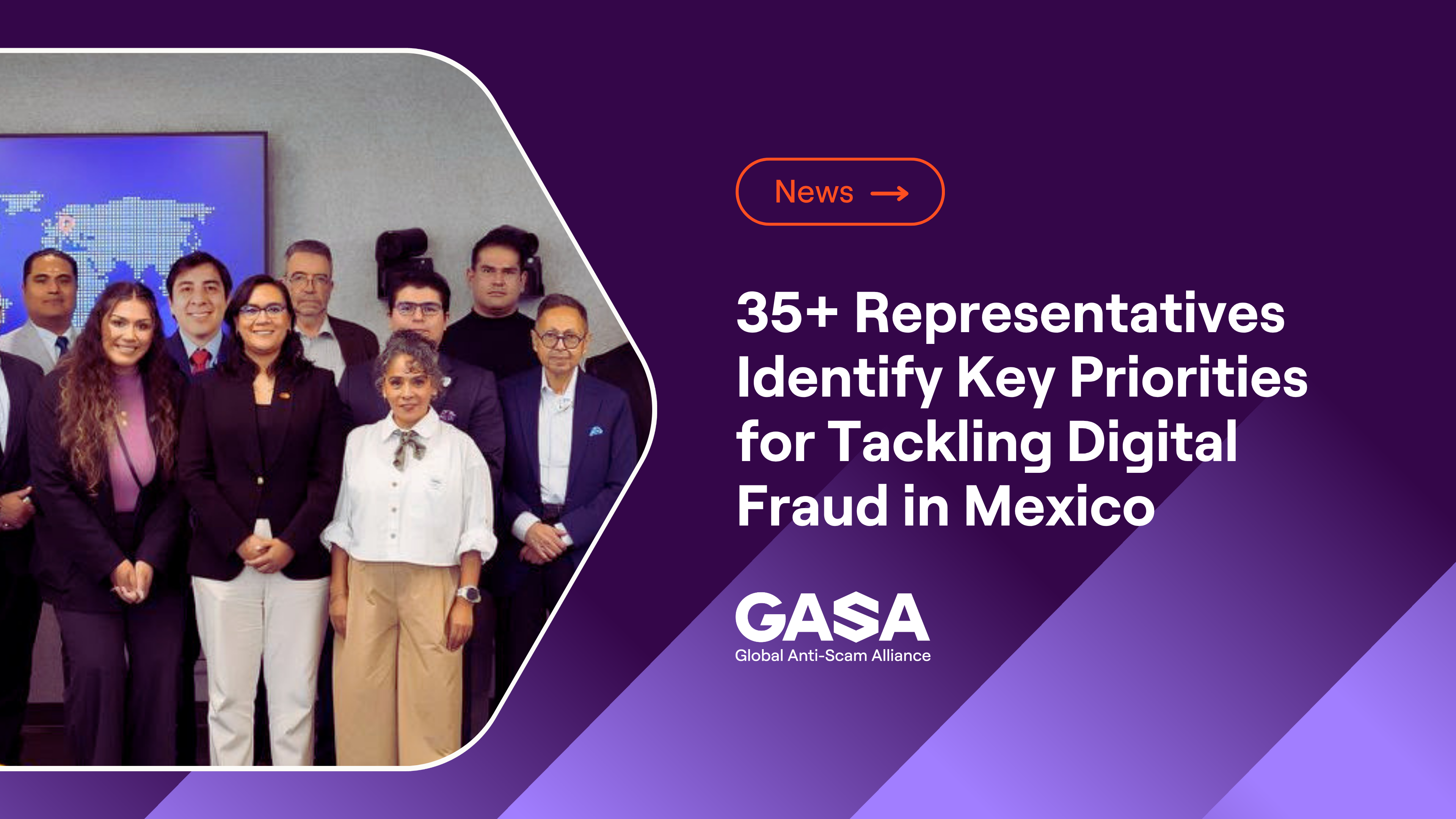
GASA Mexico's Second Roundtable Advances Coordinated Action Against Digital Fraud
GASA Mexico's second roundtable brought together more than 35 representatives to strengthen coordination across cybersecurity, fraud prevention and other sectors.

Cognyte Joins Global Anti-Scam Alliance to Fight Financial Fraud Threats
Cognyte, a global leader in investigative analytics software, today announced its membership in the Global Anti-Scam Alliance (GASA).
A network is beaten by a network: Mexico's banks move from remediation to prevention
GASA convened the ABM Fraud Committee and Mexican banks to advance the enriched agreement and strengthen coordinated fraud prevention across the sector.