
Date of Event: 16 -17 March 2026
Event: Global Fraud Summit
-1.jpeg?width=833&height=469&name=image%20(9)-1.jpeg) On March 16–17, global leaders convened in Vienna for the UN Global Fraud Summit, hosted by UNODC, where GASA was proud to serve as a key supporter. With over 1,300 participants from more than 100 countries, spanning government, law enforcement, financial services, technology, and international organizations, one message was unmistakable: Fraud is global, organized, and accelerating. Likewise, our response must be ever more coordinated, connected, and operational. A strong Call to Arms agreed at the summit demonstrates that fraud is now embedded as a key international security and organized crime priority, and our efforts need to reflect that.
On March 16–17, global leaders convened in Vienna for the UN Global Fraud Summit, hosted by UNODC, where GASA was proud to serve as a key supporter. With over 1,300 participants from more than 100 countries, spanning government, law enforcement, financial services, technology, and international organizations, one message was unmistakable: Fraud is global, organized, and accelerating. Likewise, our response must be ever more coordinated, connected, and operational. A strong Call to Arms agreed at the summit demonstrates that fraud is now embedded as a key international security and organized crime priority, and our efforts need to reflect that.
Across plenaries, expert panels, and working sessions, the summit focused on advancing public-private partnerships in action, strengthening global coordination, and moving from dialogue to implementation.
As the Global Anti-Scam Alliance (GASA) aims to bringing together actors from public and private sectors, across jurisdictions and industries, we were proud to contribute to these discussions. The next stage is now to actively work out how to deliver on these priorities at our upcoming Global Anti-Scam Summits in Lisbon (June), San Francisco (September), and Bangkok (November).
Public-private partnership in action
A central theme throughout the summit was the urgent need to move beyond siloed efforts. Fraud networks operate seamlessly across borders, sectors, and modalities. Yet, our defenses remain fragmented, often inhibited by jurisdictional, legal, and operational barriers.
The Summit featured over 53 side-events which reinforced that the next phase of anti-fraud efforts must be built on true public-private collaboration, not just as a concept but as a live operational model. This was reflected in a highly ambitious world-first, a Global Public Private Partnership on Fraud, which includes principles of joint action, including:
- Shared responsibility for tackling fraud
- Proactive and coordinated prevention
- Joint intelligence and data sharing between industry and law enforcement
- Stronger victim support frameworks
- Education for public and businesses
- A strong focus on innovation and adaptability in the face of an ever-changing threat
Where data is increasingly collected and shared between public and private sectors, for example through the Global Signal Exchange, it is becoming imperative to shift our mindset from data sharing to data activation. As Chris Compton from Microsoft captured succinctly:

We must start turning insights into measurable disruption.
From frameworks to real-world action
Beyond strategy, the summit highlighted tangible examples of what effective government and law enforcement collaboration looks like in practice. A standout case was Nigeria’s Joint Case Team on Cybercrime (JCTC), an inter-agency model bringing together:
- Law enforcement
- Financial intelligence units
- Prosecutors
- The judiciary
This integrated approach, similar to the concept of national anti-scam centers, significantly accelerates investigations and case handling, demonstrating how breaking down institutional silos leads directly to operational impact. Additionally, these centres can then bring international partners on board to have much more effective global operations to target the ringleaders of fraud gangs.
These models signal a shift from fragmented response to coordinated systems-level defense; which is becoming ever more instrumental in the fight against scams.
The rise of AI-driven scams
Another urgent theme across multiple sessions: the rapid evolution of AI-enabled fraud. We are no longer preparing for this shift, we are already in it. AI-driven scams are:
- More convincing (e.g. with deepfakes)
- More scalable (e.g. the rapid onset of agentic AI)
- Significantly more effective (with success rates reportedly 4–5x higher than traditional scams, according to INTERPOL’s latest research)
- Easier to coordinate and more difficult to disrupt
This creates a dual reality:
- A rapidly escalating threat landscape
- A powerful opportunity to deploy AI defensively
Tools like our recently launched Scam.org demonstrate how AI can be used to educate, support victims, and strengthen prevention at scale. The key question moving forward is not whether AI will shape fraud... but who will use it more effectively.
What’s next: from Vienna to Lisbon and beyond
The conversations in Vienna marked a significant step forward, but they are only the beginning. At GASA, we are committed to turning these insights into concrete, coordinated action.
This continues at our upcoming Global Anti-Scam Summits, in Lisbon (June), San Francisco (September), and Bangkok (November). These summits are where strategy meets execution, and where the global community comes together to turn collaboration into impact.
If Vienna made one thing clear, it’s this: The fight against scams will not be won in isolation. It will be won through coordinated, global action. And the time to act is now.

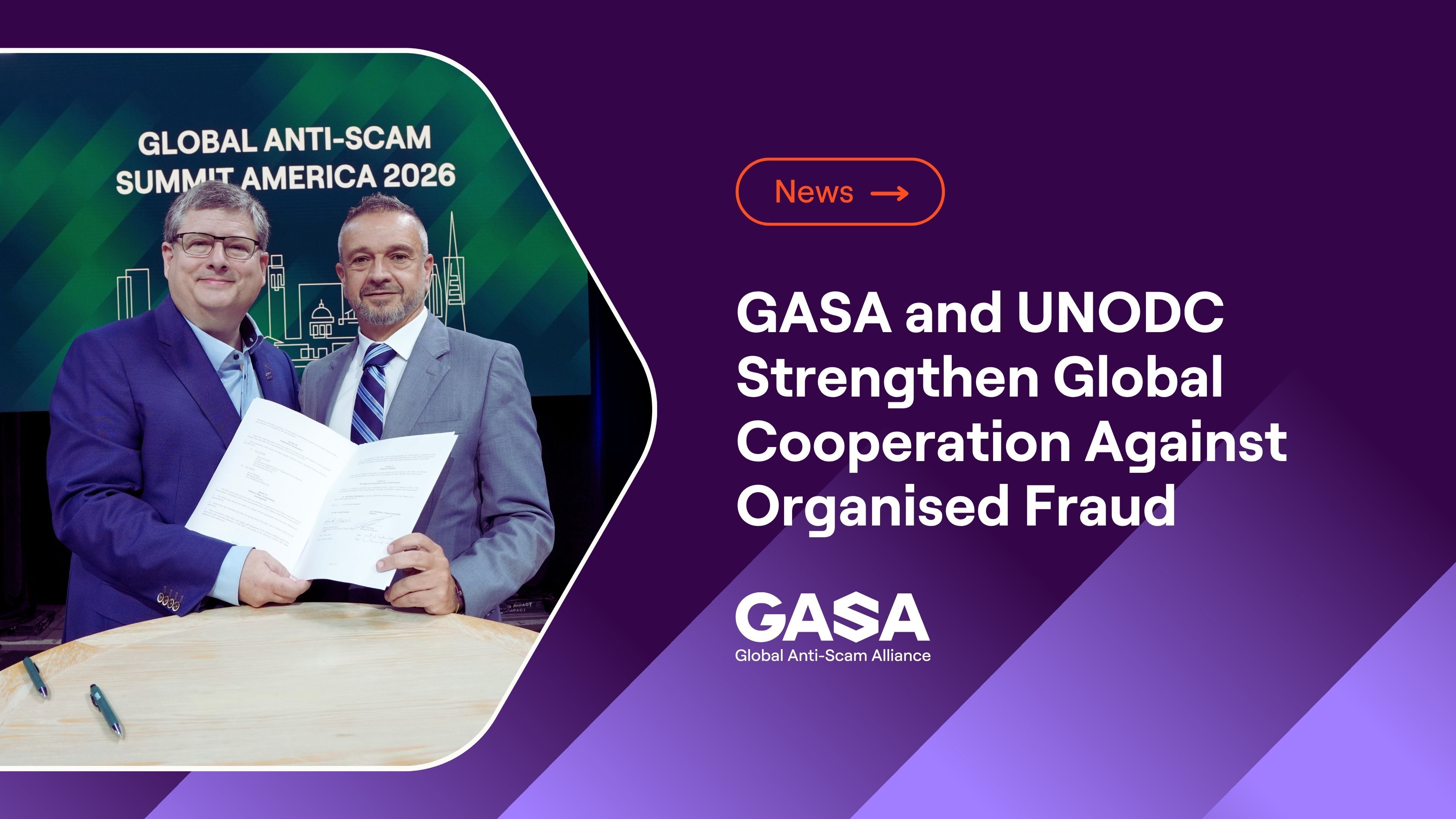
GASA and UNODC Partner to Strengthen Global Response to Organised Fraud
GASA and UNODC sign an MoU to strengthen international cooperation on fraud prevention, research, criminal justice responses and awareness.
Meet the Winners – Scam Fighter Awards at the Global Anti-Scam Summit America 2026
Meet the winners of the Scam Fighter Awards at the Global Anti-Scam Summit America 2026 and learn about their work in education, research, collaboration and technology.
From Information Sharing to Intelligence Production: GASA Mexico in Forbes
Sissi de la Peña, Director of the GASA Mexico Chapter, examines in Forbes México what the U.S. memorandum on cyber operations against fraud networks means for the country.
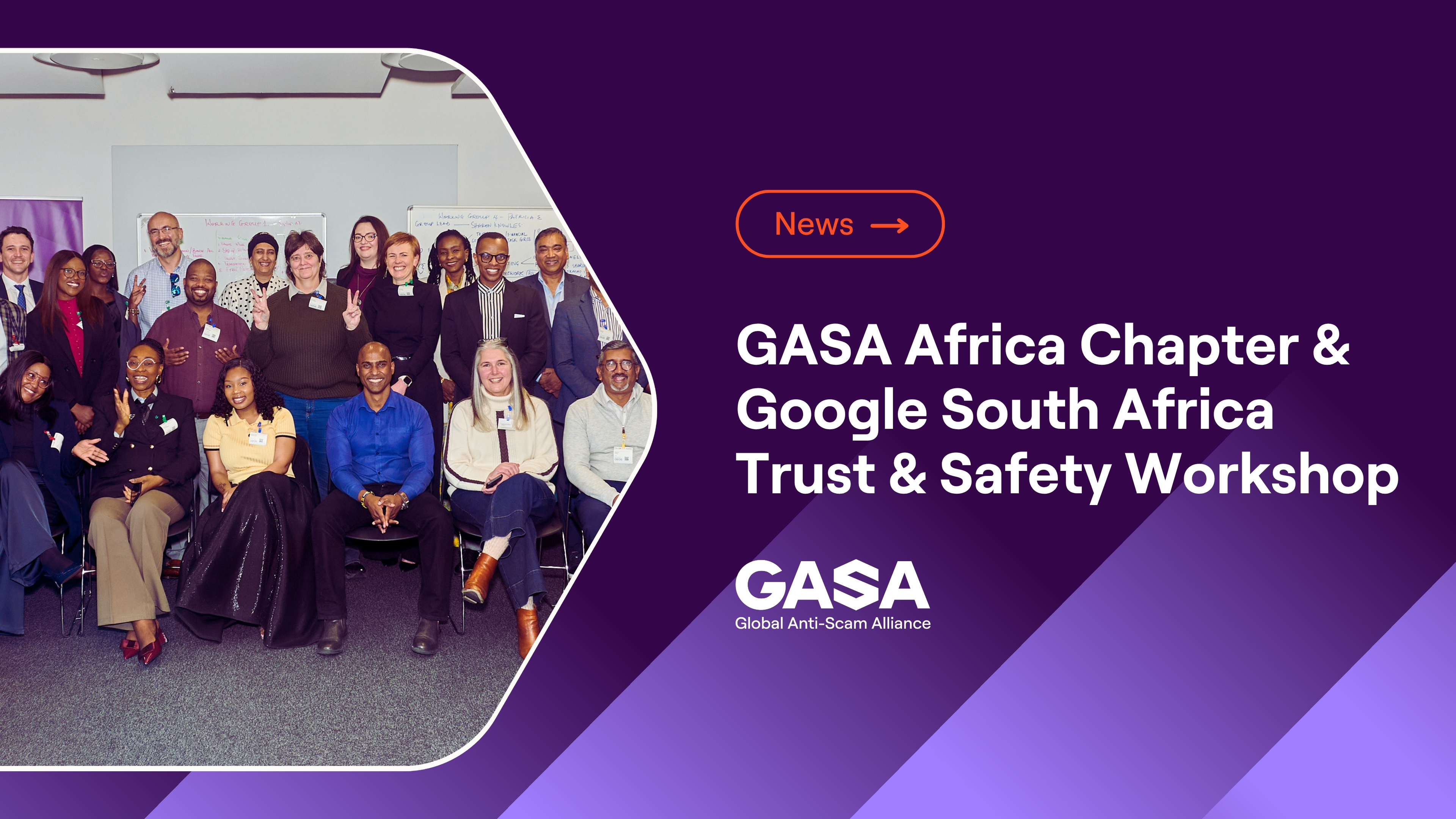
GASA and Google Trust & Safety Workshop Sets Priorities for Anti-Scam Cooperation Across Africa
GASA Africa Chapter and Google South Africa brought anti-fraud leaders together to strengthen cross-border cooperation and scam prevention.
Allstate Identity Protection Joins the Global Anti-Scam Alliance to Strengthen the Fight Against Scams and Identity Theft
Allstate Identity Protection has joined the Global Anti-Scam Alliance (GASA) as a Corporate Member within the North America Chapter.
GASA and Whoscall Release 2026 Asia Scam Report – Taiwan
The 2026 Asia Scam Report – Taiwan, provides an in-depth look at scam exposure, channels, victim experiences, and scam awareness among people in Taiwan.

BanCoppel joins the Global Anti-Scam Alliance to bolster fraud prevention and safeguard individuals entering the banking system.
BanCoppel has joined the Global Anti-Scam Alliance (GASA) as a Corporate Member of the GASA Mexico Chapter.
The emotions scammers exploit: how social engineering influences our decisions
How scammers use fear, urgency, excitement and trust to influence decisions, and how recognising these tactics can help people prevent fraud.