
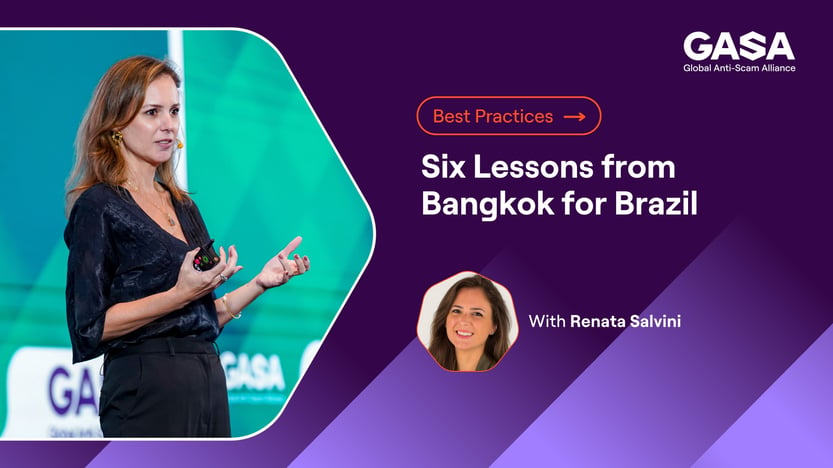
On 10 and 11 November, I was in Bangkok for the Global Anti-Scam Summit Asia 2026, one of three annual gatherings organised by the Global Anti-Scam Alliance (GASA). Over two days, the Summit brought together governments, police forces, central banks, banks, telecom operators, major tech companies, NGOs and, most memorably for me, scam survivors.
As GASA’s Brazil Chapter Director, I came home with a lot to think about and one clear conviction. Much of what Asia is facing and finding solutions to has direct parallels in Brazil. Scams are a global epidemic. Here are the six lessons that stayed with me most.
1. Scams have become an industry, and we need to fight them accordingly
The phrase I heard most often was “industrial scale”. The new report on scam centres from the Financial Action Task Force (FATF), an informal intergovernmental body, estimates that fraud generates around US$500 billion a year. It describes these operations as a distributed criminal ecosystem that extends far beyond any one building full of scammers.
The study mapped everything a scam centre needs to operate, including accounts, SIM cards, internet access, electricity, money laundering and recruitment. It identified 14 critical dependencies that are difficult and expensive to replace. That’s where collective pressure can do the most damage.
One speaker compared scammers to marketing teams. They test messages on millions of people, measure who responds and adjust their approach. That “wrong number” message asking if you’re playing golf on Tuesday is a test to see whether you’ll respond.
2. It’s a race against the clock, and criminals are winning
One figure from the Bank of Thailand made me pause. A criminal can move the money out of a new account in two minutes. A victim takes an average of 30 hours to report the scam.
Thailand has PromptPay, a QR code-based instant payment system with more users than the country has inhabitants. Sound familiar? It’s Thailand’s equivalent of Pix. The convenience is enormous, but the window for intervention is extremely short.
3. A single point of contact makes a real difference for victims
The success stories had one thing in common. Their systems were connected.
4. Thinking “it won’t happen to me” is a risk factorIn GASA’s global survey of nearly 60,000 consumers, 69% said they were confident they could recognise a scam. Greater confidence was associated with a higher likelihood of falling for one.
In Thailand, people with a university degree were more likely to encounter scams (83%) than those with only a basic school education (52%). People at every level of education can be targeted.
One investment scam survivor who met the scammer on a dating app summed it up well. Anyone can fall for a scam when the person they’re talking to is persuasive and seems genuine. Her advice was simple and powerful. If you’re in an online relationship, talk about it with someone you trust.
5. Behind many scams is another victim
At every summit, the panels that stay with me most are the ones where scam survivors tell their stories. This time, the person we heard from had also been a victim of human trafficking. A young computer science graduate accepted a well-paid IT job in Laos. When he arrived, his passport was confiscated, and he was forced to carry out scams under daily quotas and the threat of fines.
According to figures cited at the Summit, people of more than 80 nationalities have been rescued from these centres in Southeast Asia. The Exodus Road in Brazil, an NGO that combats human trafficking and exploitation in the country, estimates that 300 Brazilians may currently be victims of human trafficking.
6. Criminals are to blame, and prevention is everyone’s responsibility
When asked who should be held responsible, whether the victim, the bank or the platform, a representative of the Bank of Thailand answered without hesitation. The criminal alone is to blame. Everyone else’s job is to make scams less profitable and riskier to carry out.
A personal highlight – consumer education in practice
One of my highlights was moderating the panel “From Awareness to Resilience: What is being done in Consumer Education in Asia?” as part of the GASA Consumer Education Working Group session.
In the first panel, we looked at what governments are doing to help consumers protect themselves from scams. In the second, we discussed what companies are doing to protect consumers. The different perspectives made for a richer discussion.
That’s what we’ve been working towards in the group – turning awareness into action. With AI, it will become increasingly difficult to spot a scam by sight alone. We need to make simple tools available to more people so they can use them the moment someone tries to deceive them.
Watch the full session recording below.
What now?
I left Bangkok feeling that Brazil is keeping pace. We have Pix, a sophisticated financial ecosystem and growing collaboration across sectors. I also came away convinced that no country, company or public agency can win this fight alone.
At GASA’s Brazil Chapter, our mission is to bring these experiences and best practices to Brazil and connect the people who can put them to work. If you work in fraud prevention, security, public policy or victim support and would like to discuss how we could apply some of these lessons in Brazil, please get in touch.
Which of these lessons do you think is most urgent for Brazil?

What I Saw in Bangkok: Six Lessons from the Global Anti-Scam Summit Asia 2026 for Brazil
GASA Brazil Chapter Director Renata Salvini shares six lessons from Bangkok on preventing scams, making them easier to report and supporting victims.
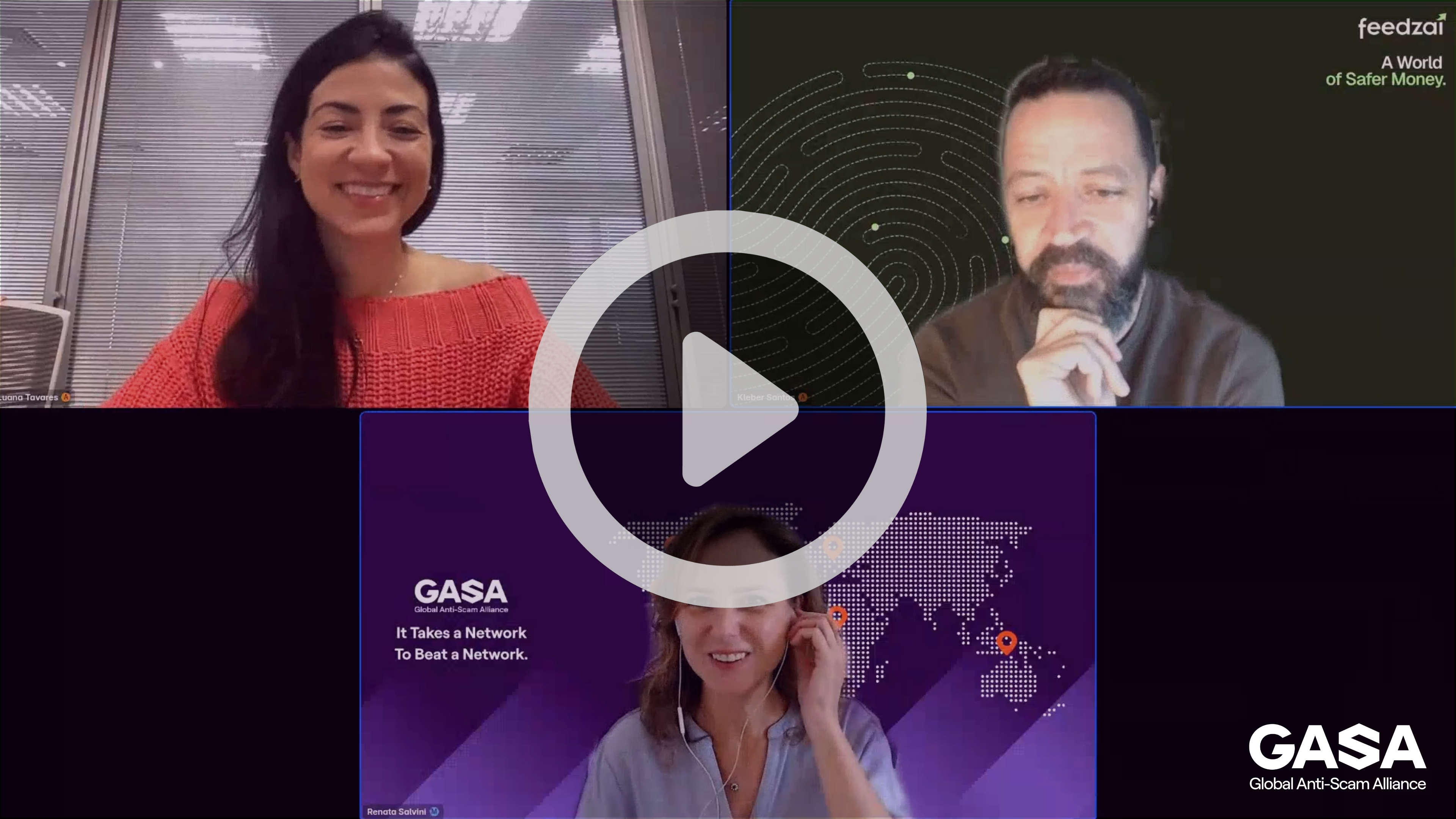
From Cyberattack to Scam: How Cybersecurity Protects Businesses and People
GASA Brazil experts discuss how cybersecurity, better data and cross-sector cooperation can prevent scams and disrupt criminal networks.

Brazil Anti-Scam Forum 2026: Key Takeaways on Strengthening Scam Prevention in Brazil
Key insights from the Brazil Anti-Scam Forum 2026 on scam trends, prevention, intelligence sharing and cross-sector collaboration.
Fenasbac and GASA Report Outlines a Cross-Sector Response to Digital Scams in Brazil
Fenasbac and GASA’s Brazil Blueprint examines how finance, telecoms, technology and regulators can share intelligence to strengthen protection against digital scams.
Brazil Introduces New Digital Protections for Minors
Brazil’s new digital statute strengthens protections for minors through platform design controls, age assurance measures, and regulatory enforcement.
Romance Scams in Brazil: Warning Signs and Prevention
Experts from Brazil discuss how romance scams work, their emotional impact, and how victims can protect themselves online.
Brazil’s BC Protege+ Blocks Fake Bank Accounts Before They Can Be Opened
Brazil’s Central Bank launched BC Protege+, allowing individuals and businesses to block bank account openings in their name. With over 1 million activations, the tool offers a structural model for reducing identity-based fraud.

What to Expect From Scams in 2026 in the Age of AI
Experts discuss how AI is changing scam tactics and what to expect in 2026, in this webinar hosted by GASA Brazil.