

 watch the full recording
The State of Scams in Brazil 2026
Renata Salvini, Director of the GASA Brazil Chapter, presented findings from the State of Scams in Brazil 2026 Report, based on a survey of 1,170 Brazilian adults conducted as part of GASA's wider global research across more than 40 countries.
The findings show the frequency with which Brazilians encounter scams. 81% of respondents had encountered a scam in the previous 12 months, equivalent to an estimated 202 scam attempts per person per year. While 42% were confident they could recognise a scam, the research showed that confidence does not necessarily prevent engagement with scammers.
Of those surveyed, 39% had interacted with a scam attempt, while 10% reported losing money or personal information that subsequently led to financial loss. Repeat victimisation was also common, with 34% of victims reporting being scammed more than once during the year. Among parents of children aged 7 to 17, 14% said their children had also been victims.
Shopping scams, unexpected money scams and employment scams were among the most common types encountered. Phone calls, instant messaging services and email were important channels, with WhatsApp particularly prominent in Brazil.
This figure should not be directly compared with the R$99 billion estimate from the previous study. The 2026 research introduced additional verification questions and excluded loss amounts where respondents were uncertain, producing a more conservative estimate rather than evidence of a year-on-year decline.
Recovery also remains limited. Only 20% of respondents who reported financial losses recovered or were reimbursed for all or part of their money, while Pix (Brazil instant payment system) was the most frequently reported payment method associated with losses.
Reporting remains fragmented. Among respondents, 42% reported incidents to their bank, 30% to the police and 29% told family or friends. The findings also showed that Brazilians place considerable responsibility on businesses to protect them, with 54% identifying commercial organisations as responsible for keeping consumers safe compared with 28% who identified the public sector.
The research further highlighted the effects beyond financial loss, including stress and other impacts on victims' emotional wellbeing.
 READ THE REPORT
When Criminals Know Enough to Create Fear
The scale of the problem was given a human dimension through the testimony of Sergio Estrela, a victim of an extortion scam, who described being targeted despite having professional experience in cybersecurity.
The criminals claimed links to the PCC Brazilian criminal organisation group and used detailed personal information to make the threat credible.
Under pressure, Estrela negotiated the amount demanded by the criminals and eventually transferred money through Pix. One of the details that ultimately raised suspicion was that the criminals referred to an old address, suggesting that the personal information they were using was not current.
Estrela also explained that he did not initially report the scam and was unsuccessful when he attempted to reverse the Pix transfer. His experience illustrated two challenges also reflected in the research: the emotional manipulation used by scammers and the continued problem of underreporting.
Technical knowledge does not remove the vulnerability created by fear, urgency and concern for family members. Personal data can give social engineering additional credibility, while emotional pressure can reduce the time available for a potential victim to question what they are being told.
Prevention Requires Visibility Across the Scam Journey
Moderated by Roberto Troncon, Senior Head of Corporate Security at Santander Brasil, the first panel examined how different sectors see different stages of the same scam and how those perspectives can be connected.
Rodrigoh Henriques, Director of Innovation and Strategy at Fenasbac, noted that financial institutions often encounter a scam only towards the end of the journey. The initial contact and manipulation may have taken place through a social platform, messaging service or telecommunications network before a transaction reaches a bank.
Information such as a recently activated SIM, device changes, unusual messaging activity or other behavioural indicators can provide context that financial data alone cannot. Henriques also addressed the need for shared or federated anti-fraud capabilities, particularly because smaller financial institutions may not have access to the same technology, intelligence and specialist teams as larger organisations.
Luana Tavares, CEO and Founder of the National Institute of Combating Cybercrimes (INCC), argued that public policy and institutional structures need to keep pace with changes in digital behaviour. She highlighted the importance of better data, public-private cooperation and stronger national cybersecurity capacity.
Tavares also pointed to practical efforts to strengthen public-sector capabilities, including work in Minas Gerais to train 35,000 public servants in cybercrime investigation. Her contribution highlighted the need to develop institutional expertise alongside legislation and technology, as well as the role a national cybersecurity strategy and dedicated governance structures could play in coordinating Brazil's response.
Telecommunications Can Intervene Before the Payment Stage
For telecommunications providers and regulators, prevention can begin considerably earlier in the scam journey.
Raphael Garcia de Souza, Manager of General Obligations Control at Anatel, outlined work to strengthen mobile registration, address spoofing and improve the verification of call origins.
Measures discussed included biometric checks associated with mobile registration and verified-origin technology designed to help consumers identify legitimate calls and make it more difficult for criminals to impersonate trusted organisations. During the forum, Garcia de Souza said that approximately 6 billion of the 22 to 25 billion calls made each month in Brazil were already being authenticated, with an objective of authenticating all calls originating in Brazil by 2028.
He also highlighted the potential of telecommunications APIs and network intelligence to identify unusual behaviour. Signals available to telecom providers can complement information held by financial institutions and digital platforms, creating opportunities to identify suspicious activity before money is transferred.
Government Impersonation Requires Cross-Sector Action
Raphael Ramos Monteiro de Souza, National Union Attorney for the Defence of Democracy at the Attorney General's Office (AGU), discussed the use of government identities in scams, including the impersonation of public institutions, government programmes and public figures.
Fraudulent advertisements and websites can use familiar government brands to create legitimacy. Responding to these cases may require the removal of malicious domains or content, action against fraudulent advertisements and cooperation with financial institutions when payments have already been made.
Monteiro de Souza also argued that the immediate barrier is not necessarily an absence of legislation. Existing consumer protection, internet and liability frameworks already provide a basis for action, while more effective information exchange between public authorities, financial institutions and technology companies could improve both investigations and prevention.
The examples demonstrated the practical difficulty of addressing a scam within one institutional boundary. The organisation being impersonated may identify the abuse, a technology company may control the advertising or content, a telecommunications provider may carry the communication and a financial institution may process the eventual payment.
Moving From Reaction to Prevention
The second panel was moderated by Rafael Fernandes, Public Prosecutor at the Ministério Público de Minas Gerais (MPMG), who traced the development of scam prevention work in Minas Gerais following the rapid growth of digital scams after the pandemic.
Fernandes described an earlier prevention initiative that used digital educational materials and anti-fraud advertising to reach more than 140,000 people in Minas Gerais. He also highlighted the scale problem facing enforcement: the volume of scams means authorities cannot rely on investigating every case individually.
Drawing on previous approaches to reducing other forms of crime in Minas Gerais, Fernandes argued for greater prioritisation, intelligence sharing and coordinated action, with public and private organisations combining information to identify patterns and concentrate resources where they can have the greatest impact.
Guilherme Fávaro, Senior Superintendent of Fraud Prevention at Santander Brasil, highlighted the importance of distinguishing between fraud in which a third party takes control of an account and scams in which the legitimate customer is manipulated into authorising a transaction.
In the latter case, conventional authentication can work exactly as designed while the customer still loses money.
Fávaro also identified underreporting as a barrier to prevention. Reporting provides information that can help financial institutions identify suspicious recipients, connect incidents and strengthen controls for subsequent attempts. He emphasised that prevention is ultimately a collective activity, requiring banks to work with peers and other parts of the ecosystem rather than relying only on their own transaction data.
Law Enforcement Needs to Connect Cases, Not Only Investigate Incidents
The volume of scams challenges investigative models built around individual cases.
Ivo Roberto Costa da Silva, Delegate at the Federal Police, discussed the development of specialised cybercrime capabilities within the Federal Police, including the creation of its cybercrime directorate in 2023.
He also presented CyberFICO, an initiative in Brasília designed to bring the Federal Police, state Civil Police and private-sector partners closer together to support intelligence sharing and coordinated investigations.
The underlying challenge is scale. Individual scam reports that appear unrelated may contain information that connects them to the same accounts, infrastructure or criminal network. Bringing together information held by different organisations can therefore help investigators identify larger patterns that would remain hidden if every report were treated independently.
Costa da Silva stressed the importance of selective, intelligence-led investigation, using available information to identify the criminal structures responsible for multiple incidents rather than treating every victim report as an isolated offence.
Paulo Nascimento, Senior Manager at OLX, highlighted the contribution digital platforms can make to this process. Platforms may hold account and connection information that becomes valuable when combined with banking, telecommunications and investigative data.
Nascimento argued for a more proactive relationship between private companies and law enforcement rather than cooperation beginning only after a formal request is received.
Raphael Mielle Trintinalia, Director of Services and Security at FEBRABAN, made a similar point from the perspective of the financial system. If protections differ substantially between institutions, criminals can exploit the weakest routes.
He highlighted cooperation across the banking sector and with law enforcement, including initiatives involving the Federal Police, as well as developments such as MED 2.0 (Pix special refund mechanism) and work involving national identity and biometric information. The objective is to strengthen protection across the financial ecosystem rather than allowing criminals to migrate towards institutions with weaker controls.
Scam Operations Extend Into Organised Crime and Human Trafficking
The final panel widened the discussion beyond the immediate interaction between scammer and victim.
Cintia Meirelles, Country Director at The Exodus Road, and Mario Cunha, Public Safety Liaison at Uber, discussed the relationship between online scams, organised criminal networks and human trafficking.
Meirelles focused on scam compounds in which people can be recruited through deceptive employment offers, transported across borders and forced to conduct online scams. Victims of trafficking may have their passports confiscated, incur fabricated debts and face violence when they fail to meet scam quotas.
She also described cases involving Brazilians trafficked into Southeast Asian scam operations, demonstrating that the scam economy can create victims on both sides of the fraudulent interaction. There’s an estimate of 300 Brazilians currently victims of human trafficking in SEA at the moment. The people contacting scam victims may themselves be operating under coercion, violence or threats.
Cunha focused on how private-sector organisations can help identify potential trafficking earlier. The Exodus Road and Uber had recently launched educational material for Uber driver partners in Brazil to help them recognise potential indicators and understand how to report concerns, reaching more than 2 million drivers.
He also described an example in which information reported by an Uber driver contributed to authorities identifying suspected exploitation. The example demonstrated how people working outside traditional law enforcement can encounter indicators that become valuable when clear reporting channels exist.
Collaboration Depends on Turning Information Into Action
Across the Brazil Anti-Scam Forum, the same structural challenge appeared at different stages of the scam journey. Telecommunications providers may detect suspicious communications, platforms may identify abusive accounts or infrastructure, financial institutions may see suspicious payments and law enforcement may identify connections between apparently separate cases. None necessarily has the complete picture.
Effective collaboration therefore depends not simply on collecting more information, but on creating trusted mechanisms through which relevant signals can reach organisations capable of acting on them.
The discussions also showed that prevention cannot depend solely on consumers identifying scams themselves. The State of Scams in Brazil 2026 Report findings show high exposure despite relatively strong confidence among respondents in their ability to recognise scams. Sergio Estrela's experience demonstrated how personal information and emotional manipulation can undermine that confidence in practice.
The event concluded with Renata Salvini, Director of the GASA Brazil Chapter and regulation and technological solutions.
In her closing remarks, Salvini returned to the importance of information sharing, the need for collaboration and the human impact behind scam statistics. Criminal networks already exchange knowledge, infrastructure and techniques across organisational and national boundaries. A stronger response depends on legitimate organisations becoming equally capable of connecting information and coordinating action.


Brazil Anti-Scam Forum 2026: Key Takeaways on Strengthening Scam Prevention in Brazil
Key insights from the Brazil Anti-Scam Forum 2026 on scam trends, prevention, intelligence sharing and cross-sector collaboration.
Fenasbac and GASA Report Outlines a Cross-Sector Response to Digital Scams in Brazil
Fenasbac and GASA’s Brazil Blueprint examines how finance, telecoms, technology and regulators can share intelligence to strengthen protection against digital scams.

Brazil Introduces New Digital Protections for Minors
Brazil’s new digital statute strengthens protections for minors through platform design controls, age assurance measures, and regulatory enforcement.
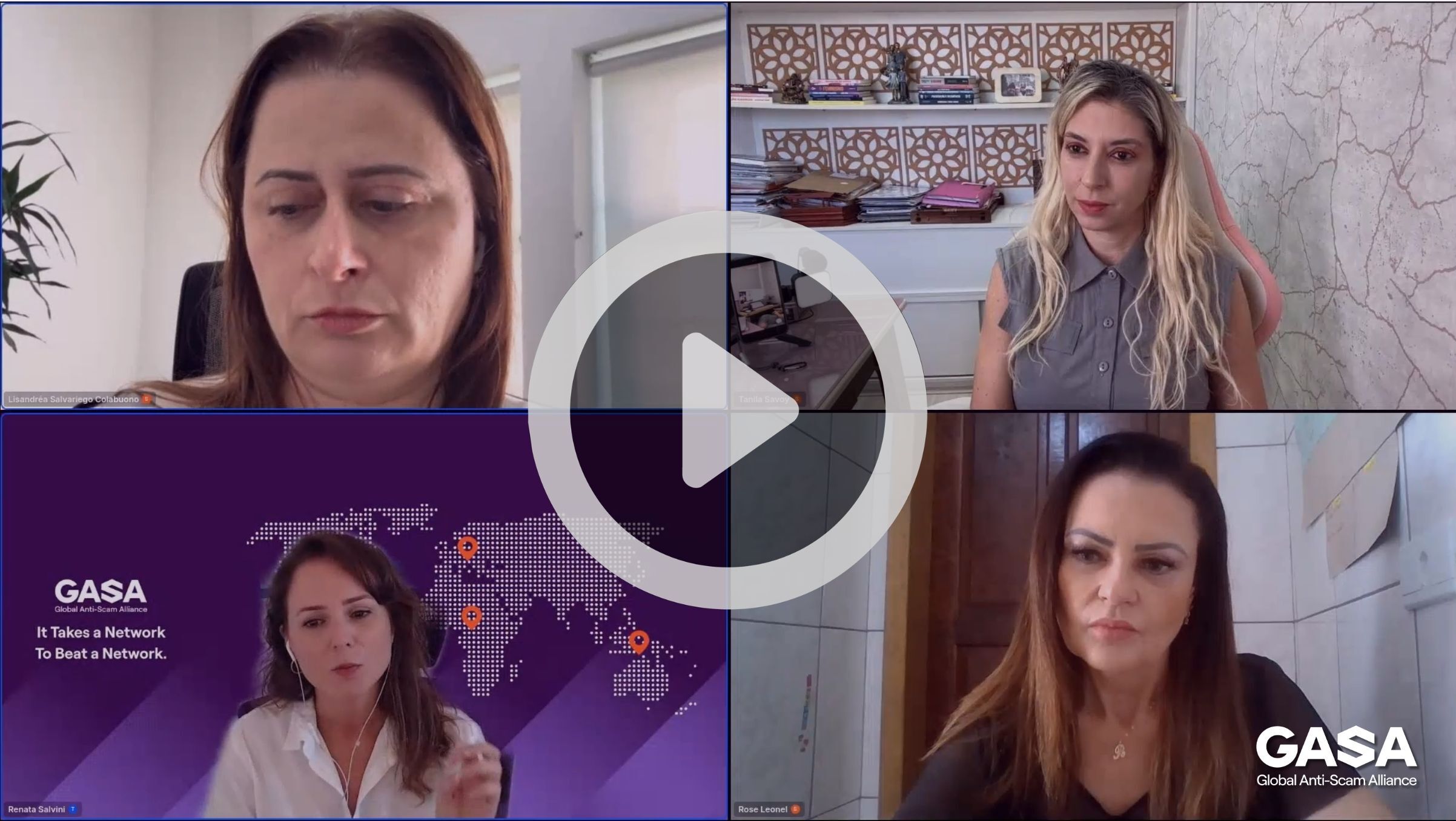
Romance Scams in Brazil: Warning Signs and Prevention
Experts from Brazil discuss how romance scams work, their emotional impact, and how victims can protect themselves online.
Brazil’s BC Protege+ Blocks Fake Bank Accounts Before They Can Be Opened
Brazil’s Central Bank launched BC Protege+, allowing individuals and businesses to block bank account openings in their name. With over 1 million activations, the tool offers a structural model for reducing identity-based fraud.
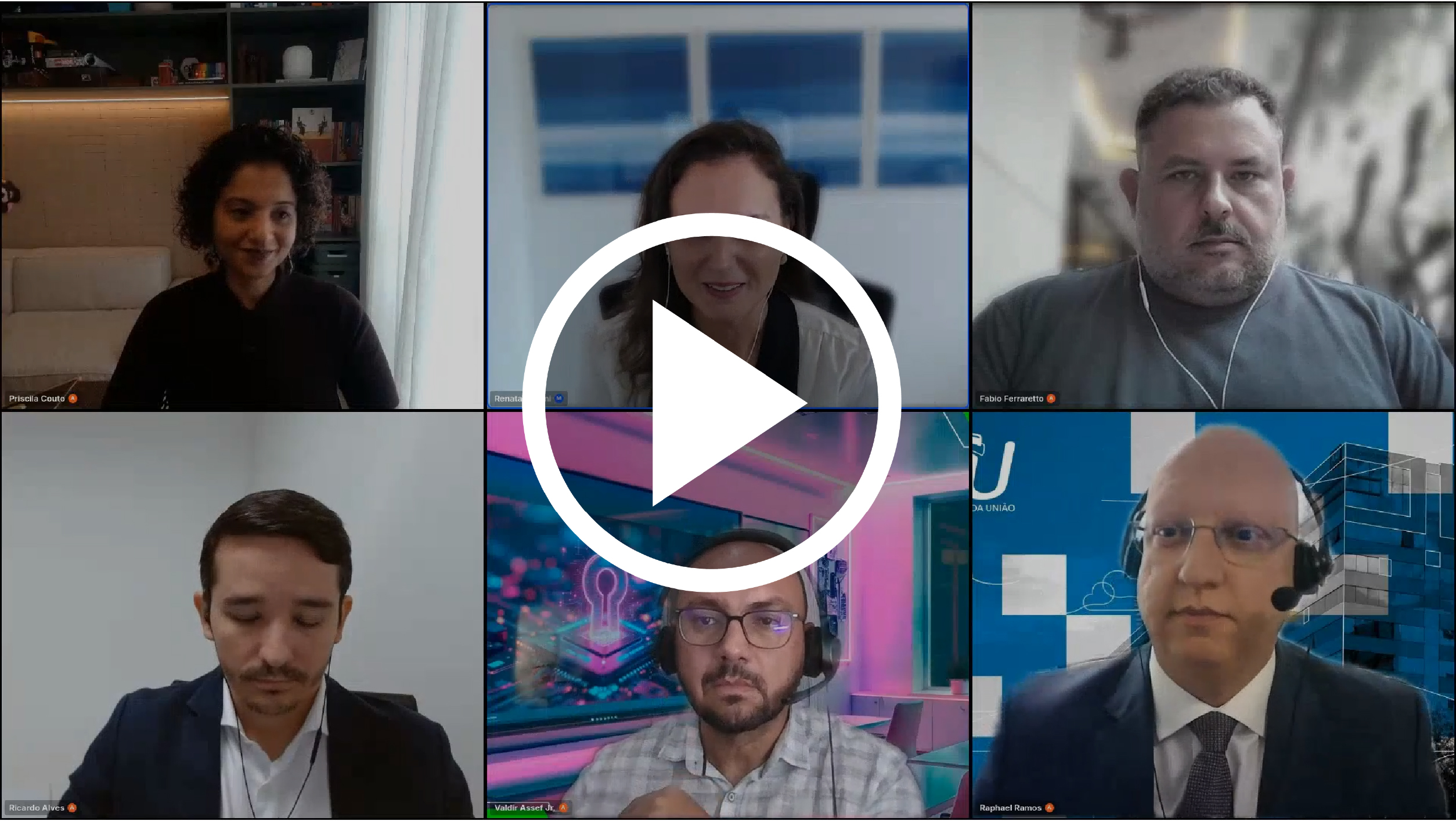
What to Expect From Scams in 2026 in the Age of AI
Experts discuss how AI is changing scam tactics and what to expect in 2026, in this webinar hosted by GASA Brazil.

Global Anti-Scam Alliance Welcomes Nasdaq Verafin as Foundation Member for Latin America’s Brazil and Mexico Chapters
Nasdaq Verafin has joined GASA as a Foundation Member for both the Brazil and Mexico Chapters, strengthening the regional and global effort to combat scams, financial crime, and digital fraud.
O Estado dos Golpes no Brasil: Como Virar o Jogo Contra as Fraudes
Leaders from GASA Brazil, government, tech, and finance discuss new findings and how Brazil can strengthen its defences against scams.