Mexico Anti-Scam Forum
From Coalition to Action
The GASA Mexico Annual Forum 2026, co-organised with the Ministry of Foreign Affairs (SRE) and the Financial Intelligence Unit of the Ministry of Finance (SHCP–UIF), will bring together approximately 150 senior officials, industry leaders and cross-sector stakeholders to translate a year of assessment and dialogue into concrete, actionable commitments.
The programme begins by examining the scale and evolving dynamics of fraud, before moving into its operational mechanisms and the conditions needed for a coordinated response. The first block defines the scale of the problem and explains why no single institution can address it alone. The second block explores how the fraud supply chain operates, which signals are useful, and how information can be shared across sectors. The third block focuses on institutional, legal and political barriers, and on connecting the national response with international cooperation.
Each block will conclude with a discussion focused on agreements, responsibilities and next steps, complemented by simultaneous sessions in two breakout rooms. The objective is to turn a shared understanding of the problem into a concrete agenda for action to reduce the impact of scams in Mexico.
Why attend?
The State of Scams in Mexico 2026
Be among the first to discover the findings of the State of Scams in Mexico 2026 Report, officially published during the Forum.
The report delivers the first comprehensive, coalition-backed diagnosis of scam trends, scale and impact in the country: how deception operates, who it reaches, what losses it leaves behind, and what happens after a person is defrauded.
Its findings open the day's discussion on the true scale of the threat and the coordinated action Mexico needs.
A Forum for Mexico's anti-scam ecosystem
The Forum brings into one room the institutions that hold each link of the chain: banking and payment networks, telecommunications, digital platforms, anti-fraud technology providers, the Federal Government, the Senate of the Republic, UNODC, academia and the media.
A network can only be met with a network. A year of work by the Mexico Chapter proved that a shared diagnosis is possible; this day turns it into commitments with named owners and timelines.
Event focus
A single day designed to close the year with operational agreements at national scale
The scam landscape in Mexico
The findings of the State of Scams in Mexico 2026 Report open the conversation on the scale of fraud, the tactics driving its growth, and the role of artificial intelligence in its industrialisation.
Cybersecurity and anti-fraud as one agenda
The convergence agreed in 2026 between the cybersecurity and anti-fraud agendas moves into implementation: what gets shared, among whom, and under what framework.
Cybersecurity and anti-fraud as one agenda
The convergence agreed in 2026 between the cybersecurity and anti-fraud agendas moves into implementation: what gets shared, among whom, and under what framework.
The Forum agenda builds directly on the outcomes of the two Mexico Chapter roundtables held in 2026.
Milestone 1 — January 2026
Hosted by Scotiabank
The first roundtable established a shared diagnosis of the scam landscape in Mexico and laid the foundations of the multisector coalition, formalised through the signing of a Memorandum of Understanding with the Cybersecurity Division of the Digital Transformation Agency (ATDT).
Milestone 2 — July 2026
Hosted by Mastercard

The second roundtable advanced the relevance and urgency of bringing the cybersecurity and anti-fraud agendas together, and defined a concrete action plan on communication, awareness and public education campaigns.
Milestone 3 — October 2026
Hosted by the Ministry of Foreign Affairs

The Annual Forum translates into concrete national action the commitments made at the UNODC Global Fraud Summit in Vienna, positioning the Mexico Chapter as a reference point for multisector governance in cybersecurity and anti-fraud across Latin America.
Program Structure
The Forum closes the Mexico Chapter’s first year with a program that moves from understanding the problem to creating the conditions needed to address it.
The first block establishes the scale of the challenge: how much Mexico loses to scams, how deception operates today, and why no single institution can address the problem alone. This is the rationale for bringing government, financial institutions, telecommunications companies, digital platforms and international organizations to the same table.
The second block brings together those working on the front lines of prevention and response for a technical discussion: how the fraud supply chain is structured, which signals are useful at each stage, and under what interoperability and compliance conditions information can be shared across sectors.
The third block takes the conversation into the public and institutional arena: the operational, political and legal barriers to institutional coordination and how Mexico’s national response connects with international cooperation—from the commitments made at the UNODC Global Fraud Summit in Vienna to the mechanisms needed to act against a crime that, in many cases, originates outside the country.
Each block concludes with a panel discussion and is complemented by simultaneous sessions in the two breakout rooms.
08:00 – 08:45
Registration
08:55 – 09:00
Opening Remarks
Welcome and overview of the day’s program.
09:00 – 09:10
GASA Mexico Introduction
Presentation of GASA Mexico’s work, the purpose of the Forum, and the main challenges that will guide the day’s discussions.
09:10 – 09:30
Official Opening by the Ministry of Foreign Affairs
Reflections on the role of public-private collaboration in building a coordinated response to fraud and scams.
09:30 – 10:00
Firsthand Account: A Scam Victim’s Testimony
An account of the full scam journey and its emotional, financial, bureaucratic, and institutional consequences.
10:00 – 10:30
Block 1 - Panel: The Cybersecurity and Fraud Agenda: A Cross-Sector Response
Scams combine social engineering, cybersecurity vulnerabilities, telecommunications channels, digital platforms, and financial transactions. Yet cybersecurity, fraud prevention, consumer protection, and law enforcement are still often addressed as separate agendas.
This panel will examine why the anti-fraud and cybersecurity agendas must be understood as a systemic problem and what each sector can contribute to strengthen prevention, detection, response, and recovery.
10:30 – 11:00
Coffee break
11:00 - 12:00
Block 2A - Presentation and Panel: The Fraud Supply Chain
This session will reconstruct how a scam operates from beginning to end: from identity theft and the initial contact to the use of telecommunications networks, digital platforms, and financial services, followed by the dispersal of funds through mule accounts, virtual assets, or other mechanisms.
Panelists will examine which actors are involved at each stage, which signals they can identify, and where the operation can be prevented, detected, blocked, or disrupted.
12:00 - 13:00
Block 2B - Presentation and Panel: Cross-Sector Intelligence and Information Sharing
Each organization sees a different part of the operation: telecommunications companies may detect communication anomalies; platforms may identify suspicious behaviour; and financial institutions may detect unusual transactions. The challenge is to connect these signals, confirm patterns, and act before the scam is completed or the funds leave the system.
This session will examine what information can be shared in real time, under which criteria, and through which technical, legal, and operational protocols.
13:00 – 14:20
Lunch
14:30 - 15:20
Block 3A - Presentation and Panel: Institutional Coordination: Operational, Political, and Legal Barriers
Responsibilities for addressing fraud are distributed across security, law enforcement, consumer protection, regulatory, and financial intelligence authorities. This fragmentation makes it difficult to guide victims, follow up on reports, connect related cases, investigate criminal networks, and recover funds.
The panel will examine the governance and leadership mechanisms Mexico needs to coordinate institutions, clarify responsibilities, and build a national strategy against fraud and scams.
15:30–16:30
Block 3B - Presentation and Panel: The International Agenda: Cooperation Against a Borderless Crime
Fraud networks operate across countries, use infrastructure located in multiple jurisdictions, and move funds through global financial systems and digital assets.
Drawing on the agreements promoted at the UNODC Global Fraud Summit in Vienna, this session will examine how to strengthen cooperation among authorities, companies, and international organizations to share information, investigate criminal networks, trace funds, and coordinate action across jurisdictions.
16:30 – 16:50
Closing Remarks and Conclusions
Summary of the main insights, challenges, and opportunities for collaboration identified throughout the day.
DATE
Wednesday, 14 October 2026
TIME
9:00 AM – 4:00 PM
(registration from 8:00 AM)
LOCATION
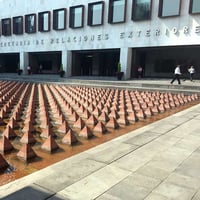
Ministry of Foreign Affairs (SRE) Av. Juárez 20, Centro, Mexico City
FORMAT
In-person · Main plenary and two parallel working sessions · Approximately 150 participants
LANGUAGE
The event will be conducted in Spanish
CLOSING COCKTAIL
By invitation, at a nearby venue
Join the Mexico Chapter
The Mexico Chapter of the Global Anti-Scam Alliance brings together financial institutions, telecommunications companies, digital platforms, technology providers, government, international organisations and academia around a shared objective: protecting people in Mexico from scams.
Want to take part in the Mexico Chapter as a member or partner, or simply follow our work? Share your contact details and we'll be in touch.