
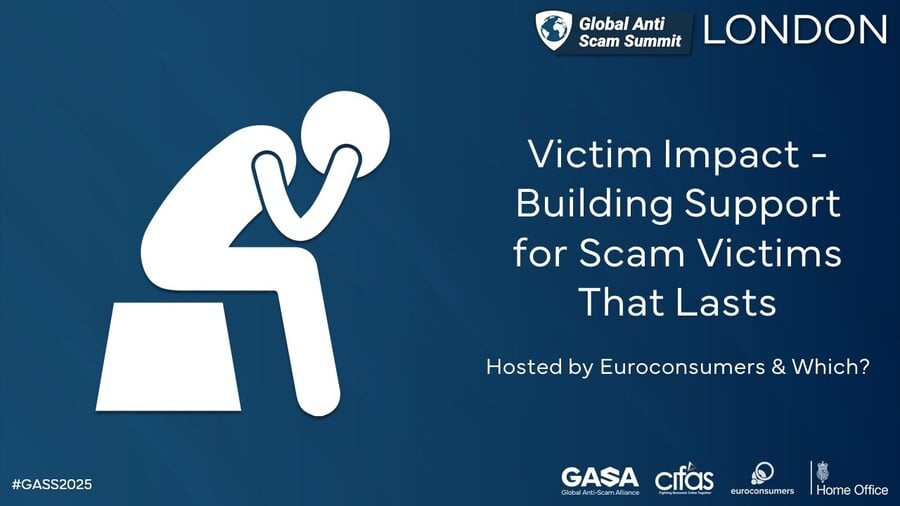
Date of Event: 26-27 March 2025
Event: Global Anti-Scam Summit London 2025
For victims of scams, the trauma extends far beyond financial losses. Stigma, isolation, and a lack of proper support often make the aftermath even more painful than the crime itself.
As part of the Global Anti-Scam Summit London 2025 , this workshop, hosted by Euroconsumers and Which?, brought together survivors and experts to explore what genuine, long-term support for scam victims should look like.
The session was chaired by Jekatyerina Maszlova, Advocacy and Enforcement Officer at Euroconsumers.
The session opened with testimonies from Cecilie Fjellhøy, Co-Founder of LoveSaid, and Anna Rowe, Founder of Catch the Catfish and Co-Founder of LoveSaid. Both spoke about their experiences of romance fraud, the psychological pressure they faced, and the barriers to receiving effective support. They described how, beyond the fraud itself, the response from institutions can add further distress.
Dr. Elisabeth Carter, Associate Professor of Criminology and Forensic Linguist at Kingston University, examined the role of language in fraud. She highlighted how scammers build trust and control victims, and how public messaging and institutional responses often place blame on victims instead of focusing on the methods used by offenders.
Wayne Stevens, National Fraud Lead at Victim Support UK, and Neil Postins, Service Delivery Manager at the National Economic Crime Victim Care Unit, City of London Police, described the challenges faced by support services. They discussed the importance of first responders in recognising victims and providing access to help at an early stage.
Matt Niblett, Senior Policy Adviser at Which?, presented findings that compared the emotional impact of scams to the financial losses. He noted that the psychological damage is often greater, and argued for public policy to address this gap.
The session also included contributions from Kole Gjikolaj, Member of the Childnet Youth Advisory Board, who shared a youth perspective on scams and their consequences.
Giles Derrington, Senior Government Relations and Public Policy Manager at TikTok, and Will Gardner, CEO of Childnet, discussed the role of digital platforms in prevention and education.
The discussion showed that meaningful support requires action across law enforcement, financial services, government, and community organisations. It is not only about prevention, but also about making recovery possible for those affected.
Watch the full session below to hear directly from the speakers and gain valuable insights into how we can build lasting support for scam victims.

BanCoppel joins the Global Anti-Scam Alliance to bolster fraud prevention and safeguard individuals entering the banking system.
BanCoppel has joined the Global Anti-Scam Alliance (GASA) as a Corporate Member of the GASA Mexico Chapter.
The emotions scammers exploit: how social engineering influences our decisions
How scammers use fear, urgency, excitement and trust to influence decisions, and how recognising these tactics can help people prevent fraud.

Global Anti-Scam Alliance Welcomes Mastercard as Founding Member of Its Mexico Chapter
The Global Anti-Scam Alliance (GASA) announces the membership of Mastercard as a Member of its Mexico Chapter.
What Uganda’s IVR Trial Shows About Practice-Based Scam Prevention
A Uganda IVR trial shows how practice-based fraud prevention helped mobile money users reduce losses and increase reporting.
FTC’s Never EVER Campaign Helps Prevent Elder Financial Abuse With Simple, Specific Scam Warnings
The FTC’s Never EVER campaign uses simple, specific imposter scam warnings to help prevent elder financial abuse and support coordinated consumer education.
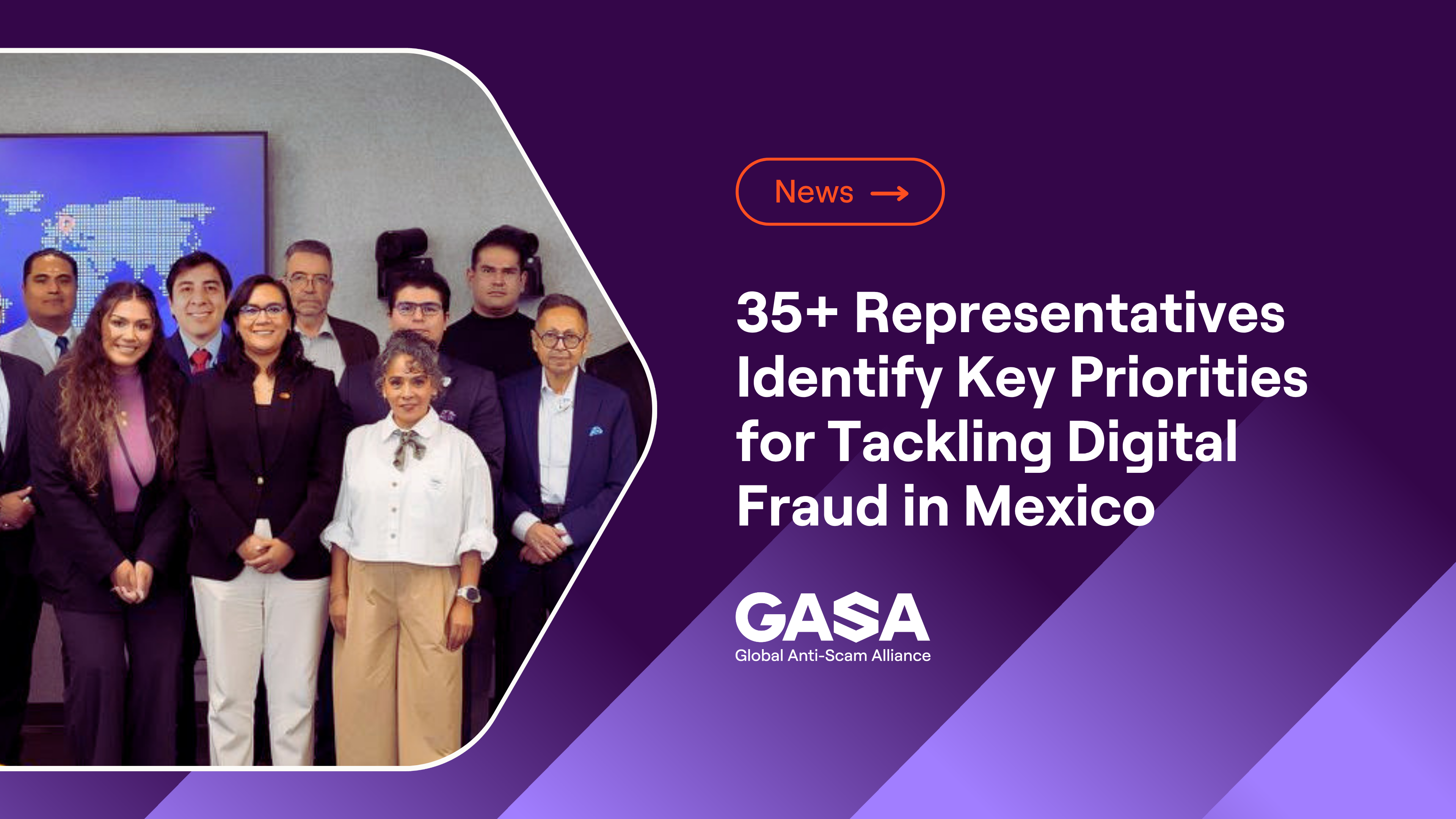
GASA Mexico's Second Roundtable Advances Coordinated Action Against Digital Fraud
GASA Mexico's second roundtable brought together more than 35 representatives to strengthen coordination across cybersecurity, fraud prevention and other sectors.
Cognyte Joins Global Anti-Scam Alliance to Fight Financial Fraud Threats
Cognyte, a global leader in investigative analytics software, today announced its membership in the Global Anti-Scam Alliance (GASA).
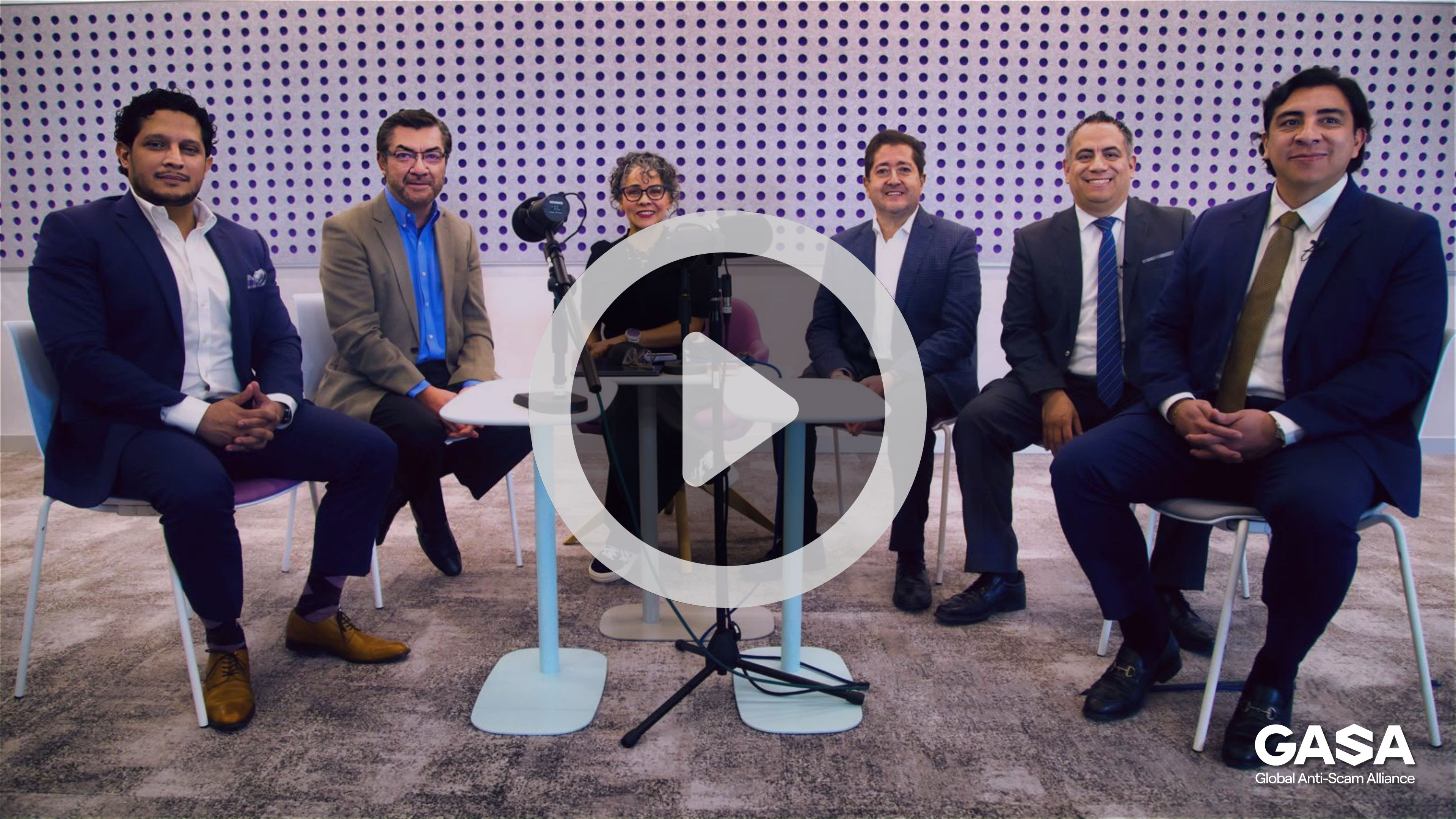
A network is beaten by a network: Mexico's banks move from remediation to prevention
GASA convened the ABM Fraud Committee and Mexican banks to advance the enriched agreement and strengthen coordinated fraud prevention across the sector.