

Date of Event: 18 June 2026
Event: GASA Africa Chapter Meet-Up
As financial markets, fintech platforms, digital lending, mobile money, venture capital, and cross-border investments become increasingly technology-driven, cyber risk is becoming a core investment risk. The GASA Africa Chapter meet-up, Policy Blind Spots in Cyber-Enabled Investment, explored how regulatory and policy frameworks can struggle to keep pace with fast-moving digital investment ecosystems, leaving consumers, investors, institutions, and economies exposed to scams, data misuse, and cyber-enabled fraud.
Hosted by the Global Anti-Scam Alliance Africa Chapter, the discussion brought together experts from consumer protection, cybersecurity, finance, technology, and scam research. The session examined how policy gaps can emerge when financial services, telecoms, technology platforms, third-party providers, and cross-border payment channels operate across overlapping regulatory environments.
Speakers:- Patricia Eromosele, Director – Africa Chapter, Global Anti-Scam Alliance (Moderator)
- Florence Abebe – Federal Competition and Consumer Protection Commission, Nigeria
- Geraldine Mugumya, Risk Analyst, Information Security – National Information Technology Authority Uganda
- Fiyinfolu Okedare, Director, Consulting Services – Forvis Mazars in Nigeria
- Oluwole Olakanmi, Security Scam Researcher – DarkLens
The discussion also addressed the challenge of balancing innovation with consumer protection. Florence Abebe shared insights from Nigeria’s experience with digital money lending, where regulatory action was needed to address harmful practices around data access, unfair recovery methods, and consumer privacy. Speakers emphasised that regulation should support innovation while ensuring that consumers are protected from abuse, misleading practices, and weak data safeguards.
Geraldine Mugumya noted that investment ecosystems across Africa are evolving beyond traditional banking and capital markets, but regulatory frameworks often remain divided by sector. This can create gaps when banks, telecoms, third-party aggregators, fintechs, and digital platforms all play a role in the same transaction chain. The panel stressed the importance of flexible, multi-stakeholder policy frameworks that can adapt as technology changes.
Fiyinfolu Okedare discussed cybersecurity risk as a growing blind spot in investment due diligence. While investors often focus on market, credit, liquidity, and operational risk, they may pay less attention to ransomware exposure, third-party risk, credential compromise, business email compromise, phishing, deepfake-enabled deception, and the resilience of the platforms they invest in or rely on. He emphasised that investors, platforms, regulators, financial institutions, and governments all share responsibility for reducing exposure.
Oluwole Olakanmi focused on the need for resilient investment ecosystems built around continuous monitoring, intelligence sharing, incident response, stronger identity controls, and practical scam awareness. The discussion also highlighted the importance of reporting culture, especially when victims feel ashamed to report financial loss. Without better reporting and intelligence sharing, regulators, platforms, financial institutions, and law enforcement may struggle to identify patterns early enough to prevent wider harm.
A key theme throughout the session was trust. Cyber-enabled investment scams exploit confidence in platforms, brands, professional networks, payment channels, documents, and official-looking communications. Once trust is lost, it can be difficult to restore. Speakers called for stronger collaboration between policymakers, regulators, innovators, financial institutions, telecom operators, technology platforms, and consumer protection agencies to close policy blind spots without stifling responsible innovation.
The meet-up reinforced GASA’s wider message that it takes a network to beat a network. As scam tactics become more sophisticated and cross-border, stronger coordination, targeted awareness, data sharing, and adaptive regulation will be essential to protect consumers and build safer digital investment environments across Africa and beyond.
Watch the full discussion below to learn how Africa’s anti-scam community is working to strengthen safeguards around cyber-enabled investment.

State of Scams in Nigeria 2026: A Comparative Review Across Africa
Nigerian experts examine scam trends, technology, consumer protection and the need for stronger cross-sector collaboration.
Nearly three in four Danish adults encountered scams as estimated losses reach DKK 10.1 billion
New State of Scams Denmark 2026 report finds scam exposure is rising, while victims face repeated financial and emotional harm.

Building a More Trusted Digital Philippines: New Report Underscores the Need for Collective Action as Scam Exposure Continues to Rise
GASA’s State of Scams in the Philippines 2026 Report, in collaboration with Mastercard and Gogolook, highlights the growing scale of the scam challenge in the Philippines.
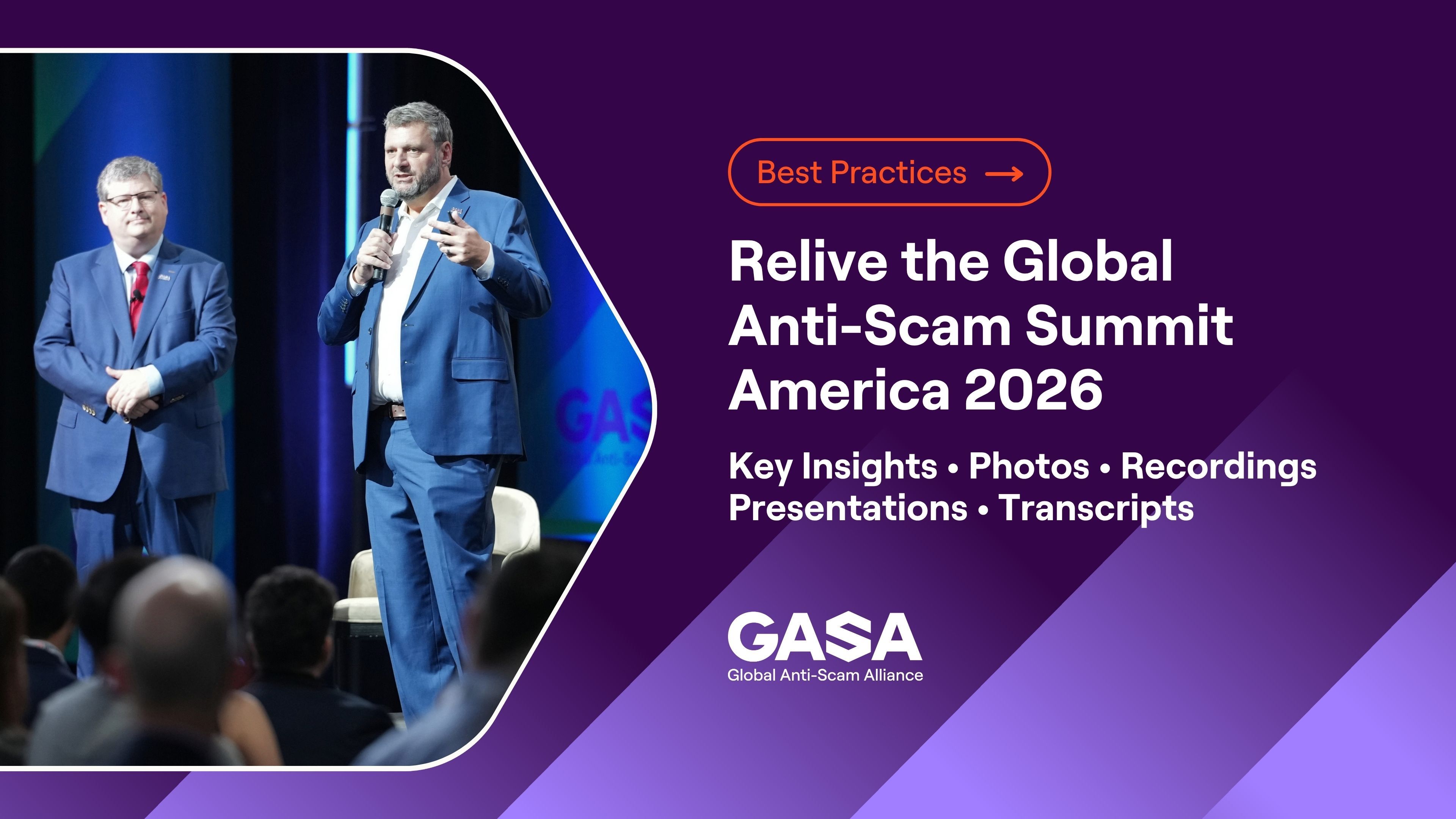
Global Anti-Scam Summit America 2026: Highlights, Insights and Resources
Explore GASS America 2026 highlights and insights, with the Summit summary, photos, presentation slides, transcripts and session recordings from San Francisco.
State of Scams in Kenya 2026: A Comparative Review Across Africa
Kenyan experts examine scam trends, data sharing, digital trust and the need for stronger cross-sector prevention.
State of Scams in South Africa 2026: A Comparative Review Across Africa
South African experts examine scam trends, AI, consumer protection and the need for stronger cross-sector collaboration.
-3.jpg)
More than one in five adults in Japan encountered scams in the past year
New State of Scams Japan 2026 report examines how scams are reaching consumers and where stronger prevention and collaboration can make a difference

GASA Brings Stakeholders Together in Brussels for First Europe Chapter Meeting
GASA Europe brings 50+ stakeholders together in Brussels to discuss scam trends, data sharing and cross-sector priorities.