
Date of Event: 6 October 2026
Event: GASA Africa Webinar
Scams have become a widespread part of Kenya’s digital economy, reaching consumers through mobile phones, social media, payment platforms and other trusted channels. New research from the Global Anti-Scam Alliance (GASA) shows that 92% of Kenyan adults encountered a scam in the past year, while 70% interacted with a scammer and 36% lost money or shared personal information that subsequently led to money being stolen.
 READ THE REPORT – STATE OF SCAMS IN KENYA 2026
Speakers
- Patricia Eromosele, Director, Africa Chapter – Global Anti-Scam Alliance (GASA), Moderator
- Joy Kuria, Payments Risk and Governance Leader – Association of Fintechs in Kenya (AFIK)
- Kiprono Rugut, Chief Information Security Officer – Adili Group
- Lawrence Nderu, Senior Lecturer in Computer Science – Jomo Kenyatta University of Agriculture and Technology (JKUAT)
- Lenkai Shingawa – NC4
- Mutheu Nyagah Khimulu, CEO – MKC
Scam Exposure Is Rising Sharply
The findings show both the scale of scam exposure and the difficulty consumers face in recognising increasingly convincing approaches. Only 54% of Kenyan adults say they are confident they can recognise a scam, while 70% of all respondents interacted with a scammer. Among those who encountered a scam, that rises to 83%.
Employment scams generated the highest level of interaction at 40%, followed by investment scams at 39% and unexpected money scams at 37%. Text and SMS scams have also grown sharply, while 86% of scam attempts occurred on platforms with a direct messaging function.
Financial and Emotional Costs Remain High
Scams are estimated to have cost Kenyan adults KSh 286.7 billion, or around US$2.2 billion, over the past year, with an average loss of approximately KSh 23,951 per victim. More than half of those who lost money were scammed more than once, with victims losing money an average of 2.2 times.
The consequences extend beyond financial loss. 77% of victims said being scammed had a moderate or significant impact on their wellbeing, while others reported increased distrust of digital platforms, persistent concern about future scams, reduced confidence and additional debt.
Reporting Does Not Always Lead to Recovery
The report also highlights a gap between reporting and outcomes. Scam victims were more likely to report incidents to commercial organisations or social platforms than to authorities, while just 14% of those who reported a financial loss had money recovered or reimbursed.
Among those who did not report a scam, 41% said they did not believe reporting would make a difference, while uncertainty over where to report and the complexity of reporting processes also remained significant barriers.
Moving From Response to Prevention
The webinar discussion focused on the need for earlier intervention and stronger cooperation across sectors. Speakers explored how banks, telecom operators, digital platforms, government, academia and law enforcement can share relevant scam signals more effectively, while respecting data protection requirements.
The report shows there is significant public support for stronger preventive measures. 73% of Kenyan adults support allowing banks to block transactions above a certain value when they believe a scam may be taking place, while 60% support data sharing between banks, telecom operators and law enforcement where someone may be being scammed or involved in scamming.
The discussion reinforced that scam prevention cannot rest on consumers alone. With scams moving across platforms, telecom networks, financial infrastructure and borders, earlier detection and coordinated action across the ecosystem will be essential to reducing harm.
Watch the full discussion below to hear how experts across Kenya are approaching scam prevention, information sharing and digital trust.
 WATCH NOW

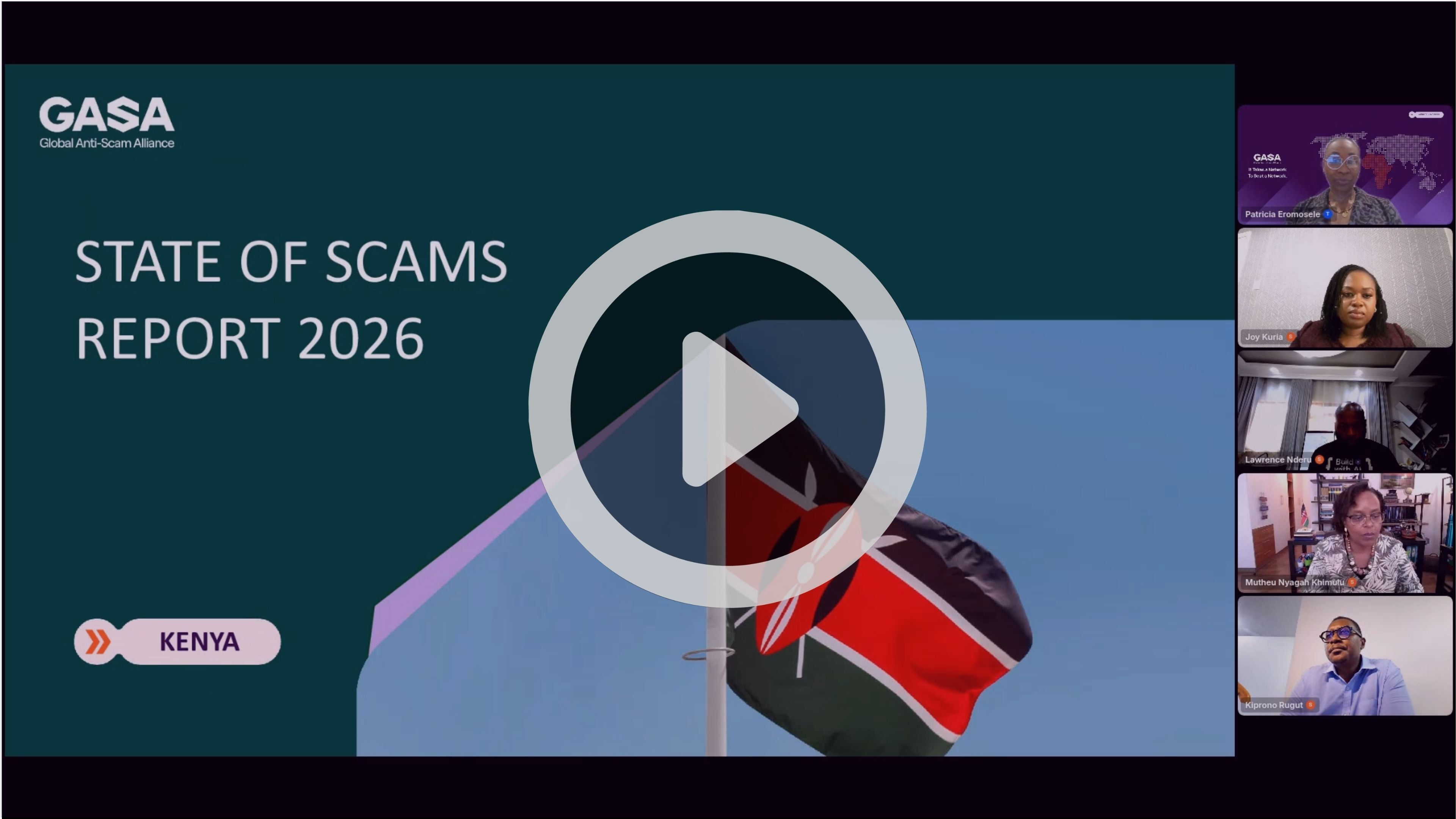
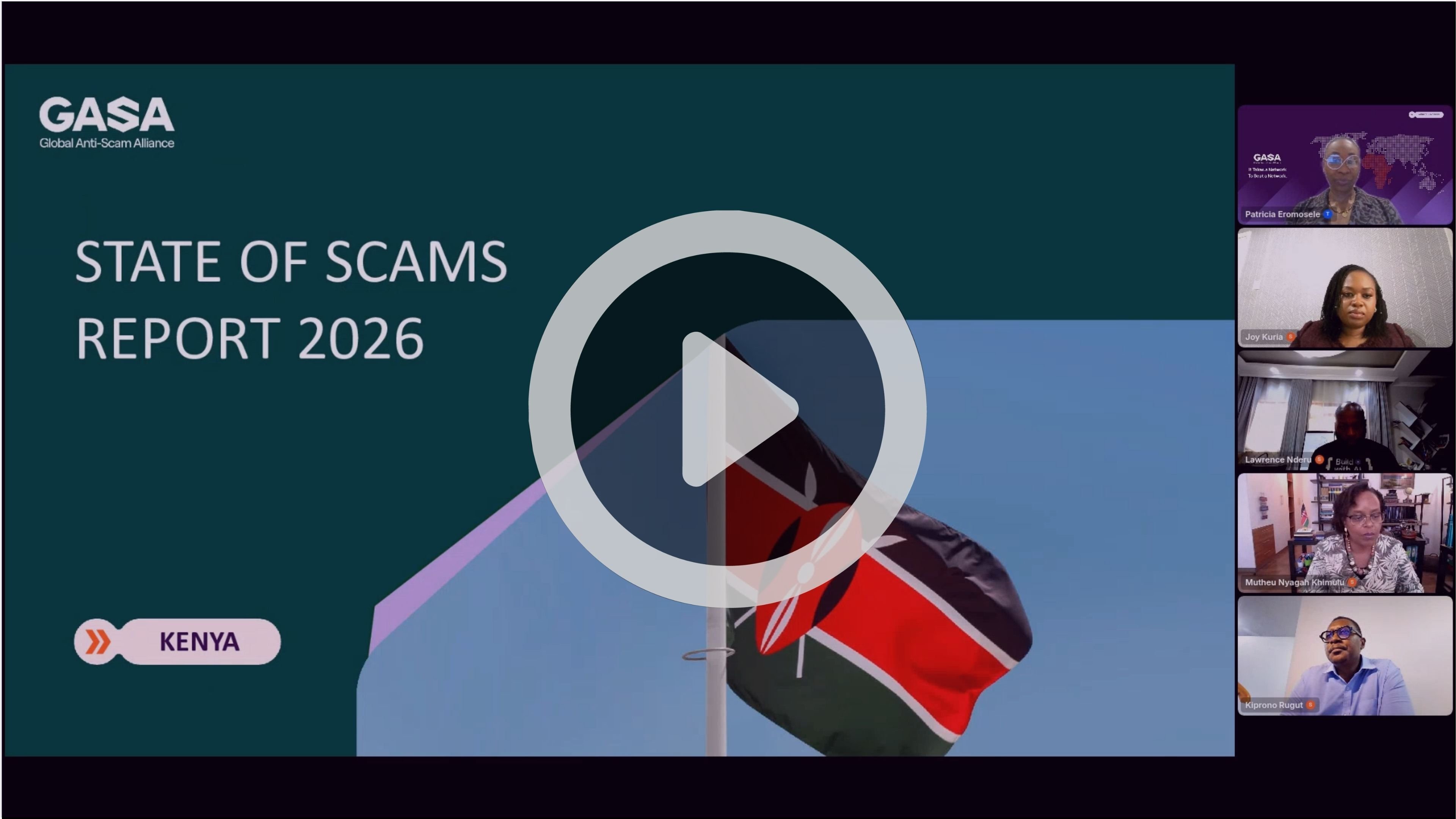
State of Scams in Kenya 2026: A Comparative Review Across Africa
Kenyan experts examine scam trends, data sharing, digital trust and the need for stronger cross-sector prevention.
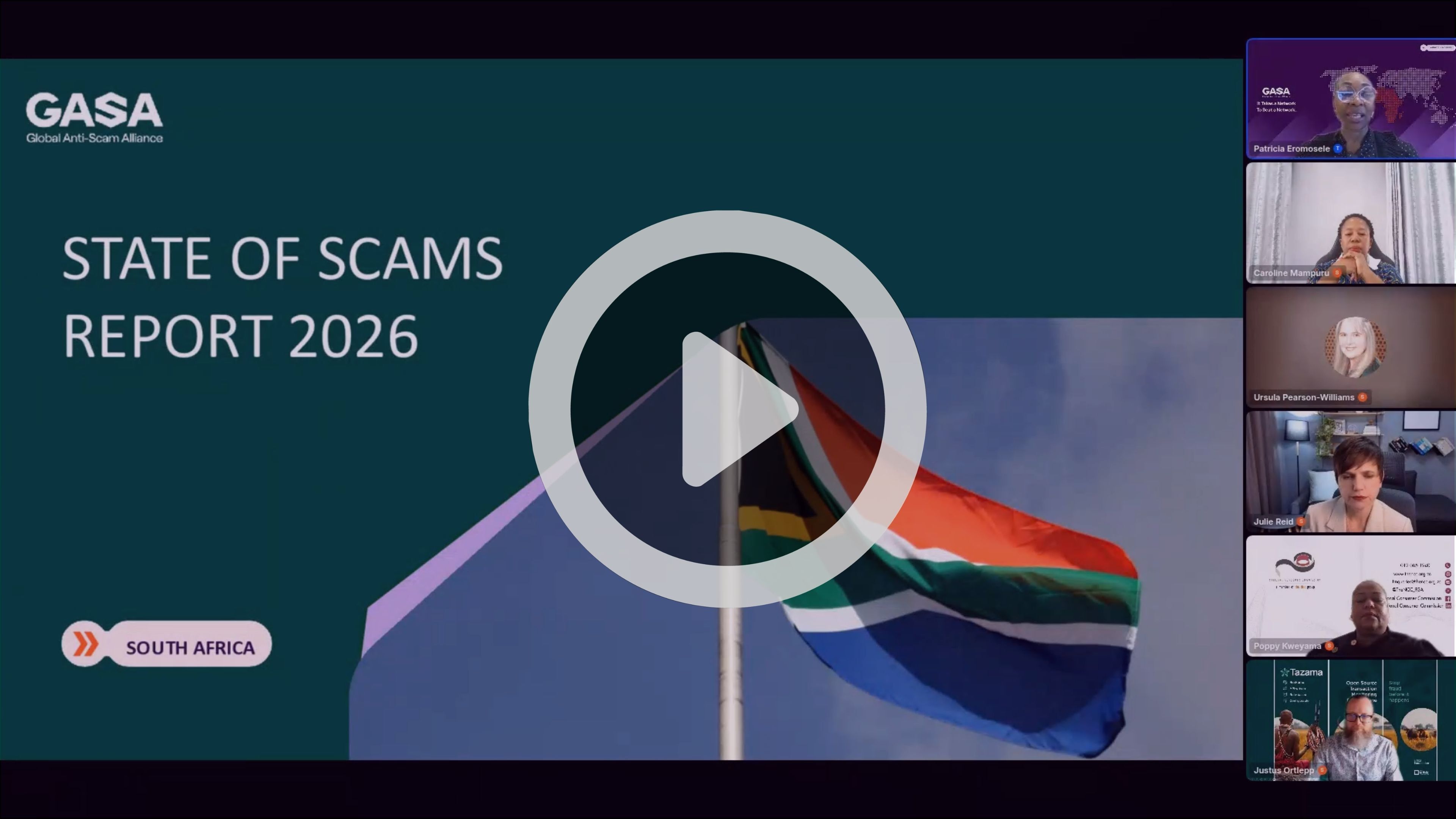
State of Scams in South Africa 2026: A Comparative Review Across Africa
South African experts examine scam trends, AI, consumer protection and the need for stronger cross-sector collaboration.

GASA and Google Trust & Safety Workshop Sets Priorities for Anti-Scam Cooperation Across Africa
GASA Africa Chapter and Google South Africa brought anti-fraud leaders together to strengthen cross-border cooperation and scam prevention.

What Uganda’s IVR Trial Shows About Practice-Based Scam Prevention
A Uganda IVR trial shows how practice-based fraud prevention helped mobile money users reduce losses and increase reporting.

Protecting Seniors and Vulnerable Communities from Fraud
Experts from financial services, internet safety and policy explore how families, banks and communities can better protect vulnerable groups from fraud.
Beyond Compliance: Why Organisational Accountability is Critical for Consumer Protection
How the NDPC-Meta initiative could strengthen data protection, organisational accountability, scam prevention and consumer trust across Nigeria’s digital economy.
Policy Blind Spots in Cyber-Enabled Investment | GASA Africa
GASA Africa Chapter explores cyber risks, investor protection, and policy gaps in digital investment ecosystems.
League of Protectors: Women Fighting Against Scams
Explore key insights from our International Women’s Month webinar on combating scams. Discover how women leaders are driving cross-border collaboration, digital literacy, and collective action to protect communities from fraud.