
 READ THE REPORT
TAIPEI, Taiwan — Whoscall, the anti-scam app developed by TrustTech company Gogolook, today joined forces with the Global Anti-Scam Alliance (GASA) to release the 2026 Asia Scam Report – Taiwan, providing an in-depth look at scam exposure, channels, victim experiences, and scam awareness among people in Taiwan.
The findings show that while people in Taiwan demonstrate a high level of awareness when identifying and preventing scams, scammers are increasingly diversifying their tactics and shifting their activities toward email and social media platforms. Repeat victimization and the psychological impact of scams also remain pressing issues that require continued attention and coordinated action across the public and private sectors.
To further strengthen global and regional collaboration against scams, the fourth Global Anti-Scam Summit Asia (GASS Asia) will take place in Bangkok, Thailand, for the first time on November 10–11, 2026. The summit will bring together representatives from governments, global technology companies, financial institutions, and other sectors to develop strategies for combating emerging AI-enabled and cross-border scams and strengthening Asia's collective defenses against fraud.
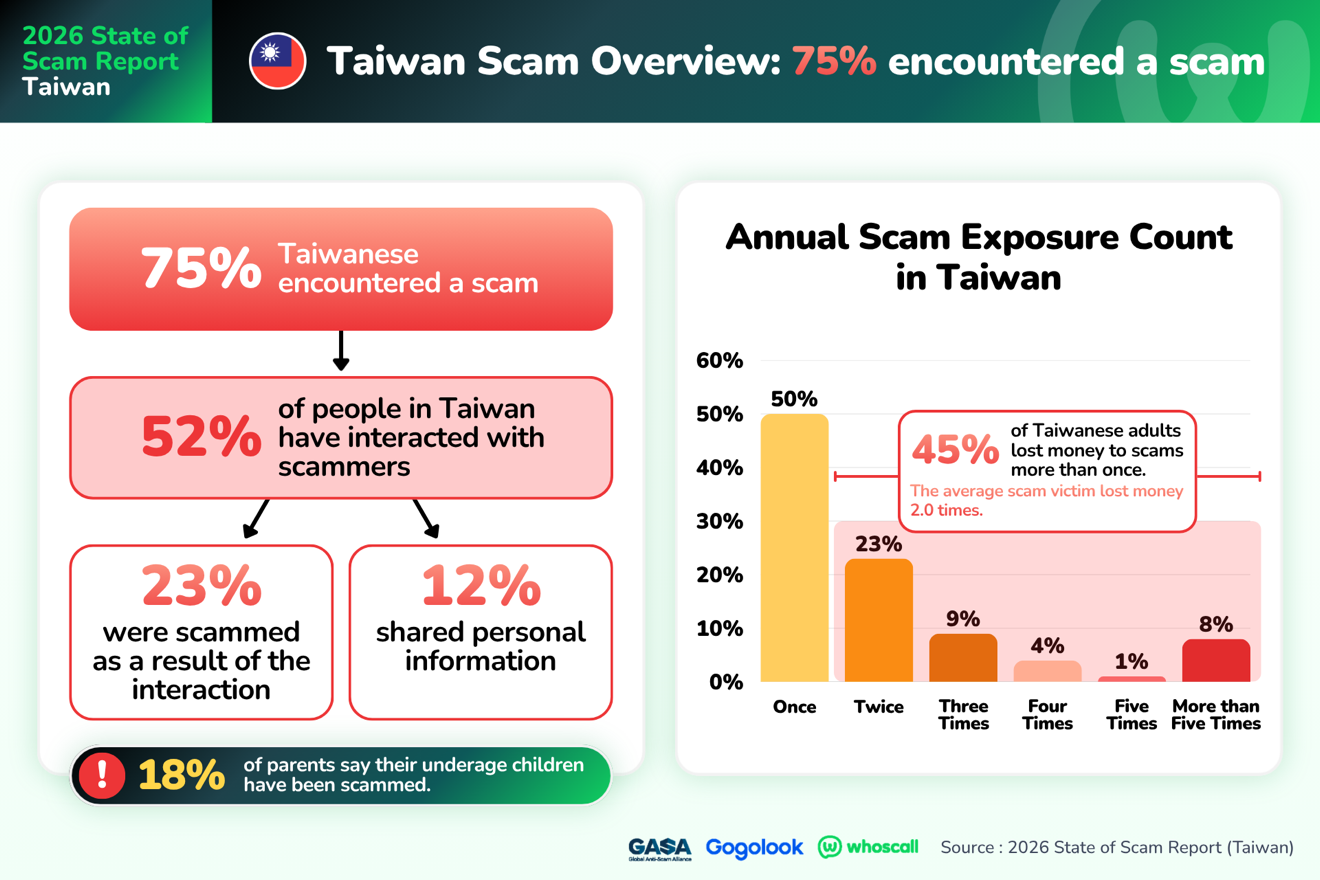
75% of People in Taiwan Encountered Scams, While More Than Half Engaged with Them
According to the 2026 Asia Scam Report, 75% of respondents in Taiwan encountered a scam in the past 12 months. Among them, 52% engaged with scammers, while 23% lost money as a result of the interaction and 12% provided personal information.
The most common reasons respondents chose not to engage included a general rule of not responding to unknown messages (42%), messages that appeared implausible or suspicious (41%), and offers that seemed too good to be true (37%).
Meanwhile, 18% of parents reported that their children had encountered scams, highlighting how scam threats are increasingly reaching teenagers and minors through digital environments such as online gaming and e-commerce.
Among victims who lost money to scams, repeat victimization has emerged as a significant vulnerability. Of adult victims in Taiwan who suffered financial losses from scams during the past 12 months, 45% said they had been scammed more than once, with victims losing money to scams an average of twice.
While 50% of victims reported losing money once, 23% were victimized twice, 9% three times, 4% four times, 1% five times, and 8% more than five times.
The findings underscore the risk of repeat victimization and suggest that scam prevention cannot stop at one-time awareness campaigns. Greater follow-up support and protection are needed for people who have already fallen victim to scams.
Jeff Kuo, Co-founder and CEO of Gogolook, said “As scam tactics become increasingly AI-driven, sophisticated, and distributed across a growing range of channels, no single organization or government agency can address the threat alone. Each year, we work with GASA to release the Asia Scam Report across multiple markets, using data and trend insights to raise awareness of the digital trust crisis and the challenges facing scam victims. Gogolook has long been committed to anti-scam technology, supported by one of Asia’s largest scam databases and cross-sector partnerships with governments around the world. We will continue advancing our anti-scam technologies to help people identify and avoid scams more effectively.”
Scam Channels Are Shifting: Phone Scams Decline as Email and Social Media Gain Ground
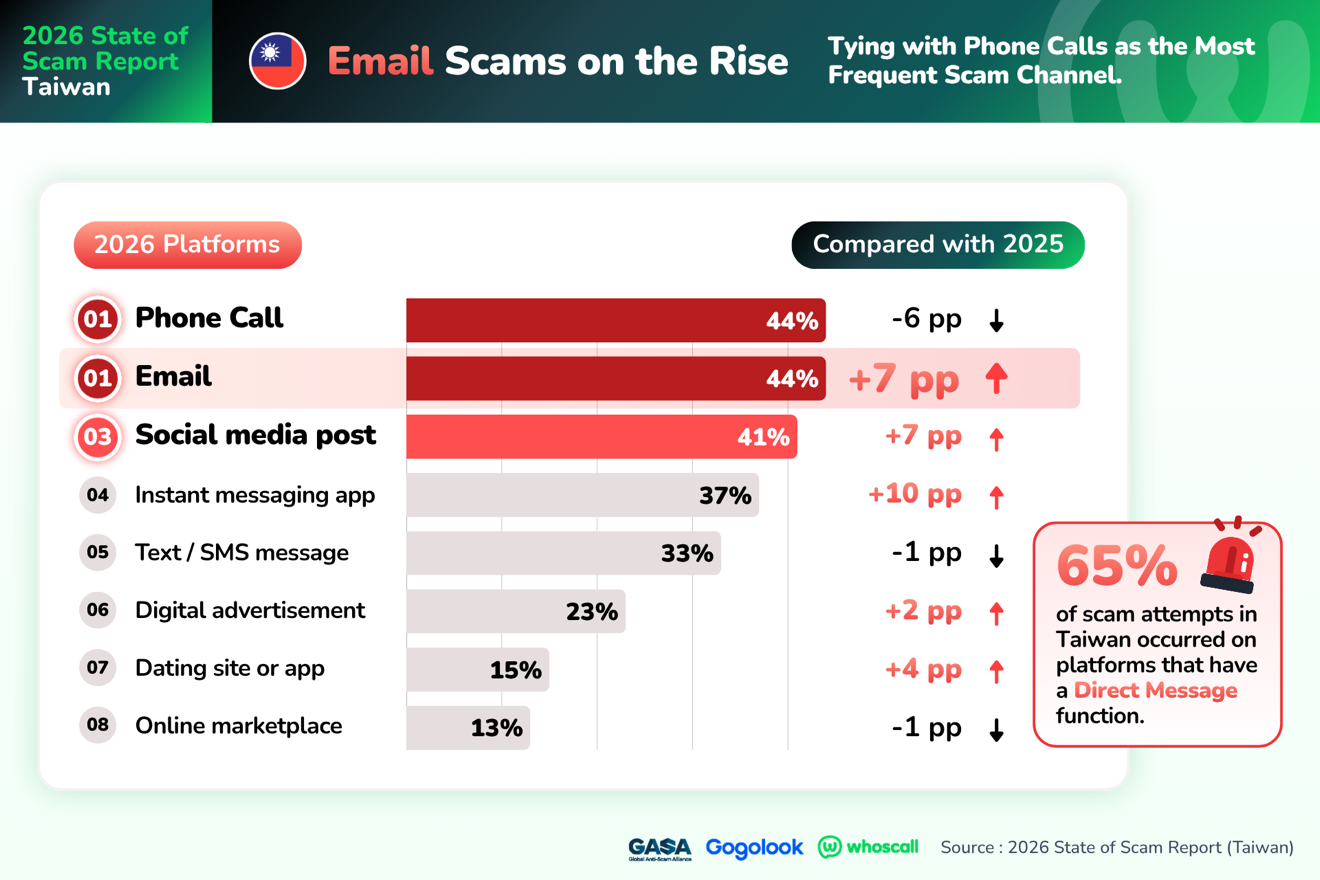
A comparison of scam channels between 2025 and 2026 reveals a significant shift in scammers' tactics.
Phone calls, historically the leading scam channel, declined from 50% in 2025 to 44% in 2026. In contrast, email rose sharply from 37% to 44%, tying phone calls as the most common channel through which people encountered scams.
Scam exposure through social media platforms (41%) and instant messaging apps (37%) also increased substantially. Overall, 65% of scam attempts occurred on platforms featuring direct or private messaging functions.
Other common channels included digital advertisements (23%), dating apps (15%), and online shopping platforms (13%), demonstrating how scams have permeated virtually every aspect of everyday digital life.
According to Taiwan's Executive Yuan Anti-Fraud Dashboard, scammers have recently been using social media posts advertising products, concert tickets, and other items at unusually low prices or even for free. Victims are then asked to click fraudulent website links under the pretext of paying shipping fees.
Scammers may subsequently impersonate bank customer service representatives and claim that payment verification is required, ultimately manipulating victims into providing their TWQR payment codes for unauthorized transactions. The scheme demonstrates how scammers increasingly move victims from one digital channel to another as part of a coordinated scam journey.
LINE and Facebook Lead Digital Platforms for Scam Exposure, While 96% of People Verify Suspicious Information
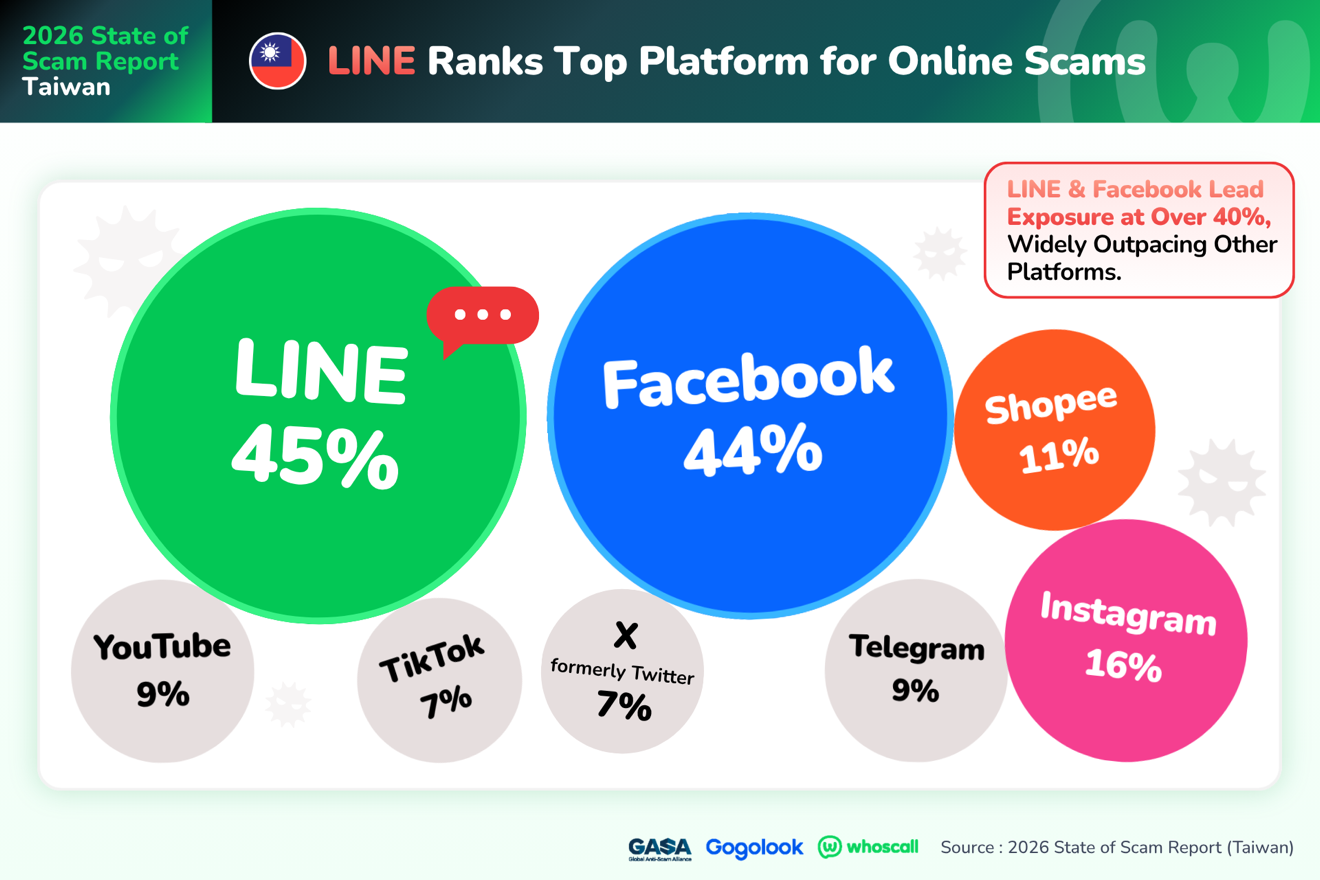
Among the top 10 digital platforms where people in Taiwan most frequently encountered scams, LINE (45%) and Facebook (44%) ranked first and second, respectively, making them the communication and social platforms most commonly associated with scam exposure.
They were followed by Gmail (35%), Google (17%), Instagram (16%), Shopee (11%), YouTube (9%), Telegram (9%), X (7%), and TikTok (7%).
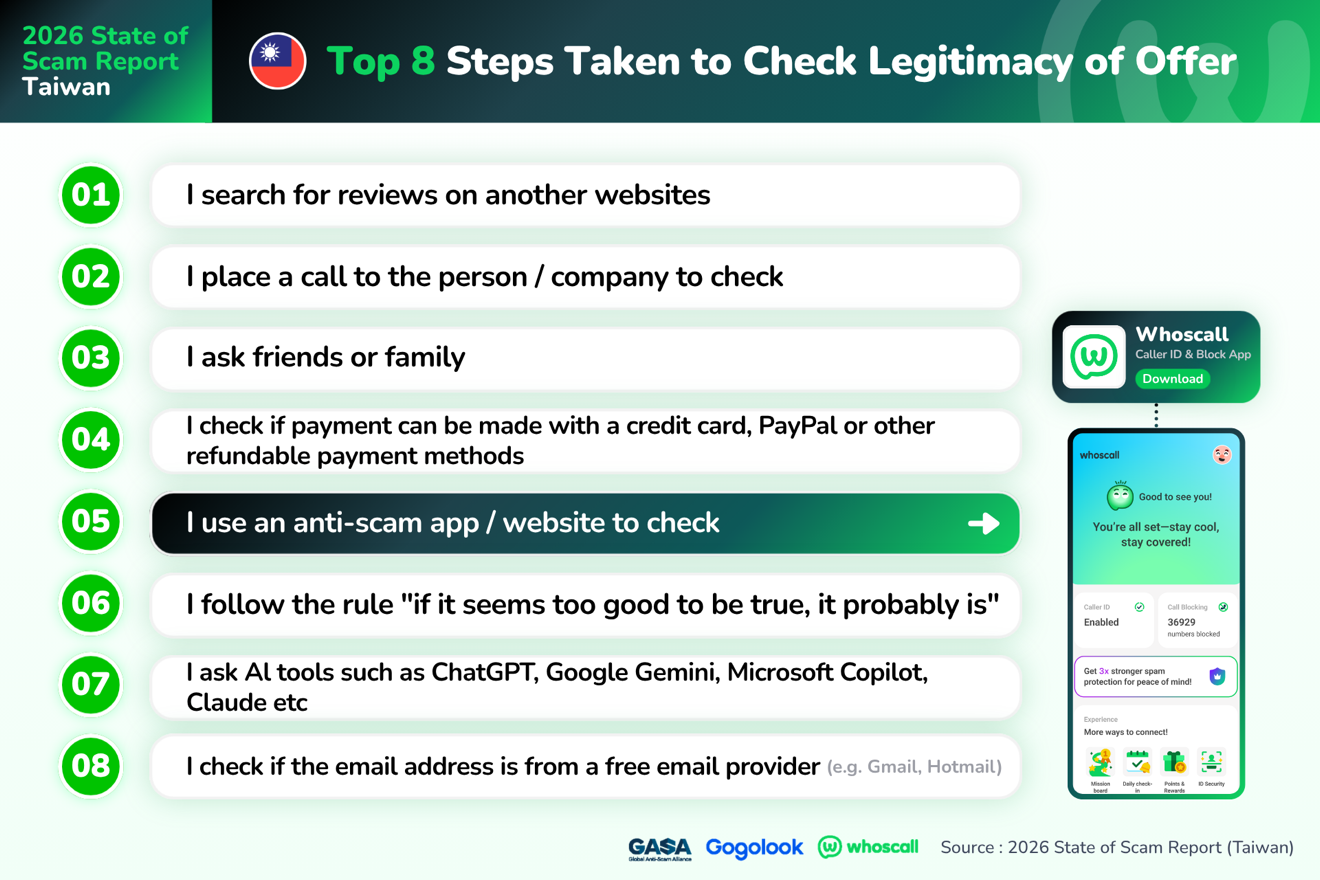
Despite the widespread threat, the report found that 96% of people in Taiwan take at least one protective measure to verify the authenticity of suspicious messages or offers.
People are increasingly adopting multiple verification methods, including checking external reviews, directly contacting organizations to confirm information, using anti-scam apps such as Whoscall or dedicated anti-scam websites, and consulting AI tools such as ChatGPT and Google Gemini to help assess suspicious content.
In response to the increasingly diverse scam landscape, Whoscall has expanded beyond caller identification with its “Check” feature, which supports suspicious phone number and URL lookups as well as AI-powered screenshot and image analysis.
Whether users receive an unfamiliar message, promotional email, or even a physical flyer, they can upload a screenshot or take a photo and use “Check” in Whoscall App to receive real-time AI-powered risk analysis. Users can also share the results with friends and family in one tap, extending individual protection into community-based scam prevention and strengthening the broader digital safety net.
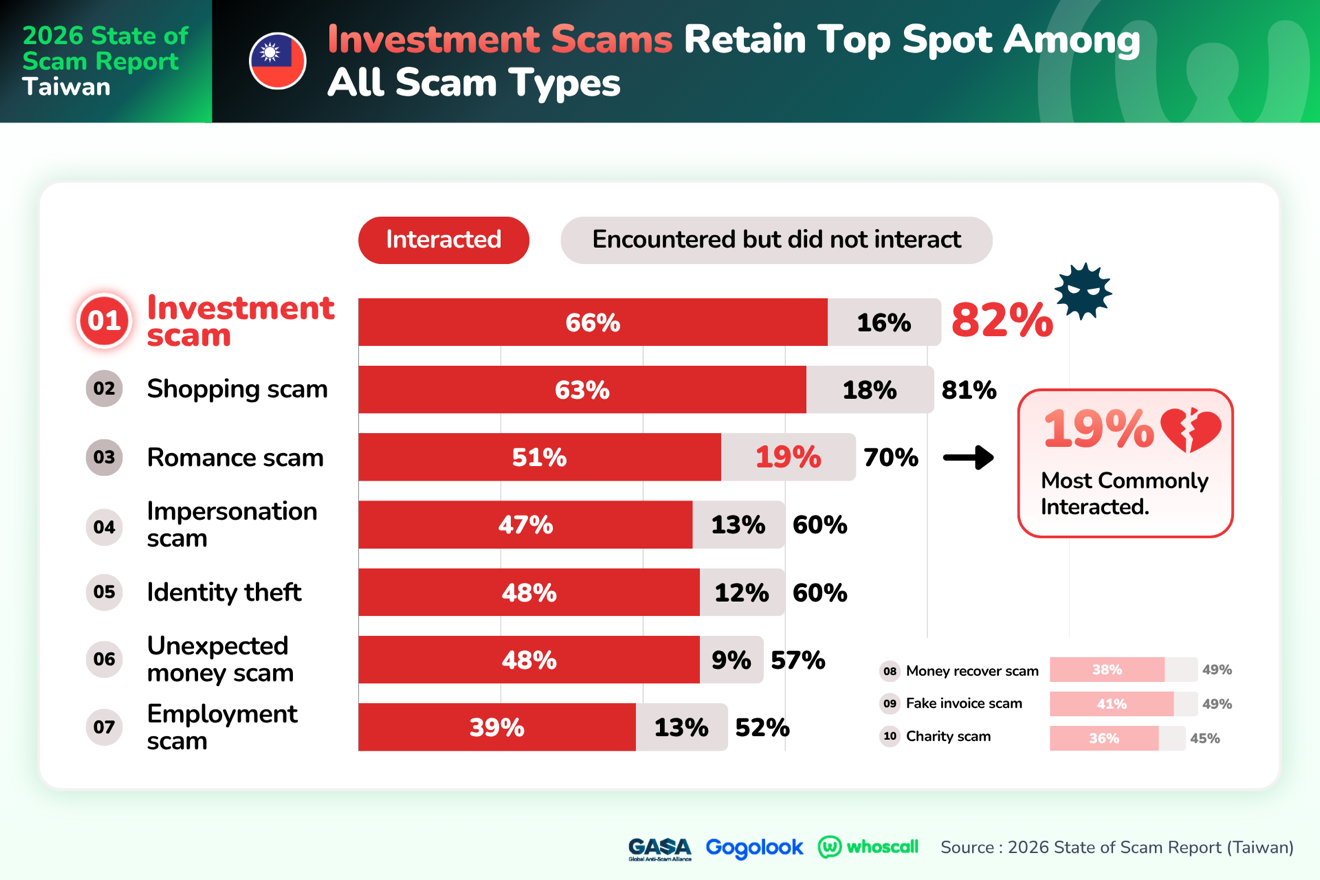
Investment Scams Remain No. 1, While Romance Scams Generate the Highest Engagement
Investment scams remained the most widely encountered scam category, with 82% of respondents reporting exposure, followed closely by shopping scams at 81%.
Romance scams, meanwhile, recorded the highest engagement rate at 19%, suggesting that emotionally driven scenarios may make it particularly difficult for people to maintain their usual level of caution.
Other frequently encountered scam types included impersonation scams (60%), identity theft (60%), prize and lottery scams (57%), and employment scams (52%).
Whoscall also found that, amid the prevalence of fraudulent investment schemes, nearly half of respondents (49%) had encountered scam recovery schemes, in which scammers advertise supposed special channels or services that can help victims recover previously lost funds.
Victims are asked to pay additional fees, effectively subjecting them to a second scam. Such schemes exploit the anxiety and vulnerability of people who have already suffered financial losses, potentially compounding both their financial and emotional distress.
Other common scam categories included fake invoice scams (49%) and charity scams (45%). The findings demonstrate how scammers increasingly package their schemes across multiple scenarios and narratives, making real-time verification tools increasingly important.
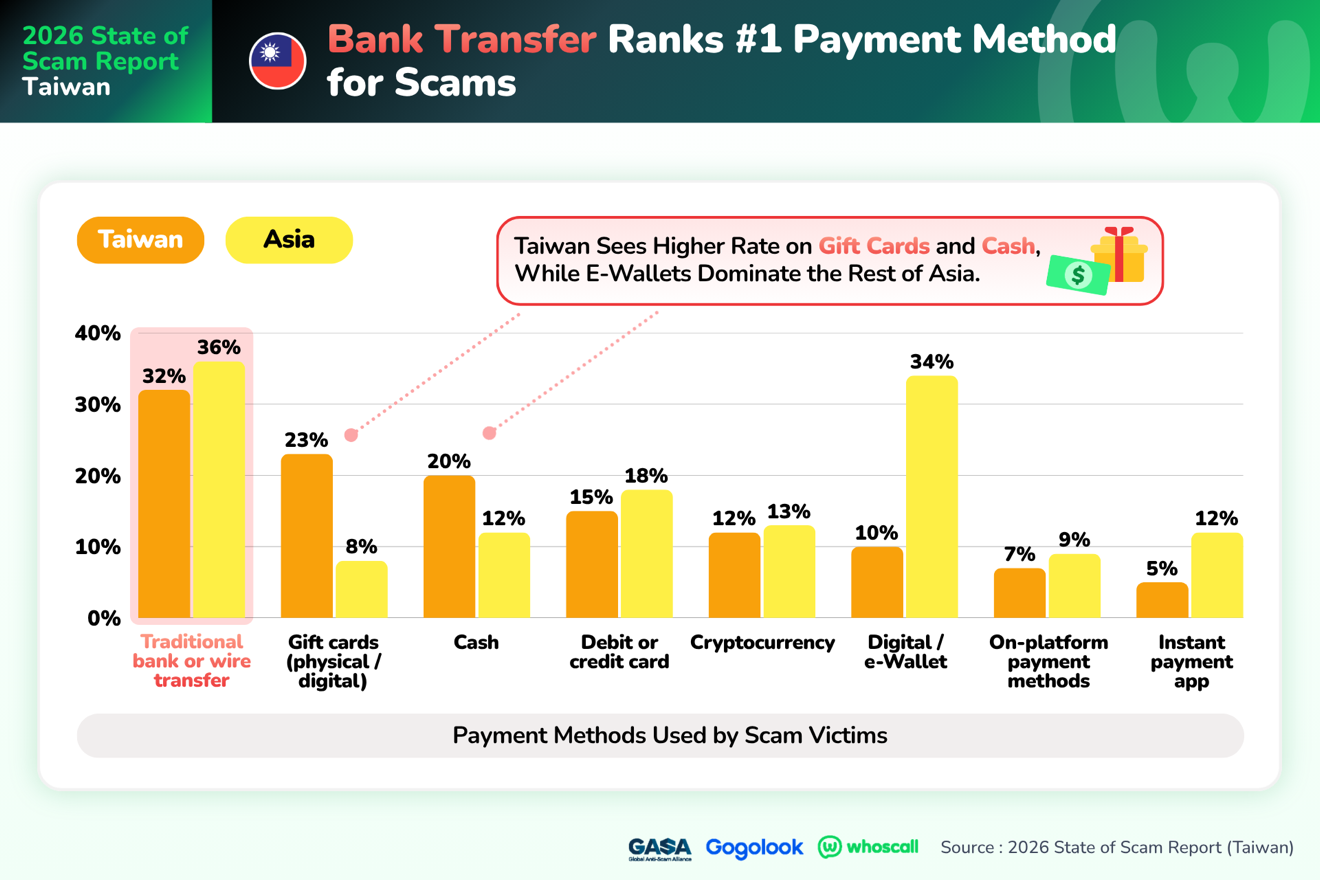
Bank Transfers Lead Scam Payments in Taiwan, While Gift Cards Stand Out as a Distinctive Method
When it comes to payment methods used in scams, bank transfers ranked first in Taiwan at 32%.
Notably, gift cards accounted for 23% of scam payments in Taiwan, nearly three times the Asian average of 8%. This suggests that scammers in Taiwan make particularly extensive use of gaming credits and gift cards, often in online dating scenarios where victims are asked to purchase gaming points or gift cards on behalf of someone they have met online.
Cash ranked third at 20%, compared with an Asian average of 12%. As authorities increasingly disrupt fraudulent bank accounts and financial flows, scammers have also turned to face-to-face cash collection as an alternative way to obtain victims' money.
Although e-wallet payments accounted for only 10% in Taiwan, substantially below the 34% average elsewhere in Asia, scams involving payment barcodes, one-time passwords (OTPs), and unauthorized linking of credit cards continue to emerge.
Other payment methods included credit cards (15%), cryptocurrency (12%), website-based payment tools (7%), and mobile payment apps (5%).
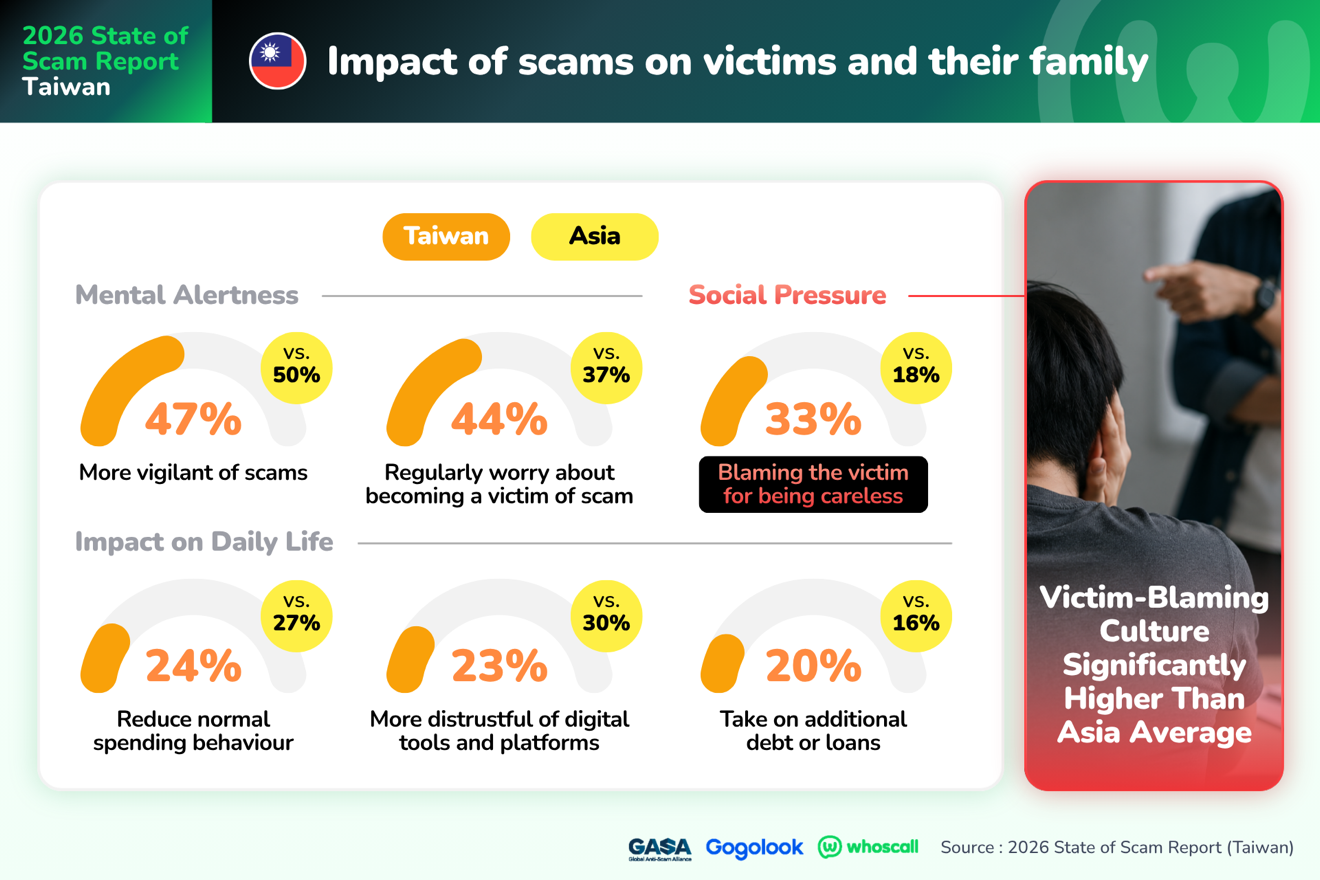
The Hidden Cost of Scams: One-Third of Victims Face Blame, While Four in Ten Continue to Fear Being Scammed Again
The consequences of scams extend well beyond financial losses, affecting victims' mental well-being and their trust in other people and digital services.
According to the 2026 Asia Scam Report, 47% of victims in Taiwan said their experience made them more cautious about scams. At the same time, 44% said they regularly worry about becoming a scam victim again.
More concerningly, 33% of victims in Taiwan reported being blamed by friends, family members, or others after being scammed — significantly higher than the Asian average of 18%.
Scams also caused 24% of victims to reduce their everyday spending, while 23% reported losing trust in digital tools and platforms. Another 20% were forced to take on additional debt or loans as a result of their losses.
Nicole Chan, Chairperson of the Association for Digital Trust in Taiwan said “Digital trust is the foundation of the digital economy. The damage caused by scams has long extended beyond financial losses and is increasingly eroding the foundations of society and the economy. As anti-scam policies around the world shift toward the principle of ‘shared responsibility,’ scam prevention is evolving from a conventional IT and cybersecurity issue into a matter of corporate governance and national infrastructure. “Given the pervasive and rapidly evolving nature of scams, the public sector cannot address the challenge alone. Businesses must proactively assume responsibility and incorporate scam prevention into their ESG frameworks to create meaningful social impact. Only when industries recognize scam prevention as an essential pillar of sustainable development and work closely with the public sector can we build a safer and more transparent digital ecosystem.”
The full 2026 Asia Scam Report – Taiwan is available below:
For more information about the Global Anti-Scam Summit Asia 2026, visit: https://events.gasa.org/gass-asia-2026

Building a More Trusted Digital Philippines: New Report Underscores the Need for Collective Action as Scam Exposure Continues to Rise
GASA’s State of Scams in the Philippines 2026 Report, in collaboration with Mastercard and Gogolook, highlights the growing scale of the scam challenge in the Philippines.
-3.jpg)
More than one in five adults in Japan encountered scams in the past year
New State of Scams Japan 2026 report examines how scams are reaching consumers and where stronger prevention and collaboration can make a difference
GASA and Whoscall Release 2026 Asia Scam Report – Taiwan
The 2026 Asia Scam Report – Taiwan, provides an in-depth look at scam exposure, channels, victim experiences, and scam awareness among people in Taiwan.
.jpg)
Fighting Crypto Scams in Singapore: Strengthening Public-Private Partnerships
On 07 July, the Global Anti-Scam Alliance (GASA) hosted a webinar bringing together leading voices from the crypto industry, law enforcement, compliance, and civil society.
Anatomy of an Investment/Crypto Scam
On 21 May, the Global Anti-Scam Alliance (GASA) hosted a webinar bringing together leading voices from the crypto industry, law enforcement, compliance, and civil society.
Republic of Fiji Officially Joins Scam.org as National Anti-Scam Hub
Milestone Partnership Announced at Global Anti-Scam Summit in Lisbon, Following First Preview at UN Fraud Summit in Vienna
Game Over for Scammers: Regional Defenses Against Online Gambling–Related Scams
Experts from INTERPOL, ACMA, and DGOJ examine how gambling-related scams operate and how global enforcement is responding.

League of Protectors: Women Fighting Against Scams
Explore key insights from our International Women’s Month webinar on combating scams. Discover how women leaders are driving cross-border collaboration, digital literacy, and collective action to protect communities from fraud.