
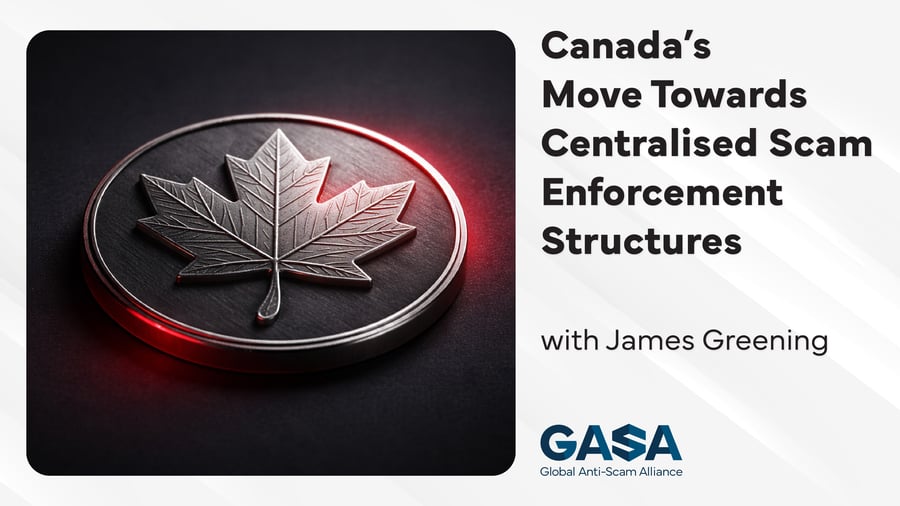
Canada is increasingly treating scams as a financial crime issue, rather than solely a downstream consumer protection problem. In October 2025, the federal government announced plans to establish a new Financial Crimes Agency as part of the country’s first National Anti-Fraud Strategy , with legislation expected by spring 2026 . The move reflects growing recognition that online scams are organised, cross-border, and closely linked to wider financial crime activity.
Why Canada Is Adjusting Its Scam Enforcement Approach
The government’s decision follows a sustained rise in reported scam harm and clear limits in existing enforcement arrangements. Figures cited in the October 2025 announcement show that Canadians lost CAD $643 million to fraud in 2024 , representing nearly a 300 percent increase since 2020 , while only 5–10 percent of scams are reported , based on data from the Canadian Anti-Fraud Centre referenced in the government’s overview of combatting financial fraud and protecting Canadians against scams and abuse .
Until now, Canada’s scam response has relied on consumer education, reporting mechanisms, and enforcement responsibilities distributed across multiple agencies. As scam operations have become more professionalised and increasingly connected to organised criminal networks, this fragmented model has struggled to keep pace, particularly in cases involving rapid movement across digital platforms and financial channels.
What the Financial Crimes Agency Is Designed to Do
The planned Financial Crimes Agency is described as Canada’s first organisation dedicated to investigating sophisticated financial crimes and recovering illicit proceeds. According to the government’s announcement on establishing the agency, its mandate will focus on:
Online financial scams
Money laundering
Organised criminal activity
Recovery of illicit proceeds from criminals
Legislation to establish the agency is expected by spring 2026 , with responsibility shared across the finance, justice, and public safety portfolios. Rather than replacing existing bodies, the agency is intended to consolidate specialist expertise and improve coordination across enforcement and intelligence functions, particularly in complex scam cases that span platforms, payment channels, and jurisdictions.
How the Agency Fits Within the National Anti-Fraud Strategy
The Financial Crimes Agency sits at the centre of a broader National Anti-Fraud Strategy , which frames scams as a systemic risk requiring coordinated action across government and industry. As outlined in the government’s description of the National Anti-Fraud Strategy , the approach combines enforcement reform with upstream prevention measures.
A key component is proposed Bank Act amendments , which would require banks to implement policies to prevent and address fraud, while giving consumers greater control over account features and transaction limits. The strategy also signals cross-sector policy actions , including measures involving technology and telecommunications , reflecting the role these sectors play in the distribution and scaling of scams.
In addition, the government plans to develop a Code of Conduct for the Prevention of Economic Abuse , overseen by the Financial Consumer Agency of Canada . Economic abuse is defined as restricting access to money, forcing debt, or exerting financial control, and is recognised as a form of harm that can intersect with scam activity, particularly affecting seniors and other vulnerable groups.
Implications for Scam Prevention and Enforcement
For scam prevention stakeholders, the most significant change is the elevation of scams within Canada’s core financial crime enforcement architecture. Scam activity is no longer treated primarily as an issue of downstream reimbursement or isolated fraud incidents, but as organised financial crime linked to investigation and proceeds recovery.
Banks are being positioned as part of a national enforcement ecosystem, with clearer expectations around fraud prevention policies, account-level controls, and cooperation with authorities. At the same time, enforcement agencies are being equipped to pursue scam cases with greater continuity, reducing fragmentation between detection, investigation, and disruption.
From Consultation to Legislation
The creation of the Financial Crimes Agency follows several years of policy development. Canada first signalled its intention to establish a dedicated financial crime body in 2022, before refining the proposal through consultation on reforms to the country’s anti-money laundering and counter-terrorist financing regime.
A November 2025 legal analysis by McCarthy Tétrault examining the move from consultation to confirmation notes that the government ultimately selected a dedicated agency model to anchor the National Anti-Fraud Strategy, marking a shift away from incremental coordination towards a permanent enforcement structure.
Closing
Canada’s planned Financial Crimes Agency signals a structural shift in how scams are addressed at a national level. By embedding scam enforcement within a broader financial crime strategy, the government is indicating that awareness and reporting alone are no longer sufficient. The effectiveness of this approach will depend on implementation, but the change reflects a growing alignment between scam prevention, investigation, and enforcement capacity.
About the Author
James Greening , operating under a pseudonym, brings a wealth of experience to his role. Formerly the sole driving force behind Fake Website Buster, James leverages his expertise to raise awareness about online scams. He currently serves as a Content Specialist for the Global Anti-Scam Alliance (GASA).
James’s mission aligns with GASA’s mission to protect consumers worldwide from scams. He is committed to empowering professionals with the insights necessary to detect and mitigate online scams, ensuring the security and integrity of their operations and digital ecosystems.


Accra Trust & Safety Workshop Turns Collaboration into Action Against Scams and Fraud in West Africa
GASA Africa Chapter and Google South Africa brought anti-fraud leaders together to strengthen cross-border cooperation and scam prevention.
State of Scams in Nigeria 2026: A Comparative Review Across Africa
Nigerian experts examine scam trends, technology, consumer protection and the need for stronger cross-sector collaboration.
Nearly three in four Danish adults encountered scams as estimated losses reach DKK 10.1 billion
New State of Scams Denmark 2026 report finds scam exposure is rising, while victims face repeated financial and emotional harm.

Building a More Trusted Digital Philippines: New Report Underscores the Need for Collective Action as Scam Exposure Continues to Rise
GASA’s State of Scams in the Philippines 2026 Report, in collaboration with Mastercard and Gogolook, highlights the growing scale of the scam challenge in the Philippines.
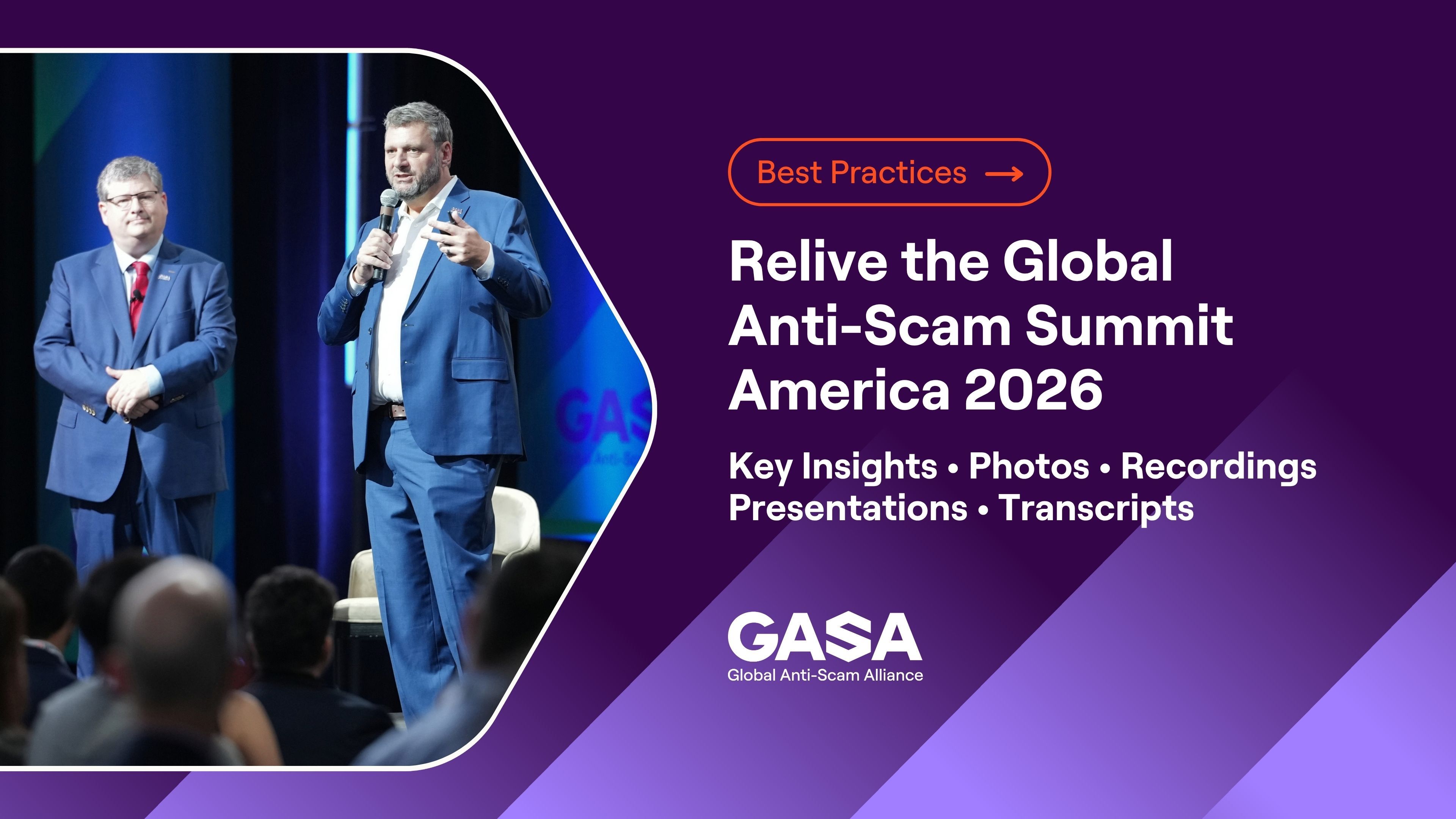
Global Anti-Scam Summit America 2026: Highlights, Insights and Resources
Explore GASS America 2026 highlights and insights, with the Summit summary, photos, presentation slides, transcripts and session recordings from San Francisco.
State of Scams in Kenya 2026: A Comparative Review Across Africa
Kenyan experts examine scam trends, data sharing, digital trust and the need for stronger cross-sector prevention.
State of Scams in South Africa 2026: A Comparative Review Across Africa
South African experts examine scam trends, AI, consumer protection and the need for stronger cross-sector collaboration.
-3.jpg)
More than one in five adults in Japan encountered scams in the past year
New State of Scams Japan 2026 report examines how scams are reaching consumers and where stronger prevention and collaboration can make a difference