
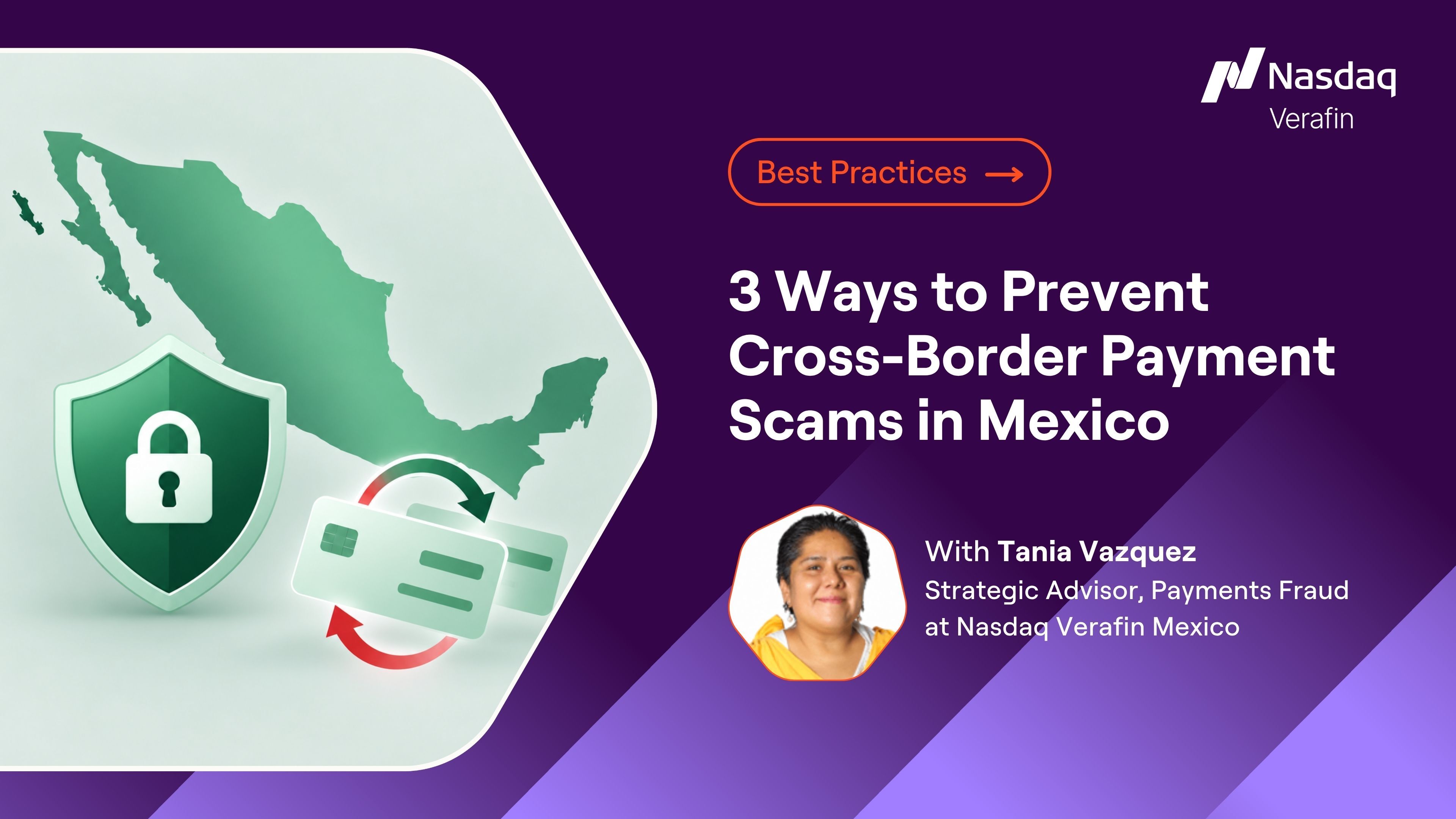
Cross-border payments have increased in speed and frequency, and criminal networks collaborate freely to exploit them. While risk is often first encountered at the payment, it originates earlier in the fraud attack chain.
However, fraud detection is obstructed by cross-institutional collaboration barriers, allowing fraudsters to move scam proceeds through mule accounts, across jurisdictions and out of your reach.
The Global Anti-Scam Alliance (GASA) has released their 2026 State of Scams in Mexico report, outlining the importance of recognizing scams before they impact your customer. Insight into risk at the receiving end of a transaction provides an opportunity to stop the attack chain before funds exit your institution.
Nasdaq Verafin: Shared Perspective on a Growing Challenge
As GASA’s recommendations for Mexico make clear, stronger fraud controls are necessary, but we’re falling behind on scams. According to the report, 83% of adults in Mexico encountered a scam last year, up from 76% last year.
Both reports highlight the need to empower consumers, build a safer payment ecosystem and strengthen cooperation.
Nasdaq Verafin shares GASA's view that improving collaboration with peer institutions, partners and law enforcement will help identify suspicious cross-border activity sooner. Similarly, we recommend three practices that will improve collaboration and prevent the proceeds of scams from exiting your jurisdiction.
Detecting & Interdicting Cross-Border Payments in Real Time
Cross-border payment fraud is a visibility challenge, and the window we have to act continues to shrink. Traditionally, most cross-border frauds are discovered after the money has been moved and become unrecoverable. That’s why the most effective fraud prevention strategies focus on detecting risk and intervening before funds leave the institution.
However, good customers expect their payments to move quickly and efficiently, leaving little room for investigation. Institutions using advanced real-time analysis, supported by artificial intelligence, can identify risk quickly without obstructing the cash flow of legitimate customers.
Combating these threats requires more than transaction monitoring alone. It requires faster intelligence sharing, deeper visibility into transaction counterparties, real-time interdiction and collaboration across the financial ecosystem.
By combining consortium intelligence, cross-border payment insights and real-time analytics, financial institutions can expand their view beyond individual transactions and identify risks that might otherwise remain hidden.
About the Author
Tania Vazquez is a Strategic Advisor, Payments Fraud at Nasdaq Verafin Mexico, bringing more than 16 years of international experience in combating financial crime. Her expertise spans risk management, fraud prevention, and the design of efficient financial processes that enable organisations to scale with strong governance, operational control, and regulatory compliance.
Throughout her career, Tania has integrated advanced technology and regulatory strategies to help protect the digital financial ecosystem from evolving threats. She combines corporate leadership with industry and academic contributions, serving as a Board Member of AWIC México and as a lecturer at Universidad Iberoamericana and FintechU, where she teaches courses on cybersecurity, payment systems, and Anti-Money Laundering (AML).
At Nasdaq Verafin, Tania leads strategic initiatives in Mexico focused on addressing the rapidly evolving challenges facing financial institutions. She works closely with organisations to strengthen fraud prevention strategies, mitigate payment fraud risks, and advance a safer, more resilient global financial ecosystem.

3 Ways to Prevent Cross-Border Payment Scams in Mexico
Learn three ways financial institutions can prevent cross-border payment scams in Mexico through intelligence sharing, payee transparency and real-time analysis.
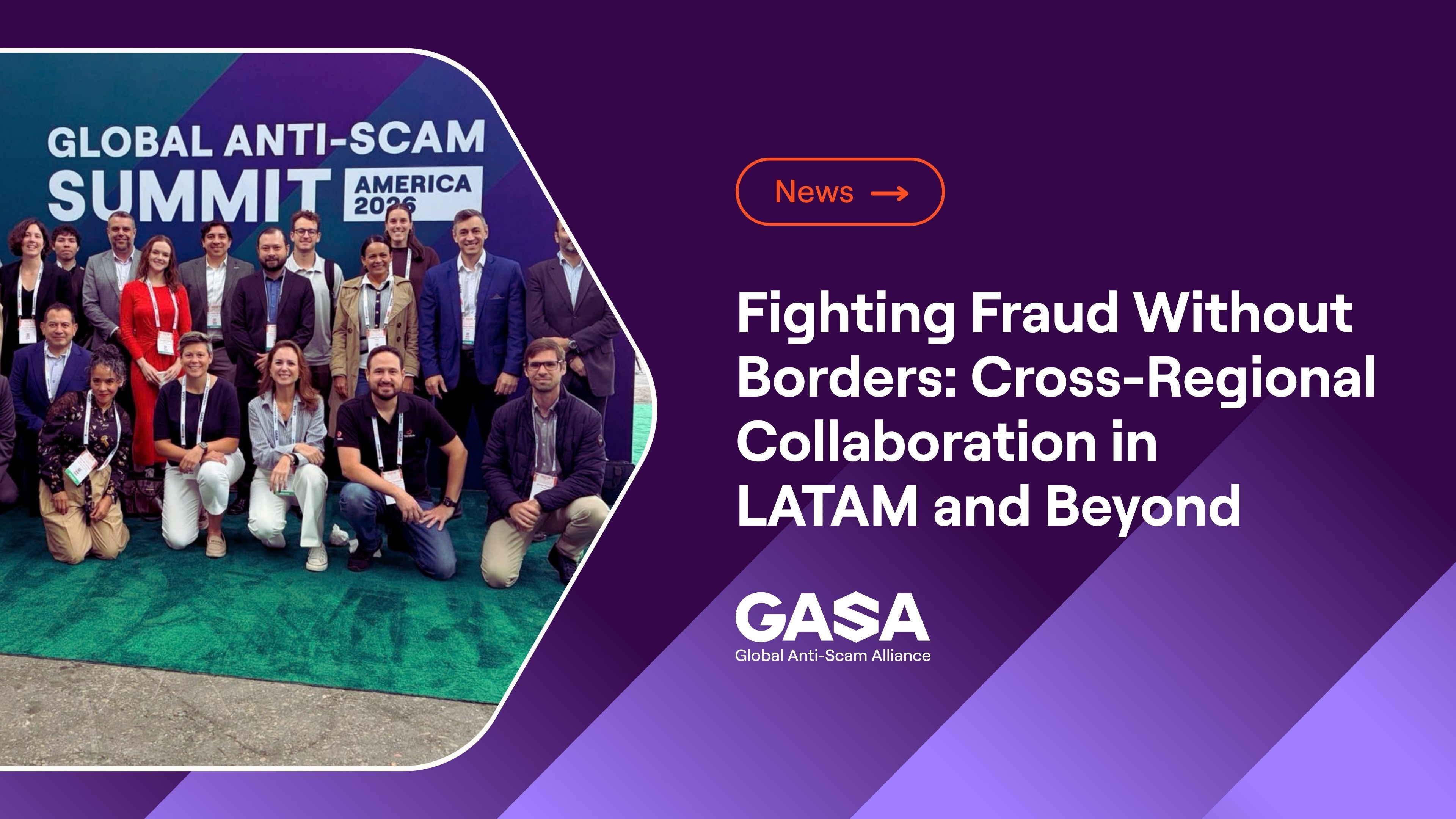
Fighting Fraud Without Borders: Cross-Regional Collaboration in Latin America and Beyond
A roundtable at GASS America examined cross-regional collaboration in Latin America and beyond, focusing on fraud prevention, consumer protection and response.
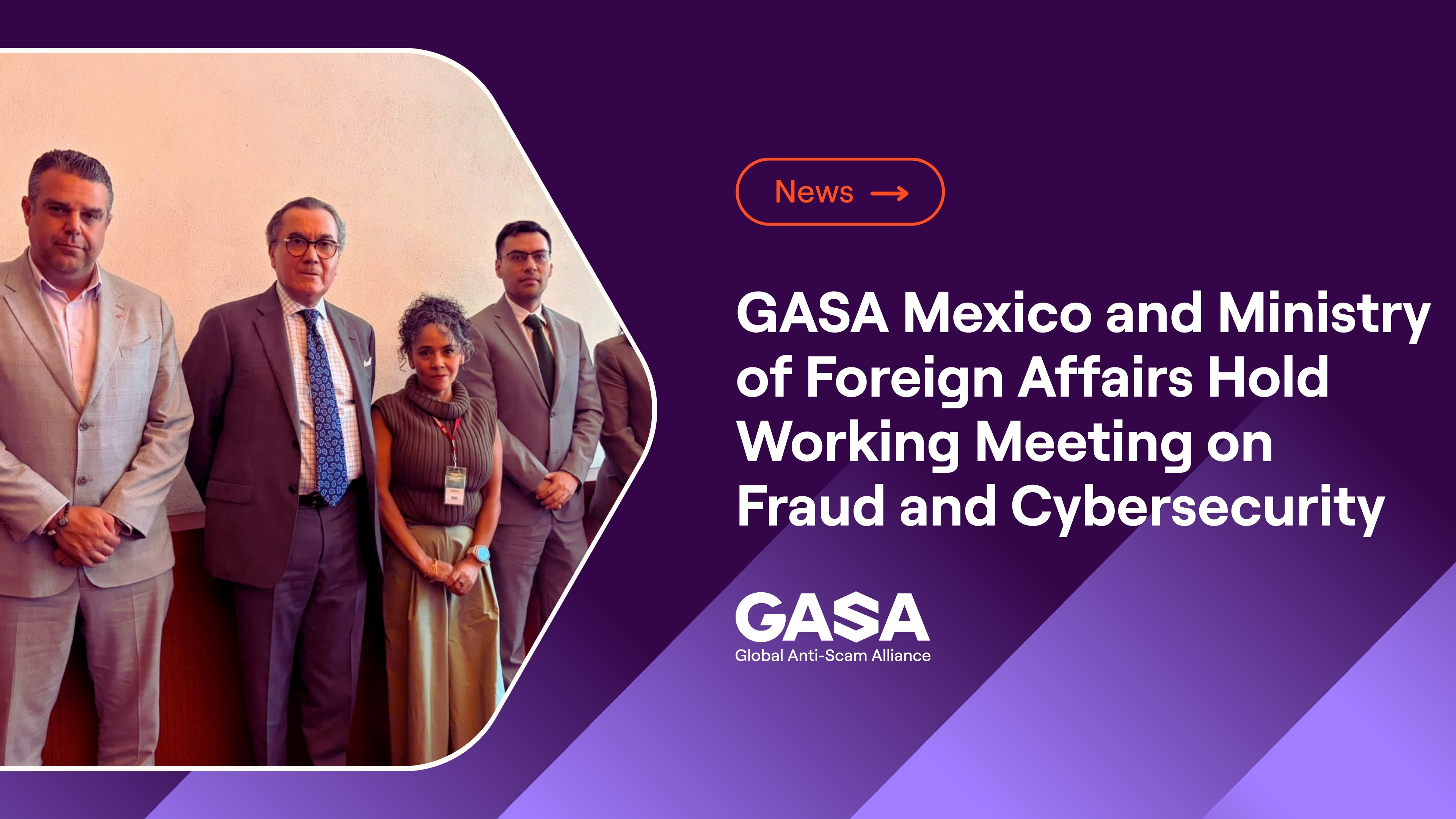
GASA Mexico and the Ministry of Foreign Affairs Hold Working Meeting Ahead of the Chapter’s Annual Forum, “From Coalition to Action”
GASA Mexico and the Ministry of Foreign Affairs convened Mastercard and Scotiabank to discuss fraud, cybersecurity, information sharing and emerging technologies.
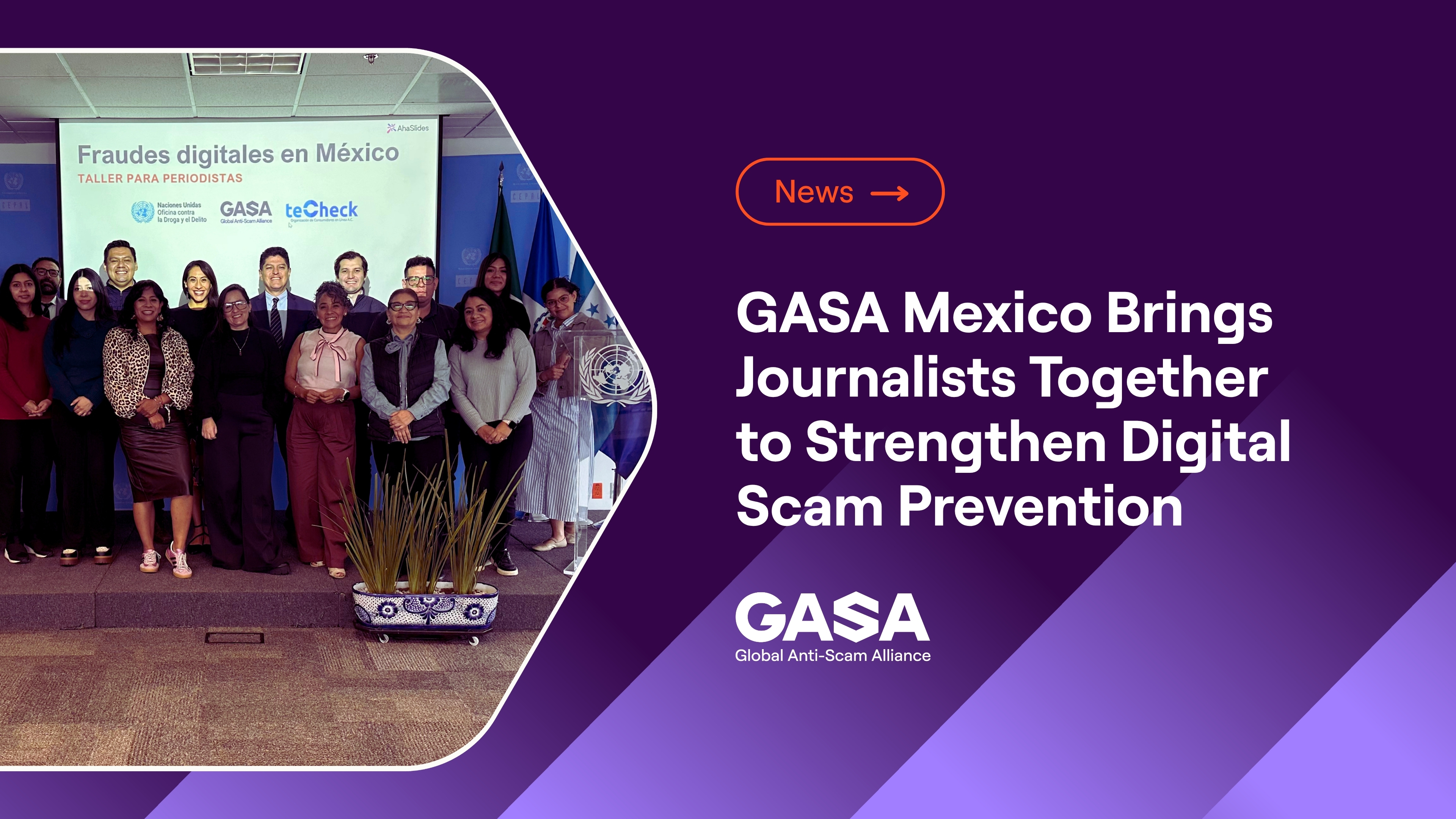
GASA Mexico Workshop Examines the Role of Journalism in Digital Scam Prevention
GASA Mexico brought together journalists and editors to discuss digital scams, victim-centred reporting and the role of media in scam prevention.
From Information Sharing to Intelligence Production: GASA Mexico in Forbes
Sissi de la Peña, Director of the GASA Mexico Chapter, examines in Forbes México what the U.S. memorandum on cyber operations against fraud networks means for the country.
BanCoppel joins the Global Anti-Scam Alliance to bolster fraud prevention and safeguard individuals entering the banking system.
BanCoppel has joined the Global Anti-Scam Alliance (GASA) as a Corporate Member of the GASA Mexico Chapter.
The emotions scammers exploit: how social engineering influences our decisions
How scammers use fear, urgency, excitement and trust to influence decisions, and how recognising these tactics can help people prevent fraud.

Global Anti-Scam Alliance Welcomes Mastercard as Founding Member of Its Mexico Chapter
The Global Anti-Scam Alliance (GASA) announces the membership of Mastercard as a Member of its Mexico Chapter.