
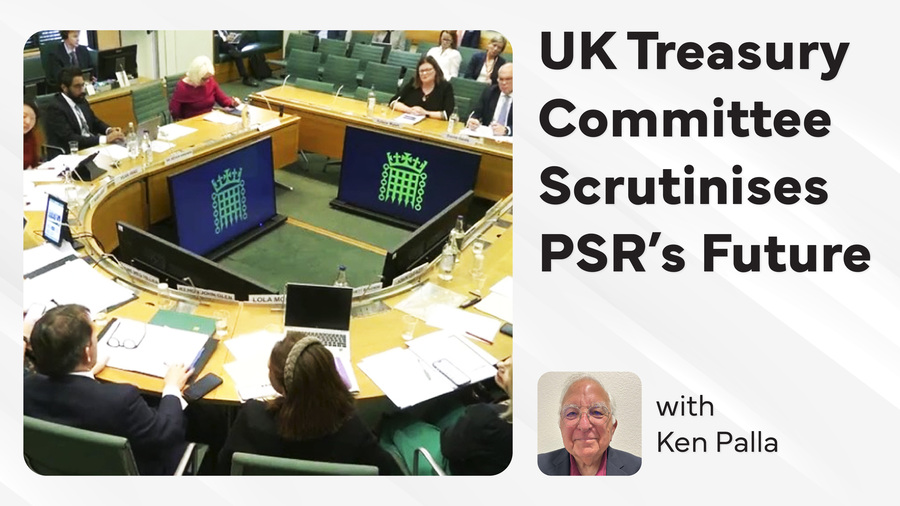
On the 12th of March, 2025, the UK Payment System Regulator (PSR) had a planned meeting with the Parliament Treasury Committee on March 12, 2025. This meeting took place just after the UK government announcement that the PSR “ Regulator axed as red tape is slashed to boost growth ”.
General Discussion of the UK Government Announcement
In this meeting the head of the PSR, David Geale, and the Chair of the PSR Board, Aidene Walsh, presented. They said there are only 185 staff at the PSR. They also said that the PSR has legislative responsibilities and until there is new legislation, the PSR cannot be eliminated. They said it will take up to 18 months for new legislation to move the PSR ‘powers’ to the Financial Conduct Authority (FCA), which has a staff of 5,000. They do not anticipate any material reduction in staff as a result of this change. They do see more opportunity to reduce overlapping regulations between the PSR and the FCA.
So perhaps the government headline was more theatre than fact. But the MPs are worried about backsliding of protections to consumers after the PSR folds into FCA. One MP quoted the following statement from the government press release: “Regulation will be cut back as the Prime Minister sets out his latest steps to drive economic growth that puts more money in working people’s pockets.”
In the meeting, David Geale did say responsibility for Payment Services Providers (PSPs) is divided between the PSR and the FCA. As an example, the PSR is responsible for 1) the actual payment rails, such as the Faster Payments rails; 2) credit cards; 3) for innovation of payments; and 4) for the consumer protection such as the new APP scam reimbursement program. The FCA is responsible for the PSPs having proper fraud controls.
So maybe Jonathan Frost is right that the PSR folding into the FCA is just “moving chairs”. But the MPs are concerned by what the UK government said in its press release about “cutting regulation” and “putting more money in the working people’s pockets—an assumption of cutting PSR costs. And from my perspective, will APP scam reimbursement limits be lowered due to more fintech pressure as part of the planned October 2025 independent assessment and probable consultancy?
Preliminary APP Scam Reimbursement Results (First Four Months)
David Geale went on to provide preliminary scam reimbursement results, since October 7 2025. He said so far there has been a positive impact for UK consumers. He said in 2023, there were over 250,000 APP scams totaling £340 million, of which 65% were reimbursed. Below are the results from the first four months of mandatory reimbursement:
There were 44,000 claims (only 17% of 2023 claims, but only 4 months). in a third of the period (these first four months) we are seeing 1/5 of the claims,
£49 million in reimbursement.
Mr. Geale said this was less than expected (maybe showing the impact of stronger fraud controls).
The PSPs determined grossly negligent (customer standard of caution) activity in under 1% of the cases.
21% of the claims are from vulnerable persons and are automatically repaid.
96% of in-scope claims are being reimbursed.
In the first 4 months of mandatory reimbursement the PSR has seen only 79 cases over £85,000. Note: Mr. Geale then said: these 79 cases (.2% of total cases by volume) totaling £9.3 million, but £6.2 million of the £9.3 million over the limit has been reimbursed. So, I think the £6.2 million is part of the £49 million reimbursed.
Why the Decision in 2024 to go from £415,000 to £85,000
Mr. Geale said £85,000 limit would capture 99% of volume and 90% of value. Customers over the £85,000 limit could still have access to the Financial Ombudsman Service (FOS) with their complaint.
Last year firms thought there would be a failure to invest in payment firms if the limit stayed at £415,000.
In 2023 PSR saw 411 cases out of 250,000 cases that were over £85,000. In the first 4 months of mandatory reimbursement the PSR has seen only 79 cases over £85,000, totaling £9.3 million.
The PSR reviewed its information with the FCA and decided £85,000 was a reasonable limit. The challenge to the limits last year was primarily from the fintech community, according to the Chair. The board’s responsibility is innovation, competition and the end users.
The fintechs are still lobbying for a £30,000 limit. But customers would still be able to go to FOS and possibly collect £415,000 reimbursement from banks and fintechs.
PSR has committed to an independent review of the limit one year after implementation (starting on October 2025). This review will start in October 2025 and if there is a proposed limit change, there will be a consultancy. This review will look at the claims experience and the impact on investment in payment firms.
Other Discussions
The FCA has introduced the ability to delay suspicious payments. Anecdotally, David Geale says, when banks hold suspicious payment, oftentimes the customer agrees to cancel the payment.
An MP asked a question: “Which regulators should be focused on the digital platforms?” Mr. Geale said that The FCA has worked with Google on placement of ads, but more by persuasion than by regulation. M r. Geale said the PSR has fed issues about digital platforms to Fraud Task Force led by Lord Hanson.
David Geale head of PSR said we need to “Stop banking fraudsters” and maybe shift more of the reimbursement to the fraudster (receiving) bank.


Accra Trust & Safety Workshop Turns Collaboration into Action Against Scams and Fraud in West Africa
GASA Africa Chapter and Google South Africa brought anti-fraud leaders together to strengthen cross-border cooperation and scam prevention.
State of Scams in Nigeria 2026: A Comparative Review Across Africa
Nigerian experts examine scam trends, technology, consumer protection and the need for stronger cross-sector collaboration.
Nearly three in four Danish adults encountered scams as estimated losses reach DKK 10.1 billion
New State of Scams Denmark 2026 report finds scam exposure is rising, while victims face repeated financial and emotional harm.
Building a More Trusted Digital Philippines: New Report Underscores the Need for Collective Action as Scam Exposure Continues to Rise
GASA’s State of Scams in the Philippines 2026 Report, in collaboration with Mastercard and Gogolook, highlights the growing scale of the scam challenge in the Philippines.
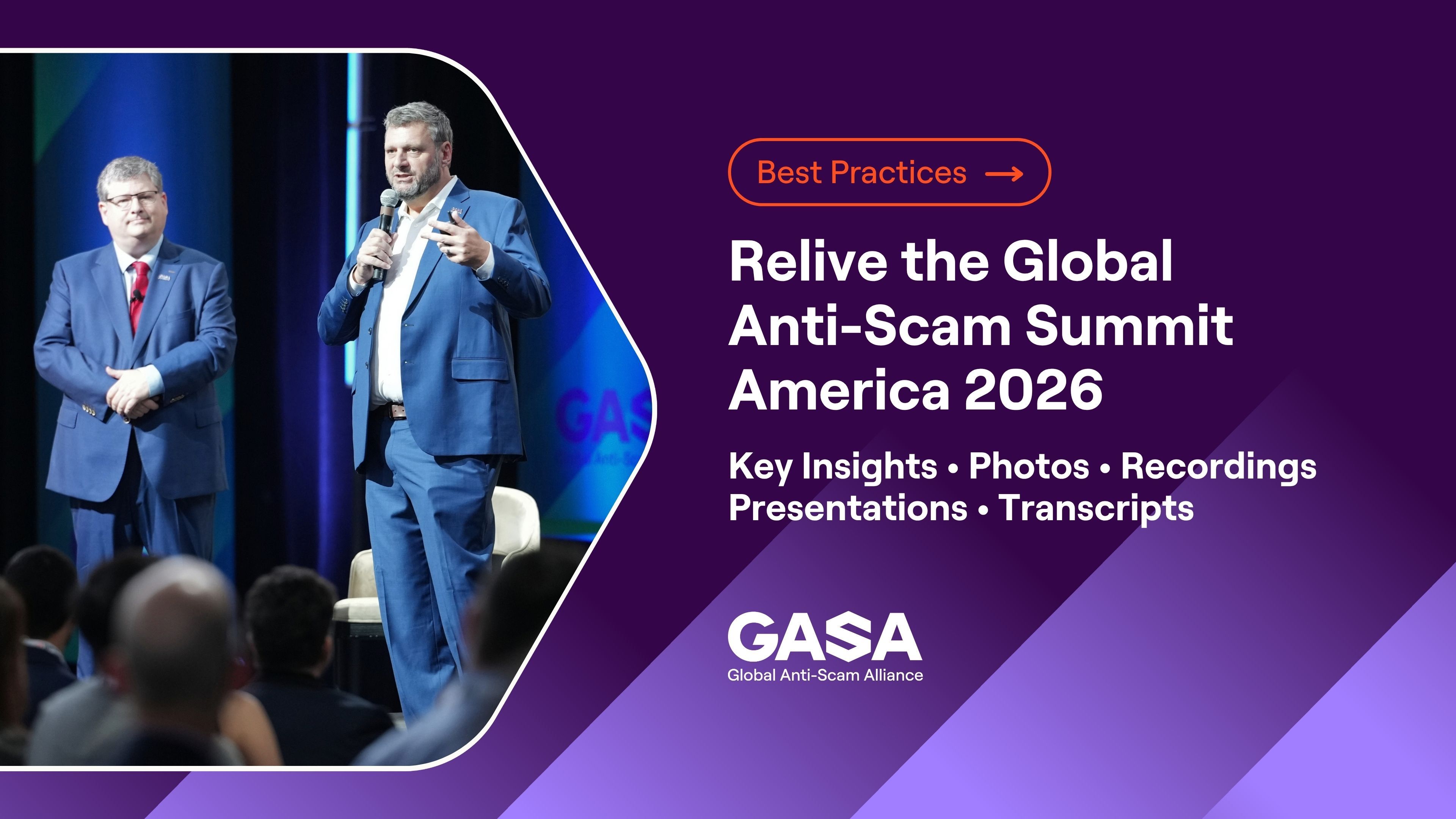
Global Anti-Scam Summit America 2026: Highlights, Insights and Resources
Explore GASS America 2026 highlights and insights, with the Summit summary, photos, presentation slides, transcripts and session recordings from San Francisco.
State of Scams in Kenya 2026: A Comparative Review Across Africa
Kenyan experts examine scam trends, data sharing, digital trust and the need for stronger cross-sector prevention.
State of Scams in South Africa 2026: A Comparative Review Across Africa
South African experts examine scam trends, AI, consumer protection and the need for stronger cross-sector collaboration.
-3.jpg)
More than one in five adults in Japan encountered scams in the past year
New State of Scams Japan 2026 report examines how scams are reaching consumers and where stronger prevention and collaboration can make a difference