
Dublin, Ireland, May 28 – The Global Signal Exchange (GSE) is proud to announce that Kitboga, the internet’s most prominent scambaiter and cybersecurity advocate, is officially joining the GSE network through the onboarding of his company, Seraph Secure. Kitboga’s company joins more than 20 global leaders, collaborating through GSE to tackle online scams, fraud and abuse with unprecedented pace, software capabilities and scale.
The announcement will be made during the Google Anti-Scam Convention in Ireland, as part of a panel discussion hosted by Jorij Abraham, a leading figure in the Global Signal Exchange and long-time advocate for cross-border scam prevention, marking a major step forward in the fight against online fraud.
The Global Signal Exchange (GSE) is the world’s first global, multistakeholder and cross sector clearing house for threat signals, founded in 2024 by Google and the Global Anti-Scam Alliance (GASA), and powered by Oxford Information Labs. The GSE enables member organisations to collaborate, share data and harness the imperatives of speed and scale to stop online scams, fraud and abuse faster - making them less effective and less profitable. With more than 220 million threat signals from 29 data providers including Google, Spamhaus and Abusix. The Global Signal Exchange represents a significant development in putting a spotlight on where online scams are happening – making possible the multi-directional sharing of threat signals on a multi-region basis across the Internet ecosystem. The Global Signal Exchange is not a data source itself but an aggregator that enriches threat signals from more than 8.5 billion data points and enables rapid distribution to partners for further analysis.
Seraph Secure, founded in 2023 by Kitboga, has been at the forefront of anti-scam innovation. Known for its real-time scam detection tools, Seraph Secure has built a reputation for proactive scam prevention using data-driven insights and user protection protocols. As part of its commitment to the GSE community, Seraph Secure will begin sharing a comprehensive database of thousands of tech support scams, with all GSE members. This contribution will significantly enhance the collective effort to stop scams before they start.
Kitboga began his journey into scambaiting in 2017 after his grandmother was targeted by scammers. Since then, he has grown a loyal following of almost 5 million people on platforms like YouTube and Twitch. His content blends humor, education, and live improvisation, raising awareness about the deceptive techniques used by scammers while entertaining and informing a global audience.
“After 8 years of investigating scams and making over 10,000 calls to scammers, I knew there had to be a way I could do more to help protect people,” said Kitboga. “So I built a team of engineers and investigators, and together we took everything we’ve learned and created Seraph Secure. We’re driven by one mission: to stop scams before they start and protect as many people as possible from being victimized.”
Global Signal Exchange co-founder, Emily Taylor added, " We are thrilled to welcome Kitboga and Seraph Secure into the GSE community. Their work is not only innovative but incredibly impactful. Together, we are strengthening our global signal intelligence framework . The level of global support for the Global Signal Exchange signifies a step-change in the fight against online crime, as we facilitate a new culture of co-operation and data sharing. Scammers work together, they share and they move quickly, which means the days are long-gone when individual brands can tackle online crime alone. The Global Signal Exchange marks a new chapter in the collective fight-back against online crime.”
Jorij Abraham, Managing Director of the Global Anti-Scam Alliance, said: "I’m excited to announce that Seraph Secure is joining the Global Signal Exchange at the upcoming Google Anti-Scam Convention. This partnership strengthens our shared mission to outpace scammers through collaboration and real-time intelligence sharing."
GSE is open to anyone with a legitimate interest in, or ability to act against, online scams. Verified partners will not only gain access to the latest fraud intelligence but also receive a customised dashboard that spotlights data most relevant to their organisation. Those with access to their own abuse feed will be encouraged to contribute to the collective effort by sharing it with the exchange. The system will also incorporate a feedback loop that rewards swift reporting, threat mitigation, and quality control.
For media inquiries or partnership information, please contact:
Metje van der Meer
Marketing Director GASA
Email: Metje.vandermeer@gasa.org
Guy Bellamy
Chief Executive
Direct: 07766 775216
Email: guy@elephantcommunications.co.uk
Notes to editors
About Seraph Secure and Kitboga
Seraph Secure is a company focused on the identification and analysis of online scams. Its team conducts in-depth research into the methods and tactics used by scammers, often by directly engaging with scams to better understand how they operate. This hands-on approach informs the development of software designed to detect and counter fraudulent activity, while providing valuable insight to industry.
The company’s broader aim is to raise awareness of scam-related threats and to support individuals and businesses in protecting themselves through informed, proactive measures. Seraph Secure works to ensure that its tools offer effective protection against a constantly evolving landscape.Kitboga is an improv artist who makes entertaining and educational videos about his interactions with scammers. While playing the part of the "perfect victim" by changing his voice and adopting personas, he designs ingenious ways to waste their time to distract them from exploiting vulnerable members of society.
GSE: About the founders:
The Global Signal Exchange is a UK not-for-profit founded by OXIL, Google and GASA.
One of OXIL’s research projects, the DNS Research Federation, also played a supporting role in the early stages, exploring the role of the Domain Name System (DNS) in cyber security policy and standards.
● Oxford Information Labs (OXIL) sits at the intersection of tech, law and policy, offering data-driven digital policy research and whose development team manages the software platform for the Global Signal Exchange.
● Google has considerable experience in fighting scams across its platforms and services and will not only be sharing and consuming bad actor data, starting with Shopping, but also providing funding and AI capabilities to GSE.
● The Global Anti-Scam Alliance (GASA) is a Dutch non-profit, whose mission is to create a world where people worldwide are safe from the financial and emotional trauma caused by online scams. GASA was tasked by its global community of scam fighters to find a global platform to enable the real-time exchange of threat signals, that became the Global Signal Exchange.
BanCoppel joins the Global Anti-Scam Alliance to bolster fraud prevention and safeguard individuals entering the banking system.
BanCoppel has joined the Global Anti-Scam Alliance (GASA) as a Corporate Member of the GASA Mexico Chapter.
The emotions scammers exploit: how social engineering influences our decisions
How scammers use fear, urgency, excitement and trust to influence decisions, and how recognising these tactics can help people prevent fraud.

Global Anti-Scam Alliance Welcomes Mastercard as Founding Member of Its Mexico Chapter
The Global Anti-Scam Alliance (GASA) announces the membership of Mastercard as a Member of its Mexico Chapter.

What Uganda’s IVR Trial Shows About Practice-Based Scam Prevention
A Uganda IVR trial shows how practice-based fraud prevention helped mobile money users reduce losses and increase reporting.
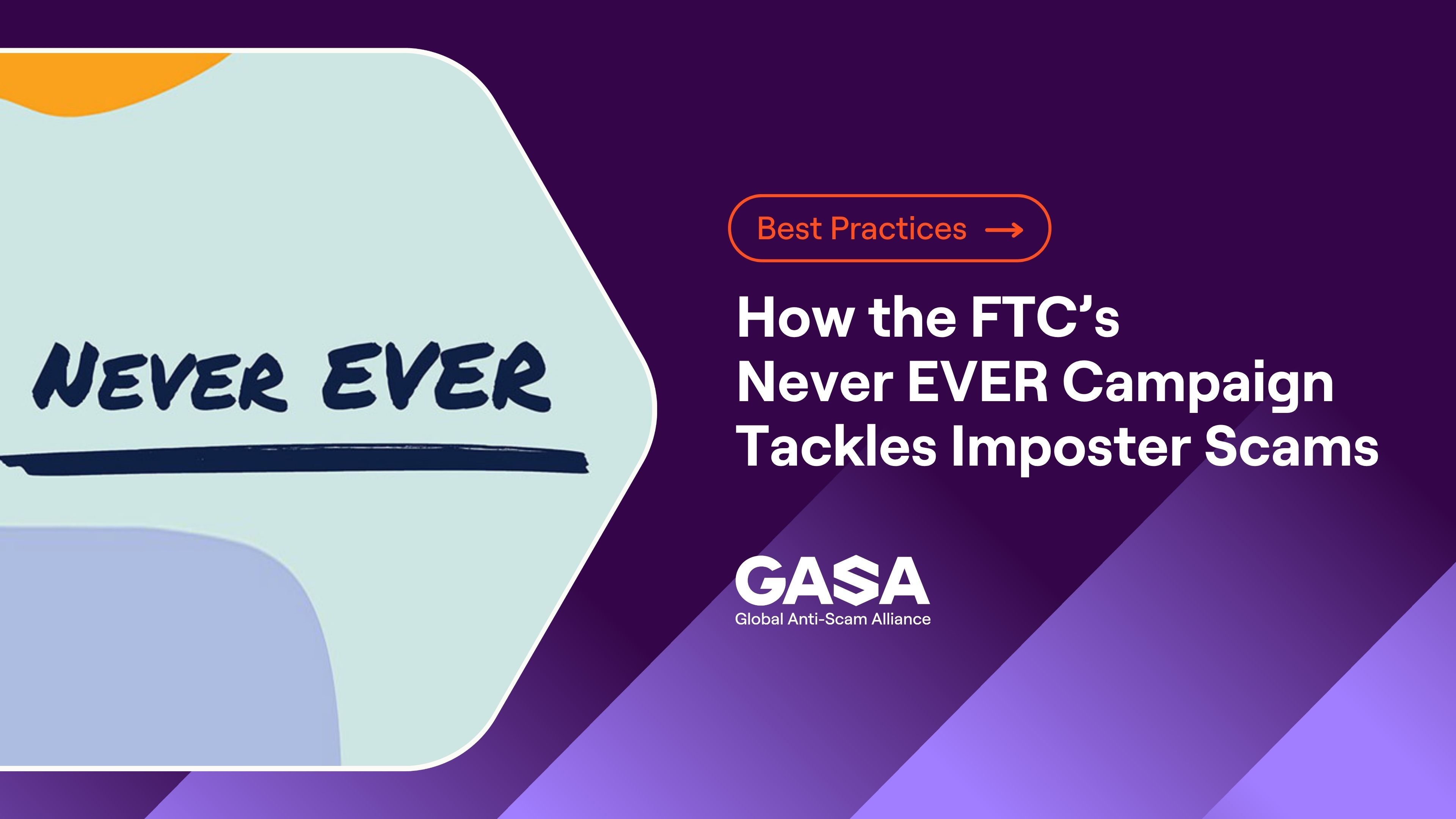
FTC’s Never EVER Campaign Helps Prevent Elder Financial Abuse With Simple, Specific Scam Warnings
The FTC’s Never EVER campaign uses simple, specific imposter scam warnings to help prevent elder financial abuse and support coordinated consumer education.
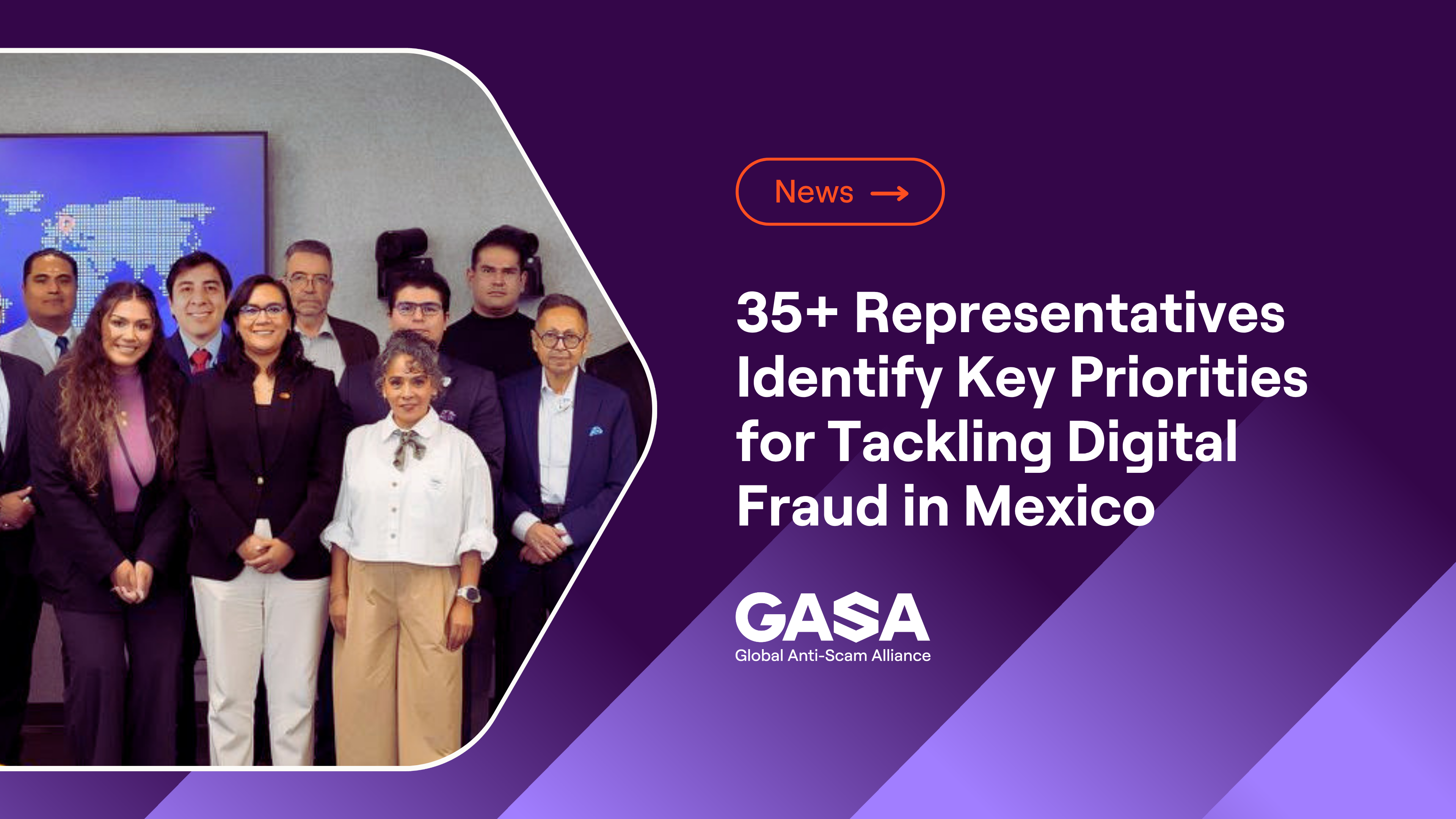
GASA Mexico's Second Roundtable Advances Coordinated Action Against Digital Fraud
GASA Mexico's second roundtable brought together more than 35 representatives to strengthen coordination across cybersecurity, fraud prevention and other sectors.
Cognyte Joins Global Anti-Scam Alliance to Fight Financial Fraud Threats
Cognyte, a global leader in investigative analytics software, today announced its membership in the Global Anti-Scam Alliance (GASA).
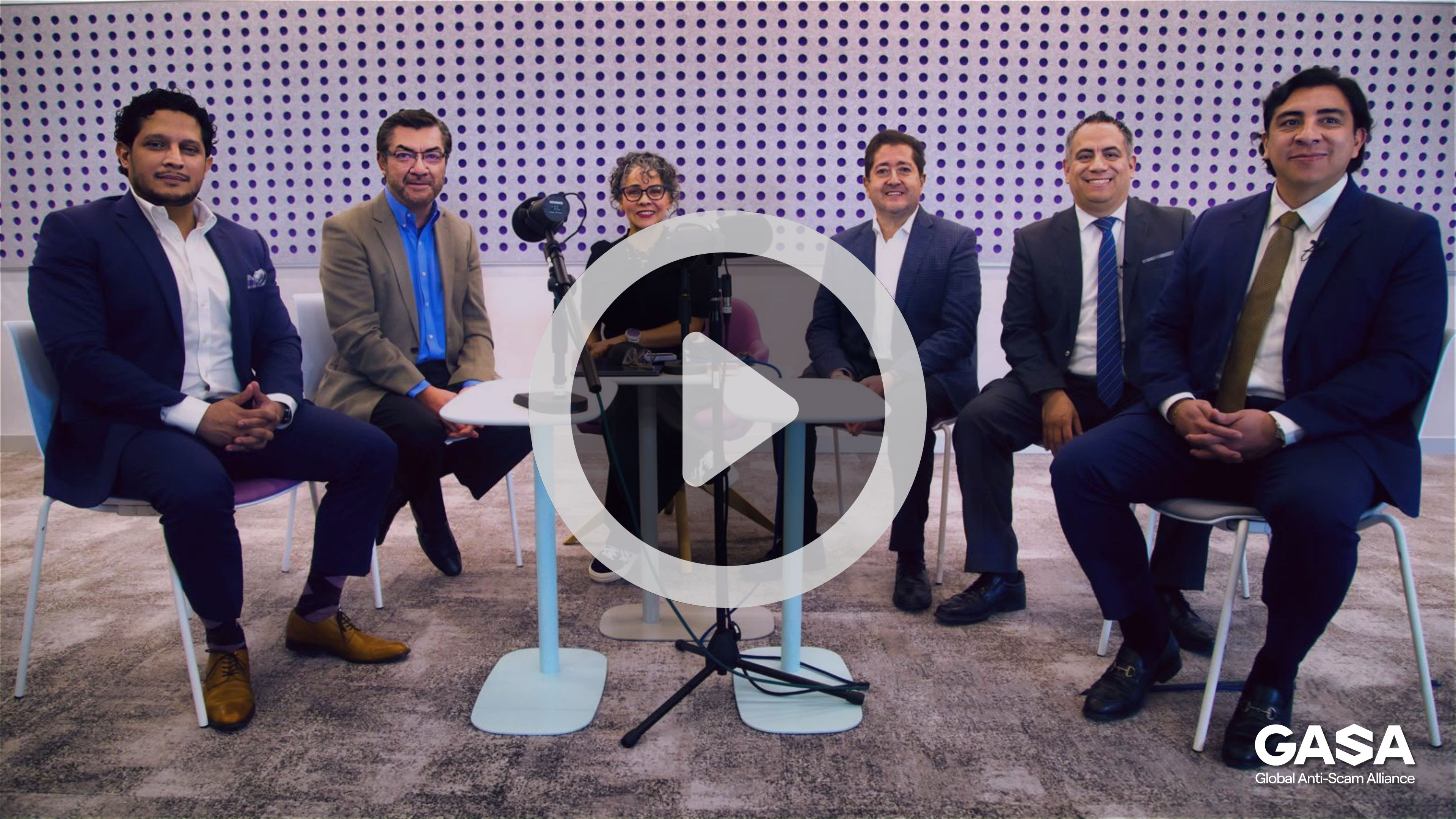
A network is beaten by a network: Mexico's banks move from remediation to prevention
GASA convened the ABM Fraud Committee and Mexican banks to advance the enriched agreement and strengthen coordinated fraud prevention across the sector.