
With imposter scams causing billions of dollars in losses each year, the FTC’s Never EVER campaign offers a practical approach to prevention. It uses clear examples of what legitimate organisations will never ask consumers to do and gives businesses, government agencies and community organisations adaptable resources to share these warnings widely.
Broad advice to “be careful” may offer little help in that pressured moment. The Never EVER campaign takes a more specific approach: it teaches people to recognise actions that a legitimate organisation would never tell them to take.
Launched in June 2026 by the Federal Trade Commission (FTC) and its partners, the campaign combines simple warnings with reusable materials that organisations can adapt and distribute through their existing channels. Coordinated through the Elder Justice Coordinating Council (EJCC), it provides a practical model for raising awareness of imposter scams and helping prevent elder financial abuse.
Imposter Scams Caused $3.5 Billion in Reported Losses
The campaign responds to the growing financial harm caused by imposter scams in the United States.
According to the FTC, consumers reported losing $3.5 billion to imposter scams in 2025, nearly three times the amount reported in 2020. Imposter scams were also the most frequently reported type of fraud, accounting for nearly one in three fraud reports.
Consumers reported losing nearly $1 billion to business impersonators and approximately $920 million to government impersonators. Bank impersonation produced the highest reported losses among business imposter scams.
These figures capture only reported losses. FTC research has found that most fraud is never reported to a government agency, meaning the actual financial harm is likely to be considerably greater.
The consequences can be particularly severe for older adults. According to an FTC analysis, the number of older adults reporting losses of more than $100,000 to imposter scams increased nearly sevenfold from 2020 to 2024, while their combined reported losses rose eightfold.
Turning General Advice Into Recognisable Warning Signs
The central idea behind Never EVER is straightforward: if someone asks you to do something that the organisation they claim to represent would never ask you to do, it is a warning sign.


This framing makes the advice easier to understand and remember. Rather than requiring consumers to identify every possible disguise or story used by scammers, it focuses attention on the requested action.
A scammer may change the organisation being impersonated, the reason for making contact or the technology used to reach the victim. The suspicious request often remains recognisable: move money, pay immediately, provide sensitive information or keep the conversation secret.
A Message Designed for High-Pressure Situations
Imposter scams commonly rely on urgency. A fake bank representative may claim that an account has been compromised. Someone impersonating a government agency may threaten arrest, fines or the loss of benefits. Another scammer may say that funds must be transferred immediately to prevent them from being stolen.
These stories are designed to narrow the victim’s attention and discourage independent verification. Long explanations and general safety advice can be difficult to recall under that pressure.
The phrase “Never EVER” gives people a simpler test. Instead of asking whether the caller sounds convincing, they can ask whether a real organisation would make the request.
This distinction is important because scammers can imitate phone numbers, email addresses, websites, credentials and even voices. A warning based only on appearance may become less reliable as impersonation techniques improve. A warning based on behaviour can remain useful even when the scam looks convincing.
Separate Toolkits for Government and Business Impersonation
The campaign supports its central message with separate toolkits for government and business imposter scams.
The general-use toolkit focuses primarily on government impersonation and uses #StopGovImposters. It includes warnings about requests involving government benefits, sensitive personal information, threats of legal action and supposed methods of protecting money.
The business toolkit uses #StopBizImposters and allows participating organisations to add their own name, logo and examples of actions their employees will never ask customers to take.
Providing different formats allows organisations to use the same warnings across websites, newsletters, social media, presentations, branches and community events. The editable business materials also let organisations make the advice more relevant to their customers without changing the campaign’s core message.
Making Participation Easier
One barrier to coordinated consumer education is the work required from each participating organisation. Developing accurate content, securing internal approval, commissioning graphics and adapting materials for different channels can require considerable time and expertise.
Never EVER lowers that barrier by providing materials that can be used directly or customised. An organisation does not need to develop a separate campaign before it can participate.
This makes the initiative accessible to organisations with different levels of communications capacity. A national business can incorporate the materials into a broad customer campaign, while a smaller community organisation can share individual graphics or use the supplied content in a local presentation.
The approach also reduces the risk of conflicting advice. Participants can speak in their own voice while retaining the same core warnings about what legitimate organisations will never do.
Reaching Consumers Through Organisations They Know
The campaign ran from 15 to 26 June 2026, beginning on World Elder Abuse Awareness Day. Although its timing placed particular emphasis on protecting older adults, the materials were designed for consumers of all ages.
The FTC described Never EVER as a first-of-its-kind public-private partnership coordinated through the Elder Justice Coordinating Council (EJCC). The campaign involved the EJCC’s 17 federal departments and agencies, alongside private-sector participants including the American Bankers Association, Google, Microsoft and USTelecom.
This cross-sector structure allows warnings to reach consumers through organisations they already know. Banks can include them in customer communications, government agencies can share them with benefit recipients, telecommunications companies can use their consumer education channels and community organisations can discuss them directly with older adults and their families.
Using multiple messengers also creates repetition. Encountering the same warning through several familiar sources gives consumers more opportunities to recognise and remember it before facing a scam.
One Hub for Advice and Reporting
All campaign communications direct people to the Never EVER campaign hub, hosted by the EJCC.
The hub brings together practical advice on recognising and avoiding imposter scams, downloadable campaign materials and information on reporting suspected fraud. It reinforces the campaign’s main warning signs and advises consumers to verify suspicious requests by contacting the organisation directly through a trusted phone number or website.
Using one clearly identified destination gives consumers a consistent source of advice, regardless of which participating organisation introduced them to the campaign. It also helps organisers measure the traffic generated collectively by participating businesses, government agencies and community organisations.
Measurement Is Included From the Beginning
The toolkit includes a shared spreadsheet for participants to record how they supported the campaign and how many people they reached.
Organisations were asked to track relevant activity during the campaign period, such as the distribution of newsletters, website visits, social media reach, video views or other forms of engagement. The collected information is intended to contribute to annual reports to Congress from the FTC and US Department of Justice.
Including measurement within the toolkit is an important part of the campaign’s design. It encourages participants to consider evaluation before distributing content and creates a common basis for reporting collective reach.
Reach alone cannot establish whether a campaign prevented scams. It can nevertheless show which organisations and channels carried the message, how widely the materials were distributed and where future campaigns may need to expand.
Building on an Earlier Coordinated Campaign
Never EVER builds on a smaller federal campaign conducted around World Elder Abuse Awareness Day in 2024.
That initiative involved the FTC, Department of Justice, FBI, US Postal Inspection Service, Internal Revenue Service, Social Security Administration, Department of Labor, Federal Reserve Board and other government bodies.
According to the FTC, the combined press releases, videos, social media posts, radio advertising, mailers and printed materials generated more than 140 million views, impressions or other engagements.
The 2026 campaign expands this model by:
- Bringing businesses and trade associations into the campaign
- Providing separate resources for government and business impersonation
- Offering editable materials for different communications channels
- Running activity over a two-week period
- Directing audiences to one source of consumer information
- Giving participants a common way to record their contributions
This progression shows how a coordinated awareness effort can move beyond simultaneous messaging towards a structure that supports wider participation and more consistent delivery.
Lessons for Anti-Scam Campaigns
The Never EVER campaign offers several practical lessons for organisations developing consumer education initiatives.
By showing people what legitimate organisations will never ask them to do, the campaign gives consumers a simple way to identify danger before responding to a convincing impersonator.
Although the coordinated campaign ended on 26 June 2026, the Never EVER campaign toolkit remains available. Organisations can use its warnings, graphics and educational resources when developing their own imposter scam awareness activities.
About the Author
James Greening is a Digital Content Manager at the Global Anti-Scam Alliance (GASA), where he writes on cyber-enabled fraud and developments in the global fight against online scams. He previously founded Fake Website Buster, a project dedicated to identifying and raising awareness of fraudulent websites.

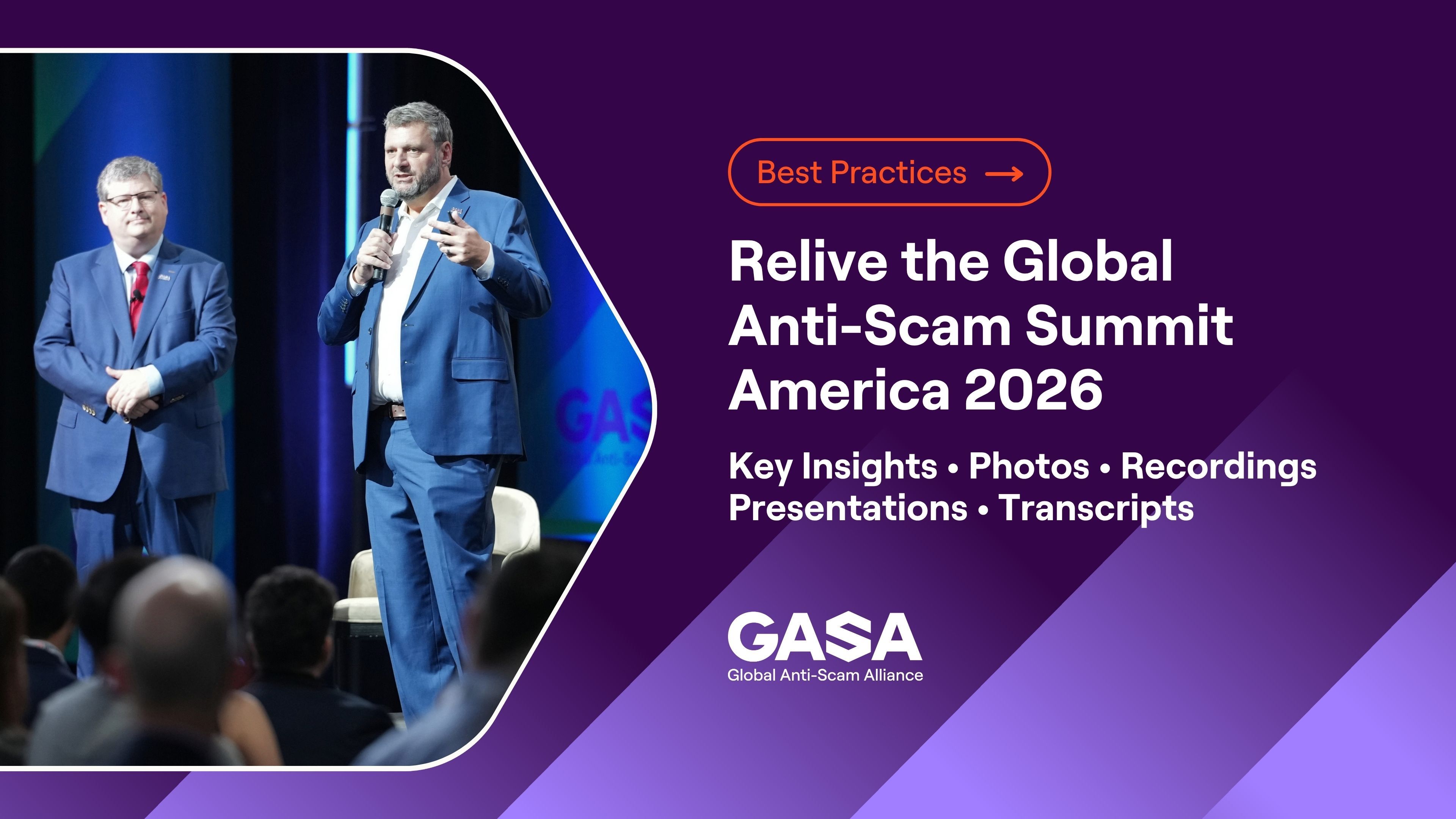
Global Anti-Scam Summit America 2026: Highlights, Insights and Resources
Explore GASS America 2026 highlights and insights, with the Summit summary, photos, presentation slides, transcripts and session recordings from San Francisco.
Meet the Winners – Scam Fighter Awards at the Global Anti-Scam Summit America 2026
Meet the winners of the Scam Fighter Awards at the Global Anti-Scam Summit America 2026 and learn about their work in education, research, collaboration and technology.

Global Anti-Scam Alliance Partners with TruthScan to Integrate Deepfake Detection on scam.org
Users of scam.org will now be able to upload an image to the website for analysis to determine whether the image is authentic, edited, or generated by artificial intelligence.
FTC’s Never EVER Campaign Helps Prevent Elder Financial Abuse With Simple, Specific Scam Warnings
The FTC’s Never EVER campaign uses simple, specific imposter scam warnings to help prevent elder financial abuse and support coordinated consumer education.

Nomorobo Joins Scam.org to Shield Consumers from Fraudulent Calls and Texts
Nomorobo has joined Scam.org as a member partner, bringing call and text blocking technology into the platform to help consumers protect themselves from fraudulent communications.
Scams Surge Across the U.S.: 82% of Adults Targeted as Engagement and Losses Continue to Rise
The Global Anti-Scam Alliance (GASA), in collaboration with Iris® Powered by Generali, has released the State of Scams USA 2026 Report.

Disrupting RedVDS: A Case Study in Taking Down Scam Infrastructure
How Microsoft’s RedVDS takedown shows the value of legal, technical and law enforcement action against cybercrime infrastructure.

OKX Joins Global Anti-Scam Alliance as Foundation Member
OKX will join both the GASA Global Advisory Board and the GASA North America Chapter Board.