
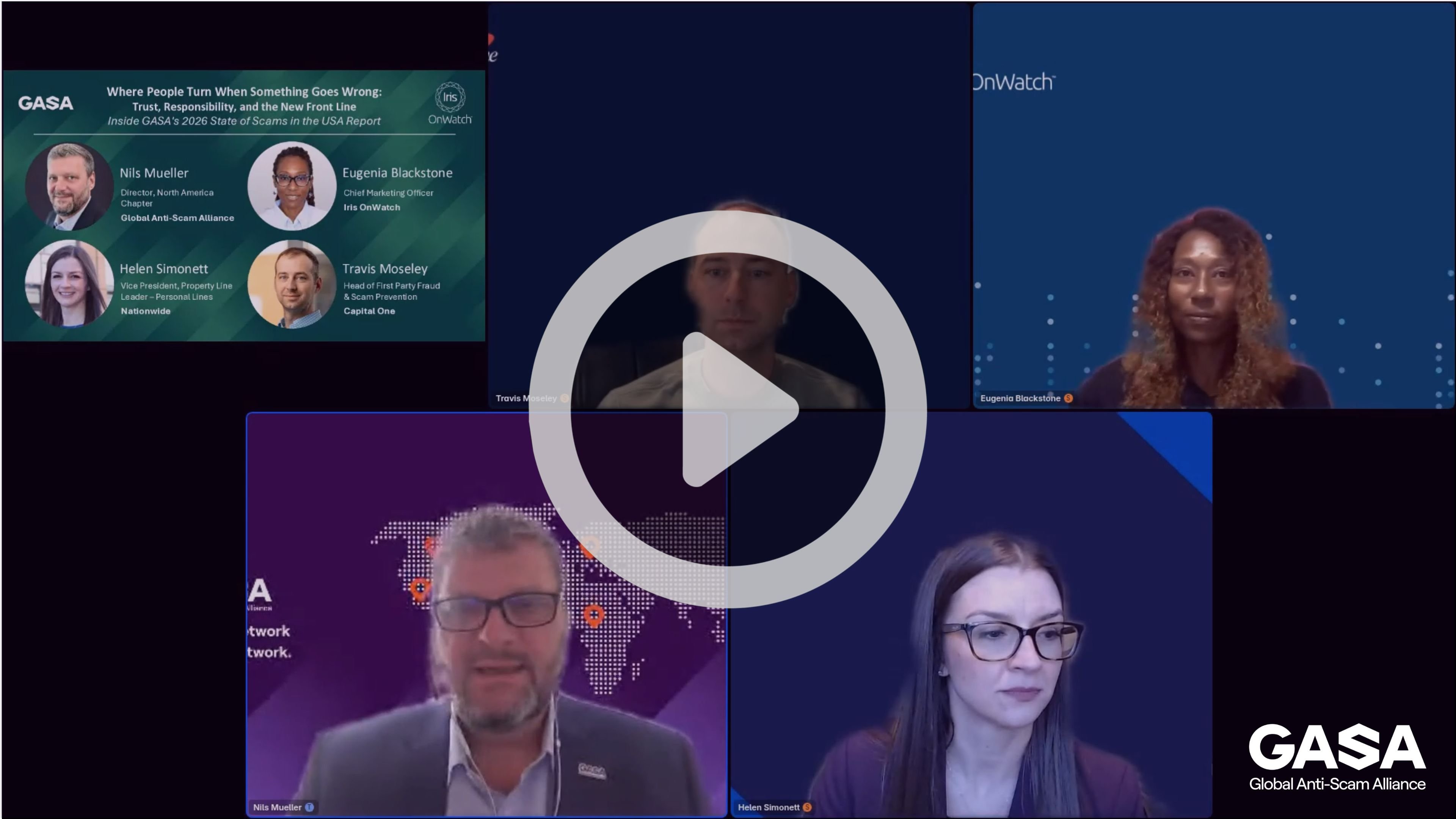
Most Americans whose funds are stolen in an online scam never contact law enforcement. GASA and Iris OnWatch cohosted a webinar in which leaders from both along with Capital One and Nationwide explored what GASA's 2026 State of Scams in the USA report reveals about where victims do turn, and what frontline organizations can do when they get the call.
 Watch the on-demand replay
The emotional cost of reporting
For most victims, the “aha” moment when they realize they’ve been scammed comes during an interaction with or notification from someone else. According to GASA’s US State of Scams Report, two in three only realized it when someone else brought their attention to it, often their bank.
What follows can be exhausting. A victim will be asked to explain what happened many times, often their bank, the FTC, the FBI's Internet Crime Complaint Center (IC3) and their local police, reliving it with each retelling. "You basically are re-victimized every time you have to tell the story to each group," said Travis Moseley, who leads First Party Fraud and Scam Prevention at Capital One. With the shame many scam victims feel, and the sense that they "should have known better," (often reinforced directly by messaging they encounter as they start trying to address the situation) it's easy to see why many never report at all.
The State of Scams data offer a picture of where those who do report actually go when they realize what’s happened. Among Americans who lost money to a scam, only 12% reported it to the police, even fewer than the 21% who report to law enforcement globally. Only 40% reported to any type of authority, including consumer protection agencies, national reporting websites and financial regulators. Far more turned to a commercial organization (58%), most often their own bank or payment provider (33%).
The stakes are high. Scams cost Americans an estimated $37.3 billion last year, but the damage goes beyond a one-time loss of cash: one in five scam survivors saw reduced access to credit, and 59% said the experience affected their overall wellbeing.
The trust gap
Americans surveyed were asked a pair of questions: who they think should be most responsible for keeping people safe from scammers, and how well those organizations actually perform. Their answers are illuminating.
At the top of the list of who Americans think *should* keep them safe from scams are the online platforms scammers use and the government. Yet those are the two ranked last in how well they’re perceived to be doing. Those ranked as doing the best job at preventing and resolving scams? Banks, payment providers, and insurance companies.
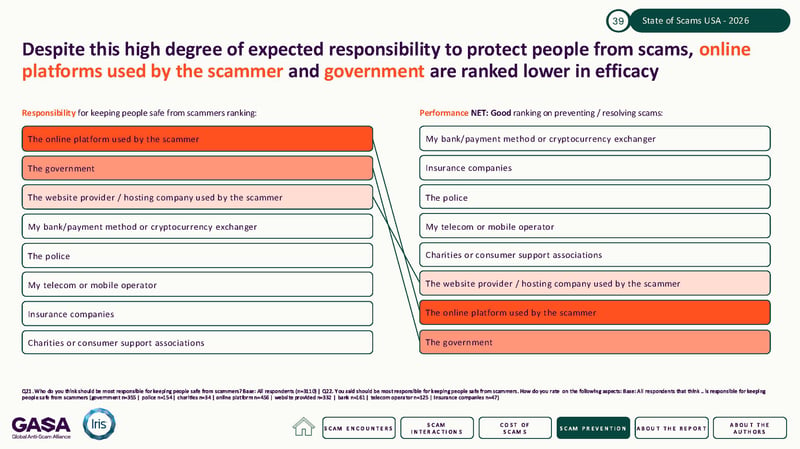
Eugenia Blackstone, Chief Marketing Officer at Iris OnWatch, suggests that companies on this front line consider the gap as an opportunity. When a scammer uses a brand's name, customers expect that brand to help, and the organizations that respond well can earn lasting trust.
For Helen Simonett, who leads Nationwide's personal lines property business, that consumer trust carries a simple obligation: listen, and help people take the next step. "The last thing they need is to feel judged or left to figure it out on their own," she said.
Meeting people where they are: five moves from the panel
If victims are coming to banks, insurers and platforms first, what should those organizations do with that trust? The panel shared practical examples.
The full 2026 State of Scams in the USA report, produced in collaboration with Iris OnWatch, is available to download below. GASA's global State of Scams report will be released in mid-November.
 Read the State of Scams in the USA report
A Scam Victim's First Call: The Accidental Front Line Against Scams
Explore why US scam victims turn to banks and brands first, and how organisations can support them. Watch the GASA and Iris OnWatch webinar replay.
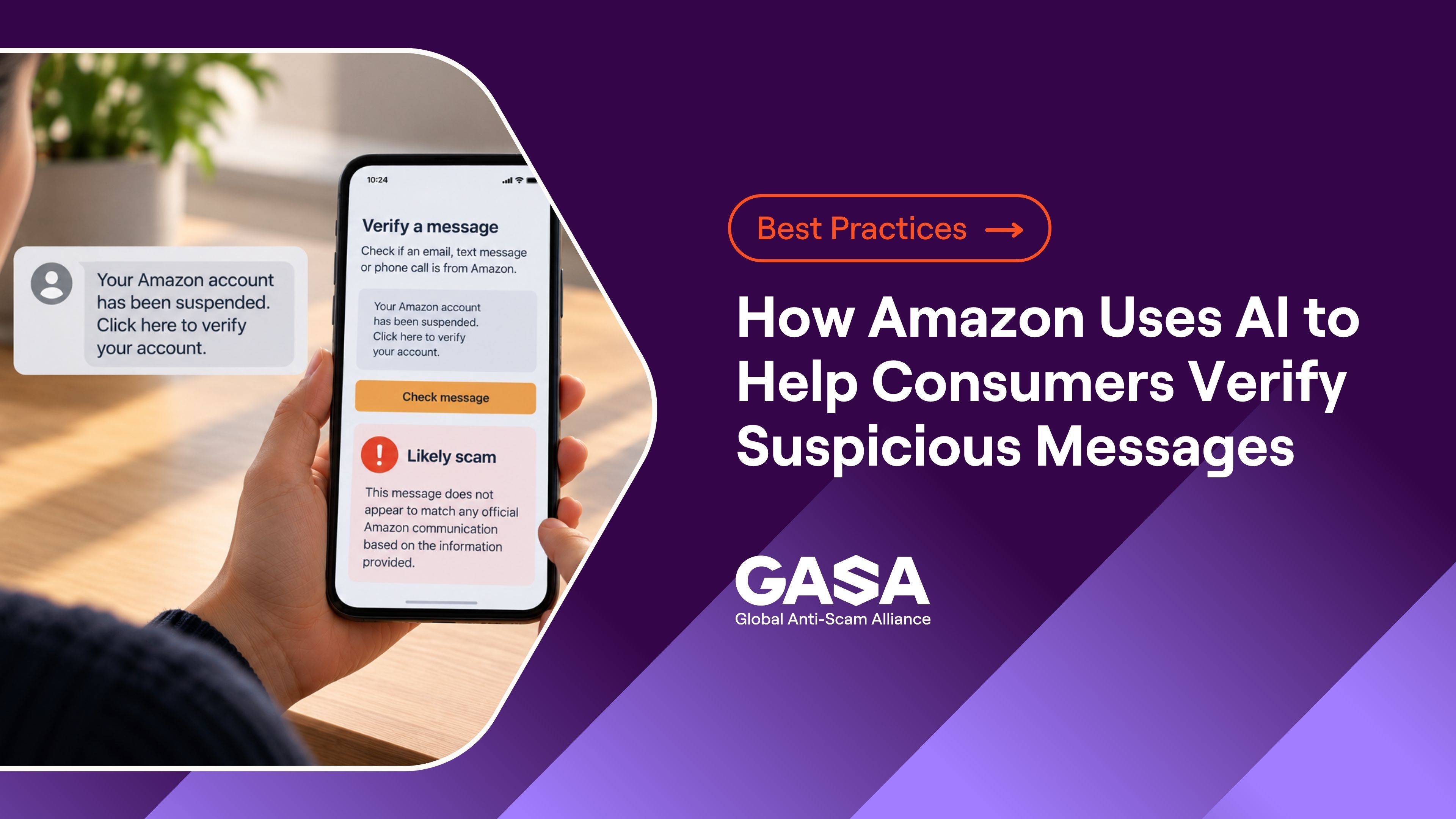
How Amazon Is Helping Consumers Verify Messages and Avoid Impersonation Scams
Explore how Amazon uses AI and outgoing communication records to verify suspicious messages and inform approaches to impersonation scam prevention.
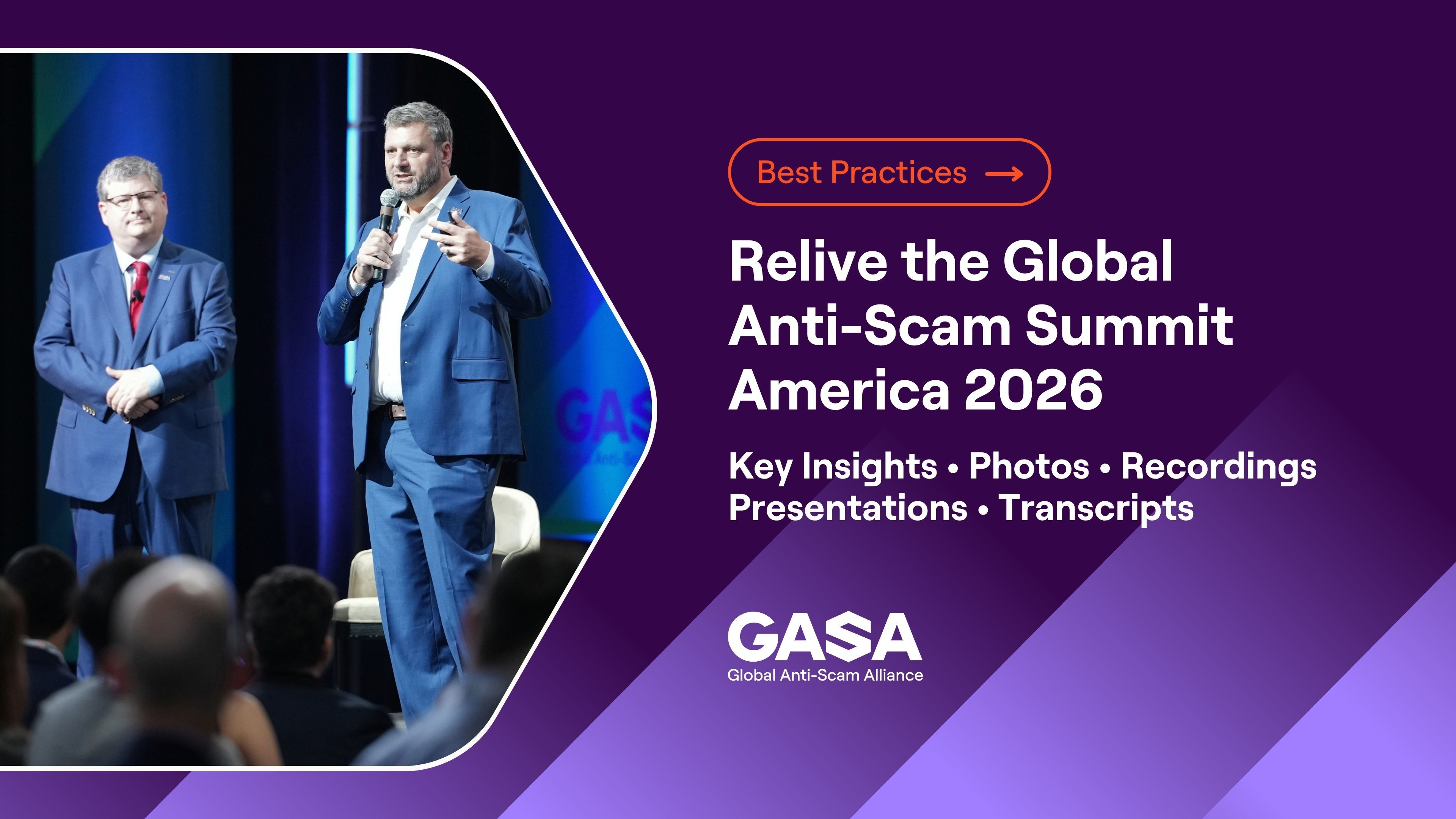
Global Anti-Scam Summit America 2026: Highlights, Insights and Resources
Explore GASS America 2026 highlights and insights, with the Summit summary, photos, presentation slides, transcripts and session recordings from San Francisco.
Meet the Winners – Scam Fighter Awards at the Global Anti-Scam Summit America 2026
Meet the winners of the Scam Fighter Awards at the Global Anti-Scam Summit America 2026 and learn about their work in education, research, collaboration and technology.

Global Anti-Scam Alliance Partners with TruthScan to Integrate Deepfake Detection on scam.org
Users of scam.org will now be able to upload an image to the website for analysis to determine whether the image is authentic, edited, or generated by artificial intelligence.
FTC’s Never EVER Campaign Helps Prevent Elder Financial Abuse With Simple, Specific Scam Warnings
The FTC’s Never EVER campaign uses simple, specific imposter scam warnings to help prevent elder financial abuse and support coordinated consumer education.
Nomorobo Joins Scam.org to Shield Consumers from Fraudulent Calls and Texts
Nomorobo has joined Scam.org as a member partner, bringing call and text blocking technology into the platform to help consumers protect themselves from fraudulent communications.
Scams Surge Across the U.S.: 82% of Adults Targeted as Engagement and Losses Continue to Rise
The Global Anti-Scam Alliance (GASA), in collaboration with Iris® Powered by Generali, has released the State of Scams USA 2026 Report.