
Every year, ScamAdviser analyzes the willingness of consumers to buy fake and counterfeit products online. This year, 1,102 consumers participated in the study from across the world.
While all income groups, educational categories, age levels and continents are represented, it is interesting to note that mostly men (63%) participated. This trend is identical to previous year's survey, where 65% of the participants were men, suggesting that men may be buying more counterfeit than generally thought.
65% say they are good at identifying fakes
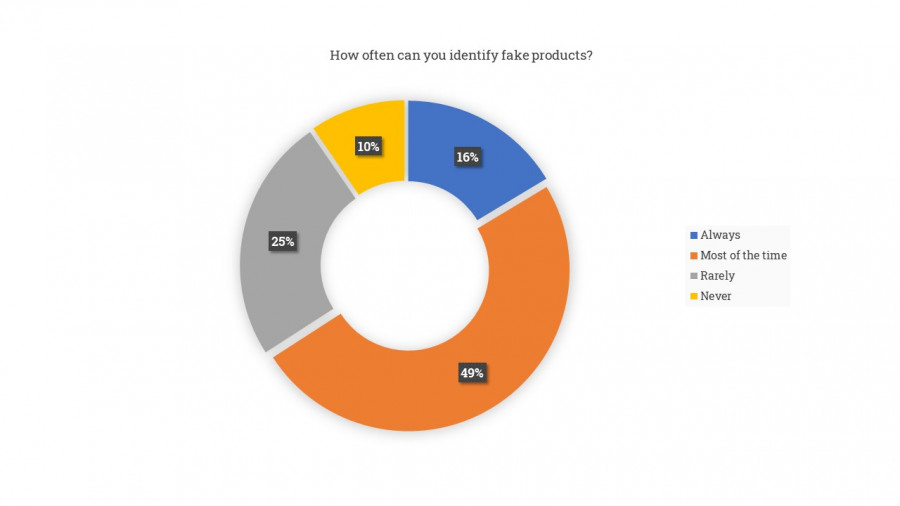
Most consumers (65%) consider themselves capable of identifying counterfeits. This is especially the case for Clothing, Accessories and Consumer Electronics. Only 10% admit they are unable to identify fakes. Consumers doubt their ability to recognize fakes Medicines and Toys.
75% of all consumers have bought counterfeits
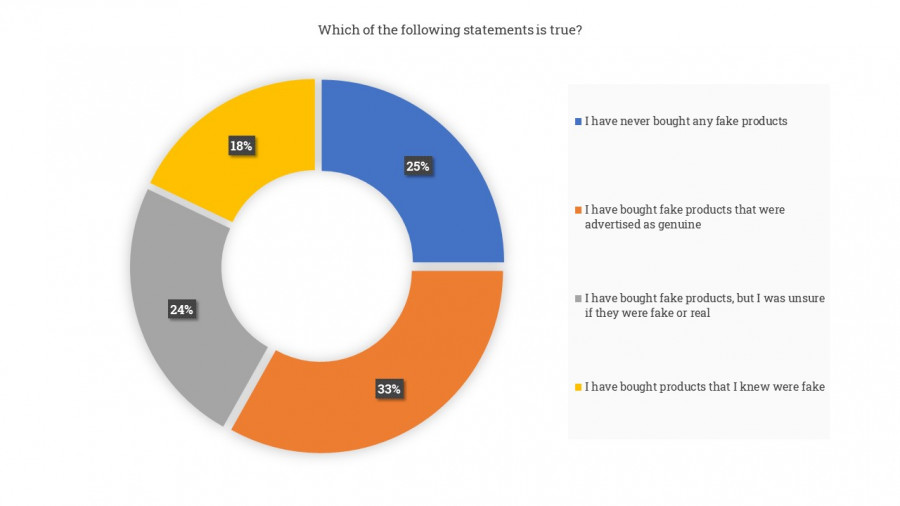
Still, 57% of the consumers have bought a fake product in the past unknowingly or doubting the originality of the product. 18% admit to knowingly having bought fakes. Clothing, electronics and accessories are the most commonly purchased fake products.
Websites, not marketplaces, are the main purchase channel
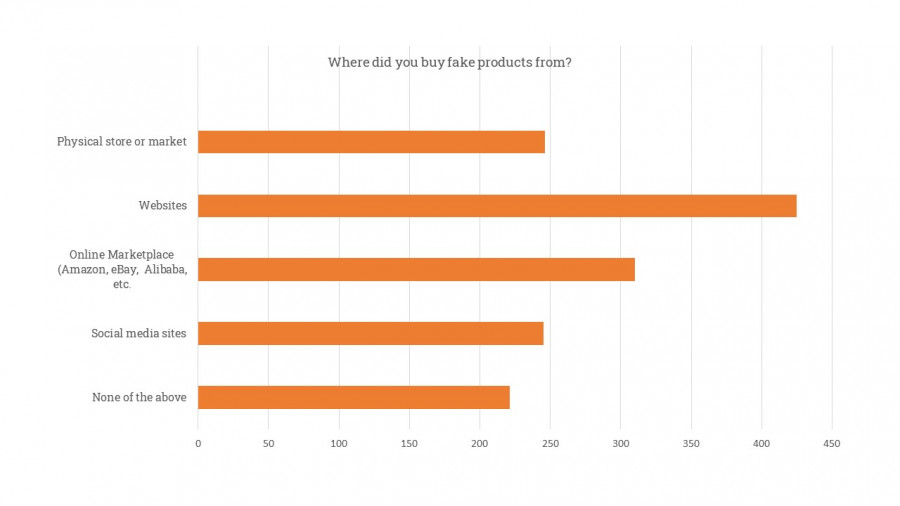
The focus of brand protection agencies has shifted to online marketplaces in recent years. However, remarkably, websites (39%) are by far the most popular channel to buy counterfeits. This channel is followed by online marketplaces like Amazon, eBay and Alibaba (28%). Physical stores and social media sites are both named by 22% of consumers each.
28% of consumers consider buying a Corona vaccine online
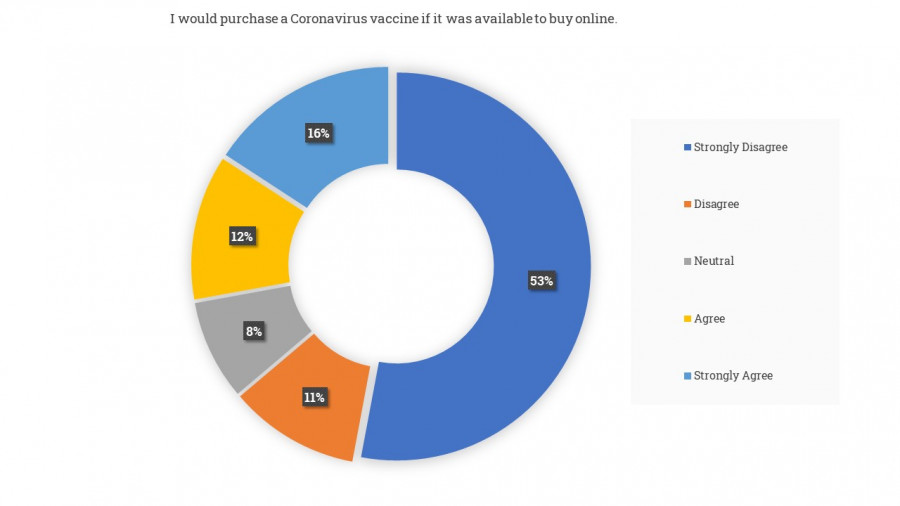
As an additional research question, ScamAdviser this year asked if the respondent would buy a Coronavirus vaccine online. 64% disagreed that they would purchase it online. However, 28% stated they would buy the vaccine online, especially if the authenticity can be guaranteed (25%) or the product is sold by an official source (28%). This leaves the door open to scammers selling either fake or illegal COVID vaccines online.
Consumers are dissuaded by fears, not ethics
Consumers buy fakes primarily as they believe that there will be no significant difference in quality (17%). The lower price (15%) and the feeling that the real brand is overpriced (11%) are also named.
Consumers are aware that counterfeits support crime and human exploitation. What however would keep consumers the most from buying counterfeit is the concern about the quality of the product (42%) and the belief that buying fakes online is not safe as their (financial) data may be misused (37%) and the product not delivered (31%).
Regarding the fight against counterfeits, consumers think the lead should be taken by consumer protection agencies (52%) and not by international authorities such as Europol/Interpol (23%) and the EU/UN (21%).
Bitdefender Report Reveals How Scams Operate Across Digital Channels
Bitdefender’s Global Scam Intelligence Report 2026 shows how organised scam campaigns move across advertising, websites, SMS, messaging apps and voice calls to exploit trust at scale.
Beyond Compliance: Why Organisational Accountability is Critical for Consumer Protection
How the NDPC-Meta initiative could strengthen data protection, organisational accountability, scam prevention and consumer trust across Nigeria’s digital economy.
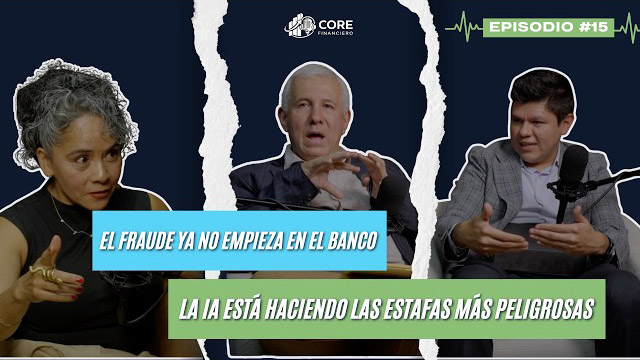
Why Mexico’s Anti-Scam Response Needs Cross-Sector Coordination
GASA Mexico Chapter's Sissi De la Pena explains why scam prevention in Mexico requires stronger coordination across finance, telecoms, platforms, government and civil society.
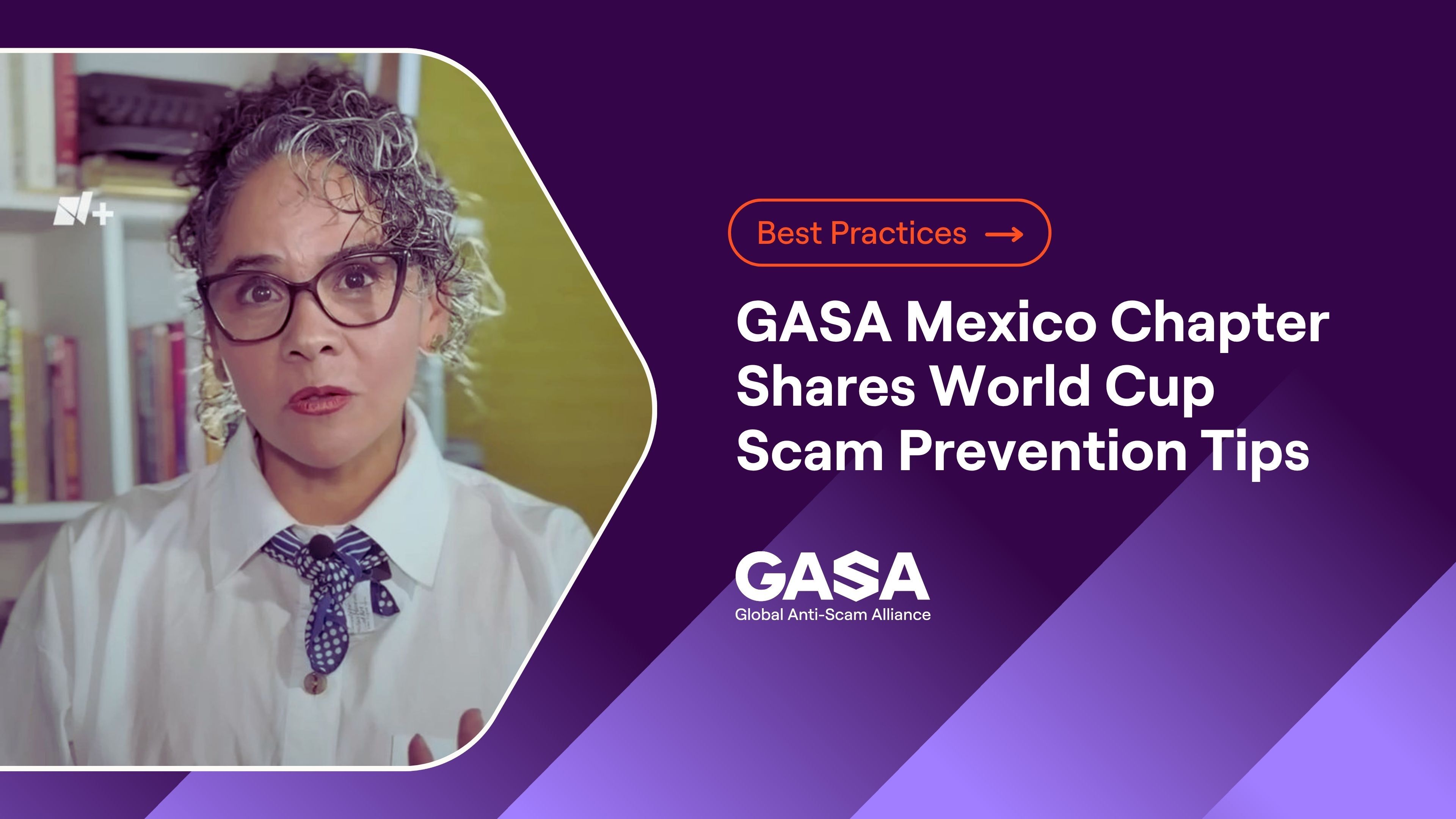
GASA Mexico Shares Scam Prevention Tips During the 2026 FIFA World Cup
GASA Mexico shares practical advice for football fans on avoiding ticketing, travel, phishing and payment scams during the 2026 FIFA World Cup.
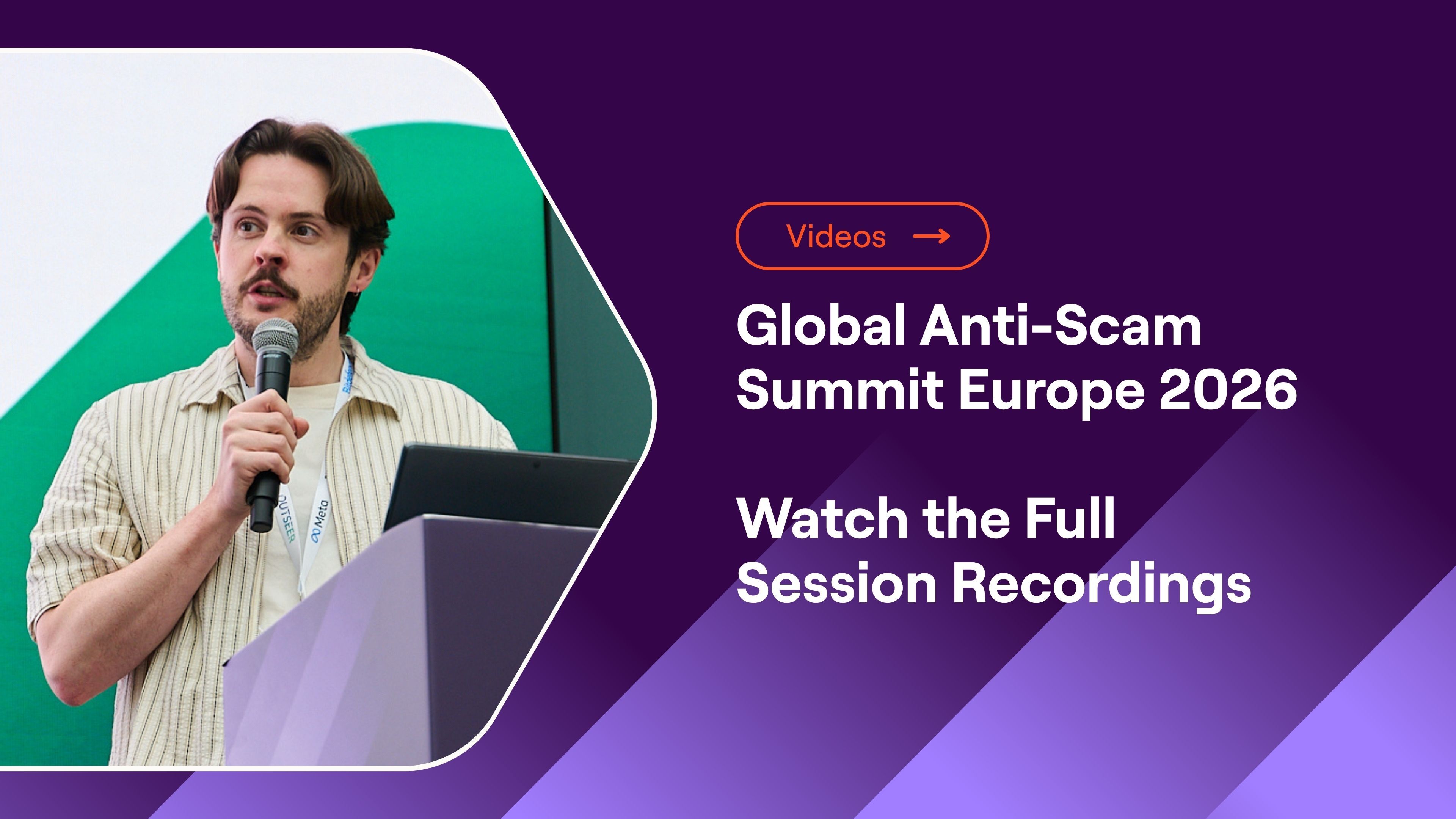
Watch the Global Anti-Scam Summit Europe 2026 Session Recordings
Watch keynotes, panels, workshops, working group sessions and Scam Fighter Awards recordings from the Global Anti-Scam Summit Europe 2026 in Lisbon.
.jpg)
Public-Private Partnerships in Action: Key Takeaways From the Global Anti-Scam Summit Europe 2026
Key takeaways from the Global Anti-Scam Summit Europe 2026 on how public-private partnerships can strengthen scam prevention, intelligence sharing, regulation and victim protection.
Nomorobo Joins Scam.org to Shield Consumers from Fraudulent Calls and Texts
Nomorobo has joined Scam.org as a member partner, bringing call and text blocking technology into the platform to help consumers protect themselves from fraudulent communications.
Scams Continue to Rise in Germany: Two in Three Adults Encountered a Scam in the Past Year
The Global Anti-Scam Alliance (GASA), in collaboration with Worldline, has released the State of Scams Germany 2026 Report.