
Date of Event: 07 July 2026
Event: GASA Meet-Up
.jpg?width=849&height=478&name=webinar%20thumbnail%20(1).jpg)
Cryptocurrency has reshaped the financial landscape, making transactions faster, more accessible, and increasingly borderless — but that same speed and reach has made crypto assets an attractive vehicle for scammers, money launderers, and organised fraud networks. The latest GASA meet-up, hosted by the GASA APAC Chapter in Singapore, brought together law enforcement, crypto exchanges, and investigators to discuss how public-private partnerships (PPP) can strengthen the region's collective defence against crypto-enabled scams.
GASA's mission is to unite the ecosystem needed to fight scam networks: government agencies, consumer protection bodies, cybersecurity companies, telcos, social media and advertising platforms, and crypto businesses. With more than 150 member organisations worldwide, GASA facilitates the intelligence-sharing, networking, and research that no single organisation could achieve alone — recognising that data privacy rules and information silos mean no one party can see the full picture of how a scam unfolds.
The panel traced how intelligence-sharing in the crypto ecosystem has matured over the years, and where it still falls short. Speakers agreed that no single exchange, law enforcement agency, or telco sees the whole picture — an exchange might see how funds move and convert between assets, while law enforcement sees victim reports and suspect details, and telcos or social platforms see the point of first contact. Bringing these views together is what allows disruption, not just detection.
Concrete cases illustrated the stakes. Binance shared how a joint operation with the Royal Thai Police helped dismantle a large "pig butchering" investment scam network, in which victims were groomed through romance and social media contact before being funnelled into fake investment platforms — a case involving roughly USD 277 million in funds across crypto and cash, with more than 200 victims coming forward. Coinbase described a private-to-private partnership with Microsoft that started from a single tip about a phishing-as-a-service operation; by tracing behavioural patterns across accounts, balances, and transactions rather than transactions alone, the investigation ultimately helped identify close to 3,000 affected victims. MetaCom detailed its close working relationship with Singapore's Anti-Scam Centre (ASC), including jointly built risk triggers and rules, rapid account-freeze tools customers can activate themselves, and "cognitive break" alerts designed to interrupt a victim mid-transaction when a scam is suspected.
Panellists were candid about the friction that remains. Traditional processes — multiple review layers, suspicious transaction reports, and waiting for formal production orders before funds can be frozen or seized — are often too slow against scammers who can move money across exchanges and jurisdictions almost instantly. Private-to-private data sharing was flagged as particularly difficult compared to public-private cooperation, constrained by tipping-off risks, PII restrictions, and inconsistent regulations between companies and countries. Cross-border cases add another layer of difficulty where treaties or diplomatic relationships don't exist between jurisdictions. Speakers also pointed to the growing sophistication of AI-infused scams and "crime-as-a-service" offerings as a trend the region needs to get ahead of, and called for collaboration to extend beyond the financial sector into social media and telecom platforms where scam recruitment and grooming often begin.
Despite these challenges, the panel closed on a note of practical optimism: success depends not only on technology and cross-jurisdiction investigative capability, but on the trust, communication, and sustained collaboration built between public and private partners over time. GASA's Singapore chapter continues to convene these industry and government stakeholders to keep that collaboration growing.
Watch the full discussion below to learn how Singapore is strengthening its public-private defences against crypto-enabled scams.
Watch the full discussion below to learn how Singapore is strengthening its public-private defences against crypto-enabled scams..

State of Scams in Nigeria 2026: A Comparative Review Across Africa
Nigerian experts examine scam trends, technology, consumer protection and the need for stronger cross-sector collaboration.
Nearly three in four Danish adults encountered scams as estimated losses reach DKK 10.1 billion
New State of Scams Denmark 2026 report finds scam exposure is rising, while victims face repeated financial and emotional harm.
Building a More Trusted Digital Philippines: New Report Underscores the Need for Collective Action as Scam Exposure Continues to Rise
GASA’s State of Scams in the Philippines 2026 Report, in collaboration with Mastercard and Gogolook, highlights the growing scale of the scam challenge in the Philippines.
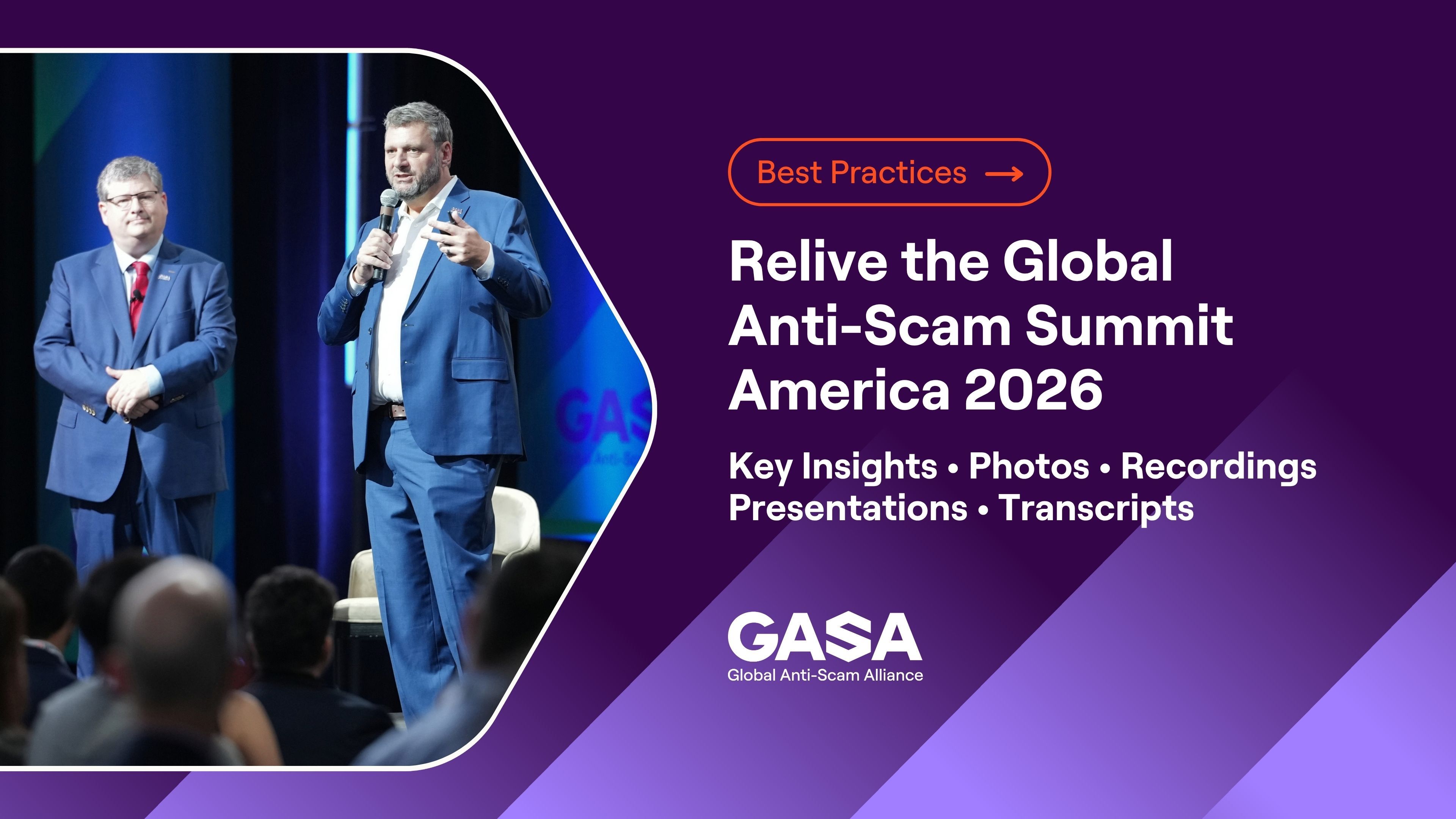
Global Anti-Scam Summit America 2026: Highlights, Insights and Resources
Explore GASS America 2026 highlights and insights, with the Summit summary, photos, presentation slides, transcripts and session recordings from San Francisco.
State of Scams in Kenya 2026: A Comparative Review Across Africa
Kenyan experts examine scam trends, data sharing, digital trust and the need for stronger cross-sector prevention.
State of Scams in South Africa 2026: A Comparative Review Across Africa
South African experts examine scam trends, AI, consumer protection and the need for stronger cross-sector collaboration.
-3.jpg)
More than one in five adults in Japan encountered scams in the past year
New State of Scams Japan 2026 report examines how scams are reaching consumers and where stronger prevention and collaboration can make a difference
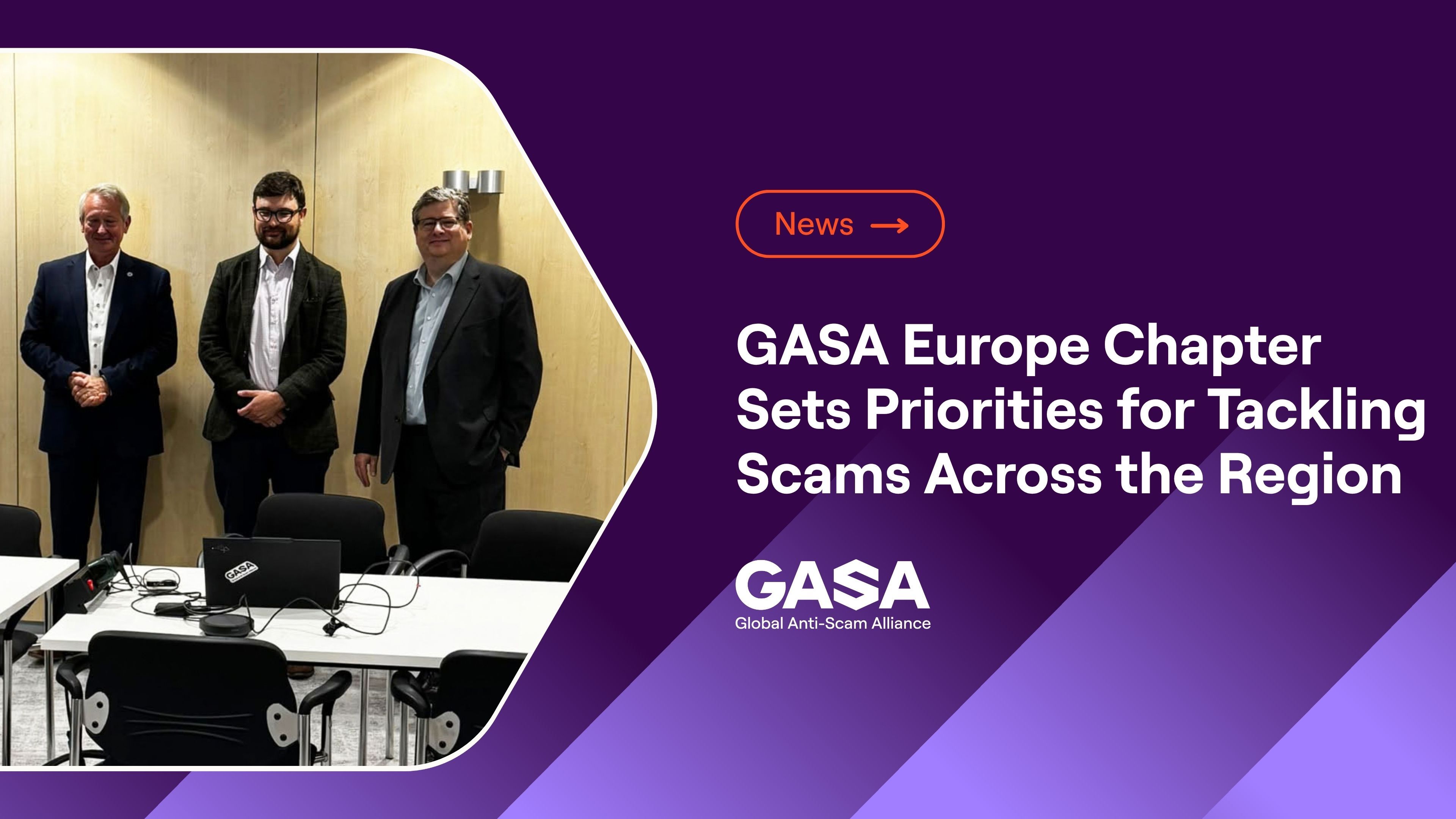
GASA Brings Stakeholders Together in Brussels for First Europe Chapter Meeting
GASA Europe brings 50+ stakeholders together in Brussels to discuss scam trends, data sharing and cross-sector priorities.